CHICAGO (AP) — Boeing reached a settlement Friday with a Canadian man whose wife and three children were killed in a deadly 2019 crash in Ethiopia, averting the first trial connected to a devastating event that led to a worldwide grounding of Max jets.
The jury trial at Chicago’s federal court had been set to start Monday to determine damages for Paul Njoroge of Canada. His family was heading to their native Kenya in March 2019 aboard Ethiopian Airlines Flight 302 when it malfunctioned and plummeted to the ground. The wreck killed all 157 people on board.
Njoroge, 41, had planned to testify about how the crash affected his life. He has been unable to return to his family home in Toronto because the memories are too painful. He hasn’t been able to find a job. And he has weathered criticism from relatives for not traveling alongside his wife and children.
“He’s got complicated grief and sorrow and his own emotional stress,” said Njoroge’s attorney, Robert Clifford. “He’s haunted by nightmares and the loss of his wife and children.”
Terms of the deal were not disclosed publicly.
Clifford said his client intended to seek “millions” in damages on behalf of his wife and children, but declined to publicly specify an amount ahead of the trial.
“The aviation team at Clifford Law Offices has been working round-the-clock in preparation for trial, but the mediator was able to help the parties come to an agreement,” Clifford said in a statement Friday.
A Boeing spokesperson said via email Friday that the company had no comment.
The proceedings were not expected to delve into technicalities involving the Max version of Boeing’s bestselling 737 airplane, which has been the source of persistent troubles for the company since the Ethiopia crash and one the year before in Indonesia. A combined 346 people, including passengers and crew members, died in those crashes.
In 2021, Chicago-based Boeing accepted responsibility for the Ethiopia crash in a deal with the victims’ families that allowed them to pursue individual claims in U.S. courts instead of their home countries. Citizens of 35 countries were killed. Several families of victims have already settled. Terms of those agreements also were not made public.
The jetliner heading to Nairobi lost control shortly after takeoff from Addis Ababa Bole International Airport and nose-dived into a barren patch of land.
Investigators determined the Ethiopia and Indonesia crashes were caused by a system that relied on a sensor that provided faulty readings and pushed the plane noses down, leaving pilots unable to regain control. After the Ethiopia crash, Max jets were grounded worldwide until the company redesigned the system.
This year, Boeing reached a deal with the U.S. Justice Department to avoid criminal prosecutions in both crashes.
Among those killed were Njoroge’s wife, Carolyne, and three small children, Ryan, age 6, Kellie, 4, and Rubi, 9 months old, the youngest to die on the plane. Njoroge also lost his mother-in-law, whose family has a separate case.
Njoroge, who met his wife in college in Nairobi, was living in Canada at the time of the crash. He had planned to join his family in Kenya later.
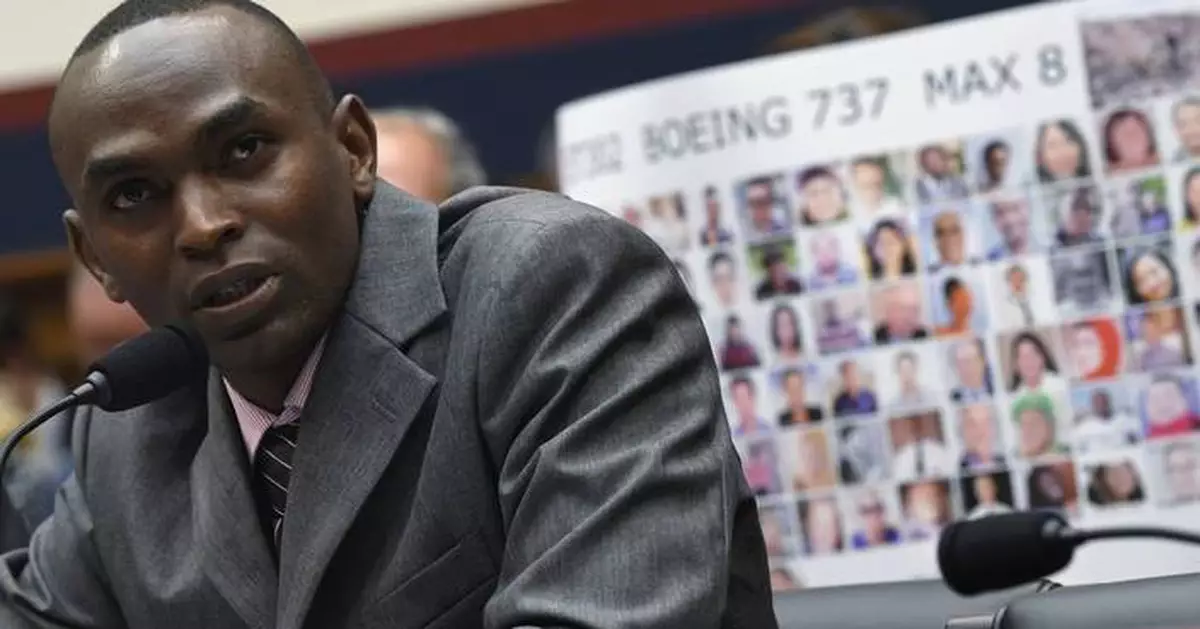
He testified before Congress in 2019 about repeatedly imagining how his family suffered during the flight, which lasted only six minutes. He has pictured his wife struggling to hold their infant in her lap with two other children seated nearby.
“I stay up nights thinking of the horror that they must have endured,” Njoroge said. “The six minutes will forever be embedded in my mind. I was not there to help them. I couldn’t save them.”
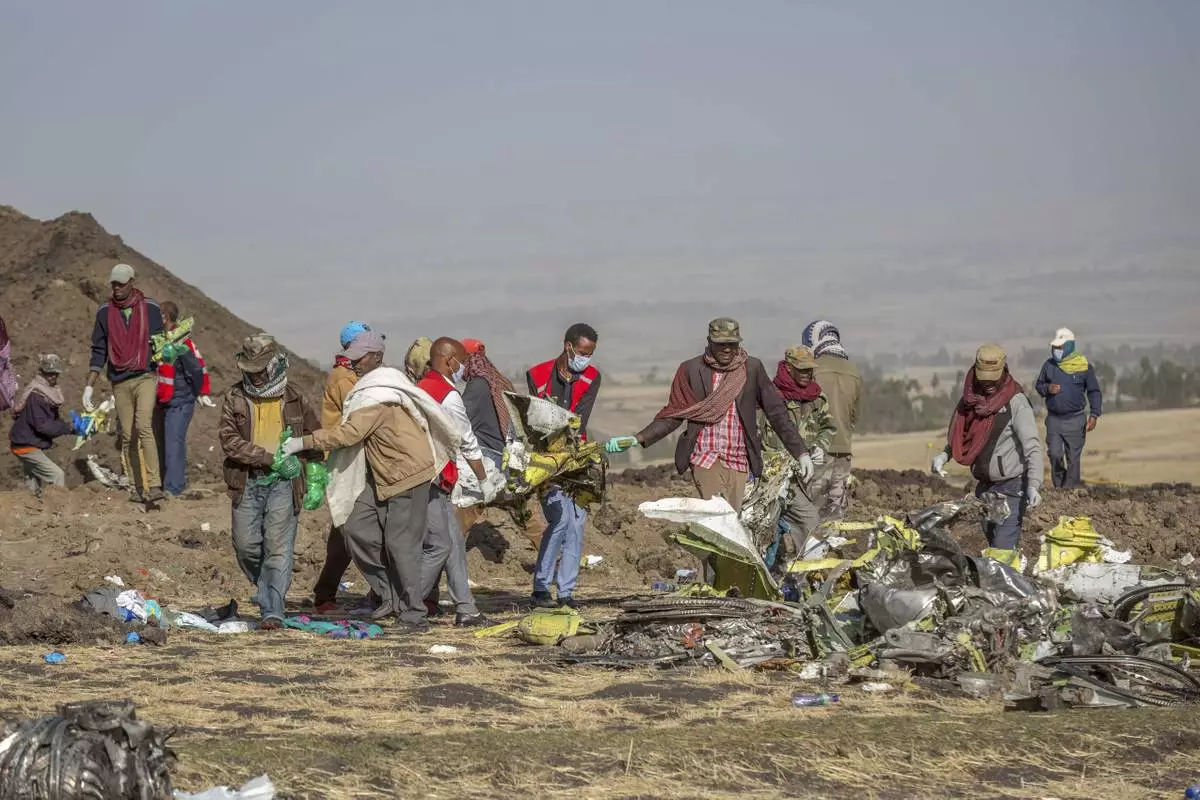
FILE - Rescuers work at the scene of an Ethiopian Airlines flight of a Boeing 737 Max 8 plane crash near Bishoftu, or Debre Zeit, south of Addis Ababa, Ethiopia, March 11, 2019. (AP Photo/Mulugeta Ayene, File)
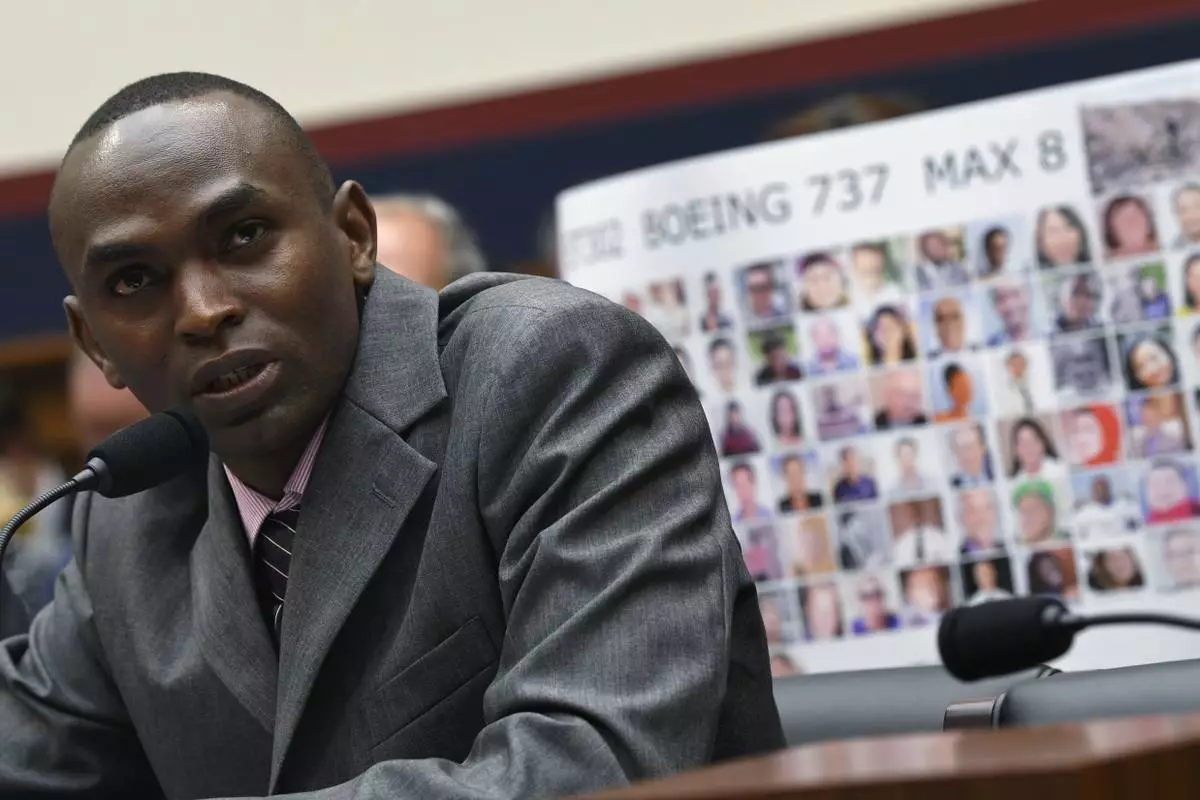
FILE - Paul Njoroge testifies during a House Transportation subcommittee hearing on Capitol Hill in Washington, July 17, 2019, on aviation safety. (AP Photo/Susan Walsh, File)
WASHINGTON (AP) — Senate Republicans voted to dismiss a war powers resolution Wednesday that would have limited President Donald Trump’s ability to conduct further attacks on Venezuela after two GOP senators reversed course on supporting the legislation.
Trump put intense pressure on five Republican senators who joined with Democrats to advance the resolution last week and ultimately prevailed in heading off passage of the legislation. Two of the Republicans — Sens. Josh Hawley of Missouri and Todd Young of Indiana — flipped under the pressure.
Vice President JD Vance had to break the 50-50 deadlock in the Senate on a Republican motion to dismiss the bill.
The outcome of the high-profile vote demonstrated how Trump still has command over much of the Republican conference, yet the razor-thin vote tally also showed the growing concern on Capitol Hill over the president’s aggressive foreign policy ambitions.
Democrats forced the debate after U.S. troops captured Venezuelan leader Nicolás Maduro in a surprise nighttime raid earlier this month
“Here we have one of the most successful attacks ever and they find a way to be against it. It’s pretty amazing. And it’s a shame,” Trump said at a speech in Michigan Tuesday. He also hurled insults at several of the Republicans who advanced the legislation, calling Sen. Rand Paul of Kentucky a “stone cold loser” and Sens. Lisa Murkowski of Alaska and Susan Collins of Maine “disasters.” Those three Republicans stuck to their support for the legislation.
Trump’s latest comments followed earlier phone calls with the senators, which they described as terse. The president’s fury underscored how the war powers vote had taken on new political significance as Trump also threatens military action to accomplish his goal of possessing Greenland.
The legislation, even if it had cleared the Senate, had virtually no chance of becoming law because it would eventually need to be signed by Trump himself. But it represented both a test of GOP loyalty to the president and a marker for how much leeway the Republican-controlled Senate is willing to give Trump to use the military abroad. Republican angst over his recent foreign policy moves — especially threats of using military force to seize Greenland from a NATO ally — is still running high in Congress.
Hawley, who helped advance the war powers resolution last week, said Trump’s message during a phone call was that the legislation “really ties my hands.” The senator said he had a follow-up phone call with Secretary of State Marco Rubio Monday and was told “point blank, we’re not going to do ground troops.”
The senator added that he also received assurances that the Trump administration will follow constitutional requirements if it becomes necessary to deploy troops again to the South American country.
“We’re getting along very well with Venezuela,” Trump told reporters at a ceremony for the signing of an unrelated bill Wednesday.
As senators went to the floor for the vote Wednesday evening, Young also told reporters he was no longer in support. He said that he had extensive conversations with Rubio and received assurances that the secretary of state will appear at a public hearing before the Senate Foreign Relations Committee.
Young also shared a letter from Rubio that stated the president will “seek congressional authorization in advance (circumstances permitting)” if he engaged in “major military operations” in Venezuela.
The senators also said his efforts were also instrumental in pushing the administration to release Wednesday a 22-page Justice Department memo laying out the legal justification for the snatch-and-grab operation against Maduro.
That memo, which was heavily redacted, indicates that the administration, for now, has no plans to ramp up military operations in Venezuela.
“We were assured that there is no contingency plan to engage in any substantial and sustained operation that would amount to a constitutional war,” according to the memo signed by Assistant Attorney General Elliot Gaiser.
Trump has used a series of legal arguments for his campaign against Maduro.
As he built up a naval force in the Caribbean and destroyed vessels that were allegedly carrying drugs from Venezuela, the Trump administration tapped wartime powers under the global war on terror by designating drug cartels as terrorist organizations.
The administration has claimed the capture of Maduro himself was actually a law enforcement operation, essentially to extradite the Venezuelan president to stand trial for charges in the U.S. that were filed in 2020.
Paul criticized the administration for first describing its military build-up in Caribbean as a counternarcotics operation but now floating Venezuela’s vast oil reserves as a reason for maintaining pressure.
"The bait and switch has already happened,” he said.
Lawmakers, including a significant number of Republicans, have been alarmed by Trump’s recent foreign policy talk. In recent weeks, he has pledged that the U.S. will “run” Venezuela for years to come, threatened military action to take possession of Greenland and told Iranians protesting their government that “ help is on its way.”
Senior Republicans have tried to massage the relationship between Trump and Denmark, a NATO ally that holds Greenland as a semi-autonomous territory. But Danish officials emerged from a meeting with Vance and Rubio Wednesday saying a “fundamental disagreement” over Greenland remains.
"What happened tonight is a roadmap to another endless war," Senate Democratic leader Chuck Schumer said at a news conference following the vote.
More than half of U.S. adults believe President Donald Trump has “gone too far” in using the U.S. military to intervene in other countries, according to a new AP-NORC poll.
House Democrats have also filed a similar war powers resolution and can force a vote on it as soon as next week.
Last week's procedural vote on the war powers resolution was supposed to set up hours of debate and a vote on final passage. But Republican leaders began searching for a way to defuse the conflict between their members and Trump as well as move on quickly to other business.
Once Hawley and Young changed their support for the bill, Republicans were able to successfully challenge whether it was appropriate when the Trump administration has said U.S. troops are not currently deployed in Venezuela.
“We’re not currently conducting military operations there,” said Senate Majority Leader John Thune in a floor speech. “But Democrats are taking up this bill because their anti-Trump hysteria knows no bounds.”
Democratic Sen. Tim Kaine, who has brought a series of war powers resolutions this year, accused Republicans of burying a debate about the merits of an ongoing campaign of attacks and threats against Venezuela.
"If this cause and if this legal basis were so righteous, the administration and its supporters would not be afraid to have this debate before the public and the United States Senate," he said in a floor speech.
Associated Press writers Josh Goodman, Lisa Mascaro, Mary Clare Jalonick and Joey Cappelletti in Washington and Bill Barrow in Atlanta contributed to this report.
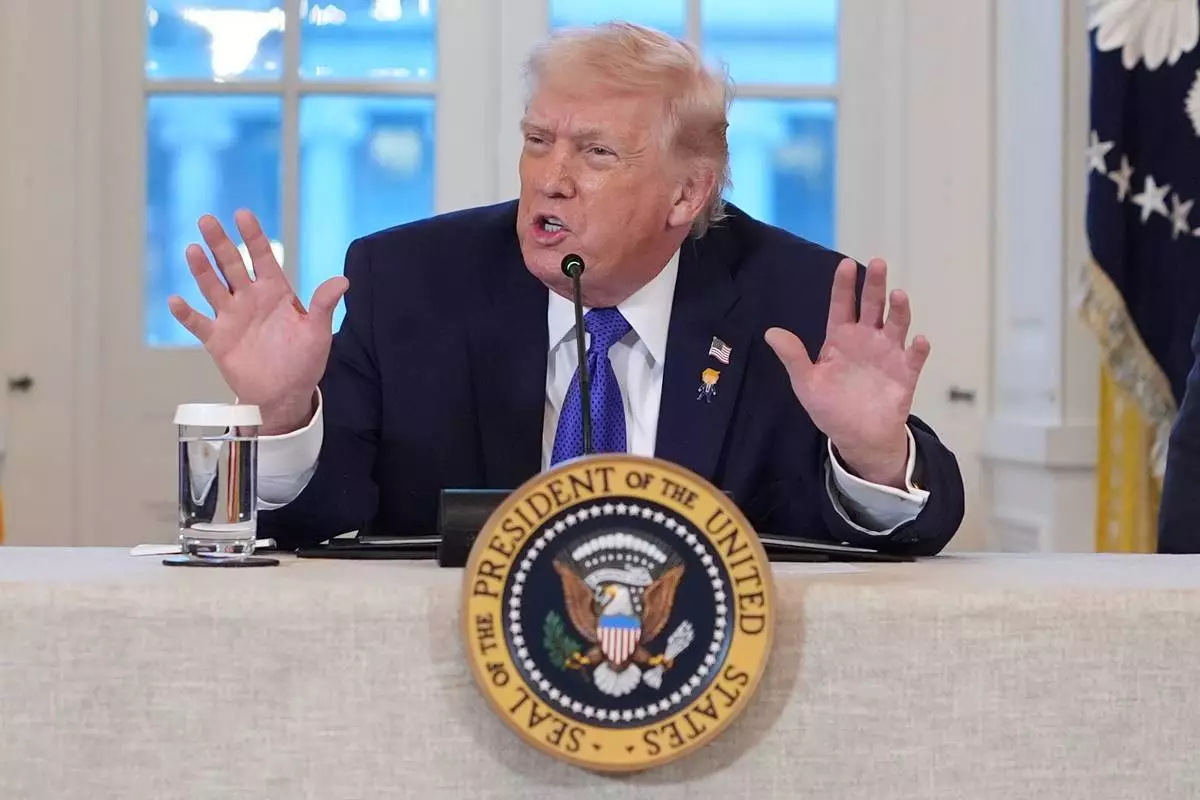
President Donald Trump speaks during a meeting with oil executives in the East Room of the White House, Friday, Jan. 9, 2026, in Washington. (AP Photo/Evan Vucci)
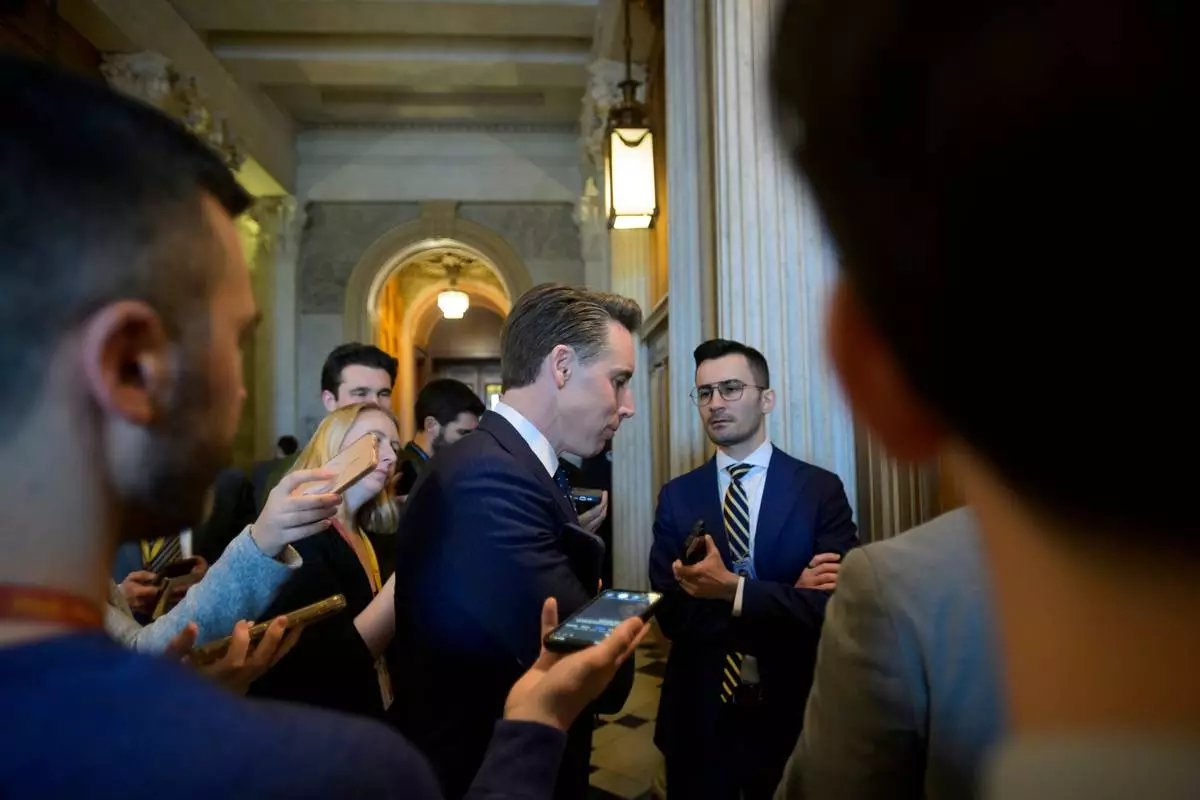
Sen. Josh Hawley, R-Mo., talks with reporters outside the Senate chamber during a vote at the Capitol, Tuesday, Jan. 6, 2026, in Washington. (AP Photo/Rod Lamkey, Jr.)
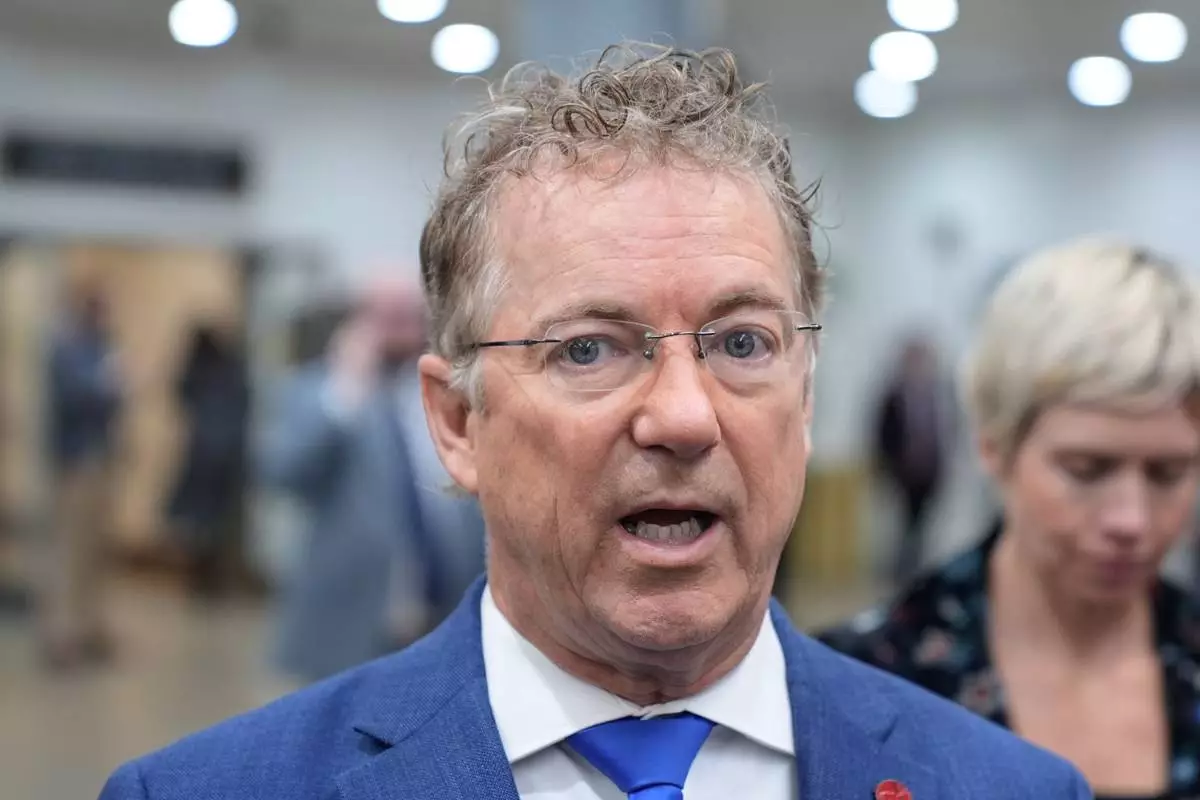
Sen. Rand Paul, R-Ky., speaks with reporters at the Senate Subway on Capitol Hill, Thursday, Jan. 8, 2026, in Washington. (AP Photo/Mariam Zuhaib)
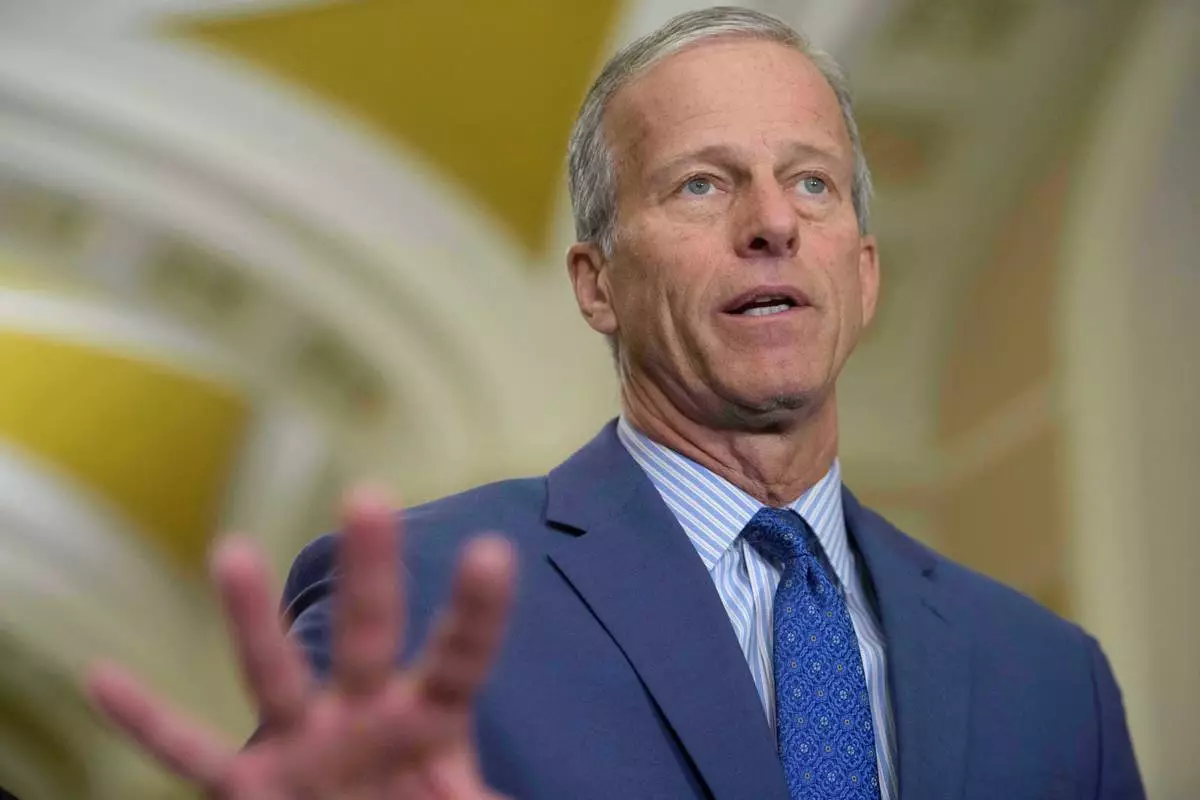
Senate Majority Leader John Thune, R-S.D., speaks during a news conference at the Capitol, Tuesday, Jan. 13, 2026, in Washington. (AP Photo/Rod Lamkey, Jr.)