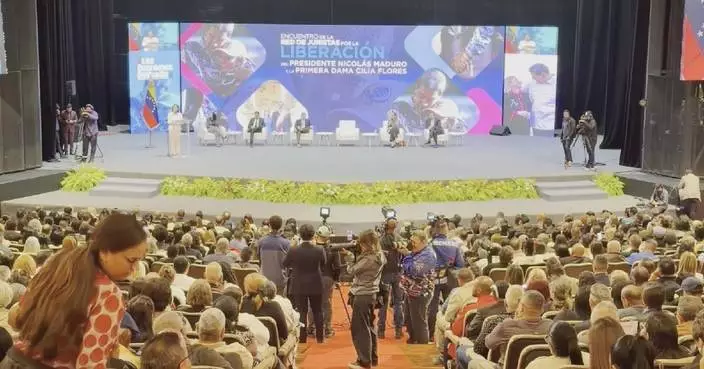
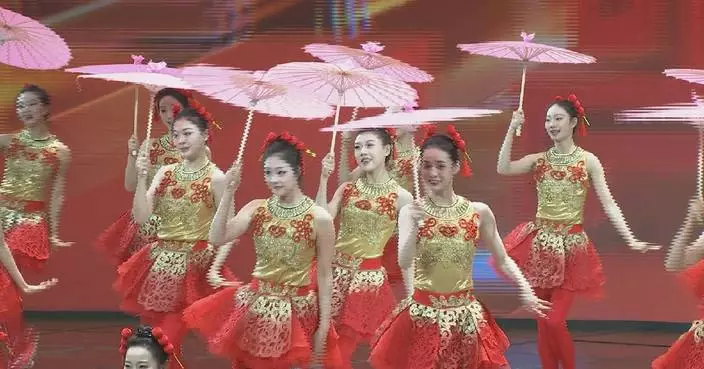
In the lead-up to Thursday's Global Civilizations Dialogue Ministerial Meeting in Beijing, international delegations toured Shanghai to explore the city's cultural heritage and technological innovation, gaining firsthand insight into China's modernization.
The Ministerial Meeting of the Global Civilizations Dialogue, held from Thursday to Friday, featured global discussions and exchanges under the theme: "Safeguarding the Diversity of Human Civilizations for World Peace and Development." For visiting representatives from countries across Europe, Asia, and Africa, the Shanghai tour offered a rich convergence of cultures and ideas -- a fitting prelude to the main event.
"When we come together, representing different backgrounds, different cultures, learning from one another, it gave us hope and confidence in the future. And we have to learn from one another. We can no longer live in cocoons, in our own little villages. The whole world is now a global village. We must learn how to understand one another and to avoid misunderstanding and wars," said former Namibian President Nangolo Mbumba.
During the trip, the delegations visited major historical and cultural sites, as well as economic and trade hubs. A key destination was the Port of Shanghai, one of the world's largest ports by volume.
"No, no other country can do this. None! This is very, very good," said Gregory Brian Riviere, international secretary of the Dominica Labour Party.
For the delegation from Peru, Shanghai Port holds even greater symbolic value, as the China-invested Chancay Port has become a major driver of the country's economy.
"I see that our Port of Chancay over in Peru is a replica of what has been built here, and that it's an important point in the inter-port commercial relations at a global level," said Flavio Cruz, a member of the Peruvian Congress.
The Global Civilizations Dialogue, together with the visit, reflects a growing sense of unity in the world -- built on deeper understanding among countries and civilizations, and a shared commitment to equality and development, noted Lekhela Thabang Polycarp, deputy principal secretary at Lesotho's Ministry of Foreign Affairs and International Relations.
"When we are united, we are stronger. And indeed, a dialogue promotes human understanding, it promotes cultural understanding, but also it promotes learning from each other," he said.
The guests also visited the Shanghai Museum, where they were inspired by the underlying connectivity between cultures, despite geographic distance.
"I can find similarities, because we are the oldest culture in Europe. The oldest things (artifacts) found in Europe are in Bulgaria, so we are very happy to see that -- especially the bronze vessels -- are very similar in some way. I can see the similarities between the cultures, just growing from thousands of years. It's really nice," said Andrey Tchorbanov, chairman of the Education and Science Committee of the National Assembly of Bulgaria.
"I think now in this century we have a situation that nations can't speak together very well. And a really big thank you to China for organizing these exhibitions to make a dialogue (all) over the world, which is very important these days, I think," said Michal Bartek, a member of the Voice-Social Democracy Party in Slovakia.
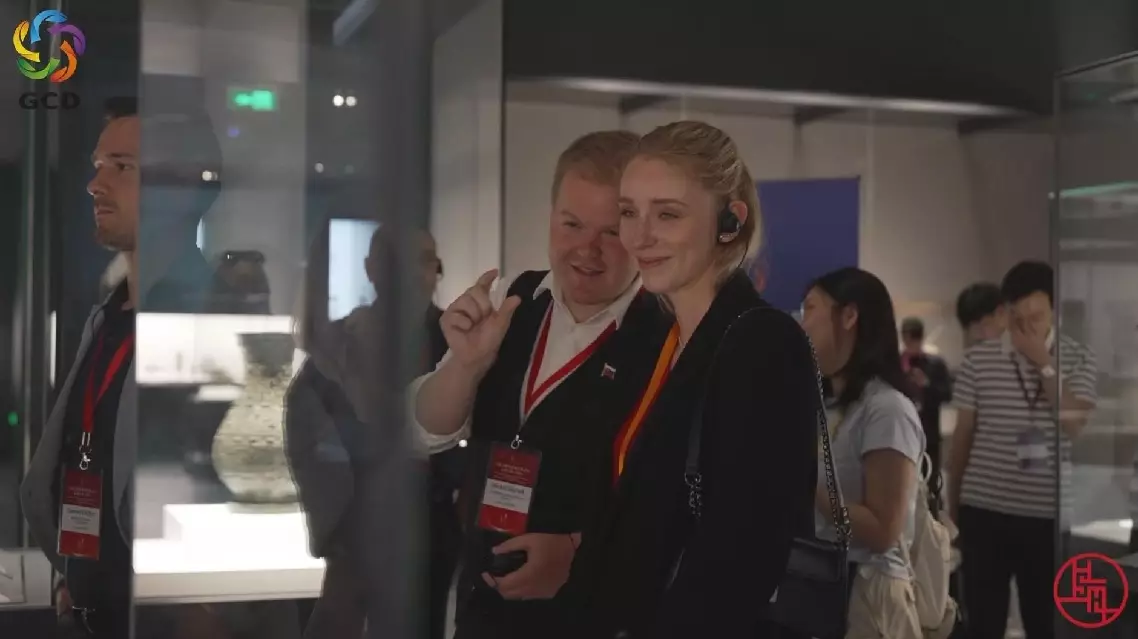
Global Civilizations Dialogue delegations visit Shanghai for firsthand insight into culture, innovation