Skip to Content Facebook Feature Image

Texas leads nation in flood deaths due to geography, size and population

News

Texas leads nation in flood deaths due to geography, size and population
News

News

Texas leads nation in flood deaths due to geography, size and population

2025-07-12 21:08 Last Updated At:21:20

Even before the Central Texas floods that killed more than 100 people, the state was by far the leader in U.S. flood deaths due partly to geography that can funnel rainwater into deadly deluges, according to a study spanning decades.

From 1959 to 2019, 1,069 people died in Texas in flooding, which is nearly one-fifth of the total 5,724 flood fatalities in the Lower 48 states in that time, according to a 2021 study in the journal Water. That's about 370 more than the next closest state, Louisiana.

More Images
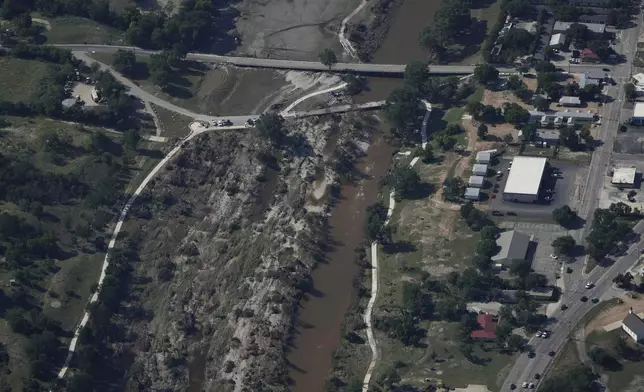
Water flows through the Guadalupe River on Tuesday, July 8, 2025, after a flash flood swept through the area in Kerrville, Texas. (AP Photo/Ashley Landis)
Water flows through the Guadalupe River on Tuesday, July 8, 2025, after a flash flood swept through the area in Kerrville, Texas. (AP Photo/Ashley Landis)

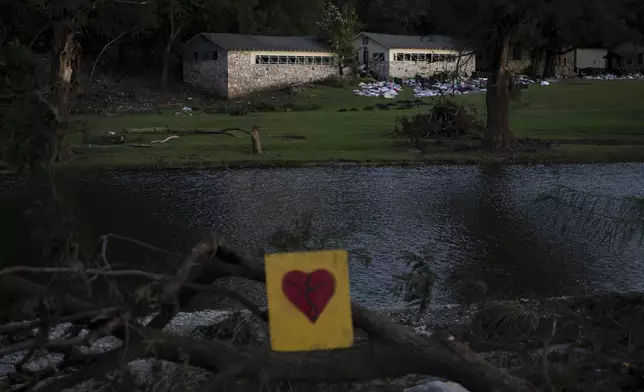
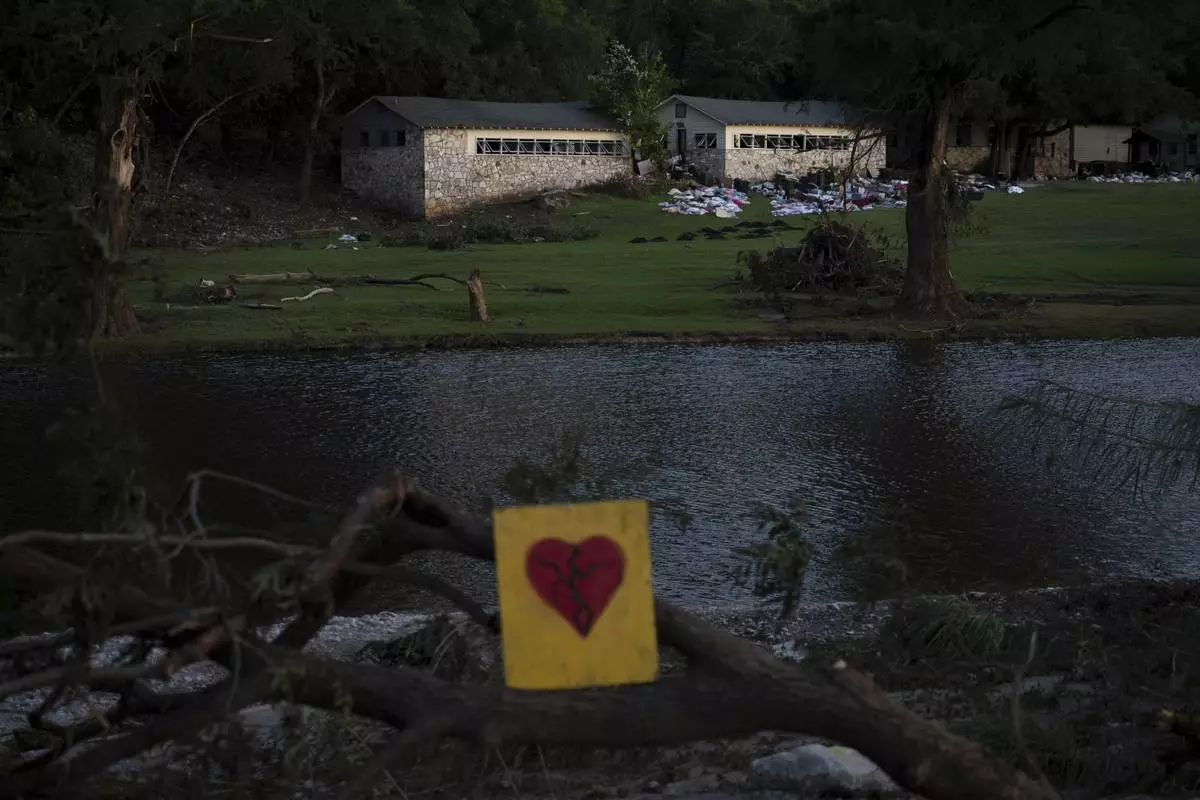
A broken heart sign is displayed near Camp Mystic on Tuesday, July 8, 2025, after a flash flood swept through the area in Hunt, Texas. (AP Photo/Eli Hartman)
A broken heart sign is displayed near Camp Mystic on Tuesday, July 8, 2025, after a flash flood swept through the area in Hunt, Texas. (AP Photo/Eli Hartman)

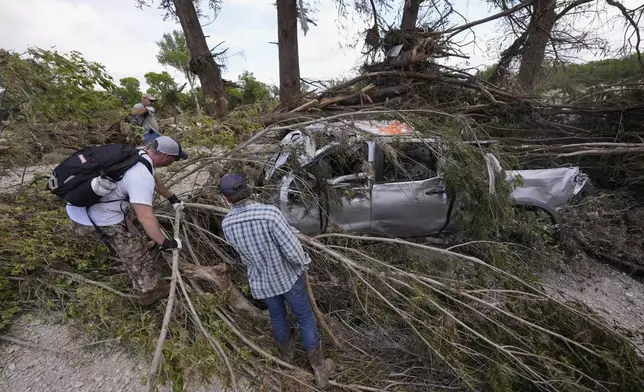
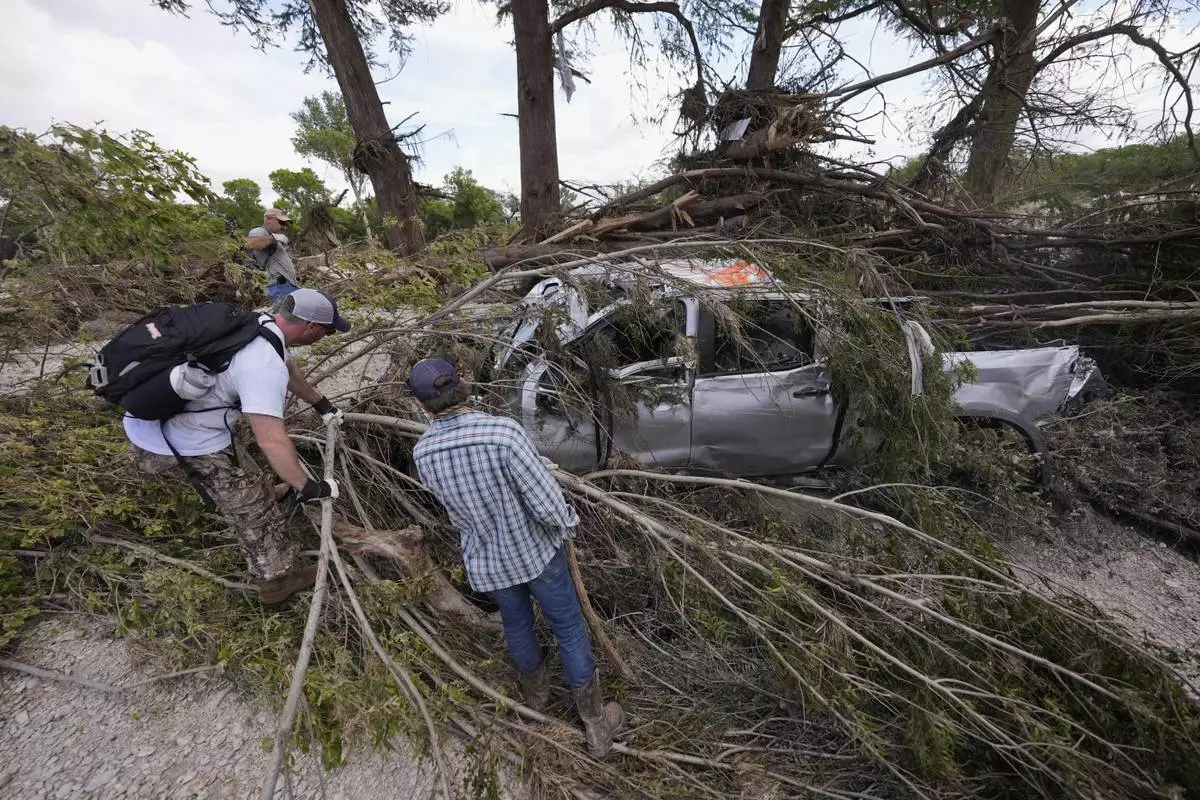
Kevin Scott, Danny LeBourgeois and Lincoln Edwards search for Aiden Heartfield, who went camping with friends and is missing, around a damaged truck and branches along the Guadalupe River after flooding in Kerrville, Texas on Wednesday , July 9, 2025. (AP Photo/Gerald Herbert)
Kevin Scott, Danny LeBourgeois and Lincoln Edwards search for Aiden Heartfield, who went camping with friends and is missing, around a damaged truck and branches along the Guadalupe River after flooding in Kerrville, Texas on Wednesday , July 9, 2025. (AP Photo/Gerald Herbert)

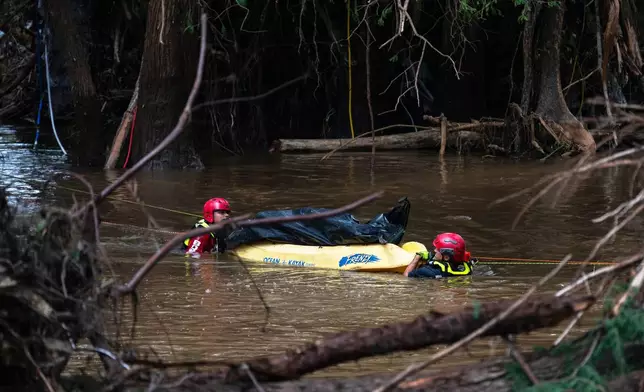
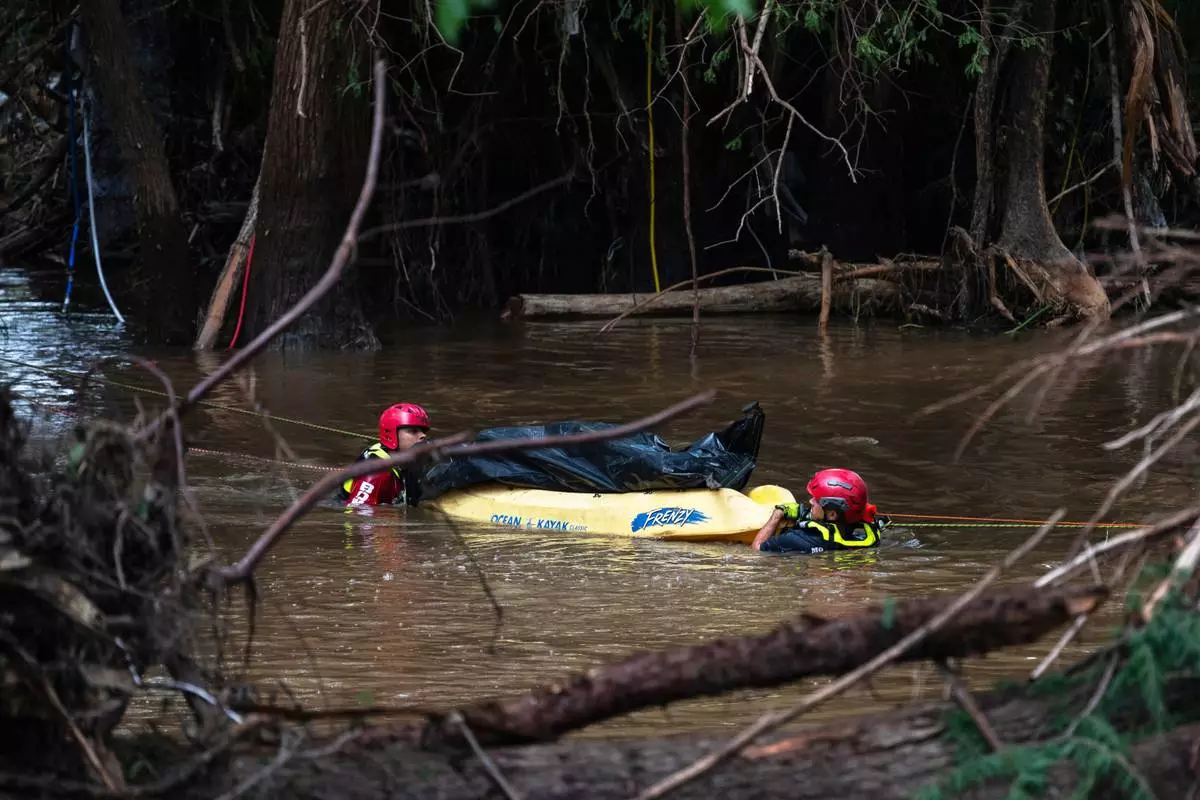
Firefighters from Ciudad Acuña, Mexico, transport a recovered body on the flooded Guadalupe River days after a flash flood swept through the area, Monday, July 7, 2025, in Ingram, Texas. (AP Photo/Eli Hartman)
Firefighters from Ciudad Acuña, Mexico, transport a recovered body on the flooded Guadalupe River days after a flash flood swept through the area, Monday, July 7, 2025, in Ingram, Texas. (AP Photo/Eli Hartman)

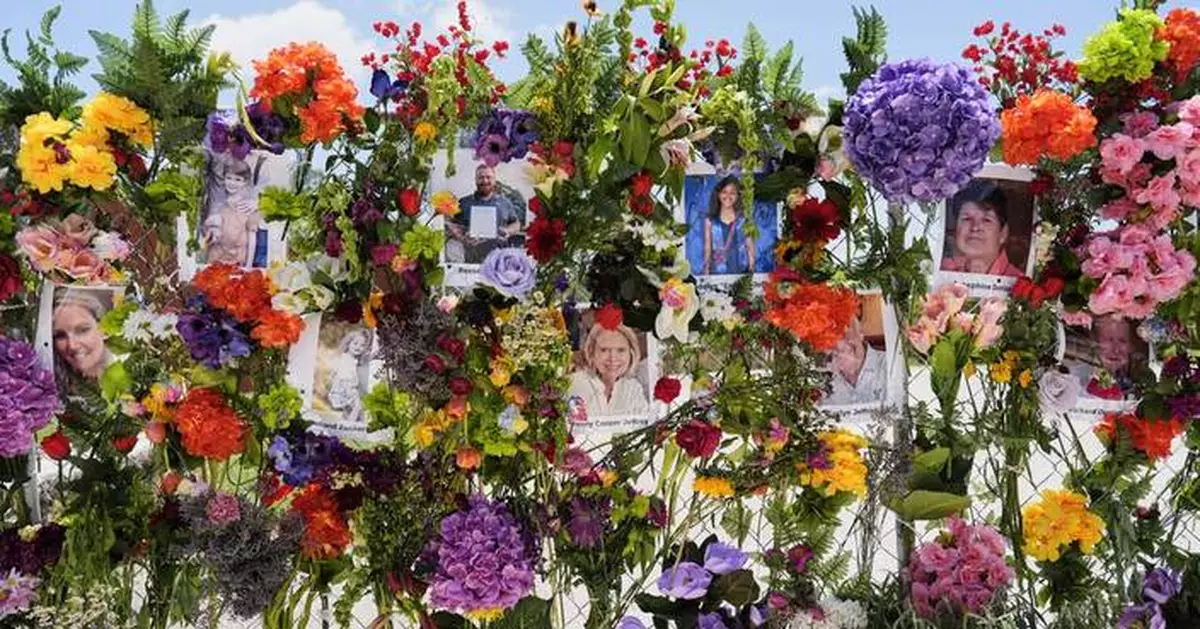
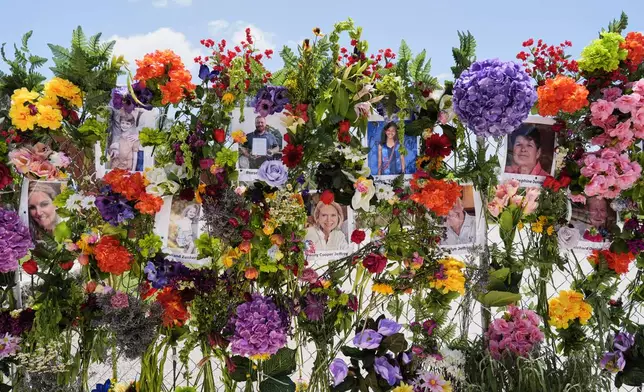
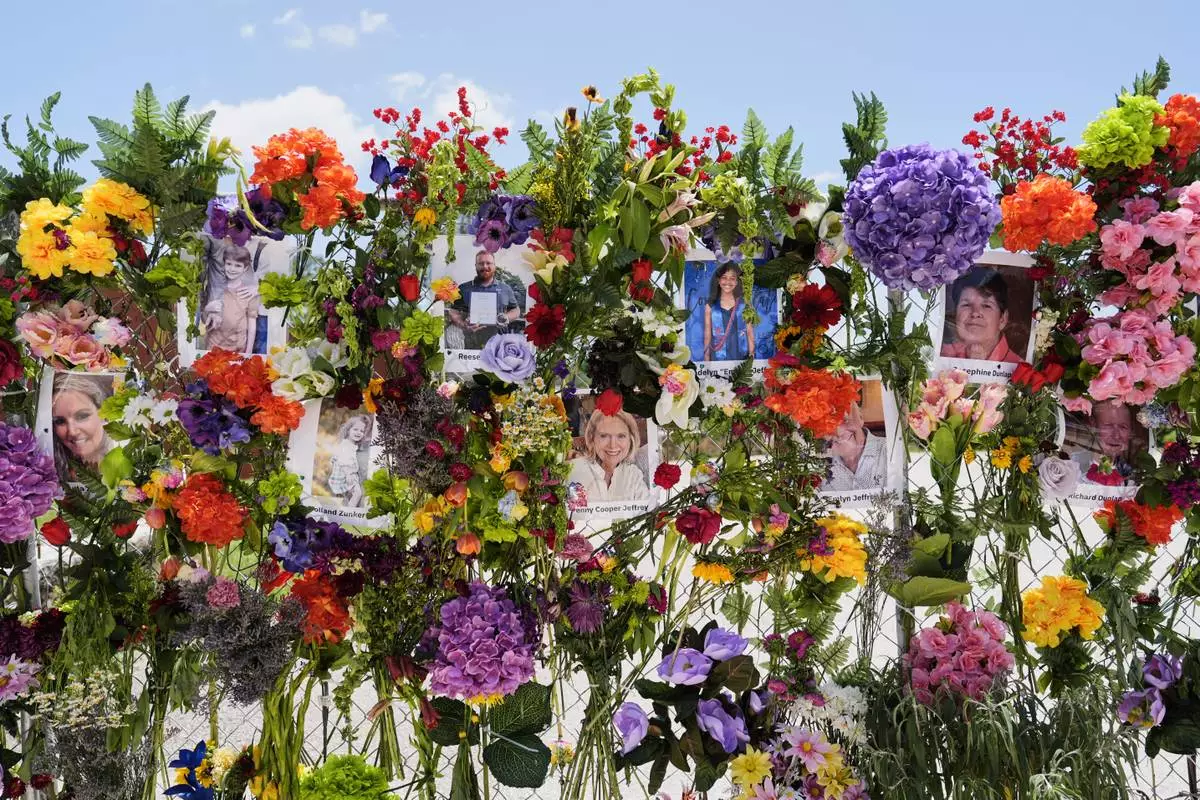
Photographs of flood victims are displayed on a memorial wall in Kerrville, Texas, Thursday, July 10, 2025. (AP Photo/Ashley Landis)

Photographs of flood victims are displayed on a memorial wall in Kerrville, Texas, Thursday, July 10, 2025. (AP Photo/Ashley Landis)

Flooding is the second leading weather cause of death in the country, after heat, both in 2024 and the last 30 years, averaging 145 deaths a year in the last decade, according to the National Oceanic and Atmospheric Administration.

Other floods have turned deadly this year: Last month in San Antonio, 13 people died including 11 people who drove into water thinking they could get through, according to study author Hatim Sharif, a professor of civil and environmental engineering at the University of Texas at San Antonio who studies why people die in floods.

For several years Sharif has urged state and local officials to integrate better emergency action programs to use flood forecasts and save lives by alerting people and closing off vulnerable intersections where roads and water meet.

“I think in Kerr County, if they had an integrated warning system that uses rainfall forecasts to forecast real-time impacts on the ground, that could have saved many lives and could have also helped emergency crews to know which location would be flooded, which roads would be impassable,” Sharif said. “They could have taken action.”

Texas has so many deaths because of its geography, population and size, experts say. The area where the most recent deadly floods struck is known as flash flood alley because of hills and valleys.

“Steep, hilly terrain produces rapid runoff and quick stream rises, since the water will travel downhill at greater speed into rivers and over land,” said Kate Abshire, lead of NOAA’s flash flood services. “Rocky terrain can exacerbate the development of flash floods and raging waters, since rocks and clay soils do not allow as much water to infiltrate the ground.”

“Urban areas are especially prone to flash floods due to the large amounts of concrete and asphalt surfaces that do not allow water to penetrate into the soil easily,” she said.

Along with those hills, “you’ve got the Gulf of Mexico right there, the largest body of hot water in the entire North Atlantic most of the time,” said Jeff Masters a former government meteorologist who co-founded Weather Underground and now is at Yale Climate Connections. “So you’ve got a ready source of moisture for creating floods.”

Historically, many of the deaths were preventable across the nation and in Texas alike, according to experts. Masters said nothing illustrates that better than one statistic in Sharif's study: 86% of flood deaths since 1959 were people driving or walking into floodwaters.

Nearly 58% of the deaths were people in cars and trucks. It's a problem especially in Texas because of hills and low lying areas that have more than 3,000 places where roads cross streams and waterways without bridges or culverts, Sharif said.

“People in Texas, they like trucks and SUVs, especially trucks,” Sharif said. “They think trucks are tough, and that is I think a factor. So sometimes they use their big car or SUV or truck, and they say they can beat the flood on the street ... especially at night. They underestimate the depth and velocity of water.”

Abshire said that not only do people ignore the weather service's safety mantra, “Turn around, don’t drown,” but studies found that a number of these fatalities occur when people actively drive around barricades and barriers blocking flooded roads.

The latest Texas Hill Country flooding was less typical because so many of the deaths were in a camp where the water overtook the victims, not people going into the water, Sharif said. Only about 8% of flood deaths in the last 60 years happened in permanent homes, mobile homes or camping, according to the study.

The July 4th floods happened at night, a common time for flood deaths. More than half of deaths since 1959 have occurred at night, when it's dark and people can't see how much flooding there is or are not awake for the warnings, Sharif's study found.

As far as demographics, about 62% of U.S. flood deaths were male, according to the study.

“Risk-taking behavior is usually associated with men,” Sharif said, adding that it's why most fatal victims of car crashes are male.

The Associated Press’ climate and environmental coverage receives financial support from multiple private foundations. AP is solely responsible for all content. Find AP’s standards for working with philanthropies, a list of supporters and funded coverage areas at AP.org.
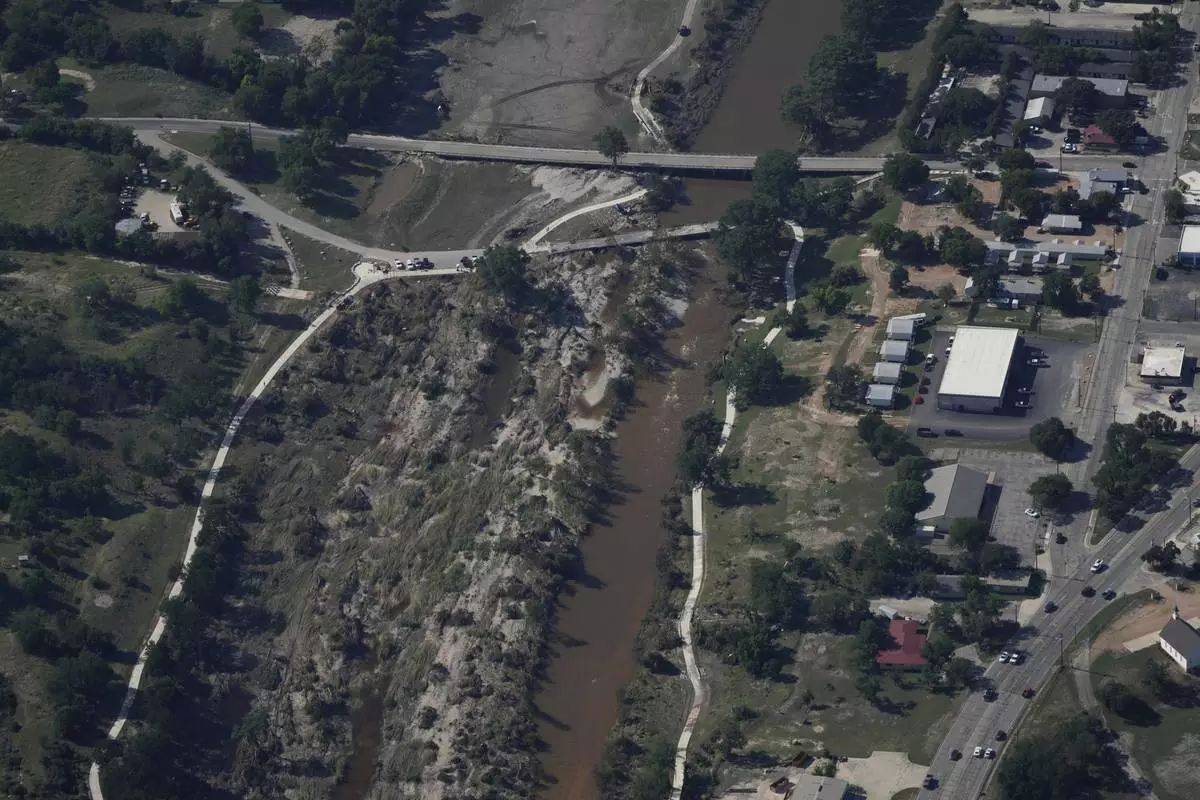
Water flows through the Guadalupe River on Tuesday, July 8, 2025, after a flash flood swept through the area in Kerrville, Texas. (AP Photo/Ashley Landis)
Water flows through the Guadalupe River on Tuesday, July 8, 2025, after a flash flood swept through the area in Kerrville, Texas. (AP Photo/Ashley Landis)

A broken heart sign is displayed near Camp Mystic on Tuesday, July 8, 2025, after a flash flood swept through the area in Hunt, Texas. (AP Photo/Eli Hartman)
A broken heart sign is displayed near Camp Mystic on Tuesday, July 8, 2025, after a flash flood swept through the area in Hunt, Texas. (AP Photo/Eli Hartman)

Kevin Scott, Danny LeBourgeois and Lincoln Edwards search for Aiden Heartfield, who went camping with friends and is missing, around a damaged truck and branches along the Guadalupe River after flooding in Kerrville, Texas on Wednesday , July 9, 2025. (AP Photo/Gerald Herbert)
Kevin Scott, Danny LeBourgeois and Lincoln Edwards search for Aiden Heartfield, who went camping with friends and is missing, around a damaged truck and branches along the Guadalupe River after flooding in Kerrville, Texas on Wednesday , July 9, 2025. (AP Photo/Gerald Herbert)

Firefighters from Ciudad Acuña, Mexico, transport a recovered body on the flooded Guadalupe River days after a flash flood swept through the area, Monday, July 7, 2025, in Ingram, Texas. (AP Photo/Eli Hartman)
Firefighters from Ciudad Acuña, Mexico, transport a recovered body on the flooded Guadalupe River days after a flash flood swept through the area, Monday, July 7, 2025, in Ingram, Texas. (AP Photo/Eli Hartman)

Photographs of flood victims are displayed on a memorial wall in Kerrville, Texas, Thursday, July 10, 2025. (AP Photo/Ashley Landis)


Photographs of flood victims are displayed on a memorial wall in Kerrville, Texas, Thursday, July 10, 2025. (AP Photo/Ashley Landis)
Stocks rose on Wall Street in afternoon trading Friday, adding to the all-time highs they set a day earlier.

The S&P 500 rose 0.3% Friday. The index is coming off six gains in a row and is headed for a ninth straight winning week, which would be the longest such streak since 2023.

The Dow Jones Industrial Average rose 349 points, or 0.7%, as of 1:18 p.m. Eastern. The Nasdaq composite rose 0.3%. Every major index is on track for records and to close out May with solid gains.

Markets in Europe and Asia mostly rose.

Technology stocks lead the gains. Dell Technologies surged 28.7% after after delivering profits that blew past expectations. The company also raised its outlook, citing powerful demand for AI computing.

Microsoft rose 3.9% and Broadcom rose 2.9%. Big technology stocks have been behind much of the market’s record-breaking streak. Their pricey stock values give them more influence in directing the market higher or lower. In May alone, technology stocks within the S&P 500 rose more than 15%, while most of the sectors in the benchmark index actually lost ground.

“The rally has been largely tech-led and supported by resilient earnings, but the key question is whether it can be sustained,” wrote Angelo Kourkafas, senior global strategist at Edward Jones, in a research note.

Wall Street has been gaining ground against worries that the U.S. war with Iran is worsening inflation and jeopardizing economic growth.

The U.S. and Iran are reportedly working toward a deal to extend a ceasefire. That eased pressure on oil prices. Brent crude, the international standard, fell 2.1% to $90.78 a barrel. It is still well above the $70 per barrel level in late February before the war began. Benchmark U.S. crude fell 2.3% to $86.89 per barrel.

Treasury yields held relatively steady as oil prices fell. The yield on the 10-year Treasury fell to 4.44% from 4.45% from late Thursday.

High oil prices remain a key concern for Wall Street. The war has stifled the flow of oil shipments through the Strait of Hormuz. Roughly a fifth of the world’s oil and natural gas is shipped through the waterway.

That has pushed up prices for gasoline and a wide range of goods, feeding inflation and squeezing consumers and businesses. Prices were already rising before the war began from the ongoing impact of tariffs.

Several reports this week reflected inflation’s rise and impact on consumers. A measure of inflation preferred by the Federal Reserve accelerated in April to its highest level in three years. Consumer confidence is slipping amid the squeeze from rising inflation.

Wall Street’s worries about rising inflation have been somewhat muted by the latest round of corporate profit reports. Companies in the S&P 500 have reported profit growth of 28% overall for the most recent quarter, according to FactSet. The overwhelming majority of companies in the S&P 500 have already reported their latest results. That could mean investors’ focus may shift back toward inflation, consumers’ behavior and the Fed’s path ahead for interest rates.

The Fed has been holding its benchmark interest rate steady as it closely watches rising inflation. It is expected to continue holding rates steady at its next meeting in June and through the year, according to CME’s FedWatch tool. Cutting interest rates could help lower borrowing costs and give the economy a jolt, but it could also worsen inflation at time when prices are already high and rising.

Trader James Lamb works on the floor of the New York Stock Exchange, Friday, May 22, 2026. (AP Photo/Richard Drew)

Trader James Lamb works on the floor of the New York Stock Exchange, Friday, May 22, 2026. (AP Photo/Richard Drew)

Trader Edward Curran, left, and specialist Meric Greenbaum, center, work on the floor of the New York Stock Exchange, Friday, May 22, 2026. (AP Photo/Richard Drew)

Trader Edward Curran, left, and specialist Meric Greenbaum, center, work on the floor of the New York Stock Exchange, Friday, May 22, 2026. (AP Photo/Richard Drew)

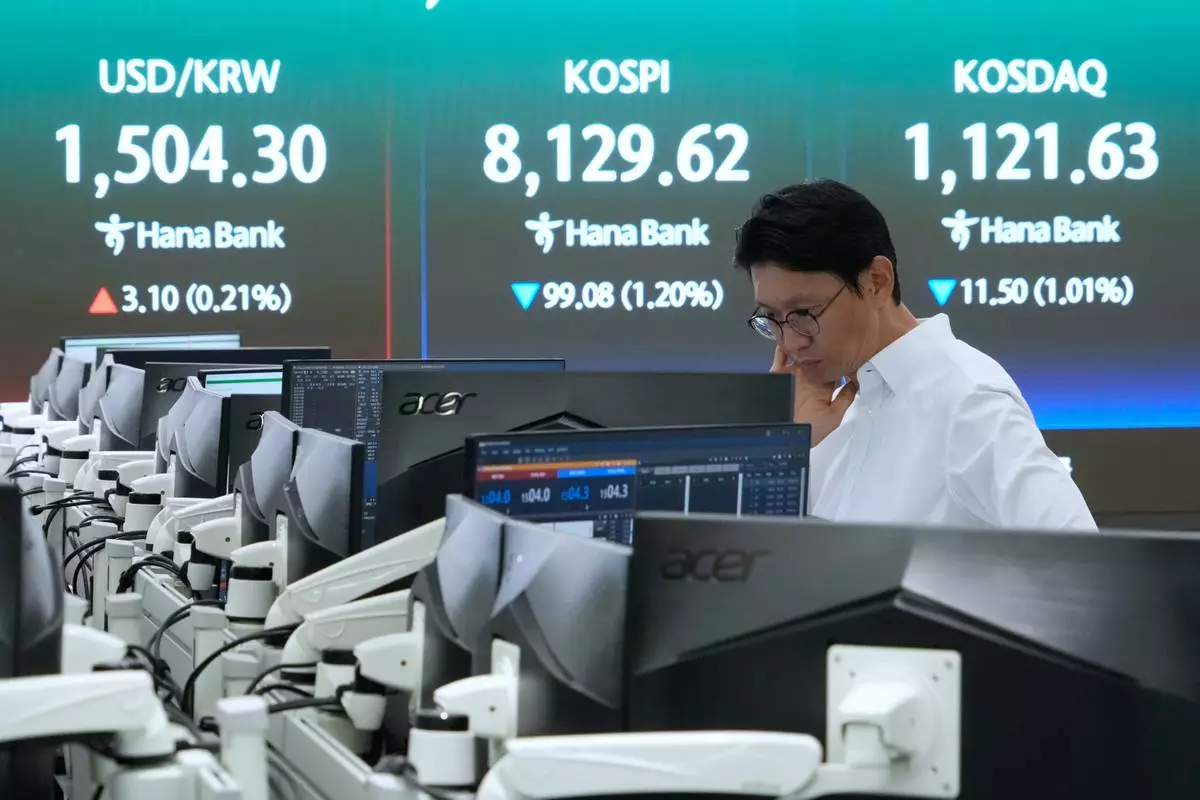
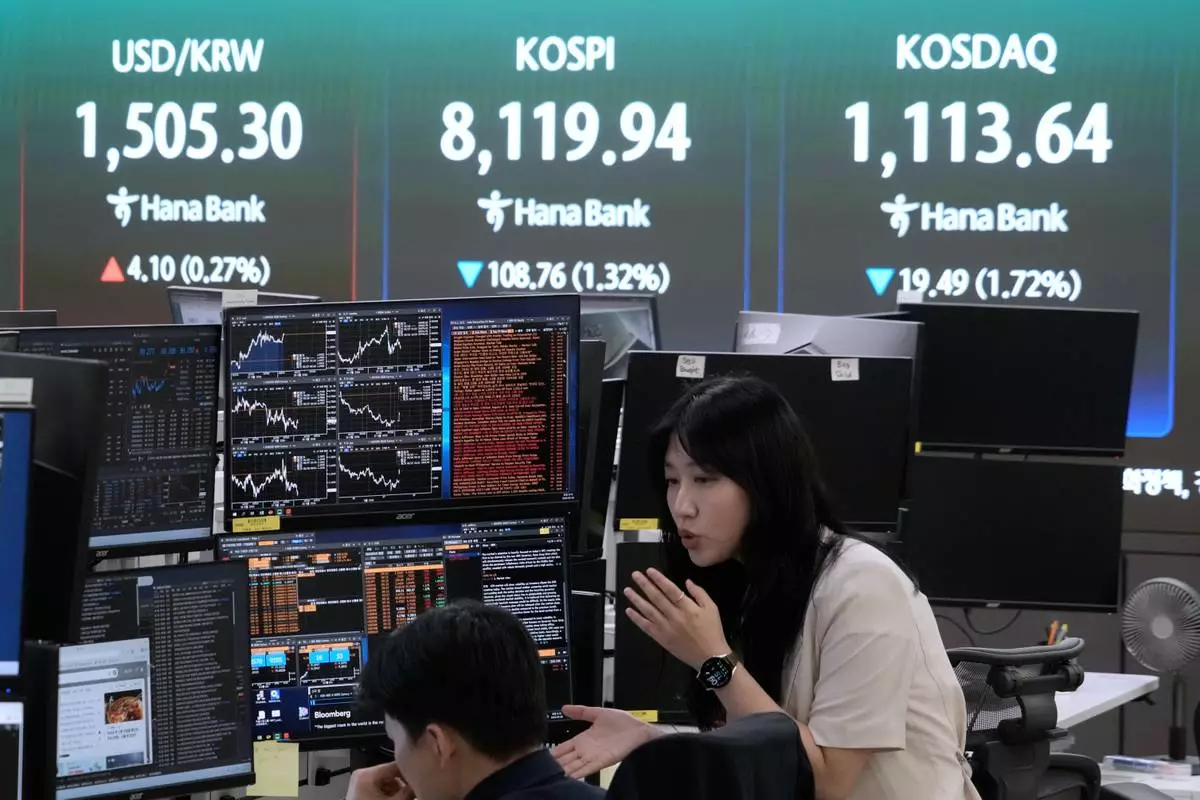
Currency traders work near a screen showing the Korea Composite Stock Price Index (KOSPI), top center, and the foreign exchange rate between U.S. dollar and South Korean won, top left, at the foreign exchange dealing room of the Hana Bank headquarters in Seoul, South Korea, Thursday, May 28, 2026. (AP Photo/Ahn Young-joon)

Currency traders work near a screen showing the Korea Composite Stock Price Index (KOSPI), top center, and the foreign exchange rate between U.S. dollar and South Korean won, top left, at the foreign exchange dealing room of the Hana Bank headquarters in Seoul, South Korea, Thursday, May 28, 2026. (AP Photo/Ahn Young-joon)

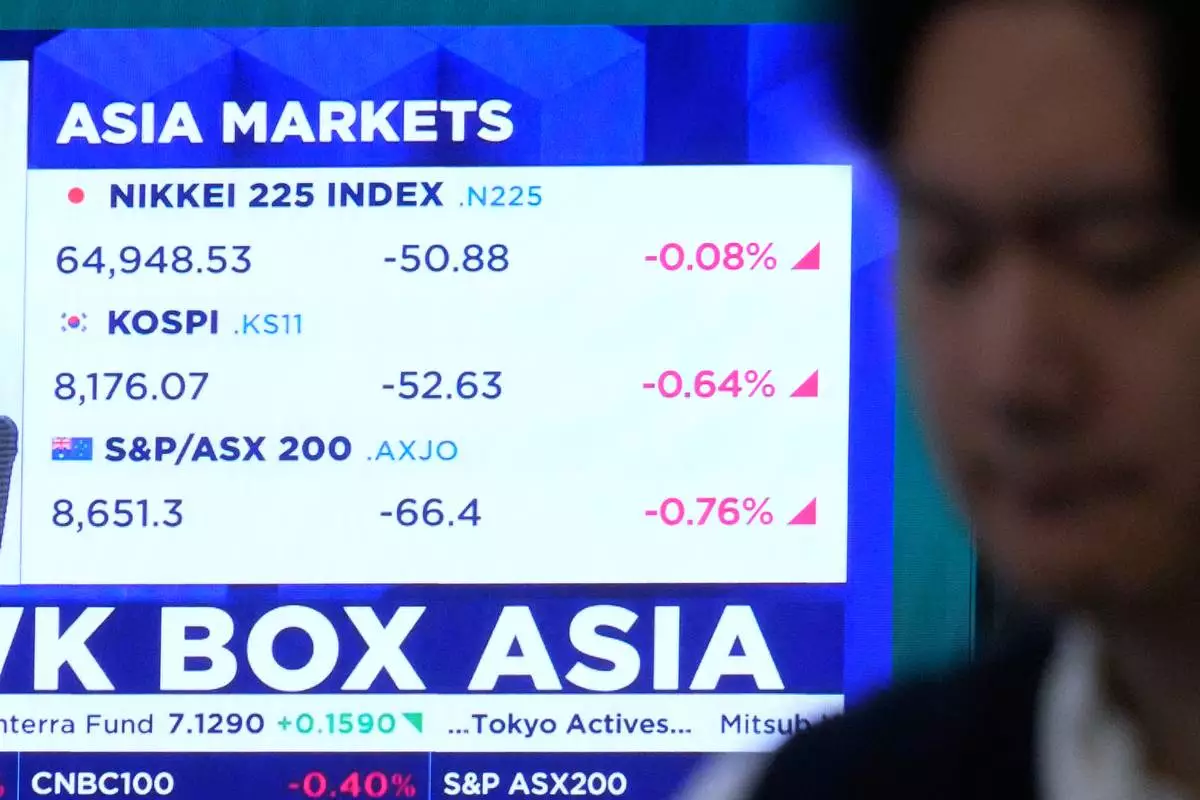
Asia markets index of Japan, South Korea and Australia is seen on a screen at the foreign exchange dealing room of the Hana Bank headquarters in Seoul, South Korea, Thursday, May 28, 2026. (AP Photo/Ahn Young-joon)

Asia markets index of Japan, South Korea and Australia is seen on a screen at the foreign exchange dealing room of the Hana Bank headquarters in Seoul, South Korea, Thursday, May 28, 2026. (AP Photo/Ahn Young-joon)

A currency trader watches monitors near a screen showing the Korea Composite Stock Price Index (KOSPI), top center, and the foreign exchange rate between U.S. dollar and South Korean won, top left, at the foreign exchange dealing room of the Hana Bank headquarters in Seoul, South Korea, Thursday, May 28, 2026. (AP Photo/Ahn Young-joon)

A currency trader watches monitors near a screen showing the Korea Composite Stock Price Index (KOSPI), top center, and the foreign exchange rate between U.S. dollar and South Korean won, top left, at the foreign exchange dealing room of the Hana Bank headquarters in Seoul, South Korea, Thursday, May 28, 2026. (AP Photo/Ahn Young-joon)

Trader Robert Arciero works on the floor of the New York Stock Exchange, Friday, May 22, 2026. (AP Photo/Richard Drew)

Trader Robert Arciero works on the floor of the New York Stock Exchange, Friday, May 22, 2026. (AP Photo/Richard Drew)

Recommended Articles