WASHINGTON (AP) — A federal judge Thursday cleared the way for a New York offshore wind project to resume construction, a victory for the developer who said a Trump administration order to pause it would likely kill the project in a matter of days.
District Judge Carl J. Nichols, an appointee of President Donald Trump, ruled construction on the Empire Wind project could go forward while he considers the merits of the government’s order to suspend the project. He faulted the government for not responding to key points in Empire Wind’s court filings, including the contention that the administration violated proper procedure.
Click to Gallery
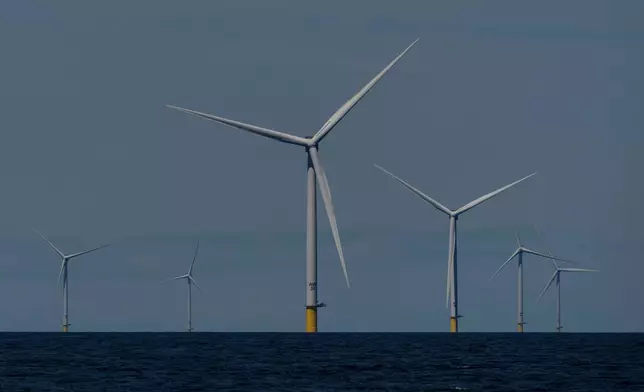
FILE - Wind turbines operate at Vineyard Wind 1 offshore wind farm off the coast of Massachusetts, July 19, 2025. (AP Photo/Carolyn Kaster, File)
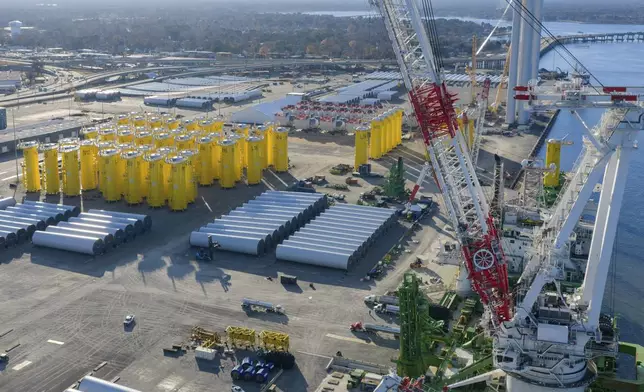
FILE - Wind turbine bases, generators and blades sit along with support ships at The Portsmouth Marine terminal that is the staging area for Dominion Energy Virginia, which is developing Coastal Virginia Offshore Wind, Dec. 22, 2025, in Portsmouth, Va. (AP Photo/Steve Helber, File)
FILE - A sign for the company Equinor is displayed on Oct. 28, 2020, in Fornebu, Norway. (Håkon Mosvold Larsen/NTB Scanpix via AP, File)
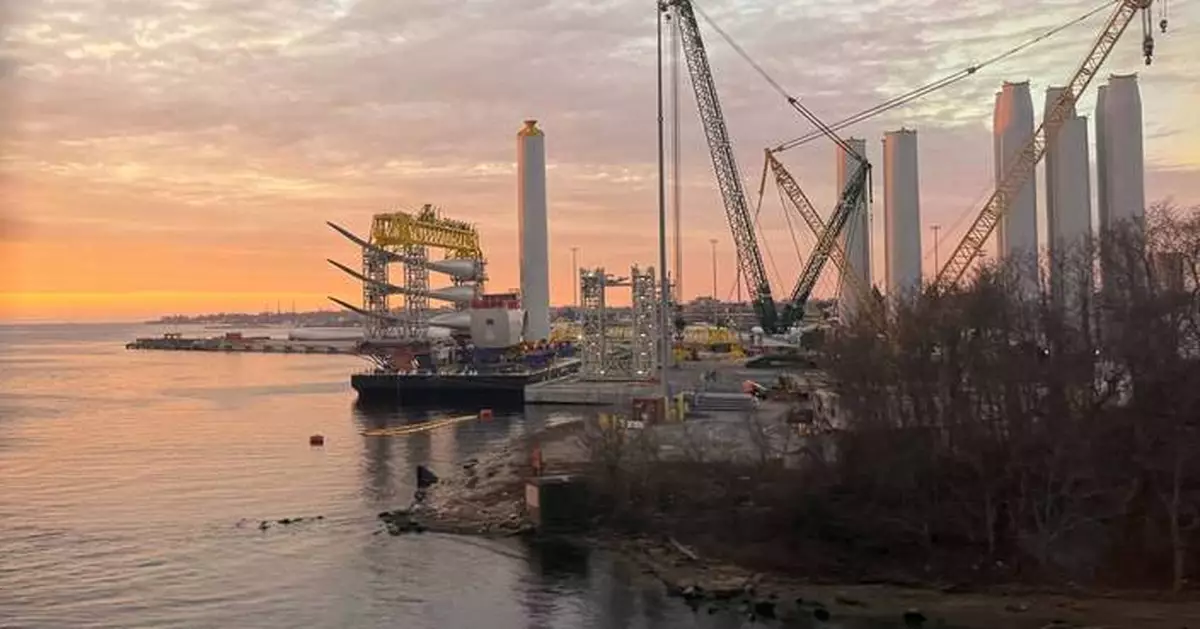
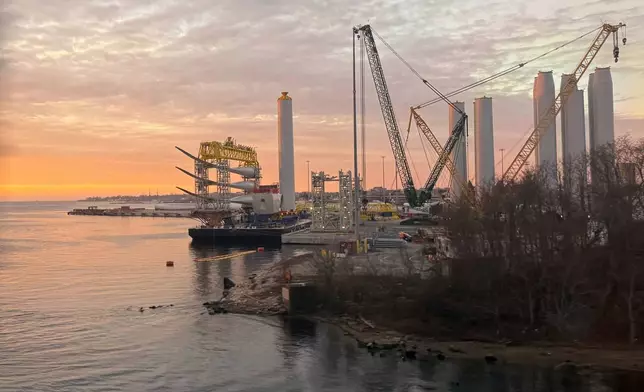
Blades and turbine bases for offshore wind sit at a staging area at New London State Pier, Wednesday, Jan. 14, 2026, in New London, Conn. (AP Photo/Matt O'Brien)
Norwegian company Equinor owns Empire Wind. Spokesperson David Schoetz said they welcome the court's decision and will continue to work in collaboration with authorities. It’s the second developer to prevail in court against the administration this week.
The Trump administration froze five big offshore wind projects on the East Coast days before Christmas, citing national security concerns. Trump has targeted offshore wind from his first days back in the White House, most recently calling wind farms “losers” that lose money, destroy the landscape and kill birds.
Developers and states sued seeking to block the order. Large, ocean-based wind farms are the linchpin of plans to shift to renewable energy in East Coast states that have limited land for onshore wind turbines or solar arrays.
New York Gov. Kathy Hochul applauded the court decision, telling reporters the projects had been “stopped under the bogus pretense of national security.”
“When I heard this I said one thing: I’m the governor of New York, if there is a national security threat off the coast of New York, you need to tell me what it is. I want a briefing right now. Well, lo and behold, they had no answer,” she said.
On Monday, a judge ruled that the Danish energy company Orsted could resume its project to serve Rhode Island and Connecticut. Senior Judge Royce Lamberth said the government did not sufficiently explain the need for a complete stop to construction. That wind farm, called Revolution Wind, is nearly complete. It’s expected to meet roughly 20% of the electricity needs in Rhode Island, the smallest state, and about 5% of Connecticut’s electricity needs.
Orsted is also suing over the pause of its Sunrise Wind project for New York, with a hearing still to be set. Dominion Energy Virginia, which is developing Coastal Virginia Offshore Wind, plans to ask a judge Friday to block the administration’s order so it can resume construction, too.
Trump has also dismissed offshore wind developments as ugly, but the Empire project is about 14 miles (22.5 kilometers) offshore and the Sunrise project is about 30 miles (48 kilometers) offshore.
The fifth paused project is Vineyard Wind, under construction in Massachusetts. Vineyard Wind LLC, a joint venture between Avangrid and Copenhagen Infrastructure Partners, joined the rest of the developers in challenging the administration on Thursday. They filed a complaint in District Court in Boston.
In contrast to the halted action in the U.S., the global offshore wind market is growing, with China leading the world in new installations. Nearly all of the new electricity added to the grid in 2024 was renewable. The British government said Wednesday it secured a record 8.4 gigawatts of offshore wind in Europe’s largest offshore wind auction, enough clean electricity to power more than 12 million homes.
Robin Shaffer, president of Protect Our Coast New Jersey, said the Trump administration was right to stop construction on national security grounds. He urged officials to immediately appeal the adverse rulings and seek to halt all work pending appellate review. Opponents of offshore wind projects are particularly vocal and well-organized in New Jersey.
Empire Wind is 60% complete and designed to power more than 500,000 homes. Equinor said the project was in jeopardy due to the limited availability of specialized vessels, as well as heavy financial losses.
During a hearing Wednesday, Judge Nichols said the government’s main security concern seemed to be over operation of the wind turbines, not construction, although the government pushed back on that contention.
In presenting the government’s case, Associate Attorney General Stanley Woodward, Jr. was skeptical of the perfect storm of horrible events that Empire Wind said would derail their entire project if construction didn’t resume. He disagreed with the contention that the government’s main concern was over operation.
“I don’t see how you can make this distinction,” Woodward said. He likened it to a nuclear project being built that presented a national security risk. The government would oppose it being built, and it turning on.
Molly Morris, Equinor’s senior vice president overseeing Empire Wind, said in an interview that the company wants to build this project and deliver a major, essential new source of power for New York.
McDermott reported from Providence, Rhode Island. Associated Press writer Anthony Izaguirre contributed to this report from Albany, New York.
The Associated Press’ climate and environmental coverage receives financial support from multiple private foundations. AP is solely responsible for all content. Find AP’s standards for working with philanthropies, a list of supporters and funded coverage areas at AP.org.
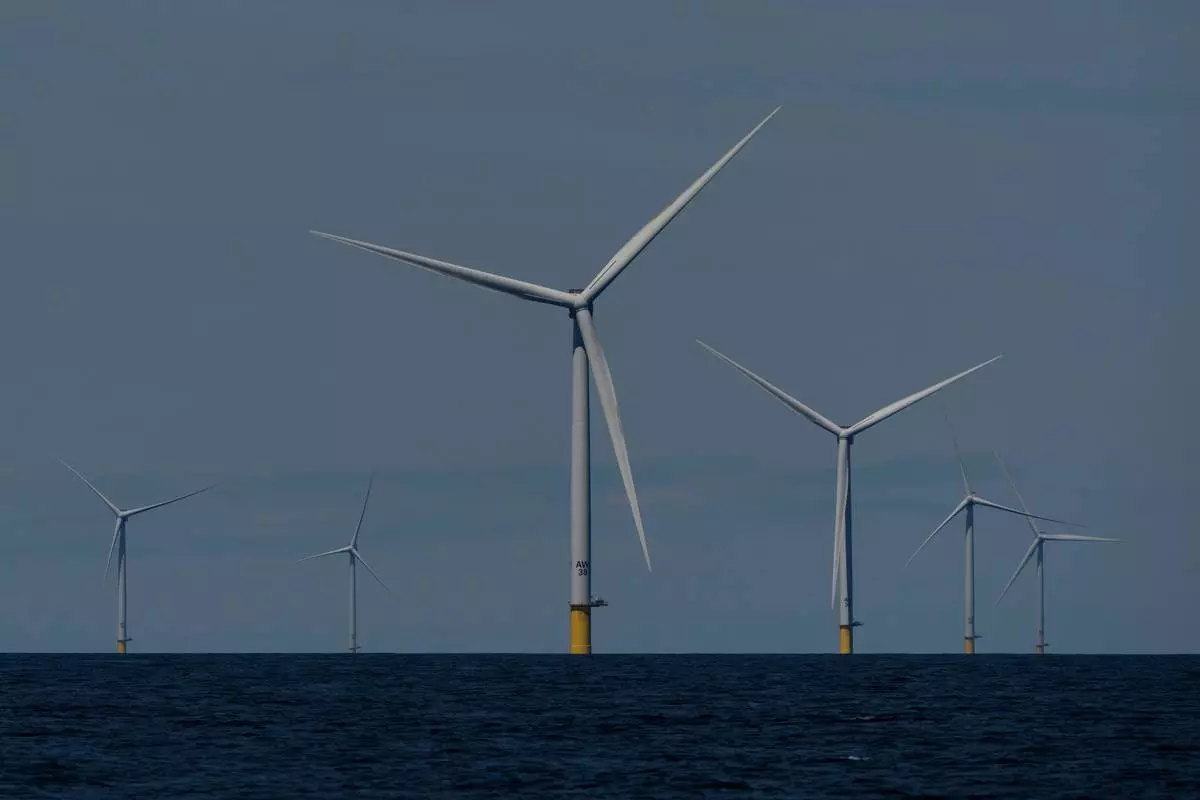
FILE - Wind turbines operate at Vineyard Wind 1 offshore wind farm off the coast of Massachusetts, July 19, 2025. (AP Photo/Carolyn Kaster, File)
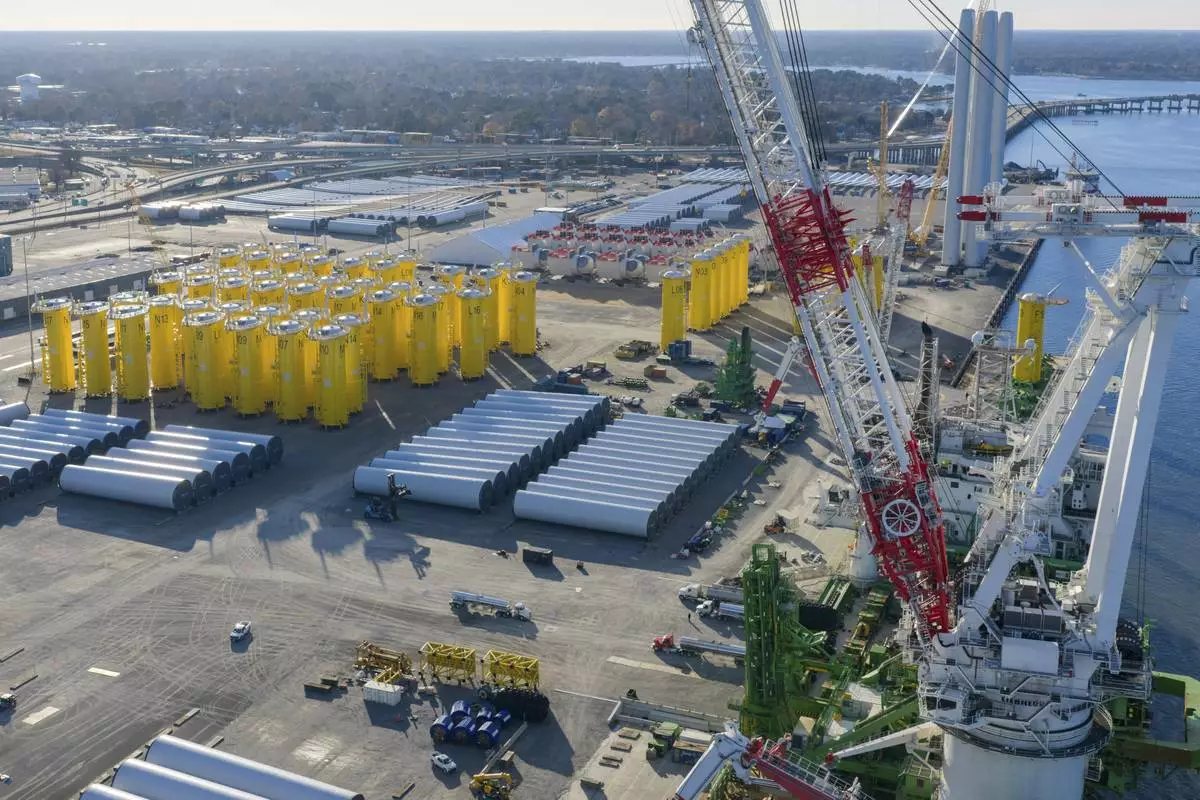
FILE - Wind turbine bases, generators and blades sit along with support ships at The Portsmouth Marine terminal that is the staging area for Dominion Energy Virginia, which is developing Coastal Virginia Offshore Wind, Dec. 22, 2025, in Portsmouth, Va. (AP Photo/Steve Helber, File)

FILE - A sign for the company Equinor is displayed on Oct. 28, 2020, in Fornebu, Norway. (Håkon Mosvold Larsen/NTB Scanpix via AP, File)
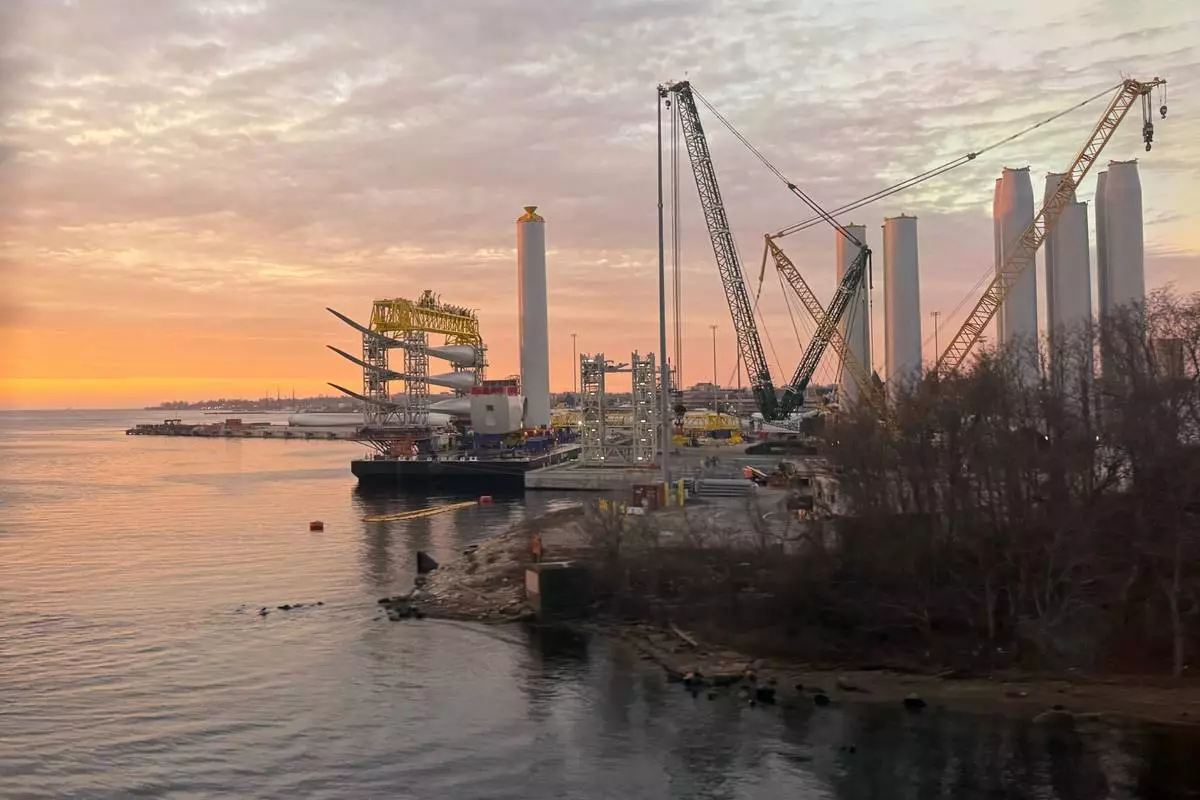
Blades and turbine bases for offshore wind sit at a staging area at New London State Pier, Wednesday, Jan. 14, 2026, in New London, Conn. (AP Photo/Matt O'Brien)
AUSTIN, Texas (AP) — James Talarico barely mentioned Donald Trump when he finally got to give his victory speech on Wednesday night as Democrats' nominee for U.S. Senate in Texas.
But the 36-year-old state lawmaker is now a front man for the left's opposition to Trump, not just in his own state but around the country. With his victory over U.S. Rep. Jasmine Crockett, the state lawmaker from Austin will test whether a smiling message of unity and change is enough to answer voters’ frustrations amid discord at home and now a war abroad.
“We're done being divided. We're done being played,” Talarico said, several times invoking his Christian faith and promising a “politics of love.”
“We're not just trying to win an election. We are trying to fundamentally change our politics,” he said, adding that he's “tired of being told to hate my neighbor.”
Talarico acknowledged that his immediate challenge is consolidating support from Crockett's supporters who flocked to the congresswoman's unapologetically pugilistic approach to Trump and Republicans. He told them, “I hope to earn your trust."
Crockett conceded to Talarico on Wednesday morning, saying that Texas “must remain united because this is bigger than any one person.”
Talarico also got an endorsement and a fundraising email blast from former Vice President Kamala Harris, who previously backed Crockett in the primary.
Talarico will need all the help he can get in a Republican-dominated state where Democrats have gone three decades without winning a statewide race. He will face either U.S. Sen. John Cornyn or state Attorney General Ken Paxton, who advanced to a Republican runoff on Tuesday.
Conventional political wisdom has Talarico as the stronger Democratic candidate for November, especially if Republicans nominate Paxton, a conservative firebrand who has weathered allegations of corruption and infidelity over the years.
Although Democrats are often choosing between moderate and progressive candidates in primaries, they faced a largely stylistic choice in Texas.
Talarico, 36, is a Presbyterian seminarian and rarely raises his voice. Crockett, 44, is an unapologetic political brawler who hammers Trump and other Republicans with acidic flourish.
But Talarico’s broader argument is one that he could have made regardless of whether Trump was in the White House. He regularly assails the rise in Christian nationalism. A former teacher, he advocates for public education. And he's said often, and again Wednesday, that the country’s fundamental divide is not partisan but “top vs. bottom.”
He's not running, he said, against Cornyn, Paxton or “any one politician” but against “the billionaire mega donors and their corrupt political system.”
Lea Downey Gallatin, 40, an Austin resident who met Talarico when they interned together for a congressman, described him as “a serious advocate for the disenfranchised and a serious policymaker.”
Talarico campaigned on the theory that he could pull new people into the party's tent, while Crockett promised she could increase turnout within Democrats' base.
“If you hate politics and you never voted before, you have a home in this campaign,” he said. He also reached out to erstwhile Trump voters who are “fed up with the extremism and the corruption in our government.”
In the closing stretch of the primary campaign, Talarico posed for pictures and greeted the singer of a Tejano band playing in a San Antonio neighborhood. Inside his campaign rally that day, Lori Alvarez, a 39-year-old who works for a disaster relief nonprofit, said she supported Talarico because “he really listens to what we need."
"I think he’s going to be able to make change in Washington for us,” said the married mother of three young girls.
Unofficial primary returns showed Talarico with a dominating performance around his home base of Austin, including in mostly white areas. He outpaced Crockett across much of rural and small-town Texas, including in the Rio Grande Valley, where Trump made gains in his 2024 presidential victory among Hispanic voters. Crockett was strongest in metro Houston and Dallas-Fort Worth, including areas with large concentrations of Black voters.
Crockett is Black, and Talarico is white.
A Democratic win in Texas would require stitching together that multiracial and multiethnic coalition, spanning the metro areas and heavily Latino South and West Texas, while limiting Republican margins in whiter rural counties.
In 2018, Democrat Beto O’Rourke came the closest to that mix, losing to Republican Sen. Ted Cruz by about 215,000 votes or about 2.5 percentage points. With both parties holding competitive primaries Tuesday, Democratic primary voters outnumbered Republicans by about 180,000 out of more than 4.4 million — with some ballots still being tallied.
Talarico and other Democrats say enthusiasm is on their side this year. But there were plenty of Democratic Texans who saw Crockett as their champion.
Troy Burrow, a 61-year-old Navy retiree, called her “rugged” and “the only one I see fighting for us.”
He added, “I like how she doesn’t back down from anybody.”
Burrow said some voters probably saw Talarico as more electable because he is more soft-spoken. But, he said, “We’ve got to get into the gutter with these folks, because that’s where they are.”
Talarico, meanwhile, promised to fight in his own way — again invoking his faith.
“Two thousand years ago, when the powerful few at the top hurt those at the bottom, that barefoot rabbi didn't stay in his room and pray,” Talarico said, referencing Jesus and the Biblical story of his anger in the temple. “He walked into the seat of power and flipped over the tables of injustice."
He added that "it's time to start flipping tables.”
Barrow reported from Atlanta, Figueroa from Austin, Texas, and Beaumont from San Antonio. Associated Press writer Maya Sweedler in Washington contributed to this report.
This story has corrected the last name of Texas voter Troy Burrow, from Burroughs.

Texas Democratic Senate candidate Texas state Rep. James Talarico, D-Austin, speaks for the first time since winning the Democratic nomination in Austin, Wednesday, March 4, 2026. (AP Photo/Eric Gay)

Attendees cheer before Texas Democratic Senate candidate Texas state Rep. James Talarico, D-Austin, speaks for the first time since winning the Democratic nomination in Austin, Wednesday, March 4, 2026. (AP Photo/Eric Gay)

Texas Democratic Senate candidate Texas state Rep. James Talarico, D-Austin, waves before speaking for the first time since winning the Democratic nomination in Austin, Wednesday, March 4, 2026. (AP Photo/Eric Gay)

Supporters of Texas state Rep. James Talarico, D-Austin, a Democratic candidate for the U.S. Senate, react as results come in during a primary election watch party Tuesday, March 3, 2026, in Austin, Texas. (AP Photo/Eric Gay)

Texas state Rep. James Talarico, D-Austin, a Democratic candidate for the U.S. Senate, greets supporters at a primary election watch party Tuesday, March 3, 2026, in Austin, Texas. (AP Photo/Eric Gay)

Rep. Jasmine Crockett, D-Texas, a Democratic candidate for U.S. Senate, speaks during a primary election watch party Tuesday, March 3, 2026, in Dallas. (AP Photo/Tony Gutierrez)
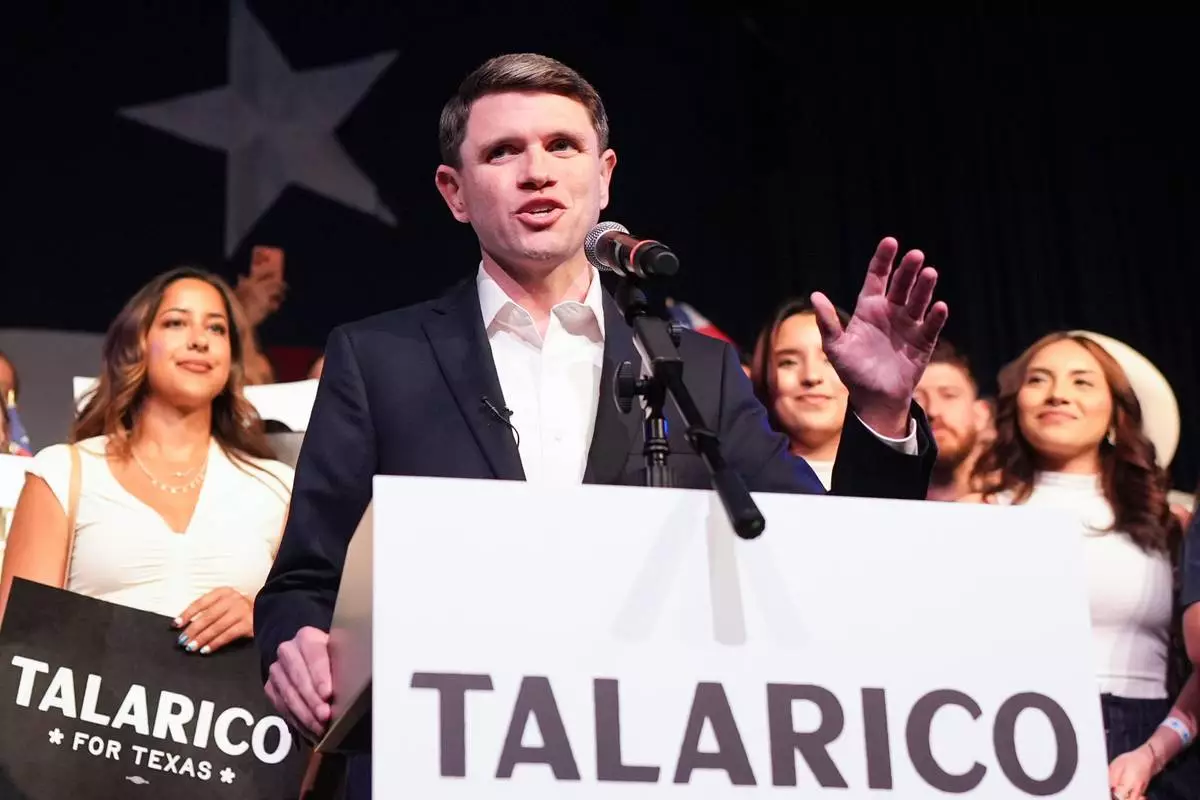
Texas state Rep. James Talarico, D-Austin, a Democratic candidate for the U.S. Senate, speaks at a primary election watch party Tuesday, March 3, 2026, in Austin, Texas. (AP Photo/Eric Gay)