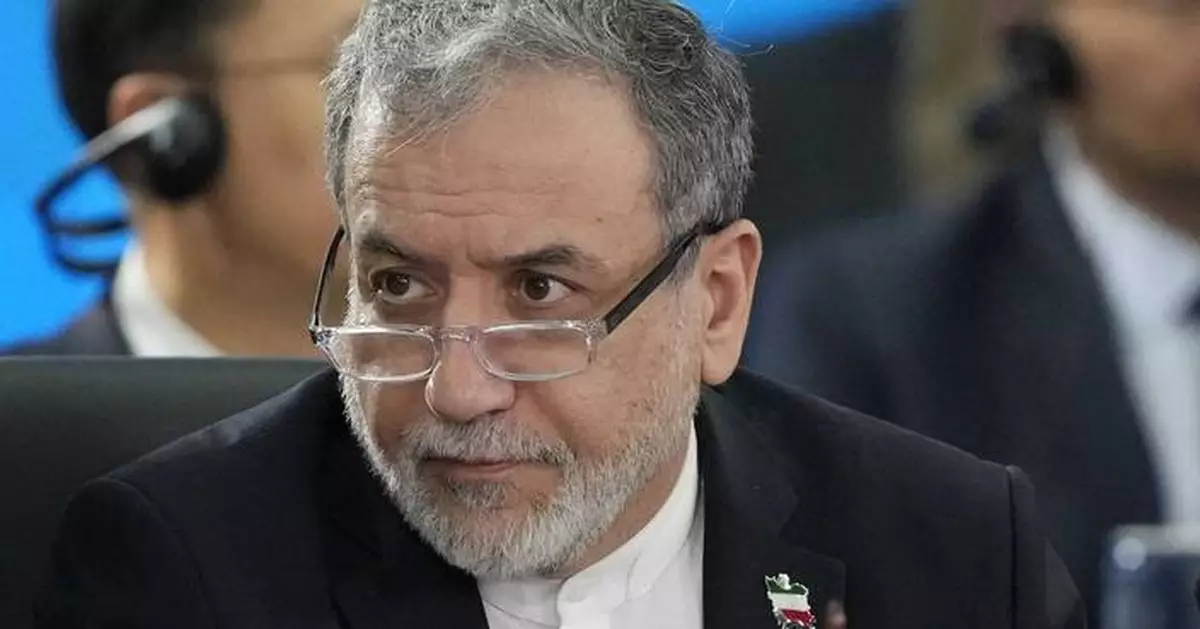
Iran’s foreign minister said Saturday that his country would accept a resumption of nuclear talks with the U.S. if there were assurances of no more attacks against it, state media reported.
Foreign Minister Abbas Araghchi said in a speech to Tehran-based foreign diplomats that Iran has always been ready and will be ready in the future for talks about its nuclear program, but, “assurance should be provided that in case of a resumption of talks, the trend will not lead to war.”
Referring to the 12-day Israeli bombardment of Iran's nuclear and military sites, and the U.S. strike on June 22, Araghchi said that if the U.S. and others wish to resume talks with Iran, "first of all, there should be a firm guarantee that such actions will not be repeated. The attack on Iran's nuclear facilities has made it more difficult and complicated to achieve a solution based on negotiations.”
Following the strikes, Iran suspended cooperation with the U.N. nuclear watchdog, which led to the departure of inspectors.
Araghchi said that under Iranian law, the country will answer the agency’s request for cooperation "case by case,” based on Iran’s interests. He also said any inspection by the agency should be done based on Iran's “security” concerns as well as the safety of the inspectors. “The risk of proliferation of radioactive ingredients and an explosion of ammunition that remains from the war in the attacked nuclear sites is serious,” he said.
He also reiterated Iran's position on the need to continue enriching uranium on its soil. U.S. President Donald Trump has insisted that cannot happen.
Israel claims it acted because Tehran was within reach of a nuclear weapon. U.S. intelligence agencies and the International Atomic Energy Agency had assessed Iran last had an organized nuclear weapons program in 2003, though Tehran had been enriching uranium up to 60% — a short, technical step away from weapons-grade levels of 90%.
Iranian President Masoud Pezeshkian in an interview published Monday said the U.S. airstrikes so badly damaged his country’s nuclear facilities that Iranian authorities still have not been able to access them to survey the destruction.
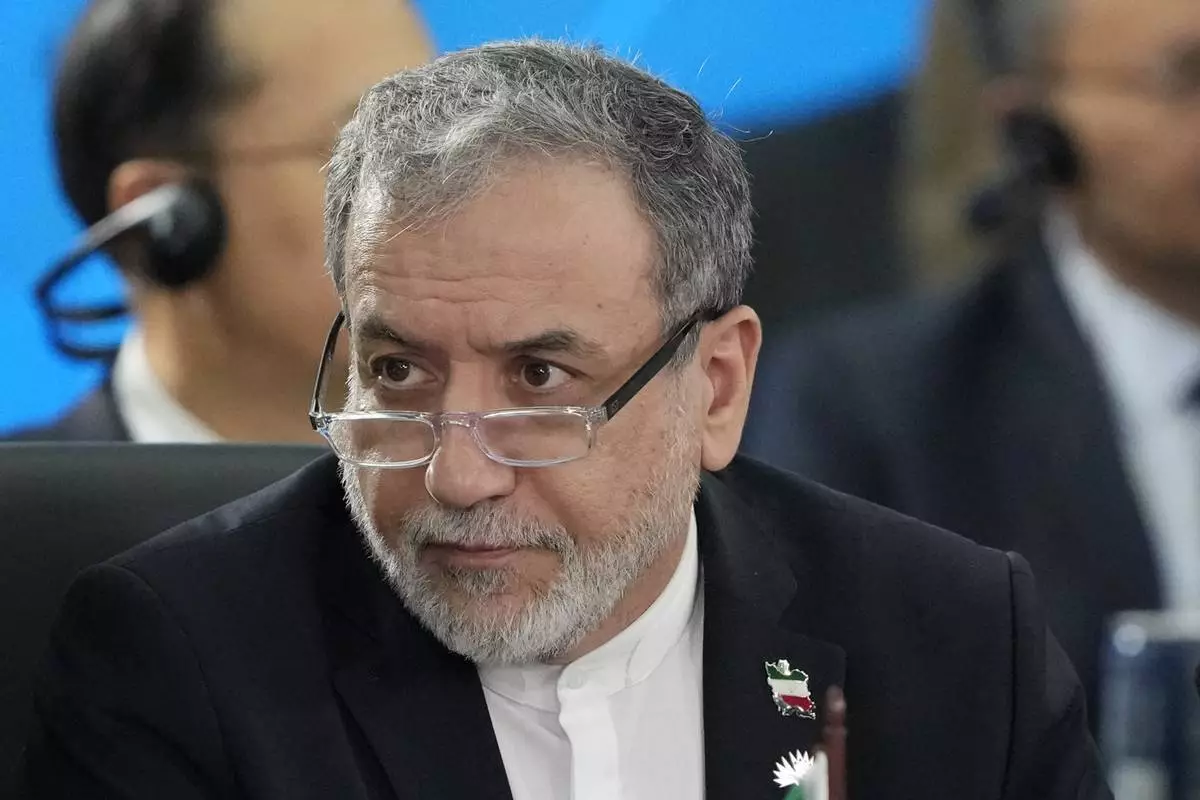
Iran's Foreign Minister Abbas Araghchi attends the 17th annual BRICS summit in Rio de Janeiro, Brazil, Monday, July 7, 2025. (AP Photo/Eraldo Peres)
WASHINGTON (AP) — Inflation likely remained elevated last month as the cost of electricity, groceries, and clothing may have jumped and continued to pressure consumers' wallets.
The Labor Department is expected to report that consumer prices rose 2.6% in December compared with a year earlier, according to economists' estimates compiled by data provider FactSet. The yearly rate would be down from 2.7% in November. Monthly prices, however, are expected to rise 0.3% in December, faster than is consistent with the Federal Reserve's 2% inflation goal.
The figures are harder to predict this month, however, because the six-week government shutdown last fall suspended the collection of price data used to compile the inflation rate. Some economists expect the December figures will show a bigger jump in inflation as the data collection process gets back to normal.
Core prices, which exclude the volatile food and energy categories, are also expected to rise 0.3% in December from the previous month, and 2.7% from a year earlier. The yearly core figure would be an increase from 2.6% in November.
In November, annual inflation fell from 3% in September to 2.7%, in part because of quirks in November's data. (The government never calculated a yearly figure for October). Most prices were collected in the second half of November, after the government reopened, when holiday discounts kicked in, which may have biased November inflation lower.
And since rental prices weren't fully collected in October, the agency that prepares the inflation reports used placeholder estimates that may have biased prices lower, economists said.
Inflation has come down significantly from the four-decade peak of 9.1% that it reached in June 2022, but it has been stubbornly close to 3% since late 2023. The cost of necessities such as groceries is about 25% higher than it was before the pandemic, and other necessities such as rent and clothing have also gotten more expensive, fueling dissatisfaction with the economy that both President Donald Trump and former President Joe Biden have sought to address, though with limited success.
The Federal Reserve has struggled to balance its goal of fighting inflation by keeping borrowing costs high, while also supporting hiring by cutting interest rates when unemployment worsens. As long as inflation remains above its target of 2%, the Fed will likely be reluctant to cut rates much more.
The Fed reduced its key rate by a quarter-point in December, but Chair Jerome Powell, at a press conference explaining its decision, said the Fed would probably hold off on further cuts to see how the economy evolves.
The 19 members of the Fed’s interest-rate setting committee have been sharply divided for months over whether to cut its rate further, or keep it at its curent level of about 3.6% to combat inflation.
Trump, meanwhile, has harshly criticized the Fed for not cutting its key short-term rate more sharply, a move he has said would reduce mortgage rates and the government's borrowing costs for its huge debt pile. Yet the Fed doesn't directly control mortgage rates, which are set by financial markets.
In a move that cast a shadow over the ability of the Fed to fight inflation in the future, the Department of Justice served the central bank last Friday with subpoenas related to Powell's congressional testimony in June about a $2.5 billion renovation of two Fed office buildings. Trump administration officials have suggested that Powell either lied about changes to the building or altered plans in ways that are inconsistent with those approved by planning commissions.
In a blunt response, Powell said Sunday those claims were “pretexts” for an effort by the White House to assert more control over the Fed.
“The threat of criminal charges is a consequence of the Federal Reserve setting interest rates based on our best assessment of what will serve the public, rather than following the preferences of the President,” Powell said. “This is about whether the Fed will be able to continue to set interest rates based on evidence and economic conditions—or whether instead monetary policy will be directed by political pressure or intimidation.”

FILE -American Giant clothing is displayed at the company's showroom in San Francisco, April 17, 2025. (AP Photo/Jeff Chiu, File)

FILE -A cashier rings up groceries in Dallas, Aug. 28, 2025. (AP Photo/LM Otero, File)