JOHANNESBURG (AP) — Just a week had remained before scientists in South Africa were to begin clinical trials of an HIV vaccine, and hopes were high for another step toward limiting one of history's deadliest pandemics. Then the email arrived.
Stop all work, it said. The United States under the Trump administration was withdrawing all its funding.
Click to Gallery
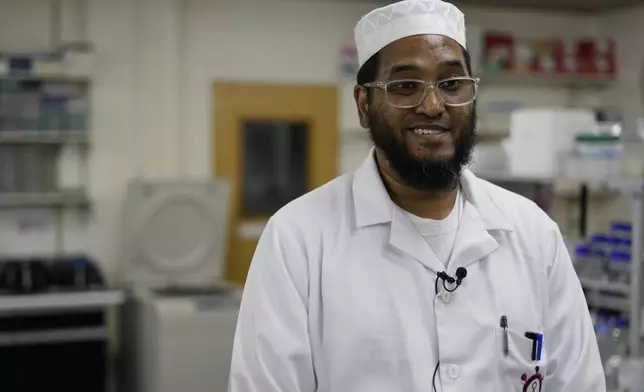
Professor Abdullah Ely speaks to the Associated Press, at the Wits laboratory Antiviral Gene Therapy Research Unit, at University of the Witwatersrand Medical School, in Johannesburg, South Africa, Thursday, May 22, 2025. (AP Photo/Themba Hadebe)
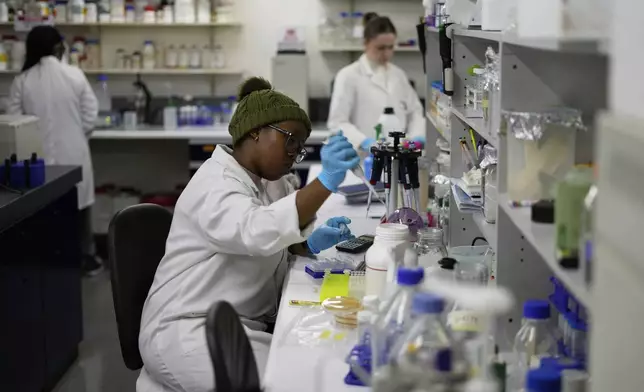
A laboratory technician Nozipho Mlotshwa works on samples at the Wits laboratory Antiviral Gene Therapy Research Unit, at University of the Witwatersrand Medical School, in Johannesburg, South Africa, Thursday, May 22, 2025. (AP Photo/Themba Hadebe)
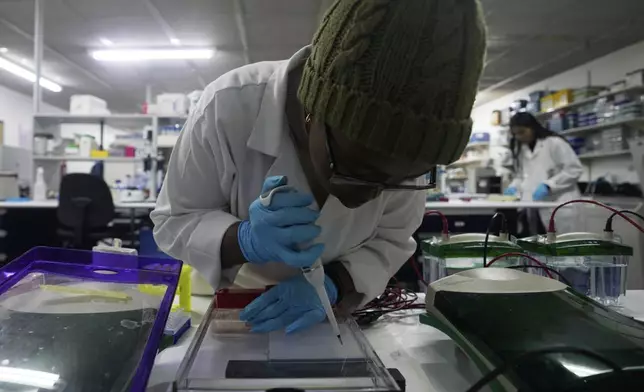
A laboratory technician Nozipho Mlotshwa works on samples at the Wits laboratory Antiviral Gene Therapy Research Unit, at University of the Witwatersrand Medical School, in Johannesburg, South Africa, Thursday, May 22, 2025. (AP Photo/Themba Hadebe)
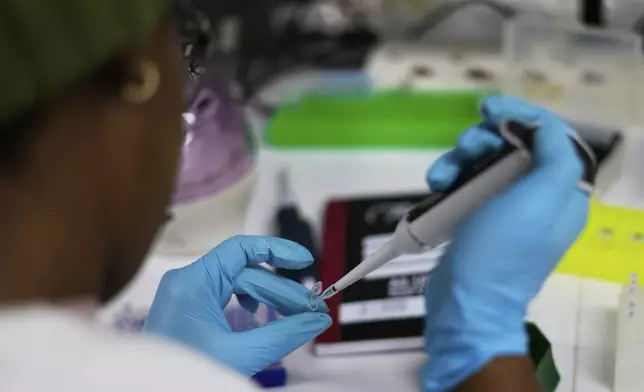
A laboratory technician Nozipho Mlotshwa works on samples at the Wits laboratory Antiviral Gene Therapy Research Unit, at University of the Witwatersrand Medical School, in Johannesburg, South Africa, Thursday, May 22, 2025. (AP Photo/Themba Hadebe)
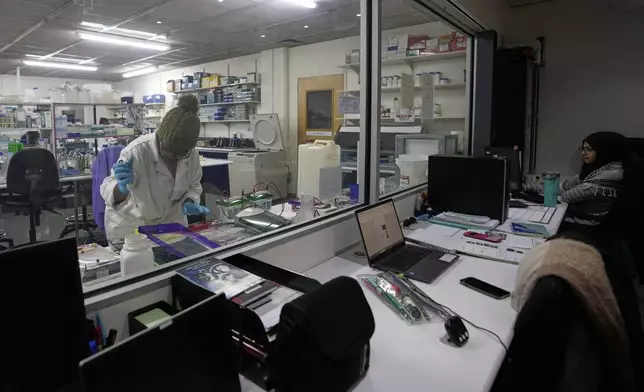
A laboratory technician Nozipho Mlotshwa works on samples at the Wits laboratory Antiviral Gene Therapy Research Unit, at University of the Witwatersrand Medical School, in Johannesburg, South Africa, Thursday, May 22, 2025. (AP Photo/Themba Hadebe)
The news devastated the researchers, who live and work in a region where more people live with HIV than anywhere else in the world. Their research project, called BRILLIANT, was meant to be the latest to draw on the region's genetic diversity and deep expertise in the hope of benefiting people everywhere.
But the $46 million from the U.S. for the project was disappearing, part of the dismantling of foreign aid by the world's biggest donor earlier this year as President Donald Trump announced a focus on priorities at home.
South Africa has been hit especially hard because of Trump's baseless claims about the targeting of the country's white Afrikaner minority. The country had been receiving about $400 million a year via USAID and the HIV-focused PEPFAR.
Now that's gone.
Glenda Grey, who heads the Brilliant program, said the African continent has been vital to the development of HIV medication, and the U.S. cuts threaten its capability to do such work in the future.
Significant advances have included clinical trials for lenacapavir, the world’s only twice-a-year shot to prevent HIV, recently approved for use by the U.S. Food and Drug Administration. One study to show its efficacy involved young South Africans.
“We do the trials better, faster and cheaper than anywhere else in the world, and so without South Africa as part of these programs, the world, in my opinion, is much poorer,” Gray said.
She noted that during the urgency of the COVID-19 pandemic, South Africa played a crucial role by testing the Johnson & Johnson and Novavax vaccines, and South African scientists' genomic surveillance led to the identification of an important variant.
A team of researchers at the University of the Witwatersrand has been part of the unit developing the HIV vaccines for the trials.
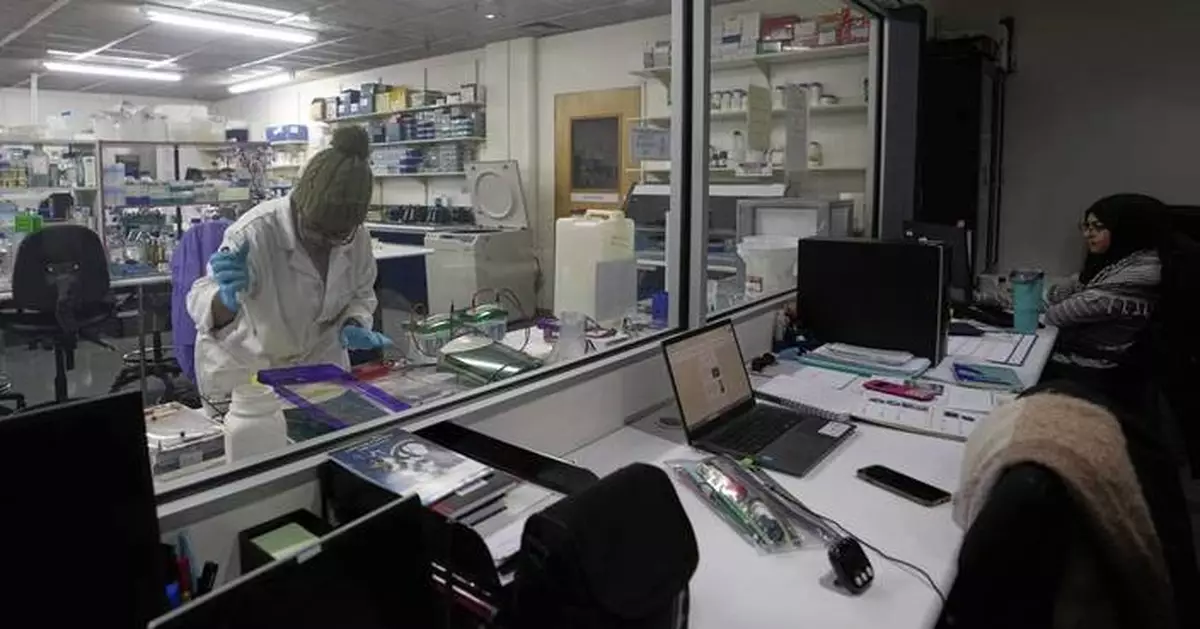
Inside the Wits laboratory, technician Nozipho Mlotshwa was among the young people in white gowns working on samples, but she may soon be out of a job.
Her position is grant-funded. She uses her salary to support her family and fund her studies in a country where youth unemployment hovers around 46%.
“It’s very sad and devastating, honestly," she said of the U.S. cuts and overall uncertainty. “We’ll also miss out collaborating with other scientists across the continent.”
Professor Abdullah Ely leads the team of researchers. He said the work had promising results indicating that the vaccines were producing an immune response.
But now that momentum, he said, has “all kind of had to come to a halt.”
The BRILLIANT program is scrambling to find money to save the project. The purchase of key equipment has stopped. South Africa's health department says about 100 researchers for that program and others related to HIV have been laid off. Funding for postdoctoral students involved in experiments for the projects is at risk.
South Africa's government has estimated that universities and science councils could lose about $107 million in U.S. research funding over the next five years due to the aid cuts, which affect not only work on HIV but also tuberculosis — another disease with a high number of cases in the country.
South Africa’s government has said it will be very difficult to find funding to replace the U.S. support.
And now the number of HIV infections will grow. Medication is more difficult to obtain. At least 8,000 health workers in South Africa's HIV program have already been laid off, the government has said. Also gone are the data collectors who tracked patients and their care, as well as HIV counselors who could reach vulnerable patients in rural communities.
For researchers, Universities South Africa, an umbrella body, has applied to the national treasury for over $110 million for projects at some of the largest schools.
During a visit to South Africa in June, UNAIDS executive director Winnie Byanyima was well aware of the stakes, and the lives at risk, as research and health care struggle in South Africa and across Africa at large.
Other countries that were highly dependent on U.S. funding including Zambia, Nigeria, Burundi and Ivory Coast are already increasing their own resources, she said.
“But let’s be clear, what they are putting down will not be funding in the same way that the American resources were funding," Byanyima said.
Associated Press writer Michelle Gumede in Johannesburg contributed to this report.
For more on Africa and development: https://apnews.com/hub/africa-pulse
The Associated Press receives financial support for global health and development coverage in Africa from the Gates Foundation. The AP is solely responsible for all content. Find AP’s standards for working with philanthropies, a list of supporters and funded coverage areas at AP.org.

Professor Abdullah Ely speaks to the Associated Press, at the Wits laboratory Antiviral Gene Therapy Research Unit, at University of the Witwatersrand Medical School, in Johannesburg, South Africa, Thursday, May 22, 2025. (AP Photo/Themba Hadebe)
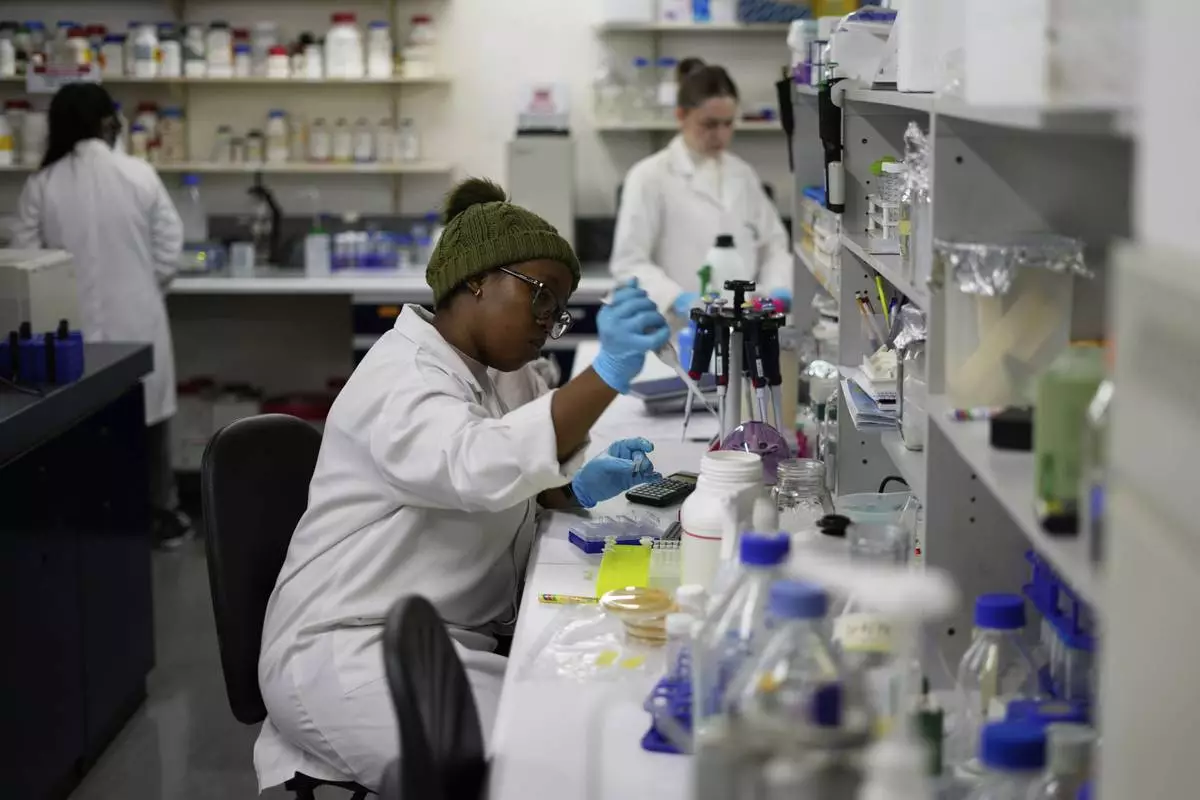
A laboratory technician Nozipho Mlotshwa works on samples at the Wits laboratory Antiviral Gene Therapy Research Unit, at University of the Witwatersrand Medical School, in Johannesburg, South Africa, Thursday, May 22, 2025. (AP Photo/Themba Hadebe)
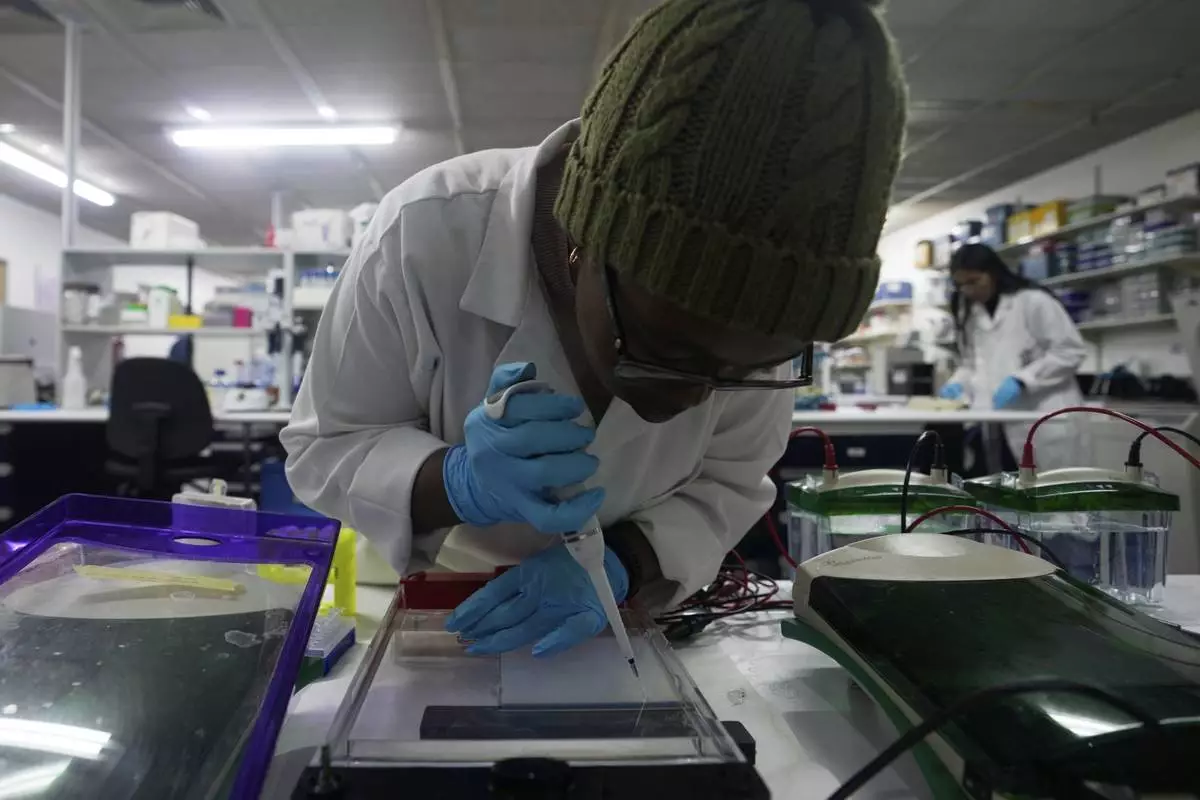
A laboratory technician Nozipho Mlotshwa works on samples at the Wits laboratory Antiviral Gene Therapy Research Unit, at University of the Witwatersrand Medical School, in Johannesburg, South Africa, Thursday, May 22, 2025. (AP Photo/Themba Hadebe)

A laboratory technician Nozipho Mlotshwa works on samples at the Wits laboratory Antiviral Gene Therapy Research Unit, at University of the Witwatersrand Medical School, in Johannesburg, South Africa, Thursday, May 22, 2025. (AP Photo/Themba Hadebe)
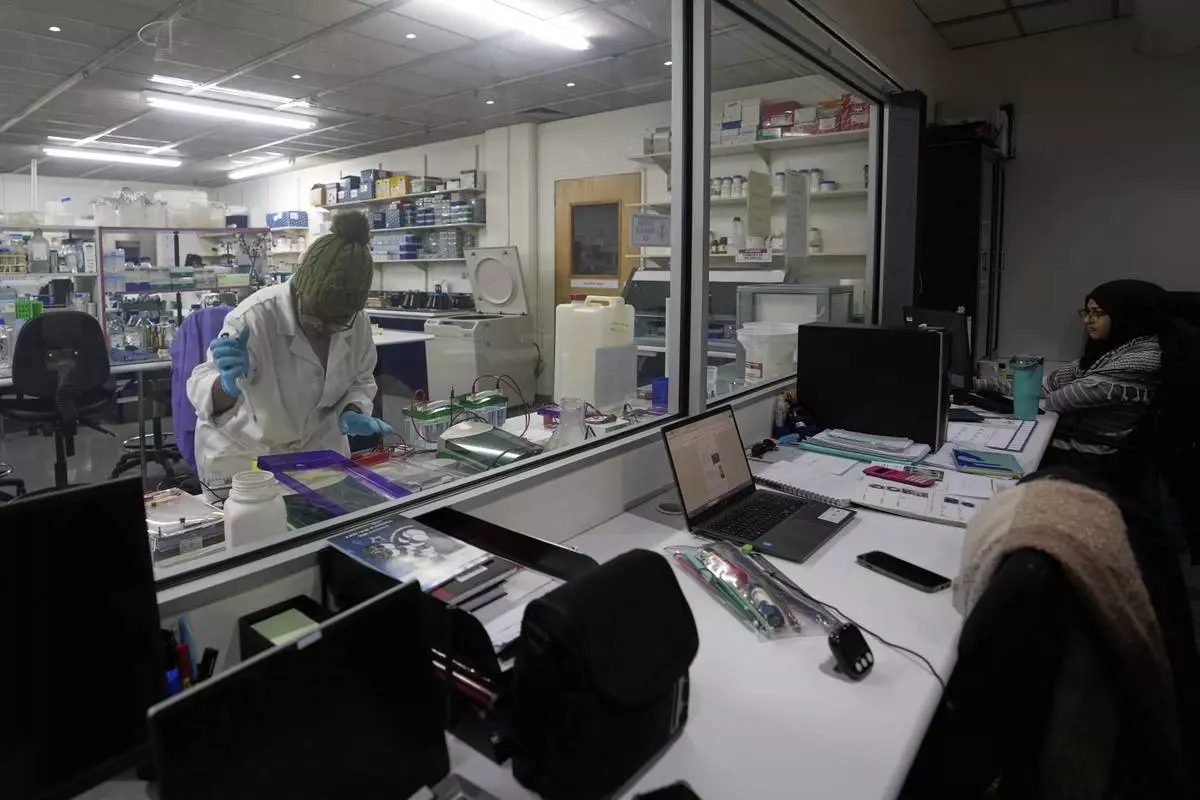
A laboratory technician Nozipho Mlotshwa works on samples at the Wits laboratory Antiviral Gene Therapy Research Unit, at University of the Witwatersrand Medical School, in Johannesburg, South Africa, Thursday, May 22, 2025. (AP Photo/Themba Hadebe)