At the invitation of the China Education Association for International Exchange, the One Voice Children's Choir from the United States visited northwest China's Xi'an City last week as a part of a China-U.S. youth music exchange program.
From July 6 to 9, young people from both countries engaged in a cross-cultural dialogue through the universal language of music, forging bonds that transcend borders.
At the event, members of the One Voice Children's Choir and the High School Affiliated to Xi'an Jiaotong University Choir performed classic songs, showing the vim and vigor of the young people of the two countries.
"This morning [the guide] told us all about the history with the dynasties, and how it's been such a big center of so many people. There are so much rich history here. So I'm too excited to see all of the beautiful architecture and the people," said Meleani, a member of the One Voice Children's Choir.
At the Shaanxi Provincial Cultural Center, the youths experienced colorful intangible cultural heritage like shadow play, paper cutting, and dough modeling, which deepened their understanding of traditional Chinese culture.
"It's so much, [and] more. It's just like the Chinese culture, it's so cool to see there is different part but they all come together to make the Chinese culture. I think that's so cool," said Evie Moleni, another member of the U.S. youth delegation.
The China-U.S. Youth Music Exchange Program innovatively organizes music exchange events in various cities across China, inviting students from diverse schools to participate. Held annually in different Chinese cities, these events provide American teenagers with an immersive experience to foster a deeper understanding of Chinese culture.
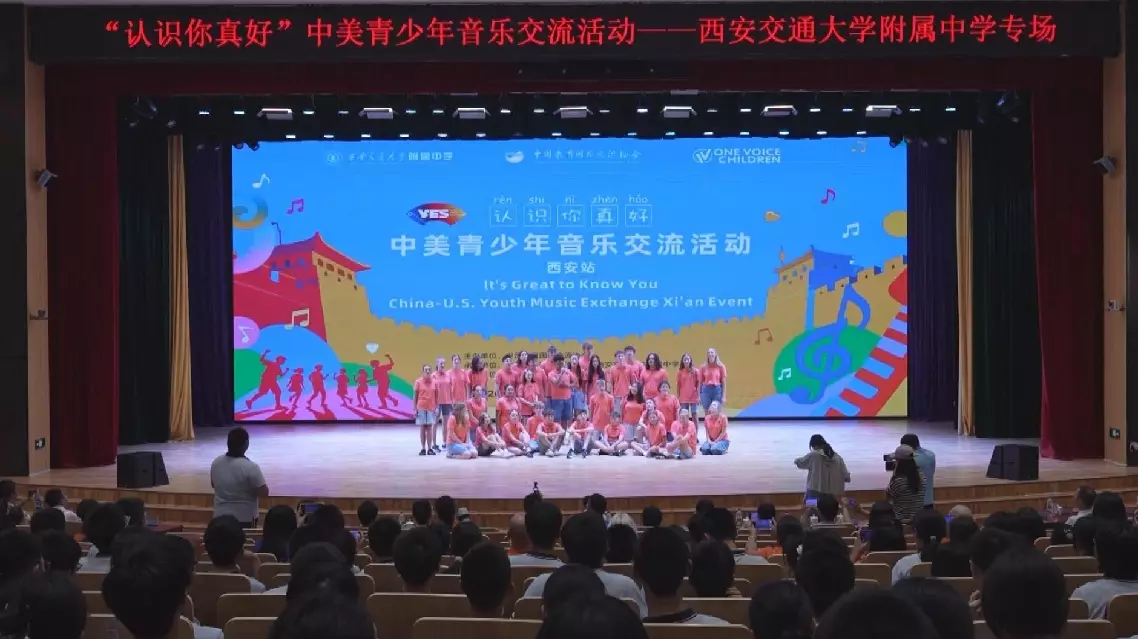
China-US youth music exchange program strikes chord of friendship
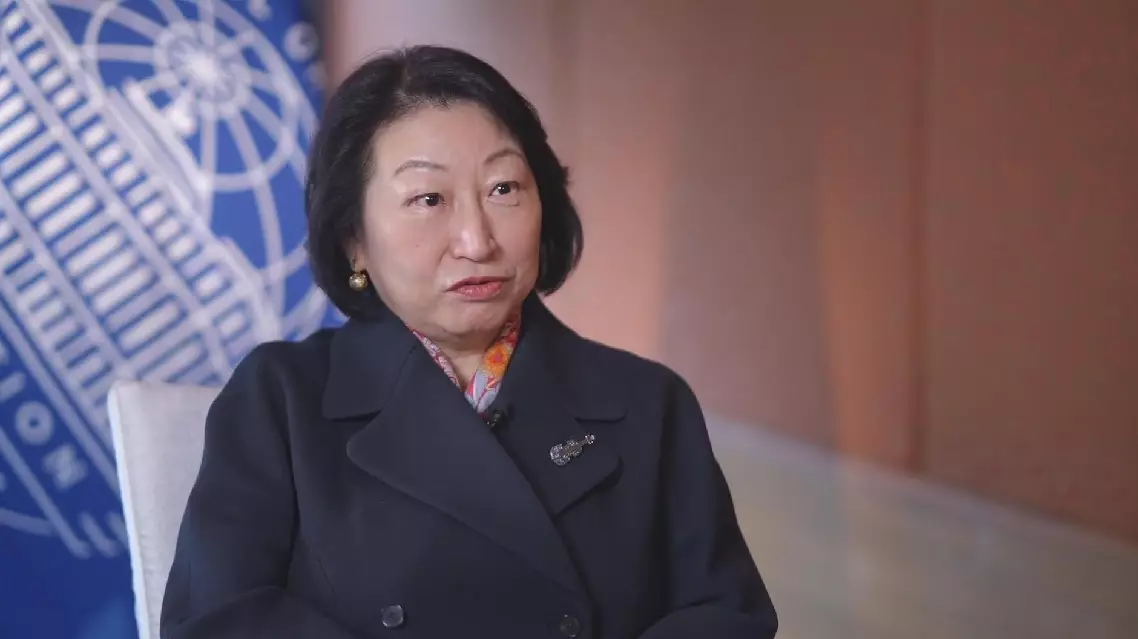
The International Organization for Mediation (IOMed), the world's first intergovernmental legal organization dedicated to resolving international disputes through mediation, fills an institutional gap in international mediation, the body's Secretary-General Teresa Cheng said.
In a recent interview with the China Global Television Network (CGTN) in Beijing, Cheng talked about the significance of IMOed's inauguration in October 2025.
"If we look at the United Nations Charter again, Article 33, we've provided for these forms of dispute resolution. Yet for 80 years, somehow there is not a body that is dedicated exclusively to mediation. And I think that triggered these 19 countries when they made their joint statement to say, let's establish such a body, so it is filling the institutional gap. The second thing is that it also complements the existing dispute resolution mechanisms. Litigation arbitration is at the moment still a prevailing form of dispute resolution, but the states see the need, also called upon by the UN Charter, to establish something exclusively for mediation to complement the existing systems," said Cheng. "There are a number of states, in particular those from the Global South, are very interested in having a say in the development of this new body. Therefore, through this organization, there are, as I said, 38 signatory states now. I think the world is in a very interesting stage at the moment. There are a lot of differences, sometimes views get entrenched. By having a body that brings into effect inclusivity multilateralism, and of course, accommodating and understanding each other through dialogue, is a very important feature." she said.
Housing the organization in the Hong Kong Special Administrative Region(HKSAR) also showed China's willingness to contribute to international mediation, said Cheng.
"The fact that we are housed and placed in the Hong Kong SAR, part of China, is because China is willing to contribute to this development, and Hong Kong very generously allows us to put our headquarters in one of the heritage buildings in Hong Kong," she added.
IOMed fills institutional gap in international mediation: secretary-general