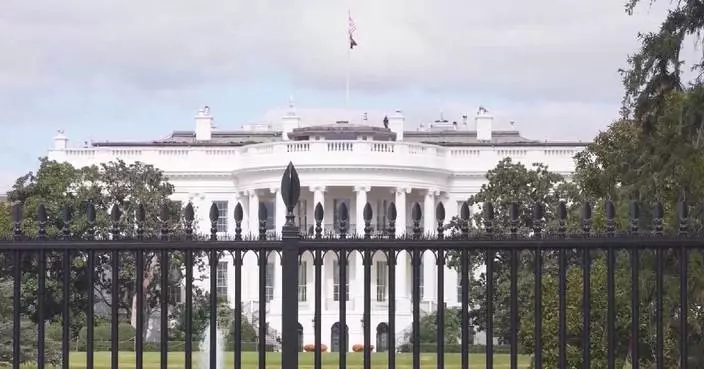
Officials from the European Union (EU) and Finland have voiced concerns after the White House said it has been discussing "a range of options" to acquire Greenland, including the use of the military.
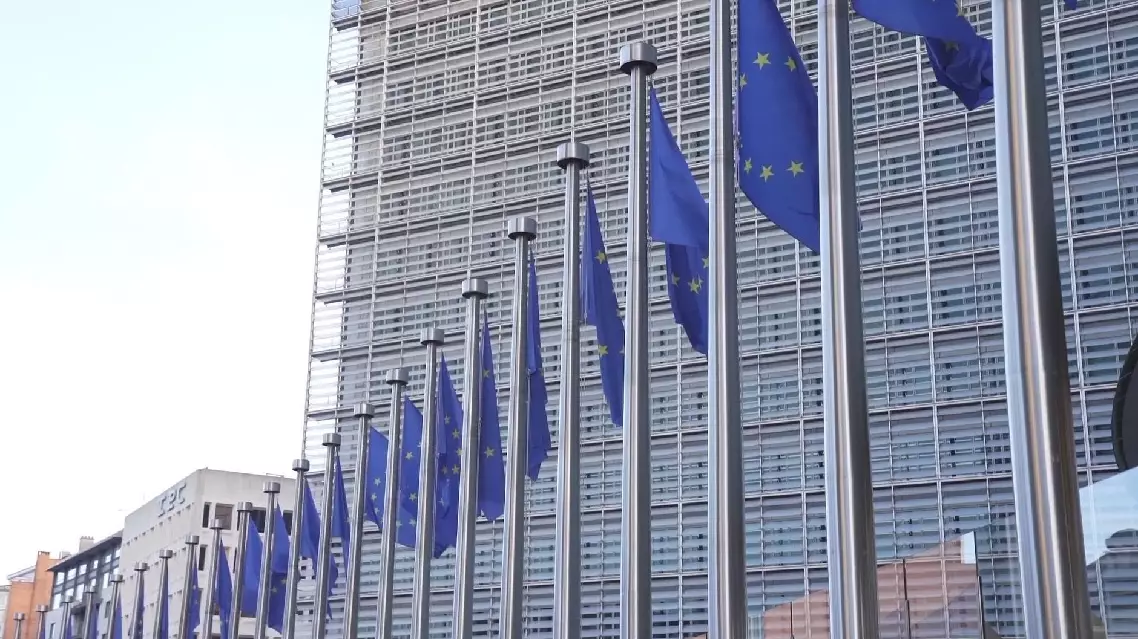
EU foreign policy chief Kaja Kallas told a press briefing in Cairo on Thursday that the message from the U.S. is "extremely concerning," and "not really helping the stability of the world."
Kallas called on all parties to stick to international law, adding that relevant response measures has been discussed among EU members.
"The international law is very clear, and we have to stick to it. It is clear that it is the only thing that protects smaller countries, and that is why it is in the interest of all of us. And we discussed this today, as well, that we uphold the international law on all levels," she said.
Finnish Foreign Minister Elina Valtonen on Thursday described recent remarks by U.S. President Donald Trump and members of his administration on Greenland as "worrying," while reiterating Finland's support for Denmark and Greenland's right to self-determination.
"Finland and the other Nordic countries have exceptional expertise in Arctic conditions, and we are happy to make use of that together with our North Atlantic Treaty Organization (NATO) allies to strengthen Arctic security, but it cannot be done by threatening allies," she said at a press conference at Finnish parliament after an extraordinary meeting of the parliamentary Foreign Affairs Committee.
Johannes Koskinen, chair of the Foreign Affairs Committee, said it was "unprecedented" for threats of violence to be made within NATO against another member in connection with seizing territory, adding that such threats run counter to the United Nations Charter and that their inconsistency with international law should be underscored at all levels.
EU, Finnish officials express concerns over US remarks on Greenland
The International Organization for Mediation (IOMed), the world's first intergovernmental legal organization dedicated to resolving international disputes through mediation, fills an institutional gap in international mediation, the body's Secretary-General Teresa Cheng said.
In a recent interview with the China Global Television Network (CGTN) in Beijing, Cheng talked about the significance of IMOed's inauguration in October 2025.
"If we look at the United Nations Charter again, Article 33, we've provided for these forms of dispute resolution. Yet for 80 years, somehow there is not a body that is dedicated exclusively to mediation. And I think that triggered these 19 countries when they made their joint statement to say, let's establish such a body, so it is filling the institutional gap. The second thing is that it also complements the existing dispute resolution mechanisms. Litigation arbitration is at the moment still a prevailing form of dispute resolution, but the states see the need, also called upon by the UN Charter, to establish something exclusively for mediation to complement the existing systems," said Cheng. "There are a number of states, in particular those from the Global South, are very interested in having a say in the development of this new body. Therefore, through this organization, there are, as I said, 38 signatory states now. I think the world is in a very interesting stage at the moment. There are a lot of differences, sometimes views get entrenched. By having a body that brings into effect inclusivity multilateralism, and of course, accommodating and understanding each other through dialogue, is a very important feature." she said.
Housing the organization in the Hong Kong Special Administrative Region(HKSAR) also showed China's willingness to contribute to international mediation, said Cheng.
"The fact that we are housed and placed in the Hong Kong SAR, part of China, is because China is willing to contribute to this development, and Hong Kong very generously allows us to put our headquarters in one of the heritage buildings in Hong Kong," she added.
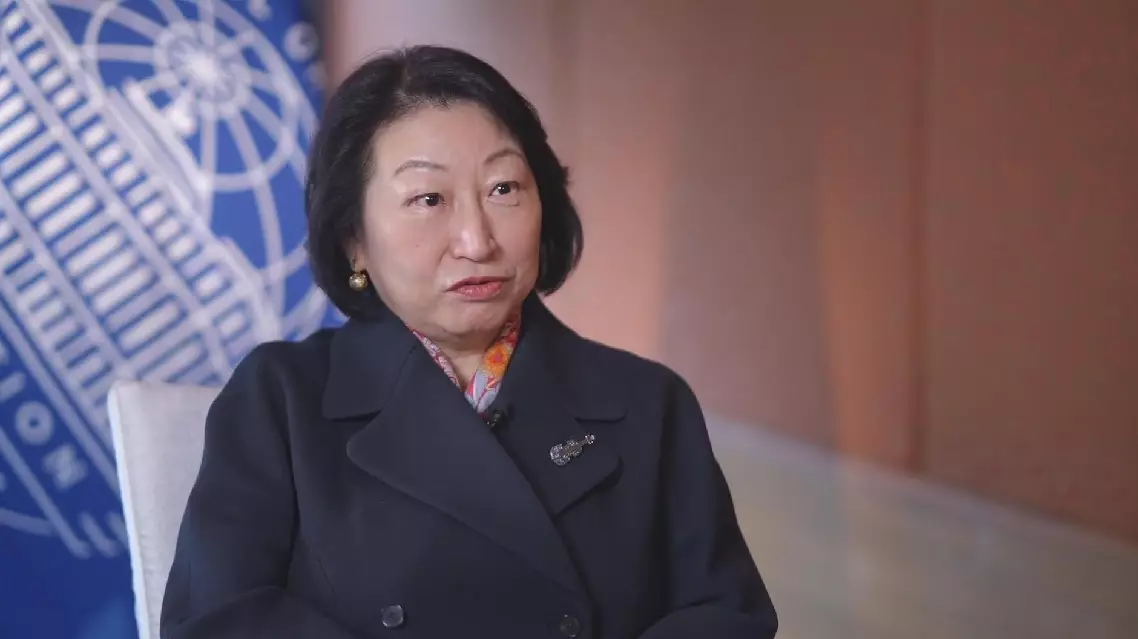
IOMed fills institutional gap in international mediation: secretary-general