Skip to Content Facebook Feature Image

Xi's Global Governance Initiative 'timely' amid global shifts: former Malaysian ambassador

China

China

China

Xi's Global Governance Initiative 'timely' amid global shifts: former Malaysian ambassador

2026-01-10 01:00 Last Updated At:12:26

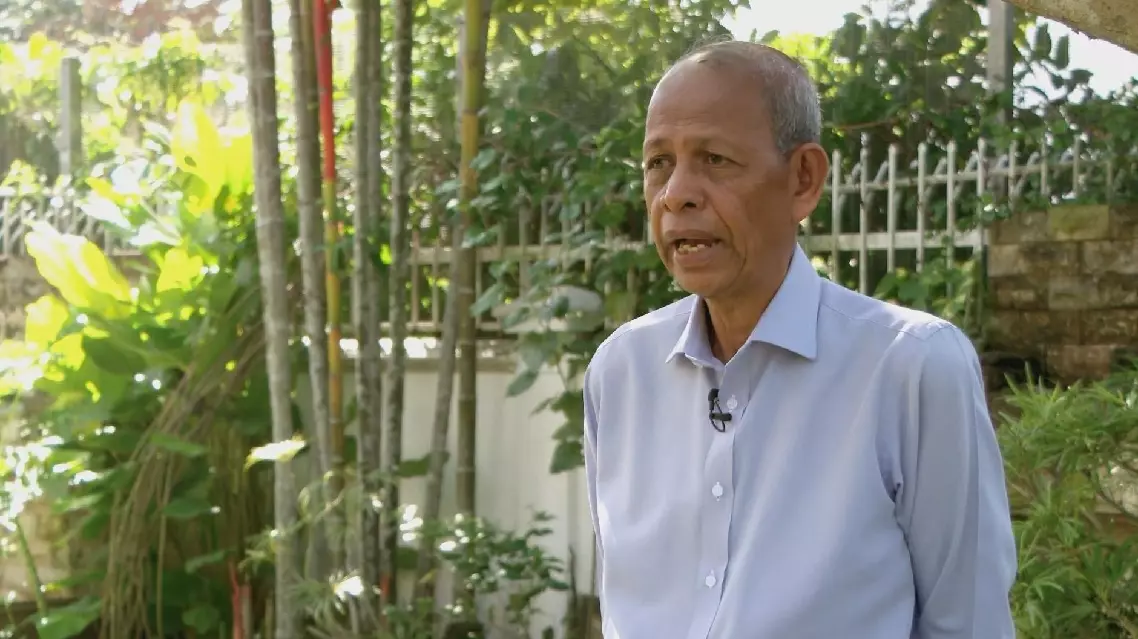
Former Malaysian ambassador to China Dato' Abdul Majid Ahmad Khan has described the Global Governance Initiative (GGI) proposed by Chinese President Xi Jinping as "timely" in a recent interview, saying it could strengthen China-ASEAN cooperation and set a model for regional collaboration.

He made the remarks during an exclusive interview with China Global Television Network (CGTN), saying the initiative is especially relevant amid shifts in the global order.

The GGI was proposed by Chinese President Xi Jinping at the Shanghai Cooperation Organization Plus meeting in September 2025 in Tianjin, northern China. It reflects China’s goal of reshaping global governance toward what it describes as a fairer and more inclusive system.

"I think President Xi's initiative on global governance is timely and a very commendable initiative, given the state of the world order today -- particularly the uncertainty characterized by undermining the UN Charter, and also the issue of not supporting multilateralism (but advancing) unilateralism. And especially, (it) has an appeal because the vision calls for a fair, much more multilateral, and an inclusive international system," said the veteran diplomat.

"I think this is also the aspiration of the Global South, because over the years, I think the international community is frustrated with the inability of the United States -- particularly to discharge its duty, especially in undermining UN authority, and also in pushing unilateralism through America First, and also imposing unfair practices such as economic sanctions. So I think this is a build-up that there should be an alternative -- not to replace totally the current international system, but to provide an alternative where we can actually foresee, or have, a fair, just, and a development-oriented international order," he added.

Majid said that as unilateralism escalates and multilateral principles face growing challenges, ASEAN nations, including Malaysia, should strengthen cooperation with China to set a benchmark for regional collaboration.

"I think there's a lot of scope for Malaysia and China to work on this vision. First, at the bilateral level, maybe both countries can further enhance their cooperation at the UN, at the IMF, and also at the WTO. At the ASEAN level, perhaps there's a need to further strengthen ASEAN-China cooperation and put it up as a model of regional cooperation," he said.
Xi's Global Governance Initiative 'timely' amid global shifts: former Malaysian ambassador

Xi's Global Governance Initiative 'timely' amid global shifts: former Malaysian ambassador
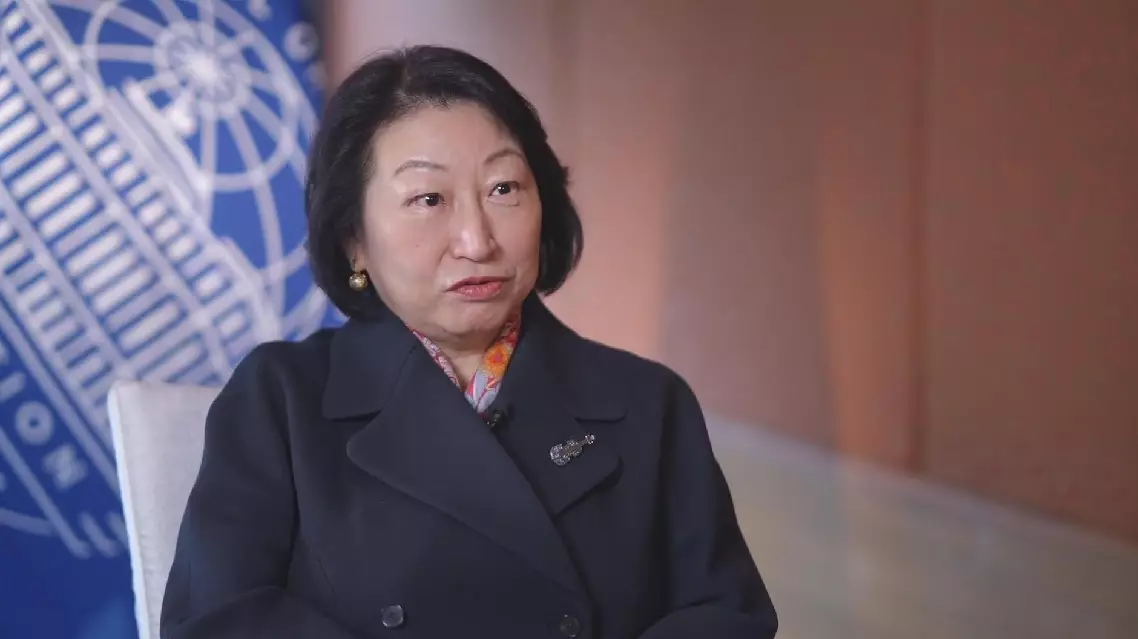
The International Organization for Mediation (IOMed), the world's first intergovernmental legal organization dedicated to resolving international disputes through mediation, fills an institutional gap in international mediation, the body's Secretary-General Teresa Cheng said.

In a recent interview with the China Global Television Network (CGTN) in Beijing, Cheng talked about the significance of IMOed's inauguration in October 2025.

"If we look at the United Nations Charter again, Article 33, we've provided for these forms of dispute resolution. Yet for 80 years, somehow there is not a body that is dedicated exclusively to mediation. And I think that triggered these 19 countries when they made their joint statement to say, let's establish such a body, so it is filling the institutional gap. The second thing is that it also complements the existing dispute resolution mechanisms. Litigation arbitration is at the moment still a prevailing form of dispute resolution, but the states see the need, also called upon by the UN Charter, to establish something exclusively for mediation to complement the existing systems," said Cheng. "There are a number of states, in particular those from the Global South, are very interested in having a say in the development of this new body. Therefore, through this organization, there are, as I said, 38 signatory states now. I think the world is in a very interesting stage at the moment. There are a lot of differences, sometimes views get entrenched. By having a body that brings into effect inclusivity multilateralism, and of course, accommodating and understanding each other through dialogue, is a very important feature." she said.

Housing the organization in the Hong Kong Special Administrative Region(HKSAR) also showed China's willingness to contribute to international mediation, said Cheng.

"The fact that we are housed and placed in the Hong Kong SAR, part of China, is because China is willing to contribute to this development, and Hong Kong very generously allows us to put our headquarters in one of the heritage buildings in Hong Kong," she added.

IOMed fills institutional gap in international mediation: secretary-general

IOMed fills institutional gap in international mediation: secretary-general

Recommended Articles