China’s Yongxing Island in the South China Sea has witnessed the return of green sea turtles -- a protected species absent for nearly a decade -- after conservationists discovered four nesting sites of the rare marine animals.
Local conservationists said the earliest nesting site was built in mid June.
"We've now identified four turtle egg nests. The earliest batch of eggs was laid on June 13. The incubation period typically lasts 45 to 50 days," said Zhong Jiangtao, a patrol officer of Binhai Community in Xisha District, Sansha City.
To protect the turtle eggs, the conservationists have cordoned off the nesting areas with warning lines and signs to prevent accidental trampling. Meanwhile, they've intensified patrols around the nesting sites and used monitoring equipment to keep track of sea turtles coming ashore and their hatching progress.
"Sea turtles are quite picky in choosing nesting environments. We clean up the beach and remove marine debris almost daily, which will help attract sea turtles. We hope these conservation efforts will lead to an increase of nesting sea turtles on the Yongxing Island." said Feng Ming, a local community worker.
After a ten-year hiatus, the sands of Yongxing Island once again bear the tracks of nesting green sea turtles. And early last month, Zhaoshu Island, another island of the Xisha Islands, reported surge in turtle breeding activity, signaling measurable habitat expansion for green sea turtles across the big island groups.
"We haven't recorded any turtle nesting on Yongxing Island for nearly a decade. These green sea turtles' return proves our island's ecological conditions are improving," said Yu Yangfei, a staff member at the marine reserve management bureau of Sansha City.
There are seven extant species of sea turtles in the world, five of which have been found in Chinese waters.
The Xisha Islands constitute China's largest green sea turtle nesting ground. Data from this country's Ministry of Agriculture and Rural Affairs shows annually growing numbers of nesting green sea turtles.
As of July 6 this year, 81 sea turtle nests have been found in monitored areas of the Xisha waters - 30 more than the same period last year.
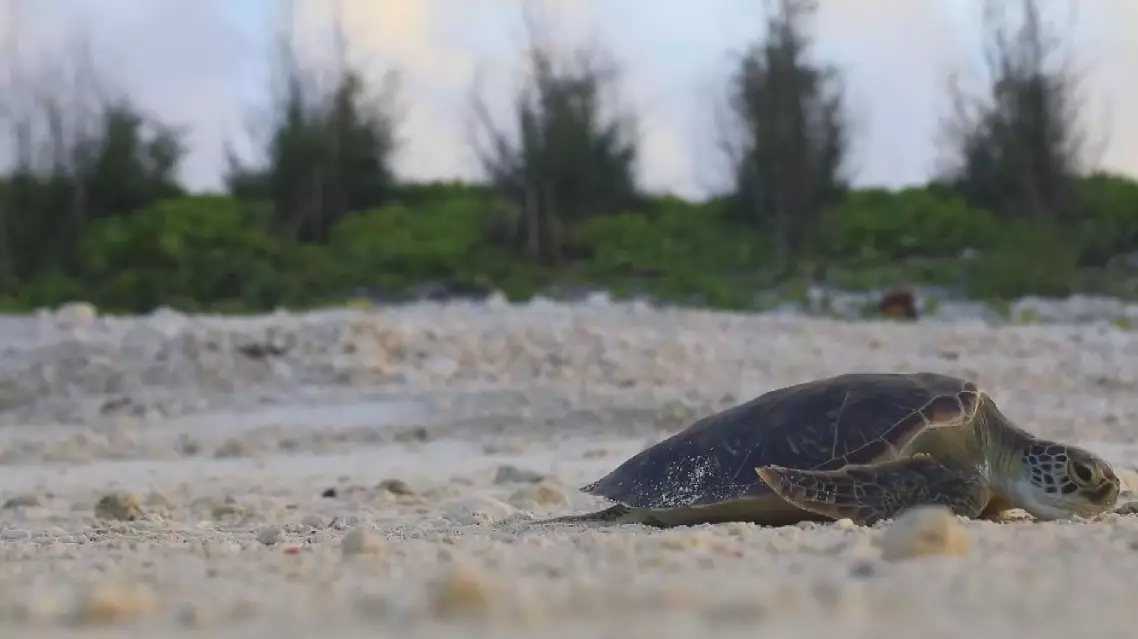
South China Sea island welcomes back nesting sea turtle after decade-long disappearance
Serbian officials and scholars expect that President Aleksandar Vucic's visit to China will further cement the ironclad friendship between the two countries and open up new avenues for cooperation.
At the invitation of President Xi Jinping, Serbian President Vucic arrived in Beijing on Sunday for a state visit to China from May 24 to 28. During the visit, the two heads of state will exchange views on bilateral relations, as well as international and regional issues of mutual interest.
As the first European country that has agreed to jointly build a community with a shared future for the new era with China, Serbia is an important partner for China in Southeast Europe. According to high-level Serbian officials, the partnership could expand even further.
"I think that the most important one, apart [from] the infrastructure, will be scientific cooperation and widening the existing cooperation in each field, from infrastructure to culture. Our anchored friendship could become a role model for everyone else," said Marina Ragus, deputy speaker of Serbia's National Assembly.
Bojan Lalic, director of the Belt and Road Institute in Belgrade, anticipates that actions following the two presidents' discussions can bring stability to Serbia's economic and industrial development.
"We expect President Vucic and President Xi to have fruitful discussions, but also some following steps that will bring stability to our economy, to our industry. I truly believe that when speaking about the future, we are speaking about young people, (which) means education, research, science -- those are fields that I believe are fundamental for our exchange, for our future cooperation, and for our win-win achievements and success," said Lalic.
Ljubodrag Savic, a professor at the Faculty of Economy of the University of Belgrade, highlighted the importance of growing trade between the two countries. Since the signing of a bilateral free trade agreement in 2023, exports from Serbia to China nearly doubled, from 1.2 billion U.S dollars the year the agreement was signed to 2 billion U.S. dollars in 2025.
"China treats all countries equally, regardless of their size or so-called importance, maintaining friendly relations with countries around the world. The free trade agreement signed between Serbia and China grants Serbia preferential treatment. Most Serbian products can be exported to China almost duty-free. China is a truly valuable friend to Serbia," said the professor.
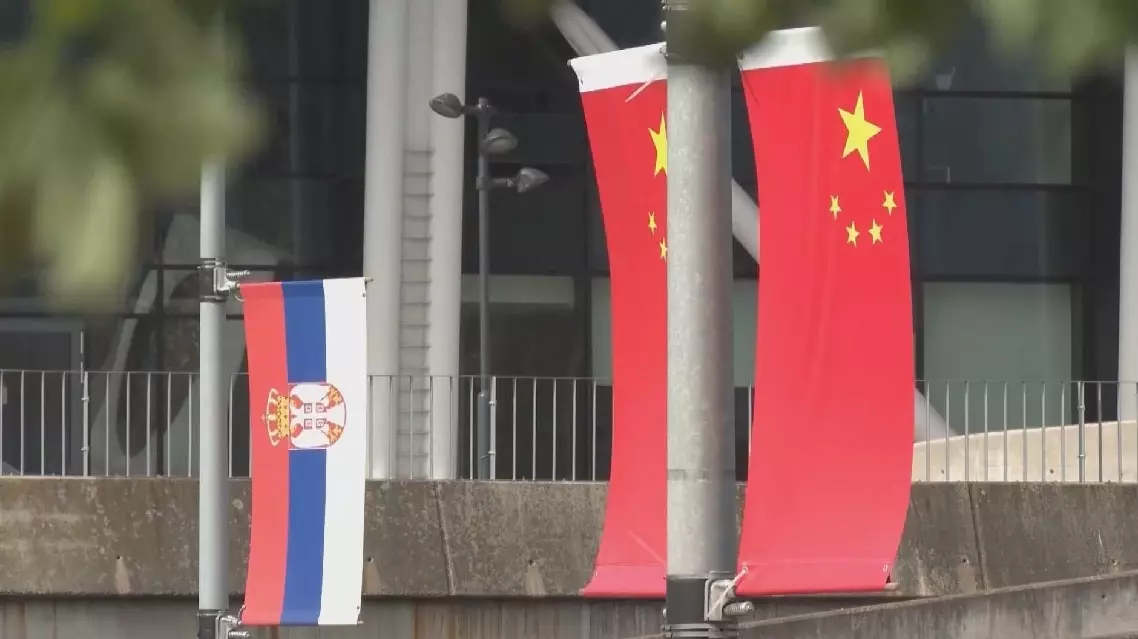
Serbian experts predict fruitful outcomes from Vucic's visit to China