China Agricultural University has launched the country's first undergraduate program in companion animal science aimed at training experts on pet nutrition, behavior, breeding and care, meeting both student aspirations and the booming demands of China's pet industry.
Unlike traditional animal science programs that concentrate on livestock such as pigs, chickens, cattle and sheep, the companion animal program focuses on pets like cats, dogs and horses. Fifty students will be admitted in the inaugural class. Upon graduation, they will receive a Bachelor of Agricultural Science degree.
While the program may sound novel to some, it represents a significant transformation in Chinese higher education -- a strategic shift away from traditional, supply-driven offerings toward demand-led disciplines tailored for emerging sectors.
China's educational authority has called for dynamic optimization of academic disciplines to ensure alignment with economic priorities. In a notice on graduate employment for 2025, the Ministry of Education (MOE) urged universities to anticipate labor market shifts and accelerate the roll-out of emerging programs.
China's pet economy offers a compelling case for this transformation. In 2024, the country's urban population owned more than 120 million cats and dogs, driving a 7.5-percent year-on-year growth of the pet economy to exceed 300 billion yuan (around 42 billion U.S. dollars).
In 2024, pet food sales, pet supplies, and vet services went up 8.5 percent, 6.6 percent, and 4.3 percent year on year, respectively.
However, the rapid growth of the pet economy has outpaced the supply of trained professionals. While about 500,000 pet-related businesses are now registered in China -- ranging from pet food and supplies to grooming, insurance and behavior training -- the sector suffers from acute labor shortages.
For example, in veterinary care alone, more than 30,000 pet hospitals operate with just 40,000 certified veterinarians.
The companion animal science program is designed to address this gap. Graduates will be well-prepared for a wide range of careers -- from conventional roles in pet food research and development, breeding operations and veterinary clinics to emerging specialties like pet genetic testing consultants and professional pet behavior trainers.
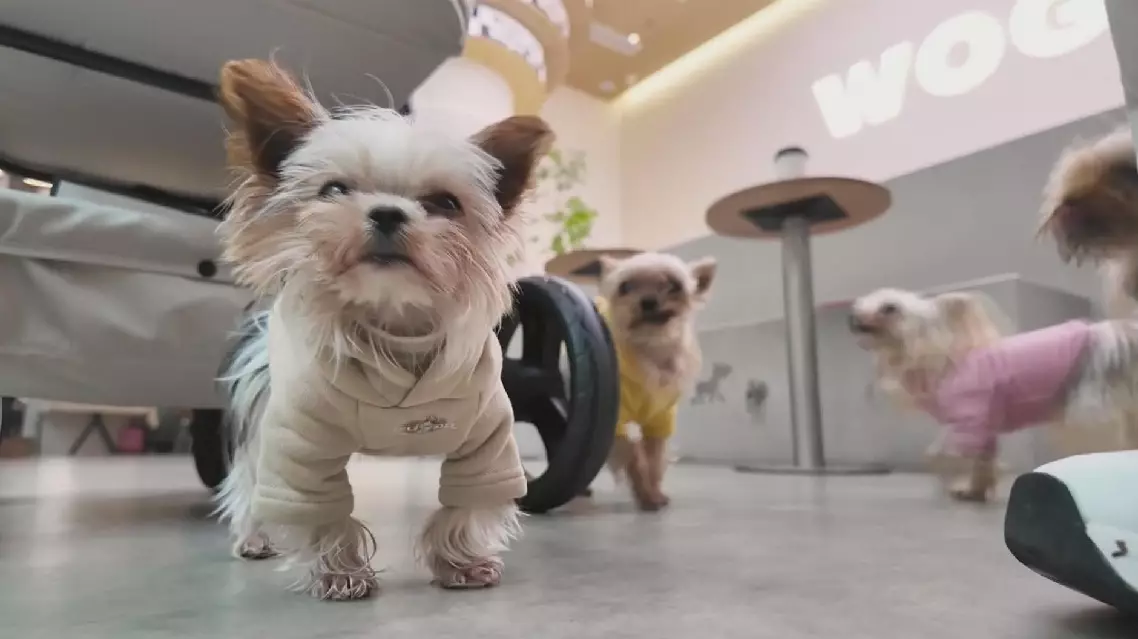
Chinese university launches country's first pet-centric bachelor's program as industry thrives