Since April, the United States has been dialing up tariffs on some of its biggest trading partners, which has sparked global pushback.
In May, the U.S. and China struck a 90-day truce after negotiations in London. As part of that, the U.S. lowered tariffs of nearly 145 percent to 55-percent tariff on many Chinese imports. Duties remain above 30 percent for most goods. This arrangement expires on Aug 12, unless renewed.
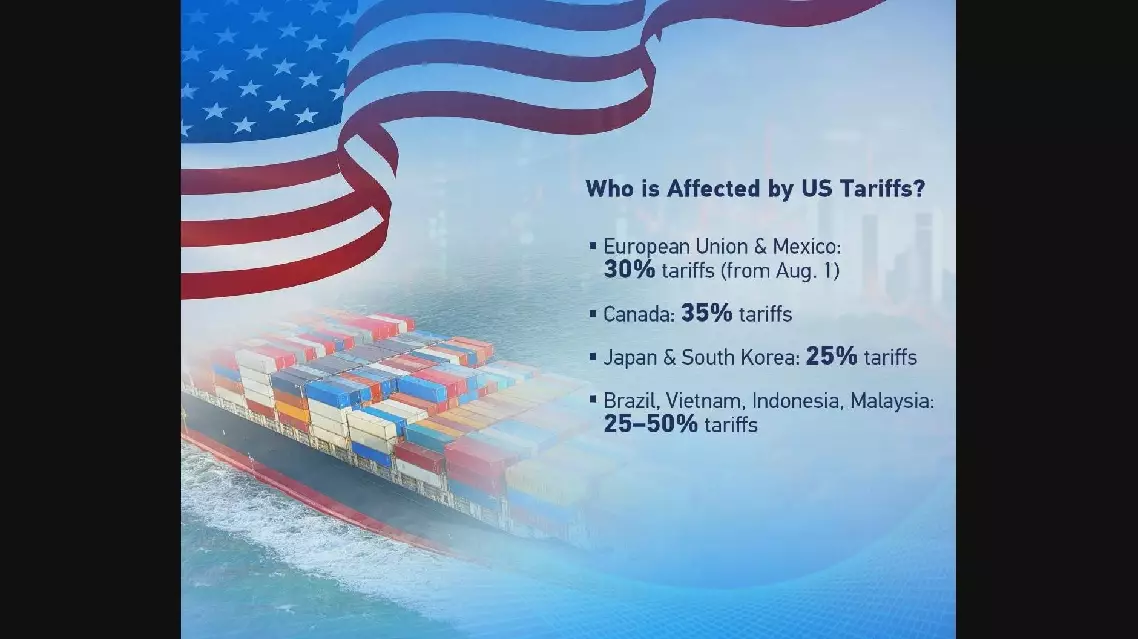
Europe and Mexico face a 30-percent tariff starting Aug 1. Canada is facing 35-percent tariffs on select exports, despite being part of a joint trade agreement with the U.S. and Mexico that was forged by Trump during his first term.
Japan and South Korea have been hit with 25-percent tariffs, which are expected to affect especially their high-tech, machinery sectors.
Brazil, and ASEAN countries like Malaysia, Vietnam, Indonesia, Thailand and Cambodia, are facing new duties ranging from 25 to 50 percent, under what Washington is calling a "reciprocal tariff regime".
Experts say this could trigger a new round of trade disputes at the World Trade Organization, and complicate supply chains that are already under pressure from inflation and geopolitical tension.
The U.S. tariffs are clearly focused on core industrial sectors, particularly those tied to national security and manufacturing jobs.
First up is steel and aluminum. The U.S. has doubled tariffs on both metals to 50 percent across the board. Even long-standing allies are no longer exempt.
Second, copper is being targeted with a new 50-percent tariff from Aug 1. It is crucial for electric vehicles, renewable energy systems, and electronics. This move could drive up costs for American clean energy projects and EV makers.
Lastly, there's the automobile sector. There's a 25-percent tariff on all car and auto part imports. That hits European and Asian manufacturers the hardest. The United States says these actions will rebuild its domestic manufacturing and reduce dependence on foreign supply chains. But critics argue the tariffs will raise prices for consumers and invite retaliation.
Roundup: US tariffs on major economies, sectors
Roundup: US tariffs on major economies, sectors