Hong Kong stocks rose Friday as Chinese AI startups prepared IPOs, with broader Asian markets also posting gains.
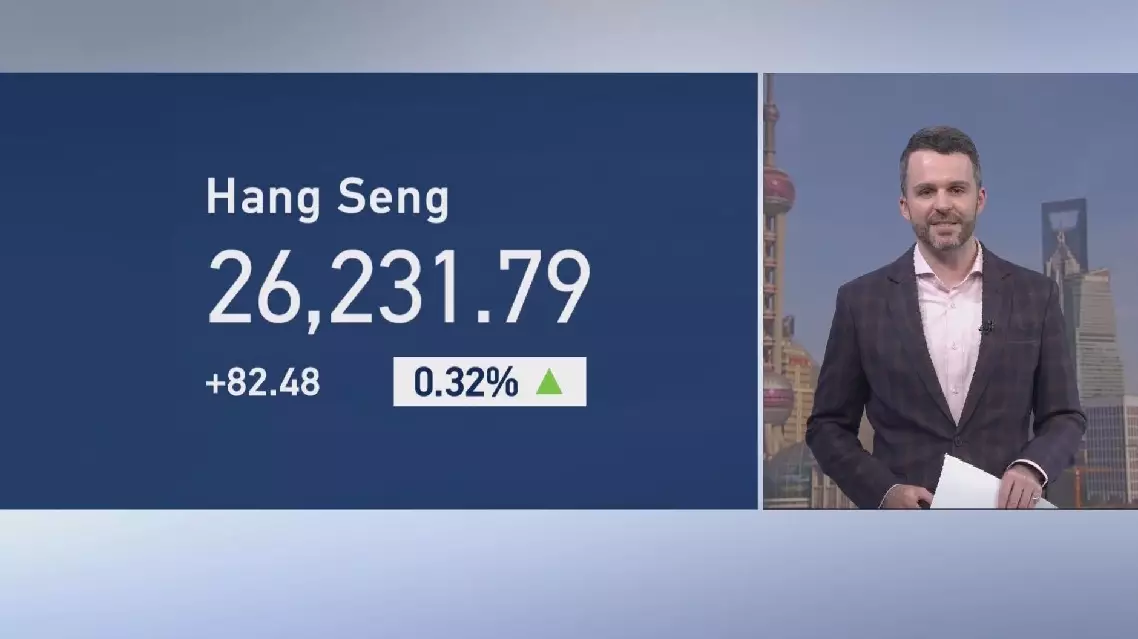
The Hang Seng Index advanced 0.32 percent to close at 26,231.79 points, lifted by optimism surrounding newly listed AI tech firms.
In Tokyo, equities also finished higher, buoyed by market heavyweight Fast Retailing after the retailer reported strong earnings. The Nikkei 225 climbed 822.63 points, or 1.61 percent, from Thursday to end at 51,939.89.
Timothy Pope, a market analyst at China Global Television Network (CGTN), reviewed performances in both markets, underscoring the strong debuts of Hong Kong's AI listings.
"Today's listing was MiniMax AI which focuses on consumer applications for artificial intelligence. Its IPO raked in 620 million U.S. dollars, which the company says is going to fund research and development. And its stock was up a massive 109 percent in its trading debut today. The company is now valued at 11.6 billion dollars, and it was only founded in 2022 -- this is a post-pandemic company. The Minimax debut follows one yesterday as well that was Zhipu AI which rose 13 percent yesterday and another 20 percent today. Zhipu's focus though differs from MiniMax in that it works more on the business and government side when it comes to AI and some market watchers are giving this as a reason why it didn't have the same first day pop -- there's simply less hype in government contracts I guess. Looking at the day more broadly Hang Seng rose a third of one percent. Tech and gold stocks were continuing to dominate. Shares in Hang Seng Bank rose 0.4 percent as well after we saw shareholders vote to accept a buyout bid by the bank's owners who want to take it private. This one isn't a done deal yet though as it still has to go before Hong Kong's High Court, which the bank says is expected to rule on the decision on January 23," the analyst said.
"Over in Tokyo the Nikkei 225 was up strongly as well -- adding 1.6 percent to close just a whisker below 52,000 points. The U.S. dollar was pretty strong against the yen today so that helped a lot of the export-oriented stocks like the automakers. But the Nikkei as we know moves at the whim of its heavyweight stocks and one of the biggest is Fast Retailing, the owners of Uniqlo. Its shares were up 10.7 percent today after some strong quarterly earnings. Profits for the previous quarter up 12 percent. But just for an idea here of what I mean when I say heavyweight, the Nikkei was up 823 points today, and 592 points was purely that Fast Retailing gain," he said.
AI listings boost Hong Kong market as Tokyo stocks rally on earnings: analyst
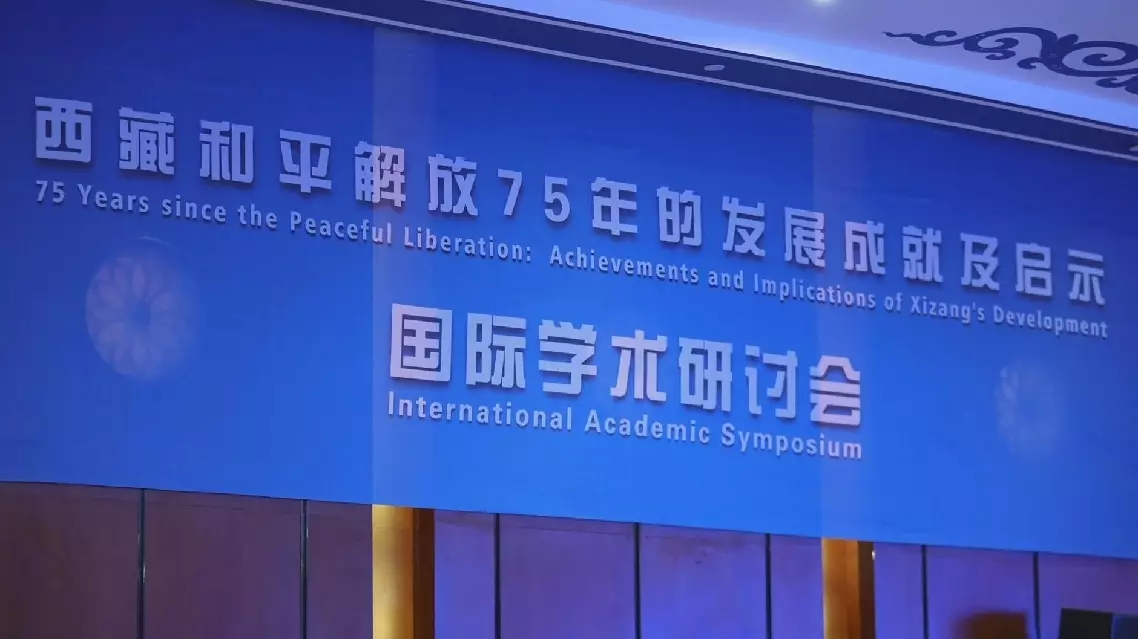
An international academic symposium was held on Saturday at the Xizang Museum in Lhasa, capital of southwest China's Xizang Autonomous Region, to mark the 75th anniversary of the peaceful liberation of the region.
Perched on the Roof of the World, the Xizang Museum is the first modern museum on the plateau.
On the 75th anniversary of Xizang's peaceful liberation, it welcomed a group of international scholars to reflect on the region's transformation and future.
Greening efforts on the highest region on Earth have seen major strides.
Forest coverage has risen from less than 1 percent in 1951 to 12.5 percent today.
"Even here you see around the mountains of Lhasa here, the massive large-scale plantation. There is a big lesson to learn now to other parts of the world and other countries also to come. This is the conservation. We should move this way," said Krishna Prasad Oli, former Nepali ambassador to China. Nestled in the Himalayas is not just Xizang's natural beauty, but its unique culture.
Over the past few decades, the central government has invested billions of yuan in the region's heritage protection.
"In general there are so many rumors that are just not true. For example, there are rumors in our media that China suppresses the Tibetan language. A very simple thing is on the street that you see signs and two languages everywhere (in Mandarin and in Tibetan). Even in Austria and the minority areas, there are big discussions if we should write something in minority languages. But in China it is not a problem. So China's handling this is far better than Austria," said Georg, Vavra, an Austrian historian.
The most ambitious and costly undertaking on the plateau since its liberation has been building modern infrastructure.
Today, Xizang boasts a network of roads and railways that continues to expand.
"It just so happens that yesterday I traveled by train from Nyingchi to Lhasa. The UK is a country of 60 million people and has been struggling and failing for 17 years to build 150 kilometers of high speed rail. Now if you consider Xizang with a population of 4 or 5 million, they could never undertake a project of that scale, and that is what China is trying to do. China is the only country in the world that has a genuine interest in the prosperity and the development of Xizang," said David Ferguson, a Scottish commentator.
Beyond traditional industries, emerging sectors are also taking root in China's western frontier.
"In the 75 years since its peaceful liberation, Xizang has built its scientific and technological capabilities from the ground up. It has become a driving force behind the region's economic and social progress," said Nyima Tashi, a professor with the School of Information Science and Technology under Xizang University.
Int'l scholars gather in Xizang to review regional development over past 75 years