At least 89 people were killed and about 200 others injured over the past two days in escalating clashes between Druze militias and Bedouin tribes in southern Syria's Sweida province, according to the Britain-based Syrian Observatory for Human Rights on Monday.
Meanwhile, the Syrian defense authority, in a statement carried by the state-run SANA news agency, put the death toll at more than 30 and the injuries at some 100.
Attributing the escalating clashes to a breakdown of institutional control, the Syrian defense authority stated that specialized military units had been deployed to separate the warring factions and secure evacuation routes for civilians. The defense authority urged restraint, warned that continued fighting would only deepen civilian suffering, and affirmed its commitment to restoring stability through coordinated operations with interior forces.
Footage shared by China Global Television Network (CGTN) showed armed fighters clashing late Monday in Sweida, with fierce exchanges of fire between the conflicting parties.
The root of the conflict lies in an earlier incident where a young Druze man was assaulted and robbed by armed Bedouins at a temporary checkpoint near al-Masmiyah. In retaliation, local Druze fighters detained several Bedouin members, escalating the situation.

89 killed in escalating Druze-Bedouin clashes in Syria's Sweida: war monitor
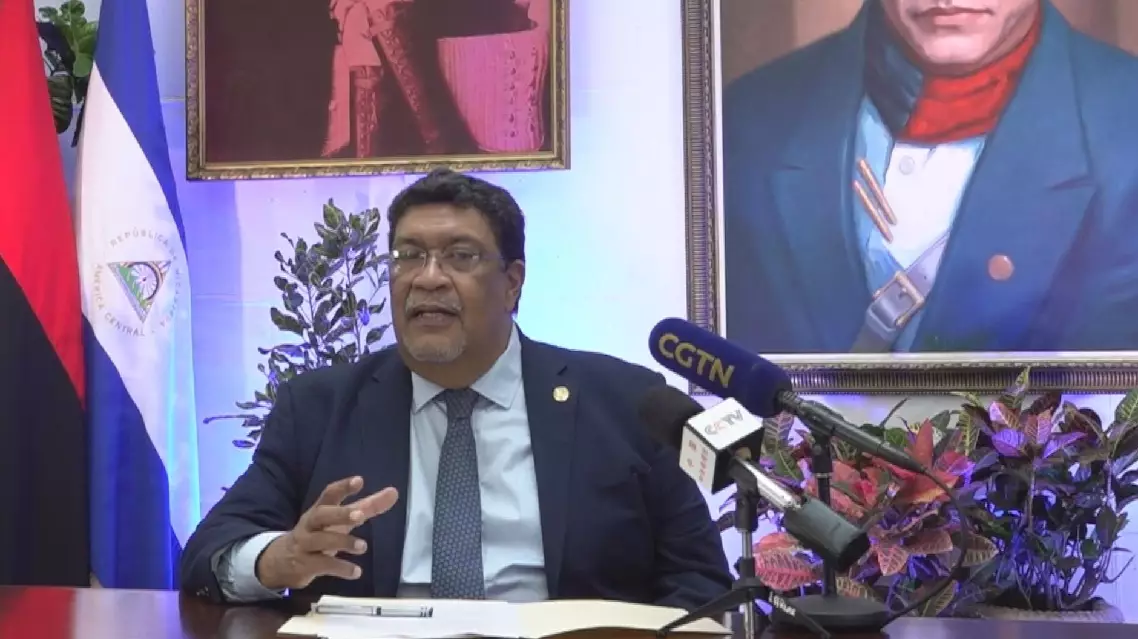
Nicaragua's co-foreign minister Valdrack Jaentschke has warned that militarism must never be allowed to rise again, as Japan's recent moves to lift its arms export ban and revise the pacifist Constitution continue to draw international concern.
This year marks the 80th anniversary of the opening of the Tokyo Trials, where Japan's Class-A war criminals from World War II were brought to justice.
In an interview with China Global Television Network (CGTN), Valdrack Jaentschke voiced his concern that today's world order is being undermined by interventionism and other challenges.
"It is necessary for us to remember that after the end of World War II, countries worked hard to build a new international order based on international law. However, regrettably, more than 80 years later, we are seeing that this once explored and attempted order is being challenged by interventionism, a confrontational mindset, and tendencies like 'might makes right.' These are precisely the conditions that gave rise to fascism and militarism in the past, which ultimately led to the tragedy of World War II," he said.
He said the international community has a responsibility to pursue a new international order -- one fundamentally grounded in peace.
"Looking back at the history more than eight decades ago and comparing it with today's reality, it is our responsibility to recognize that the world should, and must, build a new international order that is more just, fairer, rooted in international law, based on a logic of mutual benefit and shared success, and fundamentally grounded in peace," said the minister.
"Today, as we revisit the Tokyo Trials, it is meant to remind the world that such a tragedy must never be repeated -- and that we must do everything in our power to prevent it from happening again. We must stop that dark world -- born from militarism, interventionism, and fascism -- from ever returning," he said.
Nicaraguan FM warns of militarism revival