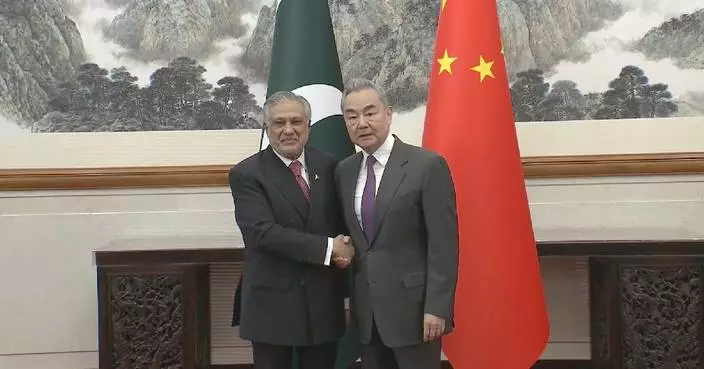
Chairman of the Standing Committee of China's National People's Congress (NPC) Zhao Leji met with visiting Australian Prime Minister Anthony Albanese in Beijing on Tuesday, to discuss relations between their two countries.
At the meeting, Zhao recalled that President Xi Jinping and Prime Minister Albanese held fruitful talks earlier in the day, saying that the meeting between the two leaders has charted out a new blueprint for the development of China-Australia relations, and that China is ready to work with Australia to implement the important consensus reached between the two leaders, advance high-quality mutually beneficial cooperation, deepen people-to-people ties, and promote long-term, sound and stable growth of bilateral relations.
He also stated the NPC is ready to strengthen friendly relations with the Parliament of Australia, enhance experience exchanges in legislation and supervision, and provide legal guarantee for bilateral cooperation.
Speaking on the same occasion, Albanese said that Australia is ready to deepen trade and economic cooperation with China, step up exchanges between the national legislatures of the two countries, expand people-to-people interactions, jointly address climate change, properly handle differences, and actively advance Australia-China relations through dialogue and cooperation.
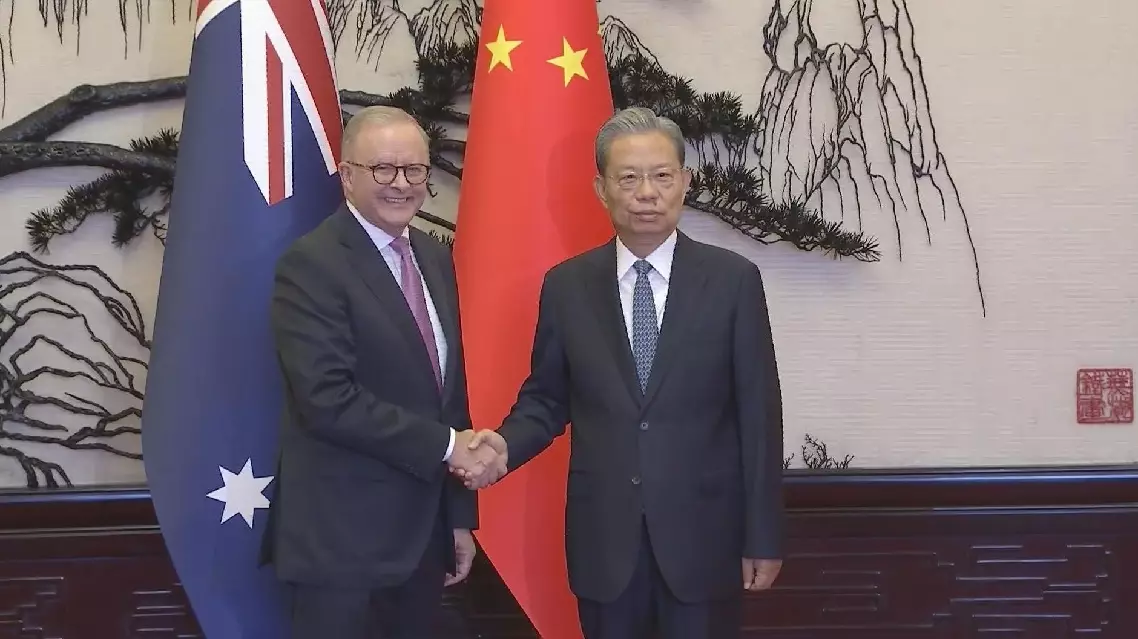
China's top legislator meets visiting Australian prime minister on relations
The United States cannot legitimize an operation that attacked Venezuela and captured its president, a Chinese scholar said Sunday.
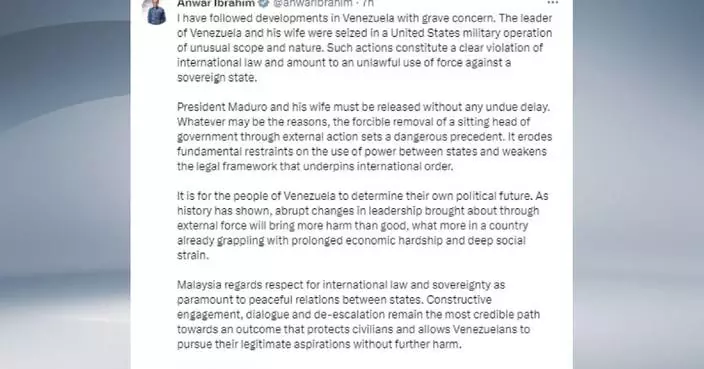
On Saturday, the United States launched a large-scale strike on Venezuela, during which Venezuelan President Nicolas Maduro and his wife were 'captured and flown out of Venezuela' according to a post by U.S. President Donald Trump on his Truth Social account.
Teng Jianqun, director of the Center for Diplomatic Studies at Hunan Normal University, said in an interview with China Global Television Network (CGTN) that the aim of this operation is to take full control of Venezuela’s natural resources.
"I don't think the United States can legitimize this operation to take custody of the president of Venezuela. And also I don't think the United States can legitimize its any action in taking the oil reserves of that country. This is actually a very dangerous game played by the Trump administration. And of course, the United States would like to take full control of that country and to take full control of the natural resources, especially the large reserve of oil in Venezuela," said Teng.
Teng said Venezuela is not an isolated case but a common practice by the United States. The United States launched an invasion of Panama on Dec. 20, 1989, which continued until January 1990, with the stated objective of capturing Panamanian strongman Manuel Noriega on charges of drug trafficking and organized crime.
"We still remember the so-called sentence of the former president of Panama in the late 1980s. And this time, the president of Venezuela will be under some judicial condition (judicial proceedings) for the so-called drug trafficking and some other crimes. So I think this is not a single case for the Venezuela country, but also this is actually a practice by the United States -- to use force, to use so-called justice under law against any leaders in Latin America and the Caribbean waters," he said.
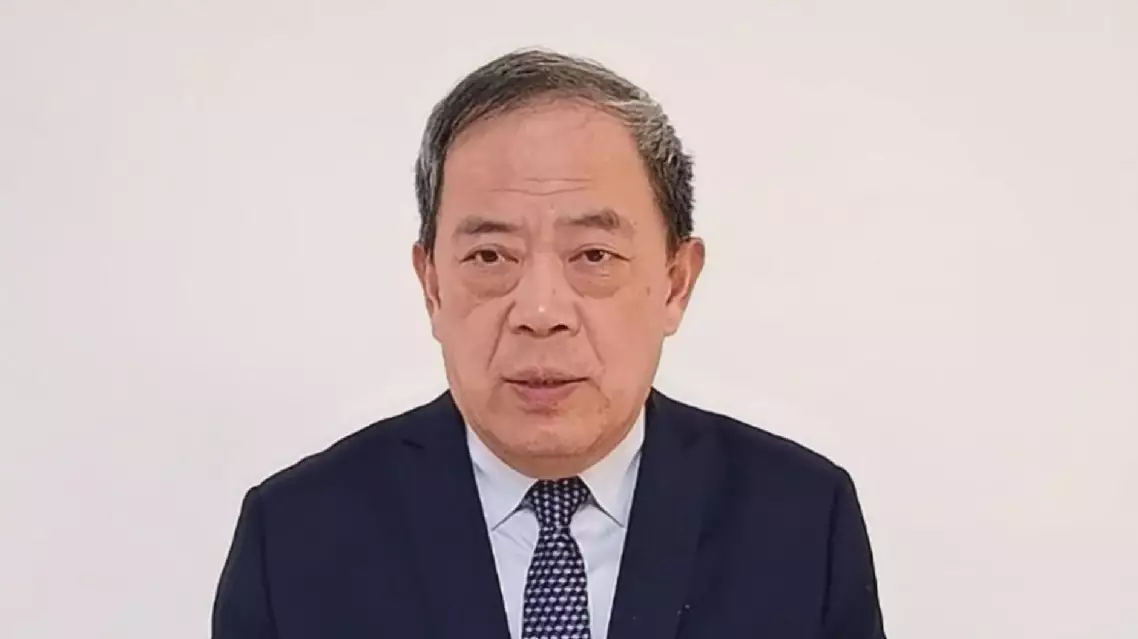
US cannot legitimize operation against Venezuela: Chinese scholar