Following the successful launch of the Tianzhou-9 cargo spacecraft early Tuesday, scientists detailed the experimental instruments and equipment onboard, praising their significance for space research.
The Tianzhou-9 delivered over 770 kilograms of supplies to the orbiting Tiangong space station, enabling 23 upcoming scientific experiments. Among the equipment are three dedicated to space life sciences and biotechnology, highlighting the mission’s advanced research focus.
One standout feature is a brain organoid chip, capable of replicating the intricate microenvironment and functions of the human brain. This technology could pave the way for groundbreaking discoveries in human biology under space conditions.
"Astronauts often experience adverse effects during long-duration space missions, such as headaches, dizziness and sleep disturbances. However, the underlying mechanisms of how these factors like microgravity and radiation impact brain function are not yet fully understood. We plan to send up a newly developed brain organoid-on-chip, mainly derived from human stem cells, which can simulate key structures and functions of the human brain. This research will provide crucial insights for future long-term space habitation and the prediction of health risks," said Qin Jianhua, at professor at the Dalian Institute of Chemical Physics under Chinese Academy of Sciences (CAS).
Among the supplies carried by the Tianzhou-9 cargo craft is also a new core muscle exercise device, helping astronauts avoid muscle atrophy in the microgravity environment of space.
"Skeletal muscle atrophy poses a significant challenge during space flight. Our study focuses on developing effective countermeasures by culturing skeletal muscle precursor cells in microgravity to analyze their behavior. The ultimate goal is to mitigate muscle loss through targeted pharmacological or nutritional strategies," said Ying Hao, principal investigator at the CAS Shanghai Institute of Nutrition and Health.
Chinese scientists also hope these space experiments will translate into new solutions and applications back on Earth, ultimately benefiting all of humankind.
"Chronic diseases like lipid metabolism disorders typically progress slowly over years or decades. However, in space, they accelerate dramatically, potentially within weeks. We aim to understand why these chronic diseases progress so rapidly in space and to explore rapid, efficient, and long-lasting drug interventions. This experiment seeks to benefit both China's space program and the wider global community," said Gan Yong, principal investigator of the CAS Shanghai Institute of Materia Medica.
Additionally, these instruments will facilitate scientific experiments in space materials science, microgravity fluid physics, and combustion science.
The Tianzhou-9 carries about 6.5 tonnes of supplies into orbit, including life-support materials for the Shenzhou-20 and Shenzhou-21 astronaut crews, two new sets of Feitian extravehicular spacesuits, a core muscle exercise device, and scientific payloads related to space medicine and other experimental fields.
The mission is the fourth cargo resupply flight of China's manned space program since the space station entered the application and development phase. It is also the 584th mission of the Long March rocket series.
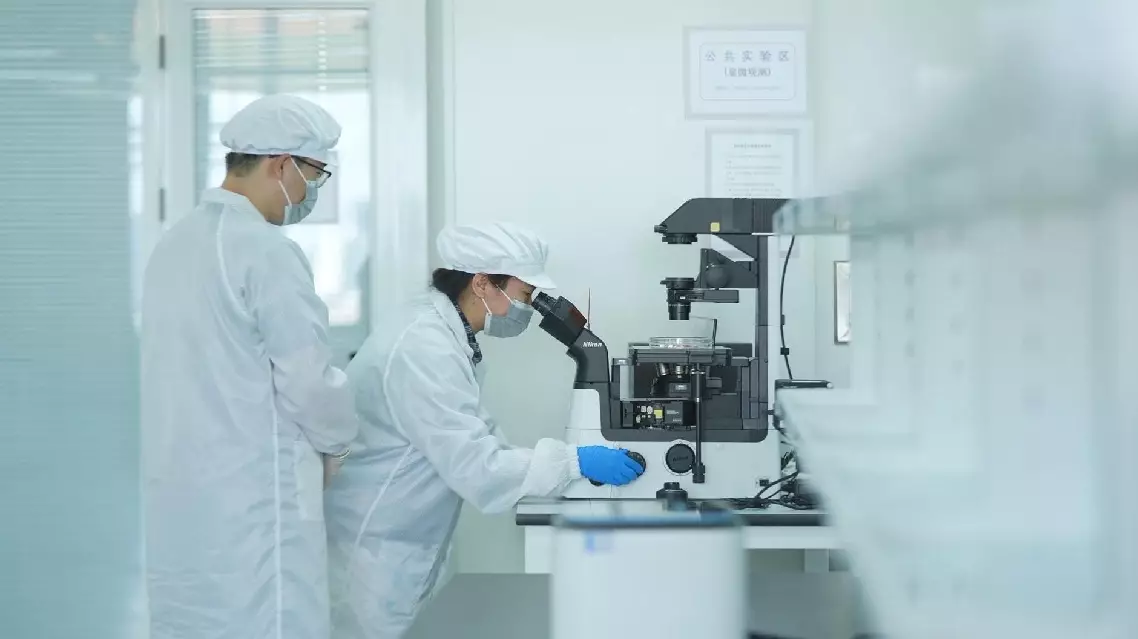
Scientists praise Tianzhou-9’s experimental payload for advancing space research