CHP urges public to be vigilant against mosquito-borne disease, Chikungunya fever
The Centre for Health Protection (CHP) of the Department of Health (DH) today (July 16) said that there was an outbreak of Chikungunya fever (CF) in Shunde, Guangdong, in July this year, which was triggered by imported cases. As of July 15, there were 478 confirmed cases, all of which presented with mild symptoms. Although no confirmed CF cases have been recorded in Hong Kong so far this year, the CHP has been preparing for the risk of imported cases as a prudent measure, and will continue to closely monitor the trend of CF in neighbouring areas.
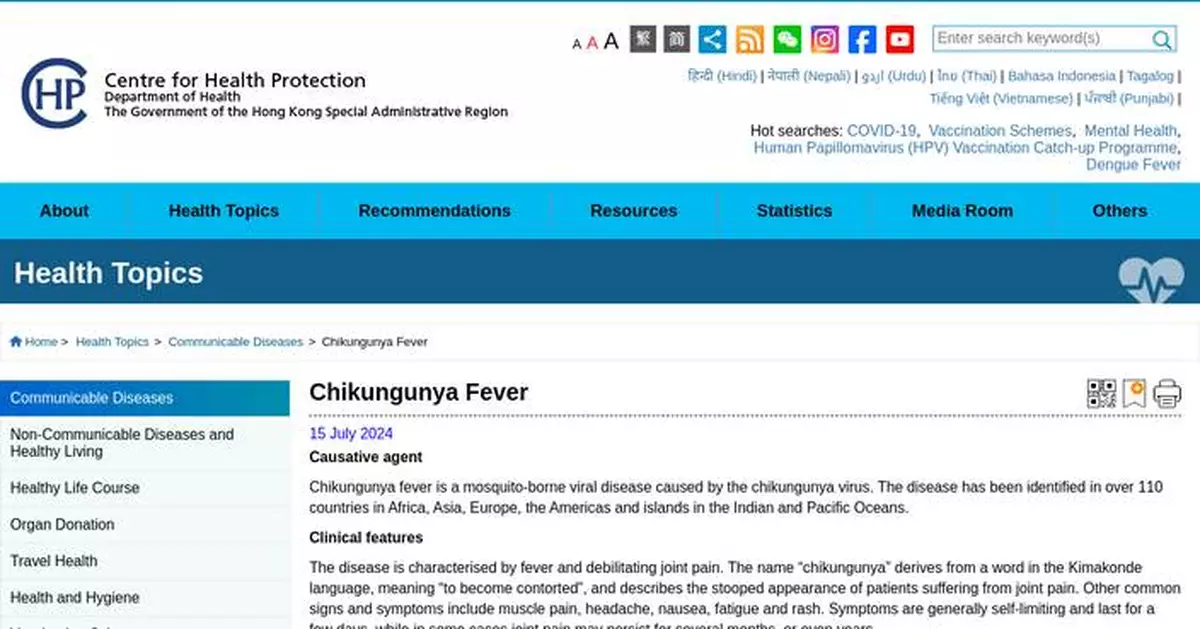
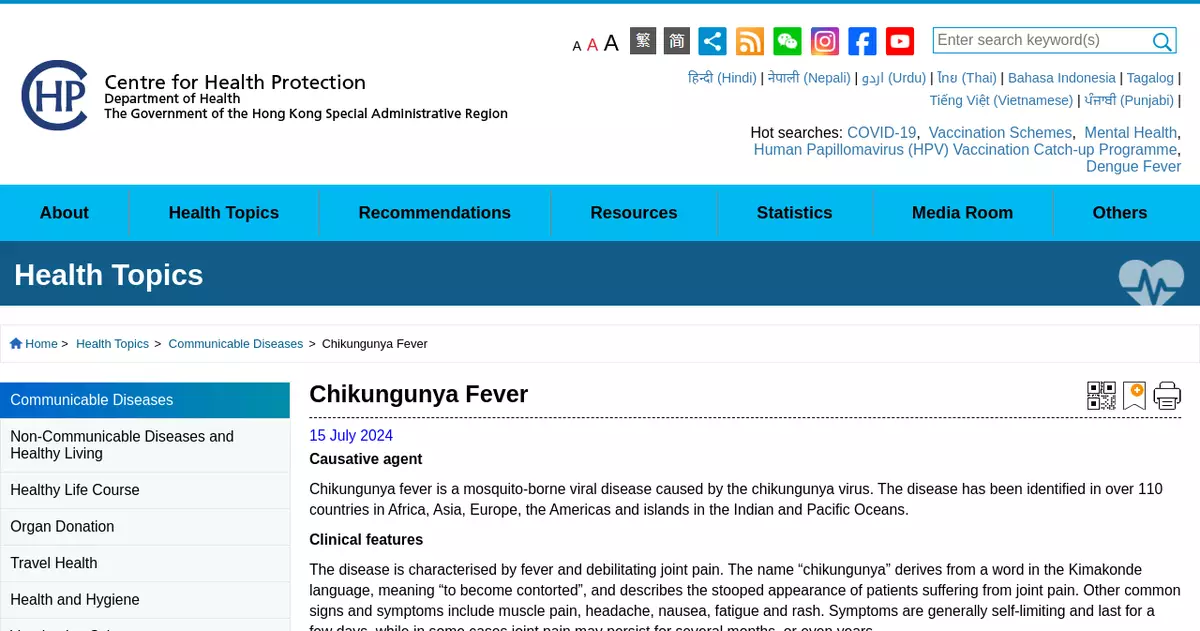
CF is a mosquito-borne disease, and a statutory notifiable infectious diseases in Hong Kong. Its symptoms are similar to those of dengue fever (DF). Patients with CF typically presented with fever and joint pain. Other common symptoms include muscle pain, headache, nausea, fatigue and rash. While most patients recover on their own, in some cases, joint pain may persist for several months or even years. The mortality rate of CF is generally lower than that of DF. From 2016 to 2019, between one and 11 CF cases were recorded in Hong Kong each year. All of which were imported cases. There have been no CF cases in Hong Kong since 2020.
According to the World Health Organization, CF cases have been recorded in more than 110 countries/regions. As of early June this year, over 220 000 cases had been reported in 14 countries/regions worldwide (including the Mainland, Taiwan and Singapore which are popular tourist destinations for Hong Kong citizens). Of these cases, about 80 were fatal.
"Although Aedes aegypti, the primary vector for spreading CF, is not found in Hong Kong, Aedes albopictus, another vector that can transmit CF, is a common mosquito species in Hong Kong. Imported cases of CF can lead to local transmission if they are bitten by mosquitoes during the communicable period. Inadequate mosquito control also poses a risk of CF outbreaks. Therefore, members of the public should remain vigilant. Mosquito control is of paramount importance, including eliminating mosquito breeding sites and avoiding mosquito bites. Members of the public are advised to maintain mosquito control and personal protective measures both locally and when travelling outside of Hong Kong. Those returning from areas affected by CF should apply insect repellent for 14 days upon arrival in Hong Kong. If they feel unwell, they should seek medical advice promptly and provide their travel details to a doctor," said the Controller of the CHP, Dr Edwin Tsui.
"According to the information provided by Guangdong Province, the current CF outbreak mainly occurred in the towns of Lecong, Beijiao and Chencun in Shunde, which are not popular tourist destinations for Hong Kong citizens. However, the risk of imported cases in Hong Kong has increased due to frequent travel between Guangdong and Hong Kong. In the light of the situation in Shunde, the DH has stepped up the provision of health advice to travellers on prevention of mosquito bites and reminded travellers returning to Hong Kong that they should seek medical treatment or contact port health staff for assistance as soon as possible if they develop symptoms. Suspected cases will be referred to medical institutions for follow-up. The CHP's Port Health Division (PHD) will step up inspections at boundary control points to ensure good environmental hygiene and vector control measures are in place. It will also continue to conduct health promotions (including reminding travellers to adopt anti-mosquito measures during outbound trips), and maintain close liaison with relevant stakeholders (e.g. airlines and the travel industry) to provide the latest disease information and health advice timely. In addition, the CHP has issued a letter to all doctors and hospitals in Hong Kong providing the latest epidemiological information and urging them to pay attention to the presence of relevant symptoms among those who return to Hong Kong after outbound travel. They should also refer any CF case to hospitals for treatment and report it to the DH immediately in accordance with the established mechanism, so that the DH can initiate epidemiological investigations and implement prevention and control measures. The Public Health Laboratory Services Branch of the CHP will conduct tests on suspected cases. Furthermore, the CHP has notified the Hospital Authority to raise alertness and make relevant contingency preparations in public hospitals as appropriate," Dr Tsui added.
DH will continue to step up health education on mosquito-borne diseases, including disseminating travel health advice to travellers and enhancing public education on the prevention of CF through various online and offline channels. The Environment and Ecology Bureau will remind relevant bureaux and departments, as well as trade stakeholders, to step up territory-wide mosquito prevention and control work. The interdepartmental Pest Control Steering Committee will convene a meeting on July 23 to review the latest situation ofmosquito proliferation and the anti-mosquito work of departments, and to plan for the anti- mosquito work for the future.
To prevent mosquito-borne diseases, members of the public are also reminded to take heed of the following advice on mosquito control:
DEET-containing insect repellents are effective and the public should take heed of the tips below:
* For children who travel to countries or areas where mosquito-borne diseases are endemic or epidemic and where exposure is likely, those aged 2 months or above can use DEET-containing insect repellents with a DEET concentration of up to 30 per cent.
The public should call 1823 in case of mosquito problems and may visit the following pages for more information: the Chikungunya fever page of theCHPand theTravel Health Service, the latestTravel Health News,tips for using insect repellents, and the CHPFacebook PageandYouTube Channel.
Source: AI-found images