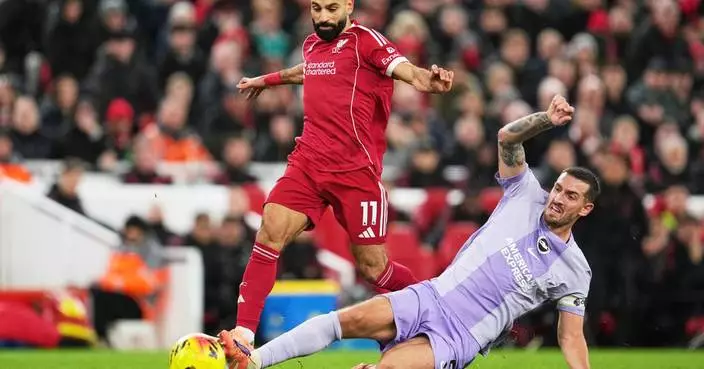
Pop Mart has struck it rich. The Chinese company that caters to toy connoisseurs and influencers said this week that it expects profit for the first six months of this year to jump by at least 350% compared with the prior-year period, largely because of its smash hit plush toy, the Labubu. Pop Mart joins a small list of companies that have tapped into the zeitgeist, drawing in millions of buyers who, for one reason or another, simply must get their hands on a toy or gadget of the moment.
But what makes the Labubu a must-have, or any toy for that matter, is a decades-old question that toy makers have yet to figure out.
Click to Gallery
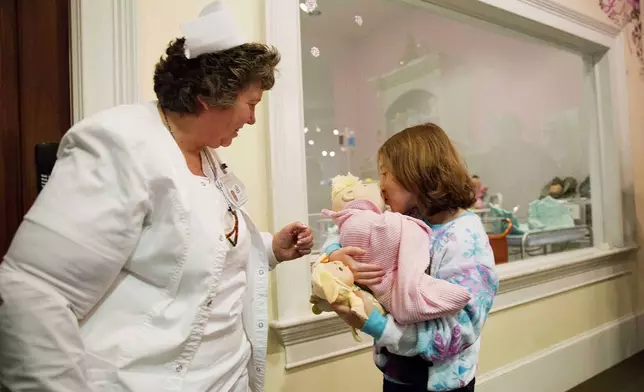
FILE - Talon Shaffer, right, kisses a Cabbage Patch Kid after it was delivered by Cyndi Pappadouplos, a "licensed patch nurse" at Babyland General Hospital, the birthplace of Cabbage Patch Kids, in Cleveland, Ga., on Nov. 21, 2014. (AP Photo/David Goldman, File)
FILE - Aki Maita, Japanese developer of the Tamagotchi digital pet, shows on Monday, December 15, 1997 the new product AngelGotchi after a press conference in Hamburg, Germany. (AP Photo/Oliver Fantitsch, file)
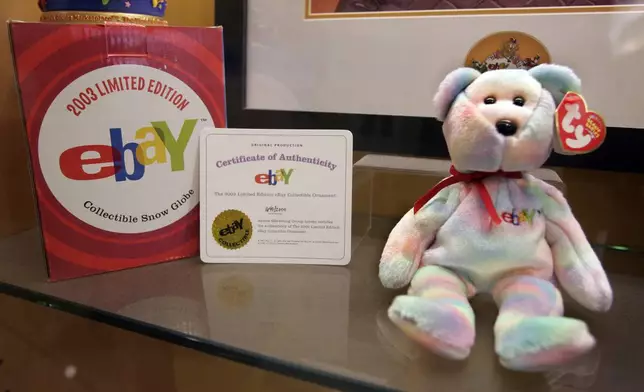
FILE - An authentic Beanie Baby is seen on display at eBay's San Jose, Calif. headquarters on Oct. 17, 2007. (AP Photo/Paul Sakuma, file)
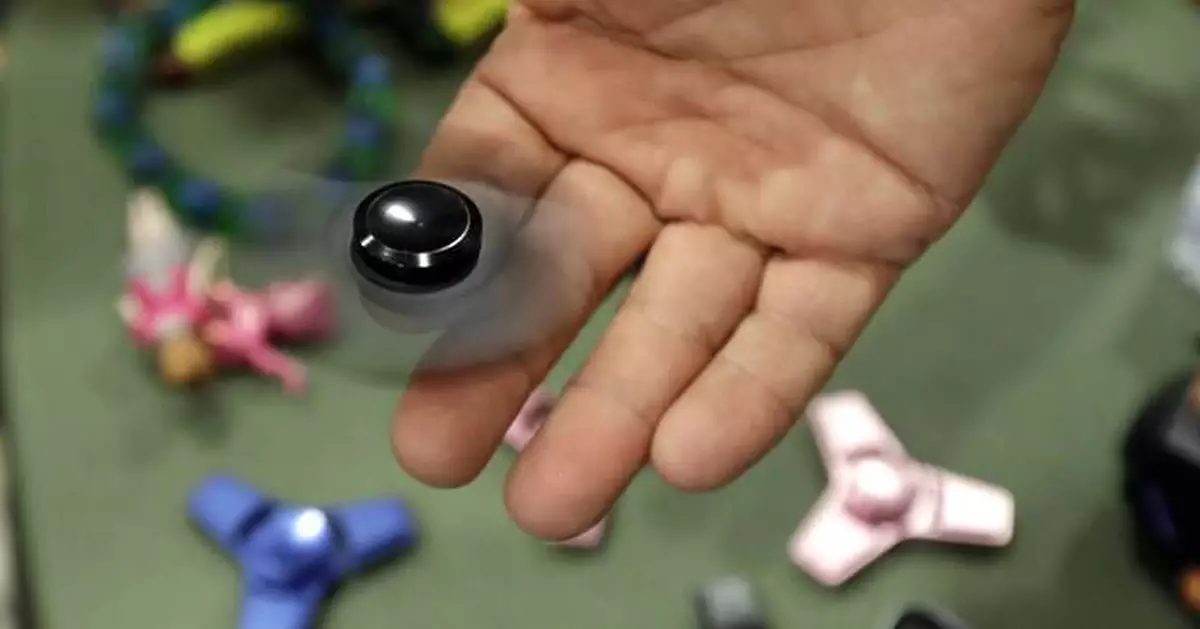
FILE - Funky Monkey Toys store owner Tom Jones plays with a fidget spinner in Oxford, Mich, Thursday, May 11, 2017. (AP Photo/Carlos Osorio, File)
Here's a look at some of the most popular toys over the years.
Cabbage Patch Kids began as chubby-faced dolls with yarn hair that came with adoption papers. During the 1980s the dolls were so popular that parents waited in long lines at stores trying to get a hold of them. More than 90 million Cabbage Patch Kids were sold worldwide during their heyday.
Cabbage Patch Kids, which were created by Xavier Roberts and initially sold by Coleco, were relaunched in 2004, looking to take part in the successful return of other popular 1980s toys including Strawberry Shortcake, Care Bears and Teenage Mutant Ninja Turtles.
A Cabbage Patch Kid museum named BabyLand General Hospital still exists in Cleveland, Georgia. The dolls entered the National Toy Hall of Fame in 2023.
Beanie Babies captivated consumers in the mid-1990s. The cuddly $5 toys were under-stuffed for maximum hug-ability, stamped with cute names on their Ty Inc. tags, and given limited edition runs.
Many people collected, traded and sold the toys with the hopes that their value would just keep going up at the dawn of the e-commerce age. It made some people money, and the founder, Ty Warner, a billionaire in three years.
In 2014 Warner learned that he would not go to prison for hiding at least $25 million from U.S. tax authorities and instead received two years' probation. Warner, one of the highest profile figures snared in a federal investigation of Americans using Swiss bank accounts to avoid U.S. taxes, had pleaded guilty to a single count of tax evasion.
Looking for a pet without the real-life responsibilities? Well then the Tamagotchi electronic pet from Bandai was for you. Consumers were hooked on the egg-shaped plastic toy that first launched in Japan in 1996 and became a craze worldwide in the late 1990s and 2000s.
Users were tasked with taking care of their virtual pet by pressing buttons that simulate feeding, disciplining and playing with the critter on screen. If a Tamagotchi is neglected, it dies.
In 2013 Tamagotchi was reborn as a mobile app, duplicating the experience of the plastic handheld toy. The toy was inducted into the World Video Game Hall of Fame in May.
Fidget spinners — the 3-inch twirling gadgets that took over classrooms and cubicles — were all the rage in 2017. The toy was considered somewhat of an outlier at the time, given that it wasn't made by a major company, timed for the holiday season, or promoted in TV commercials. Fidget spinners were more easily found at gas stations or 7-Eleven than at big toy chains.
Fidget spinners had been around for years, mostly used by kids with autism or attention disorders to help them concentrate, but they became more popular after being featured on social media.
While hot toys are often made by one company, fidget spinners were made by numerous manufacturers, mostly in China. The toys were marketed as a concentration aid but became so popular among children that many schools started banning them, saying that they were a distraction.
The Labubu, by artist and illustrator Kasing Lung, first appeared as monsters with pointed ears and pointy teeth in three picture books inspired by Nordic mythology in 2015.
In 2019 Lung struck a deal with Pop Mart, a company that caters to toy connoisseurs and influencers, to sell Labubu figurines. But it wasn’t until Pop Mart started selling Labubu plush toys on key rings in 2023 that the toothy monsters suddenly seemed to be everywhere, including in the hands of Rihanna, Kim Kardashian and NBA star Dillon Brooks. K-pop singer Lisa of Blackpink began posting images of hers for her more than 100 million followers on Instagram and on TikTok, where Labubu pandemonium has broken out.
Labubu has been a bonanza for Pop Mart. Its revenue more than doubled in 2024 to 13.04 billion yuan ($1.81 billion), thanks in part to its elvish monster. Revenue from Pop Mart’s plush toys soared more than 1,200% in 2024, nearly 22% of its overall revenue, according to the company’s annual report.

FILE - Talon Shaffer, right, kisses a Cabbage Patch Kid after it was delivered by Cyndi Pappadouplos, a "licensed patch nurse" at Babyland General Hospital, the birthplace of Cabbage Patch Kids, in Cleveland, Ga., on Nov. 21, 2014. (AP Photo/David Goldman, File)
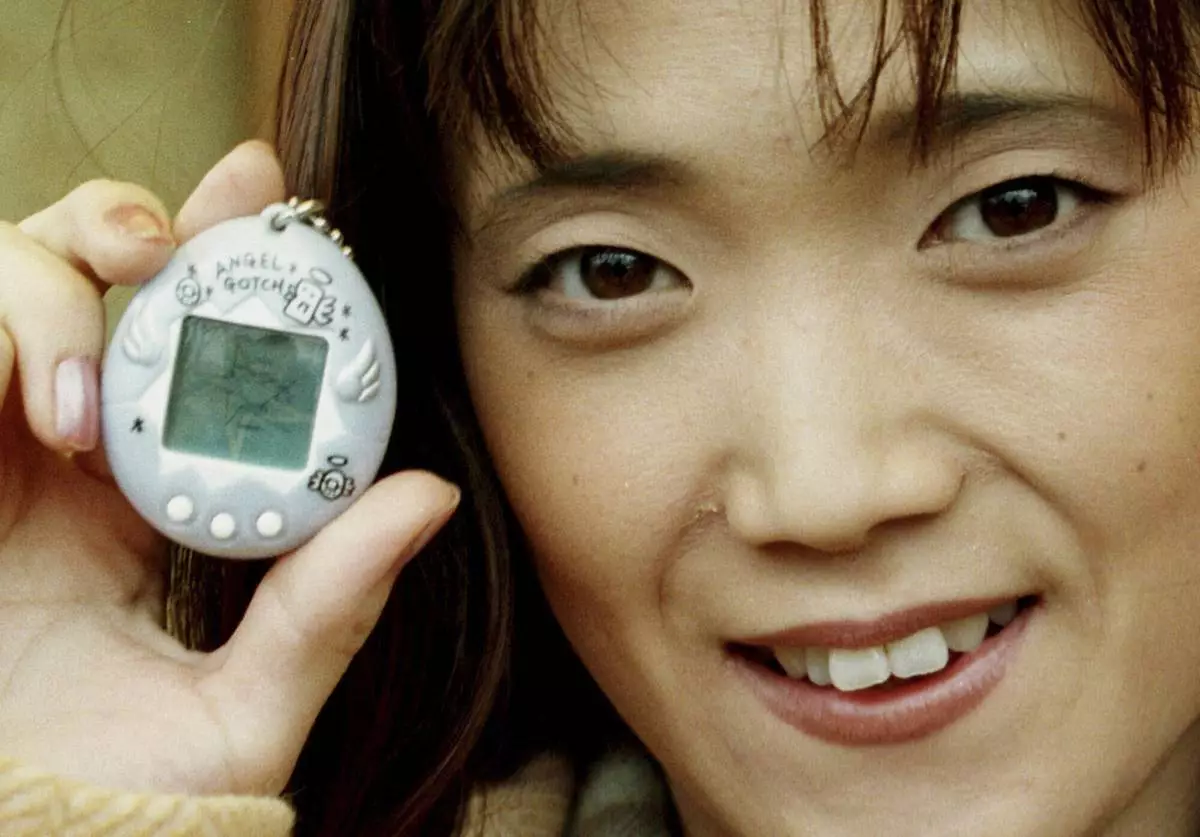
FILE - Aki Maita, Japanese developer of the Tamagotchi digital pet, shows on Monday, December 15, 1997 the new product AngelGotchi after a press conference in Hamburg, Germany. (AP Photo/Oliver Fantitsch, file)

FILE - An authentic Beanie Baby is seen on display at eBay's San Jose, Calif. headquarters on Oct. 17, 2007. (AP Photo/Paul Sakuma, file)
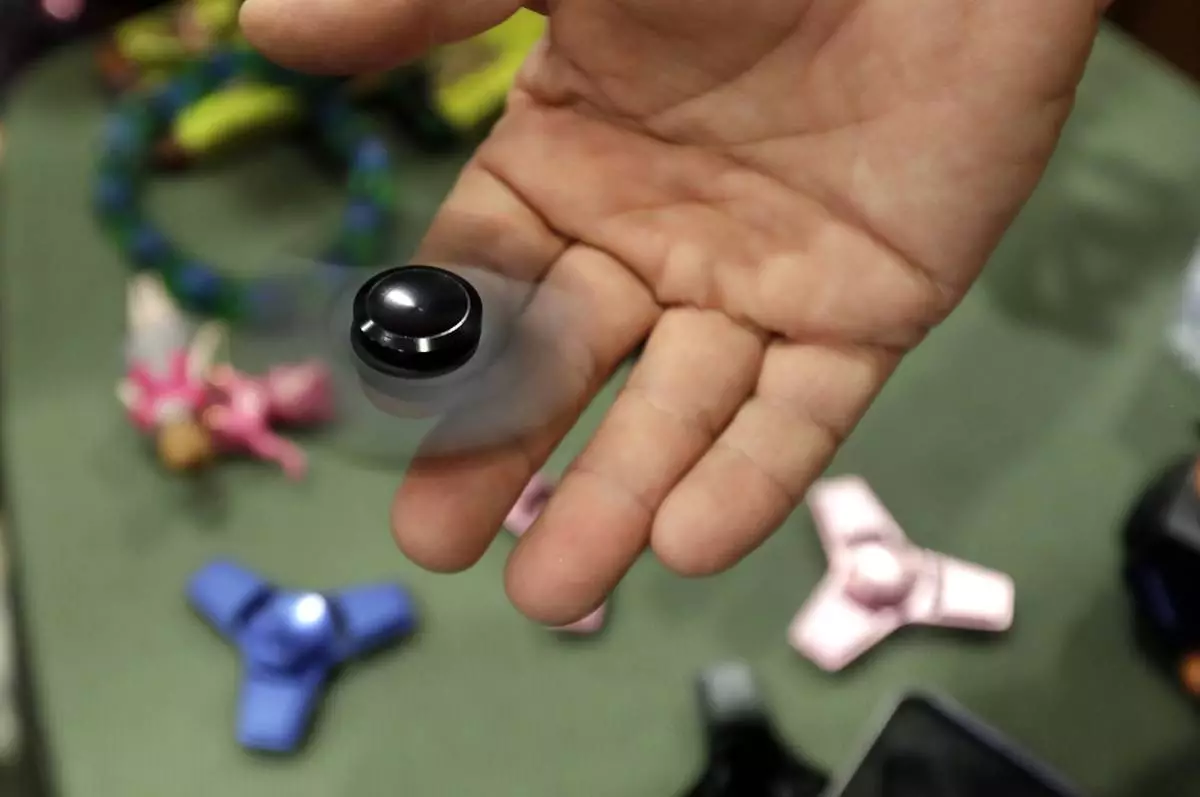
FILE - Funky Monkey Toys store owner Tom Jones plays with a fidget spinner in Oxford, Mich, Thursday, May 11, 2017. (AP Photo/Carlos Osorio, File)
VILNIUS, Lithuania (AP) — Belarus freed Nobel Peace Prize laureate Ales Bialiatski, key opposition figure Maria Kolesnikova and dozens of other prisoners on Saturday, capping two days of talks with Washington aimed at improving ties and getting crippling U.S. sanctions lifted on a key Belarusian agricultural export.
The U.S. announced earlier Saturday that it was lifting sanctions on Belarus' potash sector. In exchange, President Alexander Lukashenko pardoned 123 prisoners, Belarus' state news agency, Belta, reported.
A close ally of Russia, Minsk has faced Western isolation and sanctions for years. Lukashenko has ruled the nation of 9.5 million with an iron fist for more than three decades, and the country has been repeatedly sanctioned by the West for its crackdown on human rights and for allowing Moscow to use its territory in the 2022 invasion of Ukraine. Belarus has released hundreds of prisoners since July 2024.
John Coale, the U.S. special envoy for Belarus who met with Lukashenko in Minsk on Friday and Saturday, described the talks to reporters as “very productive" and said normalizing relations between Washington and Minsk was “our goal,” Belta reported.
“We’re lifting sanctions, releasing prisoners. We’re constantly talking to each other,” Coale said, adding that the relationship between the U.S. and Belarus was moving from “baby steps to more confident steps” as they increased dialogue, according to the Belarusian news agency.
Among the 123 prisoners were a U.S. citizen, six citizens of U.S. allied countries, and five Ukrainian citizens, a U.S. official told The Associated Press in an email. The official, who spoke on condition of anonymity to discuss private diplomatic negotiations, described the release as “a significant milestone in U.S.-Belarus engagement” and “yet another diplomatic victory” for U.S. President Donald Trump.
The official said Trump’s engagement so far “has led to the release of over 200 political prisoners in Belarus, including six unjustly detained U.S. citizens and over 60 citizens of U.S. Allies and partners.”
Pavel Sapelka, an advocate with the Viasna rights group, confirmed to the AP that Bialiatski and Kolesnikova were among those released.
Bialiatski, a human rights advocate who founded Viasna, was in jail when he was awarded the Nobel Peace Prize in 2022 along with the prominent Russian rights group Memorial and Ukraine’s Center for Civil Liberties. He was later convicted of smuggling and financing actions that violated public order — charges that were widely denounced as politically motivated — and sentenced to 10 years in 2023.
Bialiatski told the AP by phone Saturday that his release after 1,613 days behind bars came as a surprise — in the morning, he was still in an overcrowded prison cell.
“It feels like I jumped out of icy water into a normal, warm room, so I have to adapt. After isolation, I need to get information about what’s going on," said Bialiatski, who seemed energetic but pale and emaciated in post-release videos and photos.
He vowed to continue his work, stressing that “more than a thousand political prisoners in Belarus remain behind bars simply because they chose freedom. And, of course, I am their voice."
Kolesnikova, meanwhile, was a key figure in the mass protests that rocked Belarus in 2020, and is a close ally of an opposition leader in exile, Sviatlana Tsikhanouskaya.
Known for her close-cropped hair and trademark gesture of forming a heart with her hands, Kolesnikova became an even greater symbol of resistance when Belarusian authorities tried to deport her in September 2020. Driven to the Ukrainian border, she briefly broke away from security forces at the frontier, tore up her passport and walked back into Belarus.
The 43-year-old professional flautist was convicted in 2021 on charges including conspiracy to seize power and sentenced to 11 years in prison.
Among the others who were released, according to Viasna, was Viktar Babaryka — an opposition figure who had sought to challenge Lukashenko in the 2020 presidential election, widely seen as rigged, before being convicted and sentenced to 14 years in prison on charges he rejected as political.
Viasna reported that the group's imprisoned advocates, Valiantsin Stefanovic and Uladzimir Labkovich, and prominent opposition figure Maxim Znak were also freed. But it later said it was clarifying its report about Stefanovic's release, and Bialiatski told the AP that Stefanovic had not been freed, though he hopes he will be soon.
Most of those released were sent to Ukraine, Franak Viachorka, Tsikhanouskaya’s senior adviser, told the AP.
“I think Lukashenko decided to deport people to Ukraine to show that he is in control of the situation,” Viachorka said.
Eight or nine others, including Bialiatski, were being sent to Lithuania on Saturday, and more prisoners will be taken to the Baltic country in the next few days, Viachorka said.
Ukrainian authorities confirmed that Belarus had handed over 114 civilians. Ukrainian President Volodymyr Zelenskyy confirmed that five of them are Ukrainian nationals.
Freed Belarusian nationals “at their request” and “after being given necessary medical treatment” will be taken to Poland and Lithuania, Ukrainian authorities said.
When U.S. officials last met with Lukashenko in September, Washington said it was easing some of the sanctions on Belarus. Minsk, meanwhile, released more than 50 political prisoners into Lithuania, pushing the number of prisoners it had freed since July 2024 past the 430 mark.
“The freeing of political prisoners means that Lukashenko understands the pain of Western sanctions and is seeking to ease them,” Tsikhanouskaya, the opposition leader in exile, told the AP on Saturday.
She added: “But let’s not be naive: Lukashenko hasn’t changed his policies, his crackdown continues and he keeps on supporting Russia’s war against Ukraine. That’s why we need to be extremely cautious with any talk of sanctions relief, so that we don't reinforce Russia's war machine and encourage continued repressions.”
Tsikhanouskaya also described European Union sanctions against Belarusian potash fertilizers as far more painful for Minsk that the U.S. ones, saying that while easing U.S. sanctions could lead to the release of political prisoners, European sanctions should be used to push for long-term, systemic changes in Belarus and the end of the war in Ukraine.
Belarus, which previously accounted for about 20% of global potash fertilizer exports, has faced sharply reduced shipments since Western sanctions targeted state producer Belaruskali and cut off transit through Lithuania’s port in Klaipeda, the country’s main export route.
“Sanctions by the U.S., EU and their allies have significantly weakened Belarus’s potash industry, depriving the country of a key source of foreign exchange earnings and access to key markets,” Anastasiya Luzgina, an analyst at the Belarusian Economic Research Center BEROC, told the AP.
“Minsk hopes that lifting U.S. sanctions on potash will pave the way for easing more painful European sanctions; at the very least, U.S. actions will allow discussions to begin,” she said.
The latest round of U.S.-Belarus talks also touched on Venezuela, as well as Russia's ongoing invasion of Ukraine, Belta reported.
Coale told reporters that Lukashenko had given “good advice” on how to address the Russia-Ukraine war, saying that Lukashenko and Russian President Vladimir Putin were “longtime friends” with “the necessary level of relationship to discuss such issues.”
"Naturally, President Putin may accept some advice and not others,” Coale said.
The U.S. official told the AP that “continued progress in U.S.-Belarus relations" also requires steps to resolve tensions between Belarus and neighboring Lithuania, which is a member of the EU and NATO.
The Lithuanian government this week declared a national emergency over security risks posed by meteorological balloons sent from Belarus.
The balloons forced Lithuania to repeatedly shut down its main airport, stranding thousands of people. Earlier this year, Lithuania temporarily closed its border with Belarus, and Belarusian authorities responded by threatening to seize up to 1,200 Lithuanian trucks they said were stuck in Belarus.
The U.S. official said improving ties between U.S. and Belarus will require "positive action to stop the release of smuggling balloons from Belarus that affect Lithuanian airspace and resolve the impoundment of Lithuanian trucks.”
Associated Press writer Matthew Lee in Washington contributed to this report.

A woman holds an Old Belarusian flag as she stands waiting released Belarusian prisoners at the U.S. Embassy in Vilnius, Lithuania, on Saturday, Dec. 13, 2025. (AP Photo/Mindaugas Kulbis)
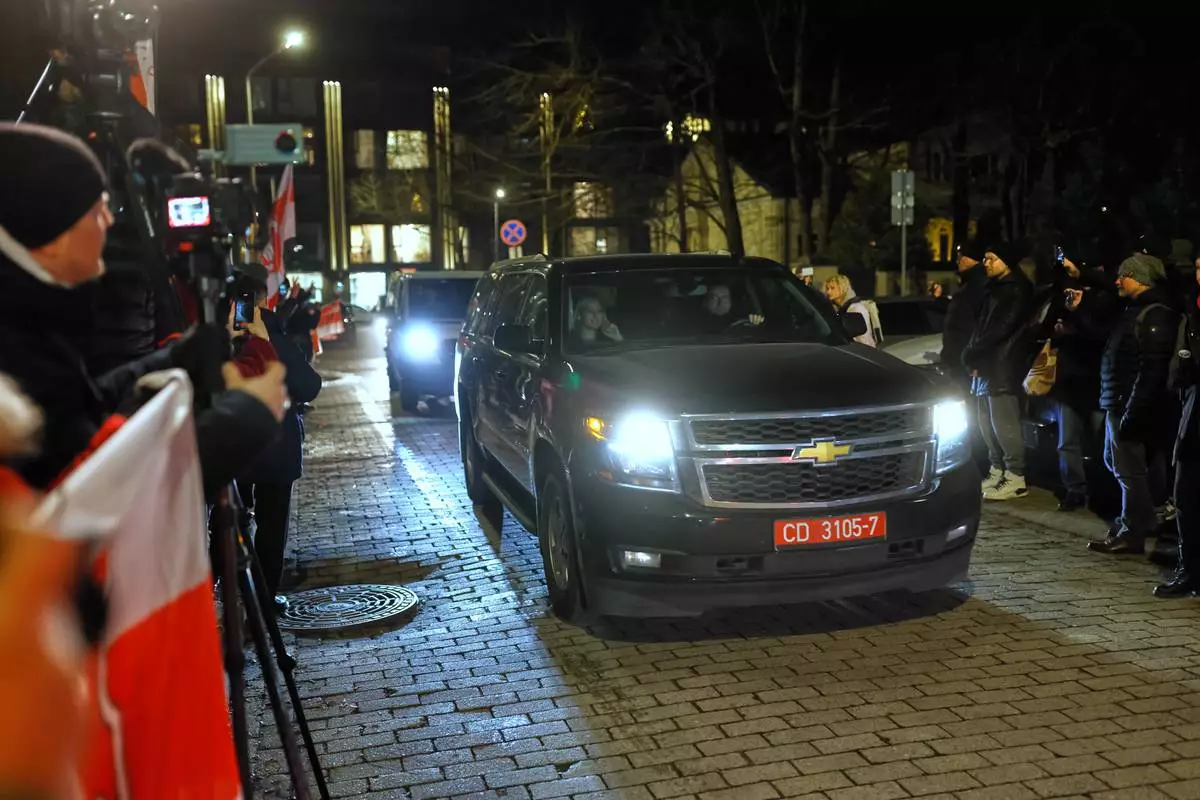
A motorcade arrives at the U.S. Embassy in Vilnius, Lithuania, on Saturday, Dec. 13, 2025. (AP Photo/Mindaugas Kulbis)
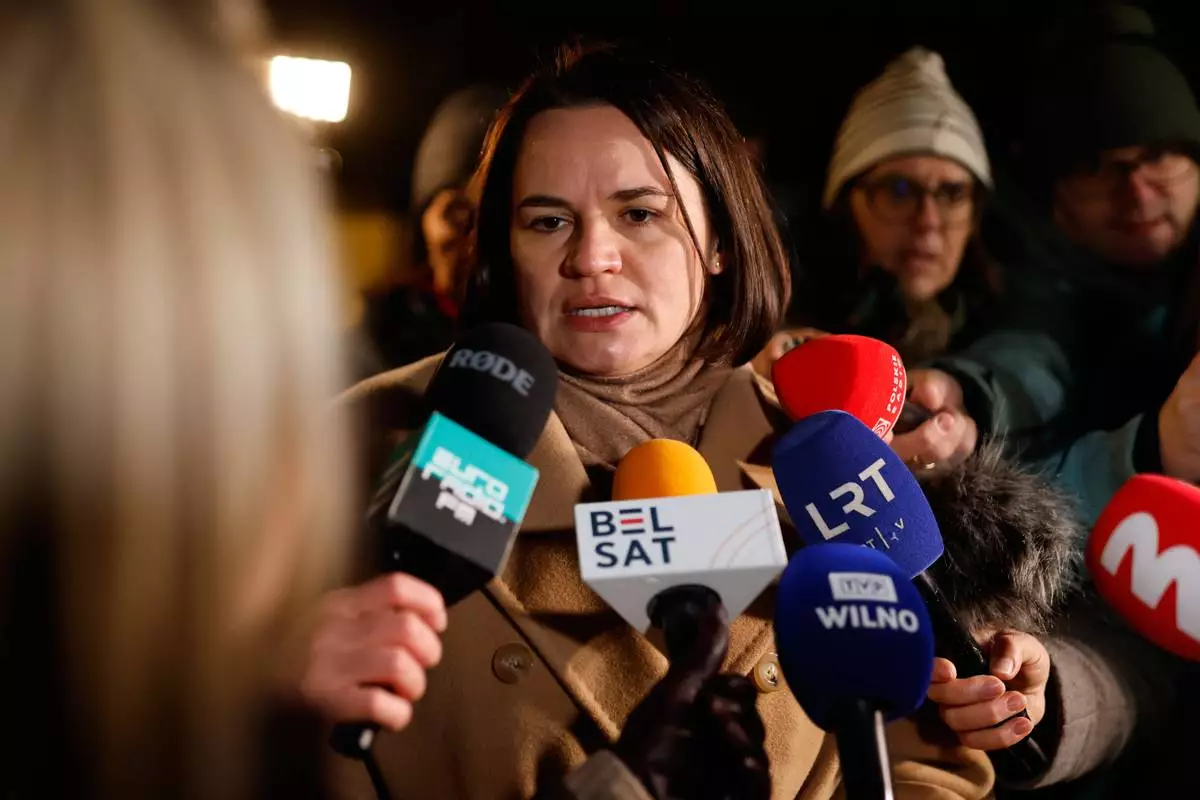
Belarusian opposition leader Sviatlana Tsikhanouskaya speaks to journalists as she waits to meet released Belarusian prisoners at the U.S. Embassy in Vilnius, Lithuania, on Saturday, Dec. 13, 2025. (AP Photo/Mindaugas Kulbis)
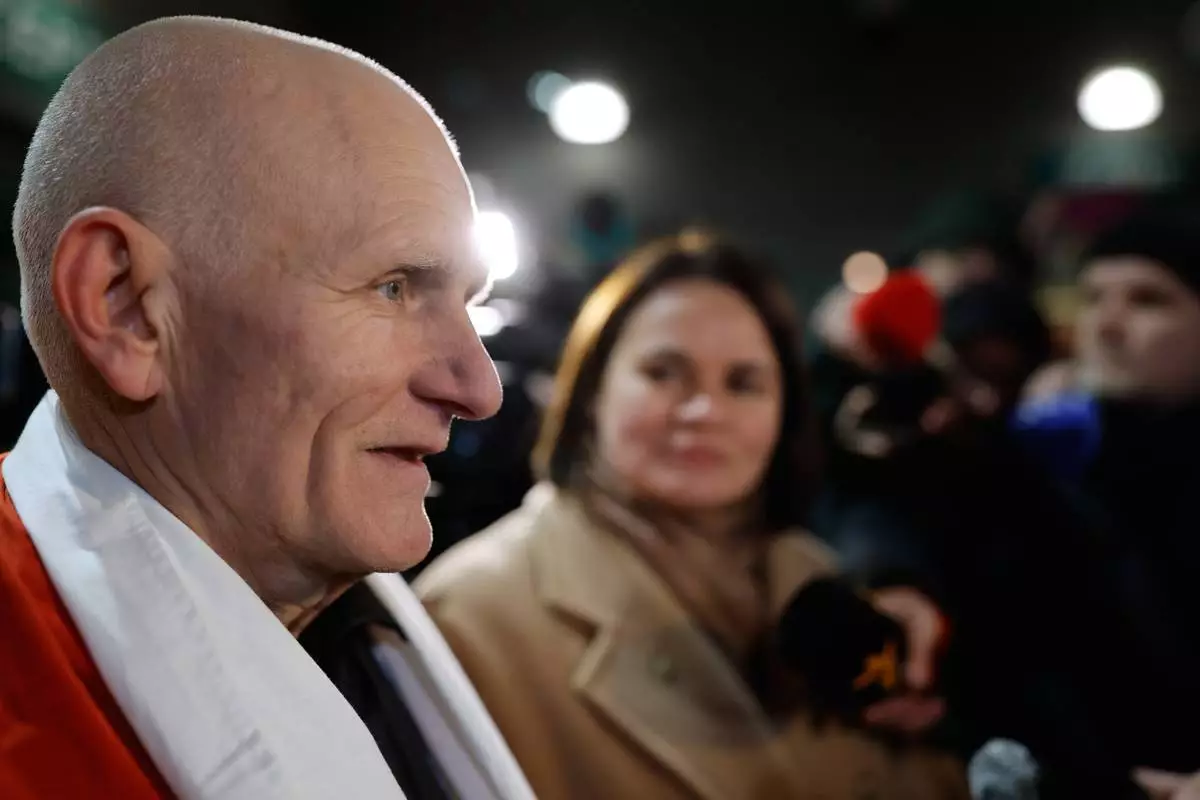
Nobel Peace Prize laureate Ales Bialiatski, one of released Belarusian prisoners, arrives at the U.S. Embassy in Vilnius, Lithuania, on Saturday, Dec. 13, 2025, as Belarusian opposition leader Sviatlana Tsikhanouskaya, background stands near. (AP Photo/Mindaugas Kulbis)
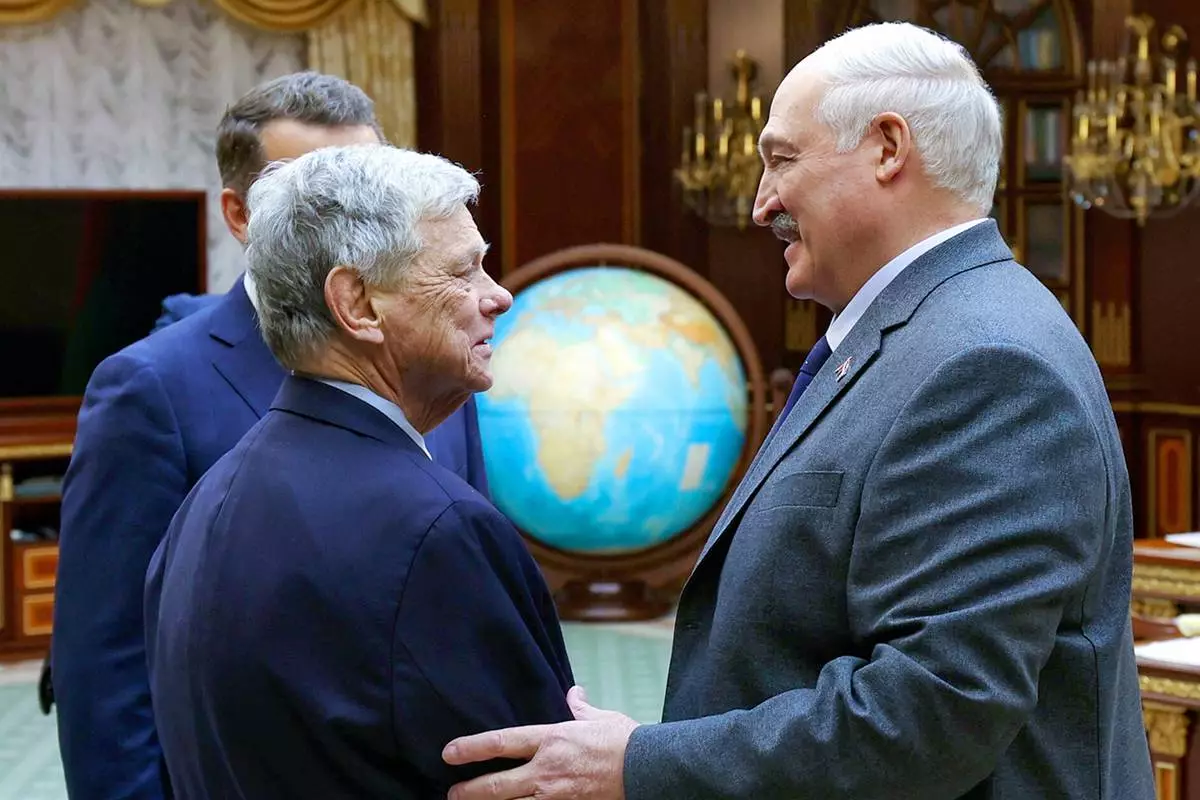
In this photo released by Belarusian presidential press service, Belarusian President Alexander Lukashenko, right, and U.S. Presidential envoy John Coale shake hands during their meeting in Minsk, Belarus, Friday, Dec. 12, 2025. (Belarusian Presidential Press Service via AP)