
The Massachusetts assisted-living facility where a fatal fire killed nine people was caring for dozens of aging residents reliant on wheelchairs and oxygen tanks, but it lacked the safety measures and most of the staffing requirements that are commonplace in nursing homes.
As an assisted-living center, Gabriel House in Fall River, about 50 miles (80 kilometers) south of Boston, offered a type of housing for older residents that has expanded nationally in recent decades. But advocates argue that the absence of any federal regulations and spotty state rules mean the sector is largely left to police itself.
Click to Gallery
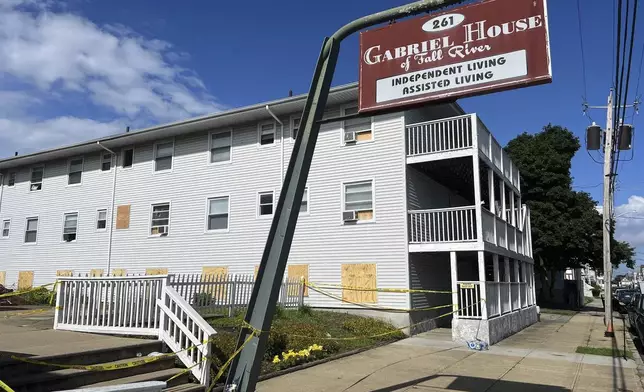
Boards cover the windows of the Gabriel House assisted living facility, where a fire on Sunday killed several people, Tuesday, July 15, 2025 in Fall River, Mass. (AP Photo/Kimberlee Kruesi)

A unidentified man, right, appears emotional while embracing a resident of the Gabriel House assisted living facility, left, in Fall River, Mass., outside a temporary shelter, Monday, July 14, 2025, in Fall River, following a fire at the Gabriel House that started late Sunday and resulted in multiple fatalities. (AP Photo/Steven Senne)
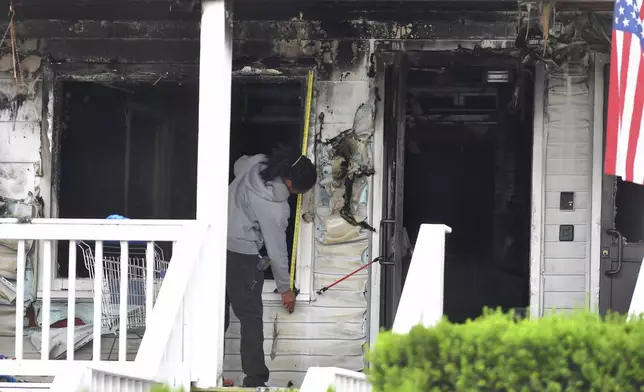
An investigator takes measurements Monday, July 14, 2025, near an entrance to the Gabriel House assisted living facility following a fire that started late Sunday in Fall River, Mass. (AP Photo/Steven Senne)
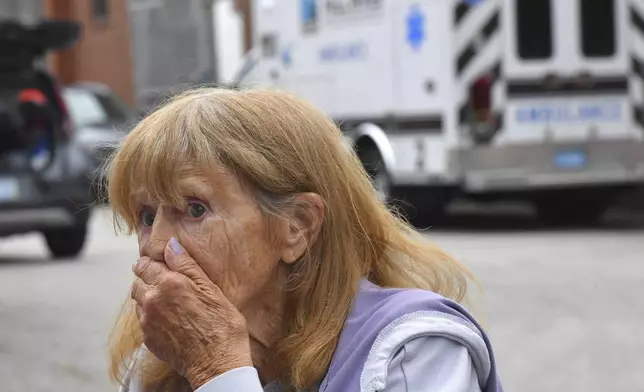
Donna Murphy, a resident at the Gabriel House assisted living facility, in Fall River, Mass., speaks with members of the media outside a temporary shelter, Monday, July 14, 2025, in Fall River, Mass., following a fire at the Gabriel House that started late Sunday and resulted in multiple fatalities. (AP Photo/Steven Senne)

Flowers sit at a makeshift memorial in front of the Gabriel House assisted living facility, where a fire on Sunday killed several people, Wednesday, July 16, 2025 in Fall River, Mass. (AP Photo/Rodrique Ngowi)
“The real issue is that assisted livings operate in an environment like the Wild West,” said Richard Mollot, executive director of the Long Term Care Community Coalition, a nonprofit that advocates for improved care in nursing and assisted-living facilities. “They can pretty much do what they want with impunity, and that results in a lot of, I would say, mini-catastrophes every day, frankly.”
The fire that tore through the three-story, 100-unit structure late Sunday raised a host of questions about conditions at the dilapidated facility and put the spotlight on the growing number of assisted-living centers in the state and nationwide.
Created in the 1980s, assisted living has been marketed as an option for older adults who need some assistance but not as much help as a nursing home. Advocates argue that regulations for the facilities have not kept up as more locations have opened. They also worry that the outlook could get worse with expected Medicaid cuts and the challenge of finding enough staff during an immigration crackdown.
“Unlike nursing homes, assisted living has no federal state requirements, no requirement for staffing, no requirements for staff training, no requirements for safety protocols, no requirements for inspections,” Mollot said. “That falls to the states, and the states have overall very weak rules.”
Nursing homes, for example, are governed by federal regulations because they receive Medicare and Medicaid. There are no federal regulations for assisted-living facilities. Nursing homes must have a minimum number of staffers and trained medical professionals such as doctors and nurses, but assisted-living facilities have no such requirements. In Massachusetts, both are required to have emergency plans, but assisted-living facilities are not required to update them annually.
“The regulations are minimal,” said Liane Zeitz, an attorney who is also a member of the state Assisted Living Residences Commission, a body created to make recommendations about the sector. She has advocated for more regulations for assisted-living facilities.
The facilities were lightly regulated because initially they were regarded as residential housing, with lower levels of care and less oversight, she said. But now those facilities are caring for a population "that is much frailer, and the population is growing.”
Not only are the regulations weaker for assisted-living facilities, but advocates argue that the enforcement of the existing rules is often lax.
Paul Lanzikos, a former Massachusetts secretary of elder affairs and co-founder of the advocacy group Dignity Alliance, described a “patchwork” of regulations across the country, with different agencies involved depending on the state.
“Some of the states are much more regulated. Some are regulated as a health care entity. Others, as we do here in Massachusetts, are considered a residential housing model,” he said.
U.S. Sen. Elizabeth Warren, a Massachusetts Democrat, has been advocating for increased oversight for years, particularly after the release of reports about health and safety problems in 2018.
“These are serious problems that have been going on for years,” she said at a hearing last year. “But we hear so much less about what’s going in assisted-living facilities than we do in other facilities, like nursing homes.”
Brian Doherty, the president and CEO of the Massachusetts Assisted Living Association, said his organization supports the state ensuring that all facilities “meet the mandate to have adequate staffing at all times to meet the specific needs of its residents, including in emergency scenarios.”
“State regulations require that ALRs develop individualized service plans for each resident that are revised as a resident’s needs evolve over time following regular review,” he said in a statement.
In Massachusetts, lawmakers last year passed a package of bills aimed at improving long-term care and assisted-living facilities. A commission created by the legislation faces an Aug. 1 deadline to recommend policies to ensure facilities meet health and safety needs. But members said Tuesday that they may seek more time given the fire.
“We need to do a deep dive based on the investigation results with this facility, but also the facilities like this one,” said state Rep. Thomas Stanley, who leads the Joint Committee on Elder Affairs.
In an interview, Stanley said he was concerned because Gabriel House was among the only 20 or so facilities serving a mostly low-income population — what he called affordable assisted-living facilities.
Unlike traditional assisted-living facilities that have any array of amenities and mostly rely on residents to pay around $15,000 a month, three-quarters of the residents at Gabriel House were on MassHealth, the state's Medicaid program. They paid $1,850 to $2,400 monthly for a studio apartment in a facility that was a motel decades ago.
“This fire would not have happened in one of the modern facilities,” said Stanley, adding that one option would be to provide state funding to help lower-cost facilities upgrade or to create more housing options for the populations they serve.
At Gabriel House, a former worker said staffing was always an issue, as was the pay that never rose much higher than the state's minimum wage, even for nursing work, said Wyntter Munroe-Myers, who worked at the home as a certified nursing assistant from 2014 to 2016. At the time, one certified nursing assistant typically handled two of the six wings at the home, with each wing having about 15 residents. Often, there would be three assistants on a shift and a fourth managing them.
“The building is huge. To have four people that are supposed to be managing a whole building is almost irrational," he said.
Jenn Marley, who worked at Gabriel House as a certified nursing assistant from 2018 to January 2020, said she would often bring in food to supplement what residents were served. She said cockroaches, mice and bedbugs were a problem and that resident bathrooms were often filthy.
“God forbid, if they ran out of toilet paper, the boss would complain that we had to give them a roll,” she said. “They would mark it on the paper who came to ask for toilet paper.”
Jarren Oldrid, whose 67-year-old father, Steven, lived at Gabriel House for three years and is still hospitalized, said he often would not see staff members when he went to visit his father's third-floor room. He recalled that the building's elevator was recently out for as long as nine months, a major inconvenience for many residents who, like his father, were not mobile.
"The whole time the elevator was out, he was stuck in his room," Oldrid said. The only other option was carrying him down the stairs. If he did it himself, he would do it a few steps at a time, and it would take ages. So that never really happened."
The night of the fire, Oldrid recalled his father saying he never saw a staffer and that the first person he saw was a firefighter when he was rescued.
“The staff never made it upstairs to him from what he told me,” he said. “No one banged on the door. No one said anything.”
Associated Press writers Holly Ramer in Concord, New Hampshire, and Matt O'Brien in Providence, Rhode Island, contributed to this report.
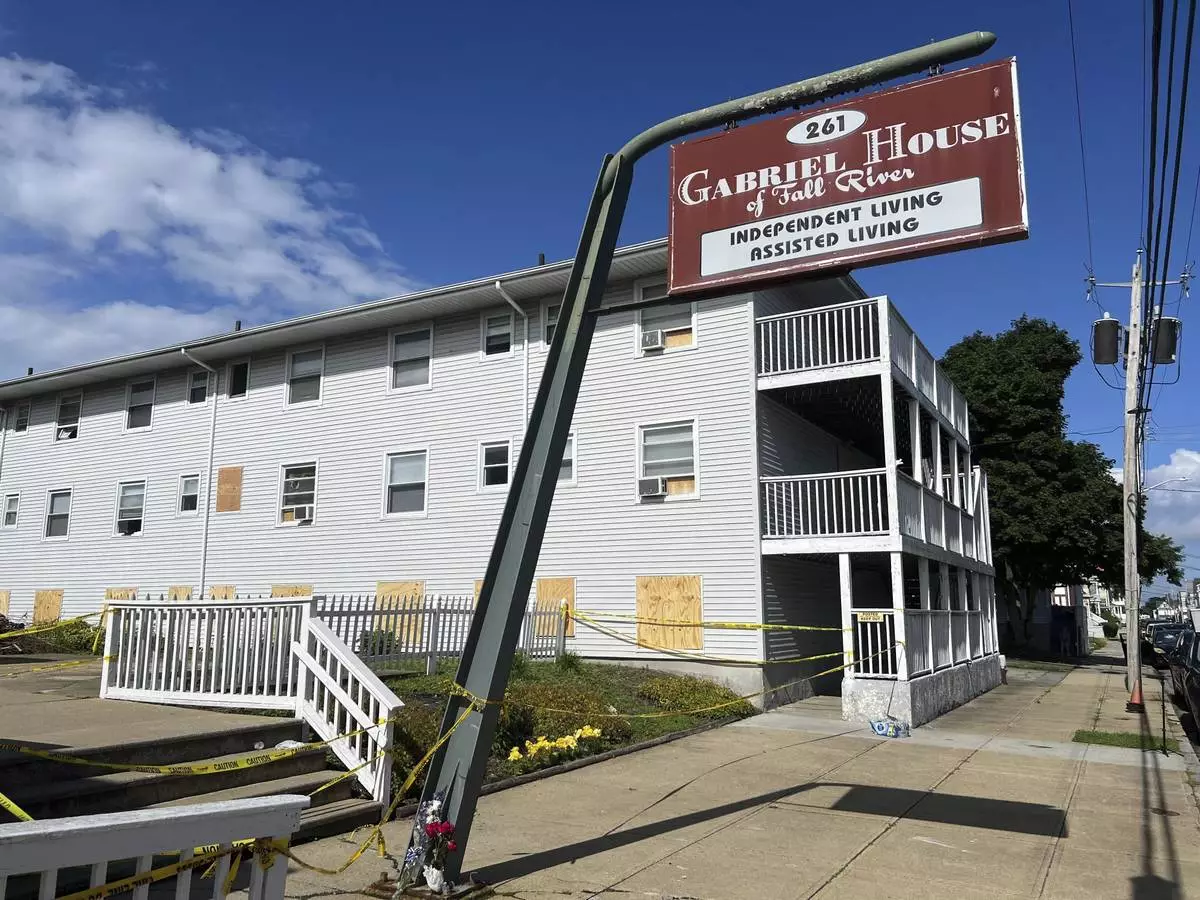
Boards cover the windows of the Gabriel House assisted living facility, where a fire on Sunday killed several people, Tuesday, July 15, 2025 in Fall River, Mass. (AP Photo/Kimberlee Kruesi)
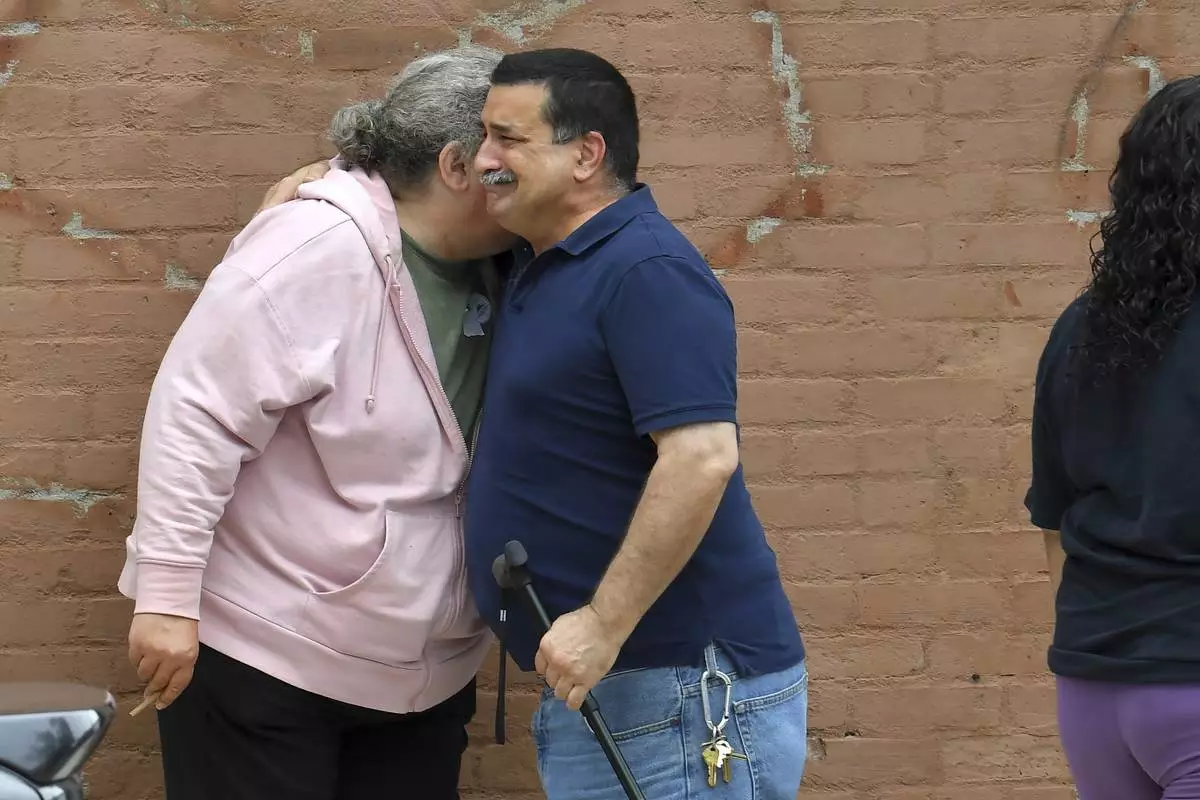
A unidentified man, right, appears emotional while embracing a resident of the Gabriel House assisted living facility, left, in Fall River, Mass., outside a temporary shelter, Monday, July 14, 2025, in Fall River, following a fire at the Gabriel House that started late Sunday and resulted in multiple fatalities. (AP Photo/Steven Senne)

An investigator takes measurements Monday, July 14, 2025, near an entrance to the Gabriel House assisted living facility following a fire that started late Sunday in Fall River, Mass. (AP Photo/Steven Senne)
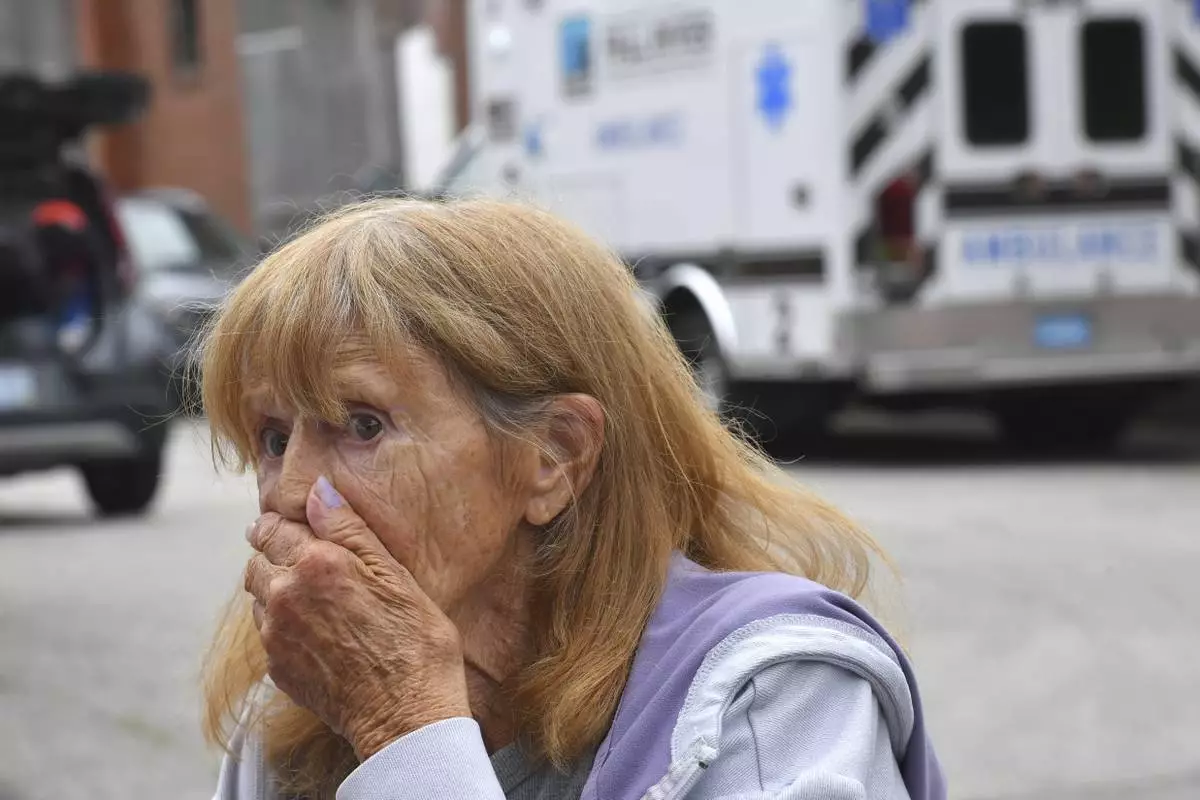
Donna Murphy, a resident at the Gabriel House assisted living facility, in Fall River, Mass., speaks with members of the media outside a temporary shelter, Monday, July 14, 2025, in Fall River, Mass., following a fire at the Gabriel House that started late Sunday and resulted in multiple fatalities. (AP Photo/Steven Senne)

Flowers sit at a makeshift memorial in front of the Gabriel House assisted living facility, where a fire on Sunday killed several people, Wednesday, July 16, 2025 in Fall River, Mass. (AP Photo/Rodrique Ngowi)