
Skip to Content Facebook Feature Image

Families, kids most at risk of losing HUD housing with Trump’s proposed time limits

News

Families, kids most at risk of losing HUD housing with Trump’s proposed time limits
News

News

Families, kids most at risk of losing HUD housing with Trump’s proposed time limits

2025-07-17 21:08 Last Updated At:21:10

WOODINVILLE, Wash. (AP) — More than 1 million low-income households — most of them working families with children — who depend on the nation’s public housing and Section 8 voucher programs could be at risk of losing their government-subsidized homes under the Trump administration’s proposal to impose a two-year time limit on rental assistance.

That’s according to new research from New York University, obtained exclusively by The Associated Press, which suggests the time restriction could affect as many as 1.4 million households helped by the U.S. Department of Housing and Urban Development.

More Images
Havalah Hopkins, a single mother who lives in government-subsidized housing with her teenage son, poses for a portrait outside her apartment Thursday, July 10, 2025, in Woodinville, Wash. (AP Photo/Lindsey Wasson)

Havalah Hopkins, a single mother who lives in government-subsidized housing with her teenage son, poses for a portrait outside her apartment Thursday, July 10, 2025, in Woodinville, Wash. (AP Photo/Lindsey Wasson)

A notice from King County Housing Authority is clipped to the fridge at the apartment of Havalah Hopkins, a single mother who lives in government-subsidized housing with her teenage son, Thursday, July 10, 2025, in Woodinville, Wash. (AP Photo/Lindsey Wasson)

A notice from King County Housing Authority is clipped to the fridge at the apartment of Havalah Hopkins, a single mother who lives in government-subsidized housing with her teenage son, Thursday, July 10, 2025, in Woodinville, Wash. (AP Photo/Lindsey Wasson)

Havalah Hopkins, a single mother who lives in government-subsidized housing with her teenage son, pets her dog, Benny, in her bedroom Monday, July 14, 2025, in Woodinville, Wash. (AP Photo/Lindsey Wasson)

Havalah Hopkins, a single mother who lives in government-subsidized housing with her teenage son, pets her dog, Benny, in her bedroom Monday, July 14, 2025, in Woodinville, Wash. (AP Photo/Lindsey Wasson)

Havalah Hopkins, a single mother who lives in government-subsidized housing with her teenage son, talks with a cashier as she buys some balloons for her son's birthday at a Dollar Tree, Thursday, July 10, 2025, in Woodinville, Wash. (AP Photo/Lindsey Wasson)

Havalah Hopkins, a single mother who lives in government-subsidized housing with her teenage son, talks with a cashier as she buys some balloons for her son's birthday at a Dollar Tree, Thursday, July 10, 2025, in Woodinville, Wash. (AP Photo/Lindsey Wasson)

Havalah Hopkins, a single mother who lives in government-subsidized housing with her teenage son, talks with her son as she blows up balloon displays for his birthday, Thursday, July 10, 2025, at their apartment in Woodinville, Wash. (AP Photo/Lindsey Wasson)

Havalah Hopkins, a single mother who lives in government-subsidized housing with her teenage son, talks with her son as she blows up balloon displays for his birthday, Thursday, July 10, 2025, at their apartment in Woodinville, Wash. (AP Photo/Lindsey Wasson)

The NYU report, which was published Thursday, also raises concerns about the largely untested policy, as most of the limited number of local housing authorities that have voluntarily tried the idea eventually abandoned the pilots.

“If currently assisted households are subject to a two-year limit, that would lead to enormous disruption and large administrative costs," for public housing authorities, the report said, adding that once the limit was up, housing authorities "would have to evict all of these households and identify new households to replace them.”

Amid a worsening national affordable housing and homelessness crisis, President Donald Trump’s administration is determined to reshape HUD’s expansive role providing stable housing for low-income people, which has been at the heart of its mission for generations.

At a June congressional budget hearing, HUD Secretary Scott Turner argued reforms like time limits will fix waste and fraud in public housing and Section 8 voucher programs while motivating low-income families to work toward self-sufficiency.

“It’s broken and deviated from its original purpose, which is to temporarily help Americans in need,” Turner said. “HUD assistance is not supposed to be permanent.”

Elderly and disabled people would be exempted, but there’s little guidance from the agency on how time-limited housing assistance would be implemented — how it would be enforced, when the clock starts and how the exemptions would be defined.

The NYU researchers dove deep into HUD’s nationwide data over a 10-year period, analyzing nearly 4.9 million households that have been public housing and Section 8 voucher tenants. Of that, about 2.1 million could be affected by the time limits because they include at least one adult who is not elderly or disabled and about 70% of those households had already been living on those subsidies for two or more years.

HUD spokesperson Kasey Lovett pushed back on the NYU study.

“There is plenty of data that strongly supports time limits and shows that long-term government assistance without any incentive disincentivizes able-bodied Americans to work,” Lovett said in a statement.

The time limits could displace more than a million children, as it would largely punish families who are working but still earning far below their area’s median income.

“Housing assistance is especially impactful for children,” said Claudia Aiken, the director of new research partnerships for the Housing Solutions Lab at NYU's Furman Center who co-authored the study with Ellie Lochhead. Their health, education, employment and earnings potential can “change in really meaningful ways if they have stable housing,” Aiken said.

Havalah Hopkins, a 33-year-old single mom, has been living in a public housing unit outside of Seattle since 2022, but now fears a two-year time limit would leave her and her teenage son homeless. The 14-year-old boy has autism but is considered high-functioning, so how HUD defines disabled and “able-bodied” for the time limit could determine if their family will be affected by the restriction.

Hopkins, who does catering work for a local chain restaurant, pays $450 a month in rent — 30% of her household income — for their two-bedroom apartment in Woodinville, Washington.

Asked what she likes most about her home, Hopkins said: “I like that I can afford it.”

Of the 17 housing authorities that tried time limits, 11 discontinued the trial. None tried two-year limits — the most common policy was a five-year limit with the option for an extra two and the limits usually applied to specific programs or referrals.

Although there are over 3,000 housing authorities in the country, only 139 of them have ever been granted flexibility to consider testing a time limit while using federal funds for programs such as job training and financial counseling.

“Any conversation about time limits ends up being this really nuanced, hyper-local focus on what works for specific communities rather than this broad national-level implementation,” said Jim Crawford, director of the Moving to Work Collaborative which oversees that group of housing authorities.

Even with those supports, several housing authorities said rent was still too high and well-paying jobs were scarce, according to the study. Others said they didn’t have enough capacity to provide enough supportive services to help households afford rent.

Shawnté Spears of the Housing Authority of the County of San Mateo in California said the agency's five-year time limits have “given folks motivation” to meet their goals in tandem with self-sufficiency programs funded by dollars Trump wants to cut. Time limits also give more households the chance to use vouchers, she said.

But with the Bay Area’s high rents, some tenants still have to spend more than half of their income on rent once their time is up or end up back on waitlists.

“I believe the program is very helpful in getting folks prepared but there lies this really, really significant rent burden here in our county,” said Spears. “When folks do leave our time-limited program, they are facing an uphill battle.”

Kramon reported from Atlanta.

Kramon is a corps member for The Associated Press/Report for America Statehouse News Initiative. Report for America is a nonprofit national service program that places journalists in local newsrooms to report on undercovered issues.
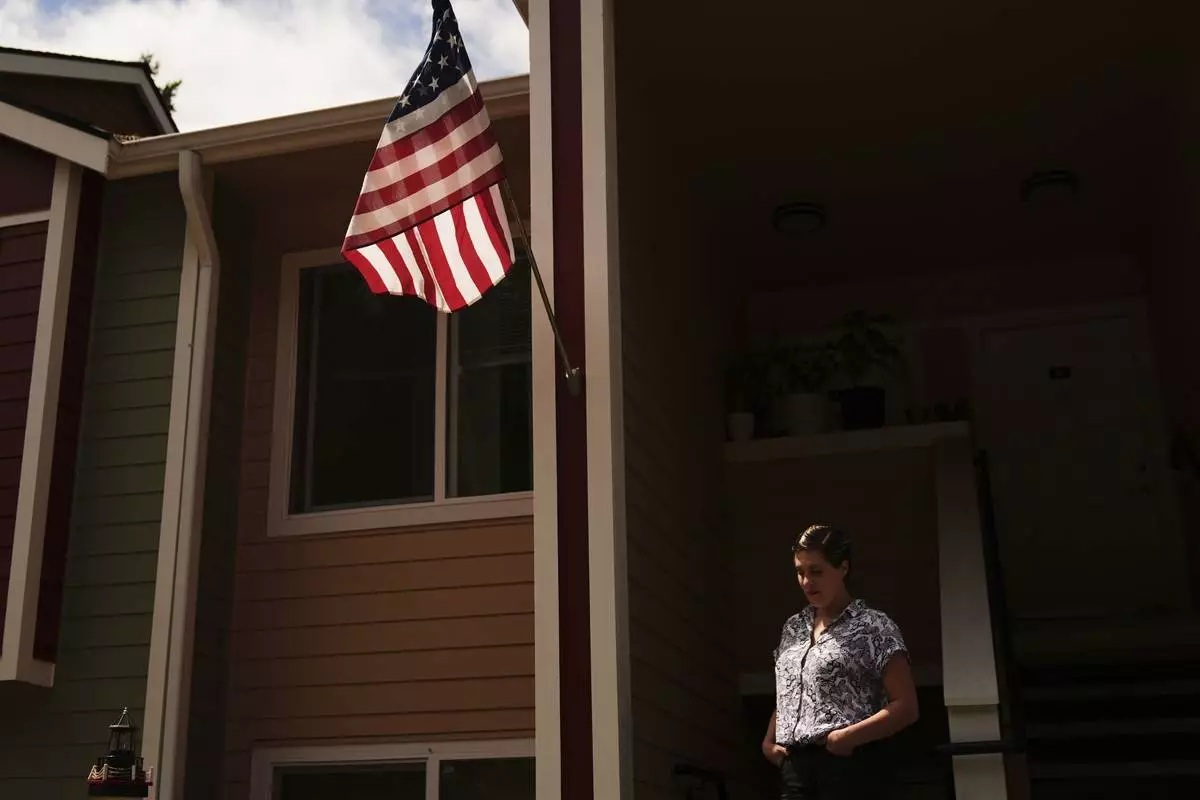
Havalah Hopkins, a single mother who lives in government-subsidized housing with her teenage son, poses for a portrait outside her apartment Thursday, July 10, 2025, in Woodinville, Wash. (AP Photo/Lindsey Wasson)

Havalah Hopkins, a single mother who lives in government-subsidized housing with her teenage son, poses for a portrait outside her apartment Thursday, July 10, 2025, in Woodinville, Wash. (AP Photo/Lindsey Wasson)

A notice from King County Housing Authority is clipped to the fridge at the apartment of Havalah Hopkins, a single mother who lives in government-subsidized housing with her teenage son, Thursday, July 10, 2025, in Woodinville, Wash. (AP Photo/Lindsey Wasson)

A notice from King County Housing Authority is clipped to the fridge at the apartment of Havalah Hopkins, a single mother who lives in government-subsidized housing with her teenage son, Thursday, July 10, 2025, in Woodinville, Wash. (AP Photo/Lindsey Wasson)

Havalah Hopkins, a single mother who lives in government-subsidized housing with her teenage son, pets her dog, Benny, in her bedroom Monday, July 14, 2025, in Woodinville, Wash. (AP Photo/Lindsey Wasson)

Havalah Hopkins, a single mother who lives in government-subsidized housing with her teenage son, pets her dog, Benny, in her bedroom Monday, July 14, 2025, in Woodinville, Wash. (AP Photo/Lindsey Wasson)

Havalah Hopkins, a single mother who lives in government-subsidized housing with her teenage son, talks with a cashier as she buys some balloons for her son's birthday at a Dollar Tree, Thursday, July 10, 2025, in Woodinville, Wash. (AP Photo/Lindsey Wasson)

Havalah Hopkins, a single mother who lives in government-subsidized housing with her teenage son, talks with a cashier as she buys some balloons for her son's birthday at a Dollar Tree, Thursday, July 10, 2025, in Woodinville, Wash. (AP Photo/Lindsey Wasson)

Havalah Hopkins, a single mother who lives in government-subsidized housing with her teenage son, talks with her son as she blows up balloon displays for his birthday, Thursday, July 10, 2025, at their apartment in Woodinville, Wash. (AP Photo/Lindsey Wasson)


Havalah Hopkins, a single mother who lives in government-subsidized housing with her teenage son, talks with her son as she blows up balloon displays for his birthday, Thursday, July 10, 2025, at their apartment in Woodinville, Wash. (AP Photo/Lindsey Wasson)

NEW YORK (AP) — Stocks of credit-card companies are tumbling on Monday after President Donald Trump threatened moves that could eat into their profits. The rest of Wall Street, meanwhile, was showing only modest signals of concern after tensions ramped to a much higher degree between the White House and the Federal Reserve.

The S&P 500 edged down by 0.1% from its all-time high as U.S. stocks drifted through mixed morning trading, while prices for gold and other investments that tend to do well when investors are nervous rose. The value of the U.S. dollar also dipped against the euro and other currencies amid concerns that the Fed may have less independence in setting interest rates to keep inflation under control.

The Dow Jones Industrial Average was down 179 points, or 0.4%, as of 10 a.m. Eastern time, and the Nasdaq composite was nearly unchanged.

Some of the market's sharpest drops came from credit-card companies, as Synchrony Financial, Capital One Financial and American Express all fell between 4% and 7%. They sank after Trump said he wanted to put a 10% cap on credit-card interest rates for a year. Such a move could eat into profits for credit card companies.

But it was a separate move by Trump that was grabbing more attention on Wall Street. Over the weekend, the Federal Reserve's chair, Jerome Powell, said the U.S. Department of Justice subpoenaed the Fed and threatened a criminal indictment over his testimony about renovations underway at its headquarters.

With an unusual video statement released on Sunday, Powell said his testimony and the renovations are “pretexts” for the threat of criminal charges, which is really “a consequence of the Federal Reserve setting interest rates based on our best assessment of what will serve the public, rather than following the preferences of the President.”

The Fed has been locked in a feud with the White House about interest rates. Trump has been loudly calling for lower interest rates, which would make borrowing cheaper for U.S. households and companies and could give the economy a kickstart.

The Fed did cut its main interest rate three times last year and has indicated more cuts may be arriving this year. But it’s been moving slowly enough that Trump has nicknamed Powell “Too Late.”

In a brief interview with NBC News Sunday, President Donald Trump insisted he didn’t know about the investigation into Powell. When asked if the investigation is intended to pressure Powell on rates, Trump said, “No. I wouldn’t even think of doing it that way.”

Powell’s term as chair ends in May, and Trump administration officials have signaled that he could name a potential replacement this month. Trump has also sought to fire Fed governor Lisa Cook.

The Fed has traditionally operated separately from the rest of Washington, making its decisions on interest rates without having to bend to political whims. Such independence, the thinking goes, gives it freedom to make unpopular moves that are necessary for the economy’s long-term health.

Keeping interest rates high, for example, could slow the economy and frustrate politicians looking to please voters. But it could also be the medicine needed to get high inflation under control.

In the bond market, the yield on the 10-year Treasury ticked up to 4.19% from 4.18% late Friday. A less independent Fed and higher inflation in the long term could also erode the value of the U.S. dollar, and it slipped 0.3% against the euro and 0.4% against the Swiss franc.

In stock markets abroad, indexes rose across much of Europe and Asia. Stocks jumped 1.4% in Hong Kong and 1.1% in Shanghai for two of the world’s bigger gains following reports that Chinese leaders were preparing more help for the economy.

AP Business Writers Matt Ott and Elaine Kurtenbach contributed.

Traders work on the floor at the New York Stock Exchange in New York, Friday, Jan. 9, 2026. (AP Photo/Seth Wenig)

Traders work on the floor at the New York Stock Exchange in New York, Friday, Jan. 9, 2026. (AP Photo/Seth Wenig)

James Lamb works on the floor at the New York Stock Exchange in New York, Friday, Jan. 9, 2026. (AP Photo/Seth Wenig)

James Lamb works on the floor at the New York Stock Exchange in New York, Friday, Jan. 9, 2026. (AP Photo/Seth Wenig)

Specialist Anthony Matesic works on the floor of the New York Stock Exchange, Thursday, Jan. 8, 2026. (AP Photo/Richard Drew)

Specialist Anthony Matesic works on the floor of the New York Stock Exchange, Thursday, Jan. 8, 2026. (AP Photo/Richard Drew)

Daniel Kryger works on the floor at the New York Stock Exchange in New York, Friday, Jan. 9, 2026. (AP Photo/Seth Wenig)

Daniel Kryger works on the floor at the New York Stock Exchange in New York, Friday, Jan. 9, 2026. (AP Photo/Seth Wenig)

Dealers watch computer monitors near the screens showing the foreign exchange rate between U.S. dollar and South Korean won at a dealing room of Hana Bank in Seoul, South Korea, Monday, Jan. 12, 2026. (AP Photo/Lee Jin-man)

Dealers watch computer monitors near the screens showing the foreign exchange rate between U.S. dollar and South Korean won at a dealing room of Hana Bank in Seoul, South Korea, Monday, Jan. 12, 2026. (AP Photo/Lee Jin-man)

A dealer walks near the screens showing the foreign exchange rate between U.S. dollar and South Korean won and the Korean Securities Dealers Automated Quotations (KOSDAQ) at a dealing room of Hana Bank in Seoul, South Korea, Monday, Jan. 12, 2026. (AP Photo/Lee Jin-man)

A dealer walks near the screens showing the foreign exchange rate between U.S. dollar and South Korean won and the Korean Securities Dealers Automated Quotations (KOSDAQ) at a dealing room of Hana Bank in Seoul, South Korea, Monday, Jan. 12, 2026. (AP Photo/Lee Jin-man)

Dealers talk near the screens showing the Korea Composite Stock Price Index (KOSPI), left, and the foreign exchange rate between U.S. dollar and South Korean won at a dealing room of Hana Bank in Seoul, South Korea, Monday, Jan. 12, 2026. (AP Photo/Lee Jin-man)

Dealers talk near the screens showing the Korea Composite Stock Price Index (KOSPI), left, and the foreign exchange rate between U.S. dollar and South Korean won at a dealing room of Hana Bank in Seoul, South Korea, Monday, Jan. 12, 2026. (AP Photo/Lee Jin-man)

A dealer walks near the screens showing the foreign exchange rates at a dealing room of Hana Bank in Seoul, South Korea, Monday, Jan. 12, 2026. (AP Photo/Lee Jin-man)

A dealer walks near the screens showing the foreign exchange rates at a dealing room of Hana Bank in Seoul, South Korea, Monday, Jan. 12, 2026. (AP Photo/Lee Jin-man)

Recommended Articles