Skip to Content Facebook Feature Image

Aimed at the growing number of young Chinese who live alone, a new app asks: ‘Are you dead?'

TECH

Aimed at the growing number of young Chinese who live alone, a new app asks: ‘Are you dead?'
TECH

TECH

Aimed at the growing number of young Chinese who live alone, a new app asks: ‘Are you dead?'

2026-01-15 16:42 Last Updated At:16:58

BEIJING (AP) — In China, the names of things are often either ornately poetic or jarringly direct. A new, wildly popular app among young Chinese people is definitively the latter.

It's called, simply, “Are You Dead?"

More Images
The app Are You Dead? is seen on a smartphone in Beijing, China, Thursday, Jan. 15, 2026. (AP Photo/Ng Han Guan)

The app Are You Dead? is seen on a smartphone in Beijing, China, Thursday, Jan. 15, 2026. (AP Photo/Ng Han Guan)

A woman looks at her smartphone in a cafe in Beijing, China, Thursday, Jan. 15, 2026. (AP Photo/Ng Han Guan)
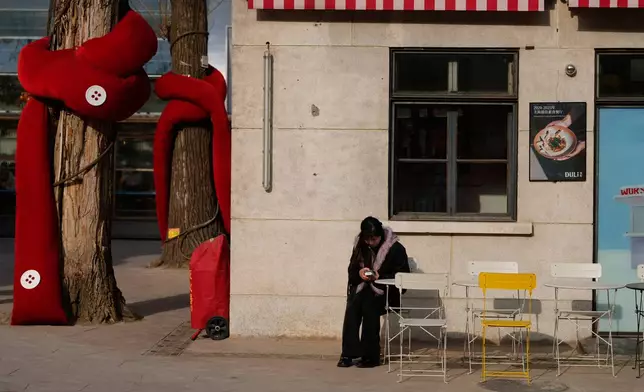
A woman looks at her smartphone in a cafe in Beijing, China, Thursday, Jan. 15, 2026. (AP Photo/Ng Han Guan)

A woman looks at her smartphone outside a restaurant in Beijing, China, Thursday, Jan. 15, 2026. (AP Photo/Ng Han Guan)
A woman looks at her smartphone outside a restaurant in Beijing, China, Thursday, Jan. 15, 2026. (AP Photo/Ng Han Guan)

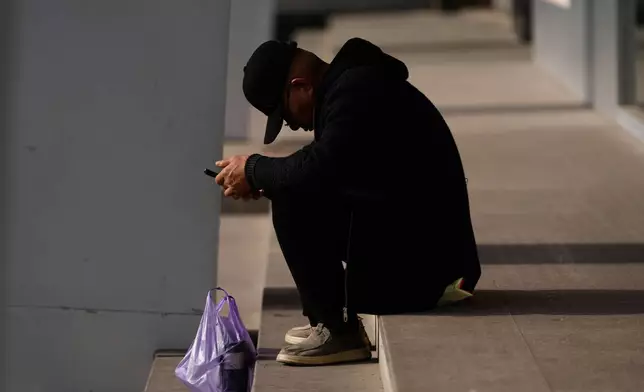
A man looks down near his smartphone in Beijing, China, Thursday, Jan. 15, 2026. (AP Photo/Ng Han Guan)
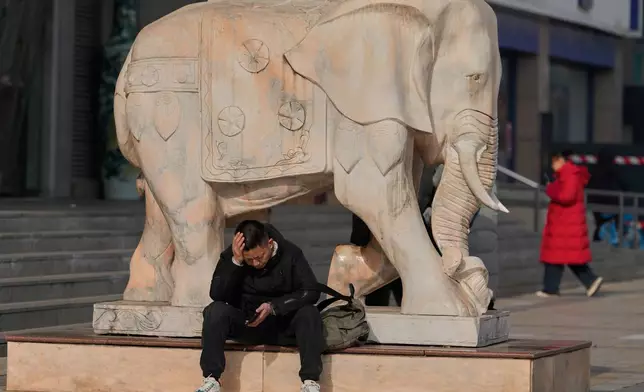
A man looks down near his smartphone in Beijing, China, Thursday, Jan. 15, 2026. (AP Photo/Ng Han Guan)

A man reacts while holding his smartphone in Beijing, China, Thursday, Jan. 15, 2026. (AP Photo/Ng Han Guan)

A man reacts while holding his smartphone in Beijing, China, Thursday, Jan. 15, 2026. (AP Photo/Ng Han Guan)

In a vast country whose young people are increasingly on the move, the new, one-button app — which has taken the country by digital storm this month — is essentially exactly what it says it is. People who live alone in far-off cities and may be at risk — or just perceived as such by friends or relatives — can push an outsized green circle on their phone screens and send proof of life over the network to a friend or loved one. The cost: 8 yuan (about $1.10).

It's simple and straightforward — essentially a 21st-century Chinese digital version of those American pendants with an alert button on them for senior citizens that gave birth to the famed TV commercial: “I've fallen, and I can't get up!”

Developed by three young people in their 20s, “Are You Dead?” became the most downloaded paid app on the Apple App Store in China last week, according to local media reports. It is also becoming a top download in places as diverse as Singapore and the Netherlands, Britain and India and the United States — in line with the developers' attitude that loneliness and safety aren't just Chinese issues.

“Every country has young people who move to big cities to chase their dreams,” Ian Lü, 29, one of the app's developers, said Thursday.

Lü, who worked and lived alone in the southern city of Shenzhen for five years, experienced such loneliness himself. He said the need for a frictionless check-in is especially strong among introverts. “It's unrealistic,” he said, “to message people every day just to tell them you're still alive.”

Against the backdrop of modern and increasingly frenetic Chinese life, the market for the app is understandable.

Traditionally, Chinese families have tended to live together or at least in close proximity across generations — something embedded deep in the nation's culture until recent years. That has changed in the last few decades with urbanization and rapid economic growth that have sent many Chinese to join what is effectively a diaspora within their own nation — and taken hundreds of millions far from parents, grandparents, aunts and uncles.

Today, the country has more than 100 million households with only one person, according to an annual report from the National Bureau of Statistics of China in 2024.

Consider Chen Xingyu, 32, who has lived on her own for years in Kunming, the capital of southern China’s Yunnan province. “It is new and funny. The name ’Are You Dead?' is very interesting,” Chen said.

Chen, a “lying flat” practitioner who has rejected the grueling, fast-paced career of many in her age group, would try the app but worries about data security. “Assuming many who want to try are women users, if information of such detail about users gets leaked, that’d be terrible,” she said.

Yuan Sangsang, a Shanghai designer, has been living on her own for a decade and describes herself as a “single cow and horse.” She's not hoping the app will save her life — only help her relatives in the event that she does, in fact, expire alone.

"I just don’t want to die with no dignity, like the body gets rotten and smelly before it is found," said Yuan, 38. “That would be unfair for the ones who have to deal with it.”

While such an app might at first seem best suited to elderly people — regardless of their smartphone literacy — all reports indicate that “Are You Dead?” is being snapped up by younger people as the wry equivalent of a social media check-in.

“Some netizens say that the 'Are you dead?' greeting feels like a carefree joke between close friends — both heartfelt and gives a sense of unguarded ease,” the business website Yicai, the Chinese Business Network, said in a commentary. ""It likely explains why so many young people unanimously like this app."

The commentary, by writer He Tao, went further in analyzing the cultural landscape. He wrote that the app's immediate success “serves as a darkly humorous social metaphor, reminding us to pay attention to the living conditions and inner world of contemporary young people. Those who downloaded it clearly need more than just a functional security measure; they crave a signal of being seen and understood.”

Death is a taboo subject in Chinese culture, and the word itself is shunned to the point where many buildings in China have no fourth floor because the word for “four” and the word for “death” sound the same — “si.” Lü acknowledged that the app's name sparked public pressure.

“Death is an issue every one of us has to face,” he said. “Only when you truly understand death do you start thinking about how long you can exist in this world, and how you want to realize the value of your life.”

A few days ago, though, the developers said on their official account on China’s Weibo social platform that they’d pivot to a new name. Their choice: the more cryptic “Demumu,” which they said they hoped could "serve more solo dwellers globally.”

Then, a twist: Late Wednesday, the app team posted on its Weibo account that workshopping the name Demumu didn’t turn out “as well as expected.” The app team is offering a reward for whoever offers a new name that will be picked this weekend. Lü said more than 10,000 people have weighed in.

The reward for the new moniker: $96 — or, in China, 666 yuan.

Fu Ting reported from Washington. AP researcher Shihuan Chen in Beijing contributed.

The app Are You Dead? is seen on a smartphone in Beijing, China, Thursday, Jan. 15, 2026. (AP Photo/Ng Han Guan)

The app Are You Dead? is seen on a smartphone in Beijing, China, Thursday, Jan. 15, 2026. (AP Photo/Ng Han Guan)

A woman looks at her smartphone in a cafe in Beijing, China, Thursday, Jan. 15, 2026. (AP Photo/Ng Han Guan)
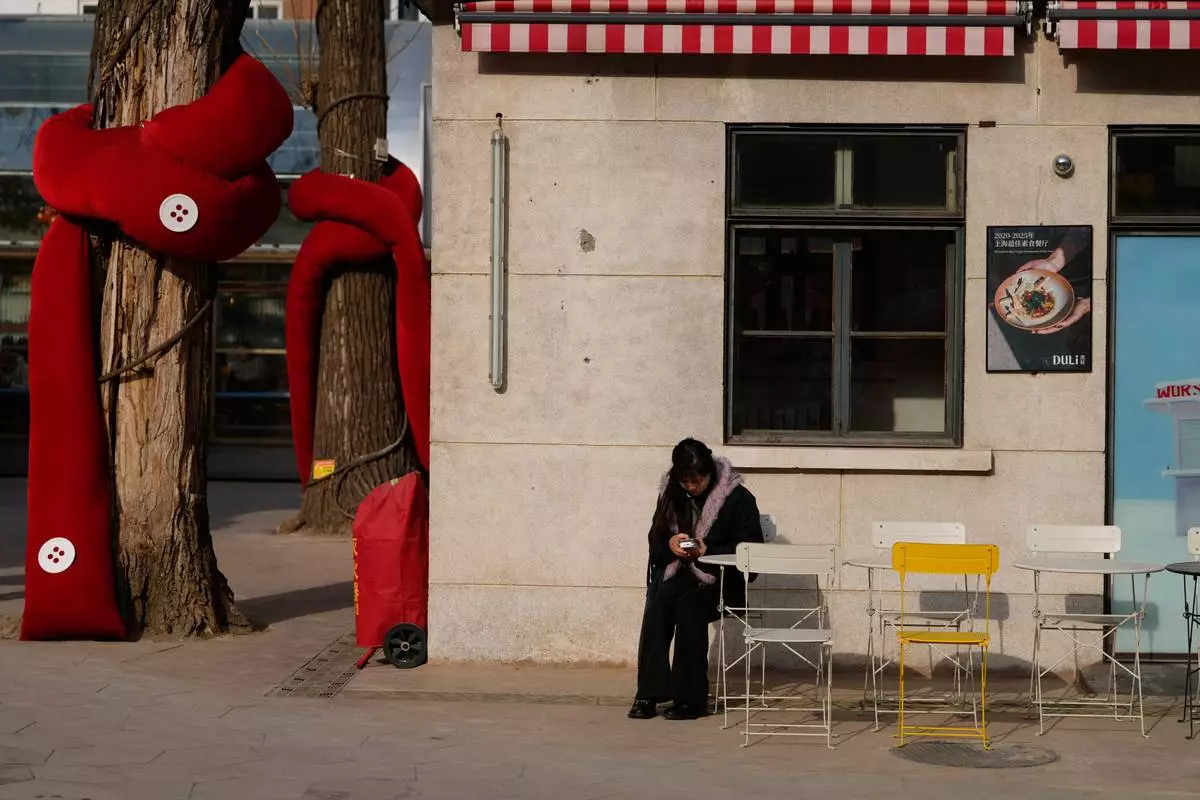
A woman looks at her smartphone in a cafe in Beijing, China, Thursday, Jan. 15, 2026. (AP Photo/Ng Han Guan)

A woman looks at her smartphone outside a restaurant in Beijing, China, Thursday, Jan. 15, 2026. (AP Photo/Ng Han Guan)
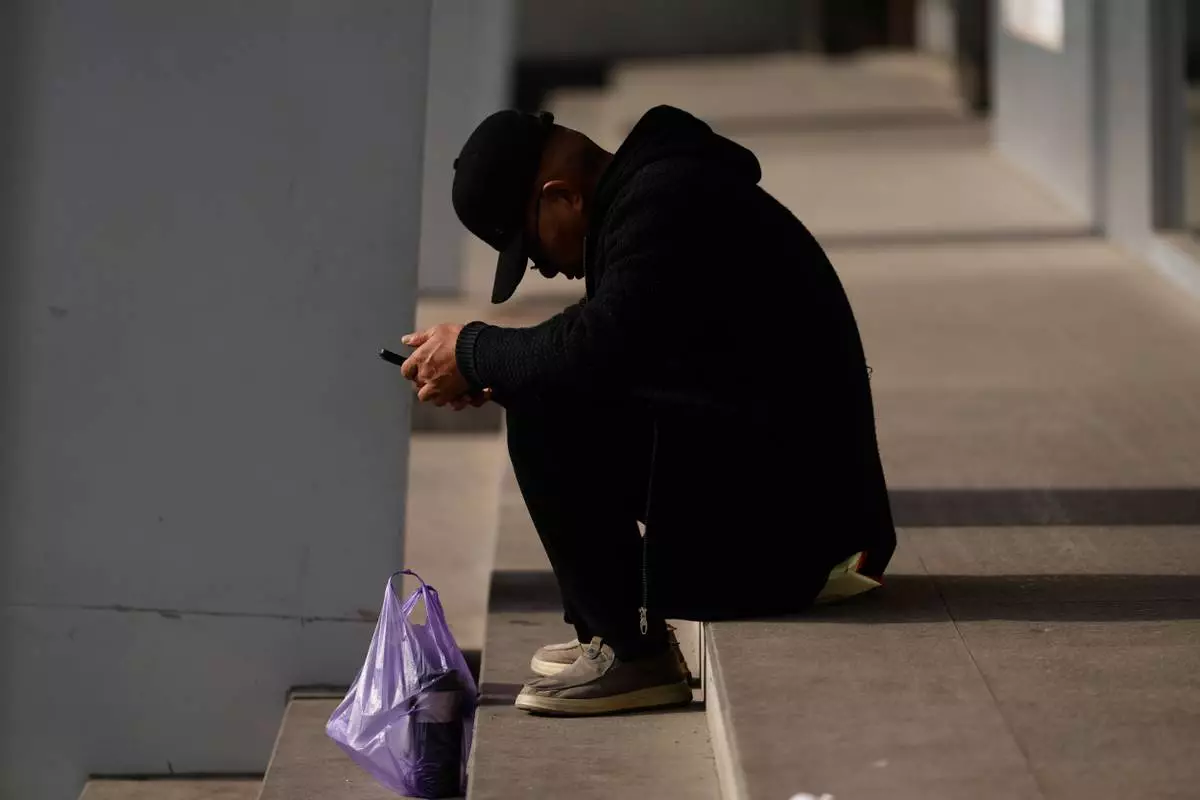
A woman looks at her smartphone outside a restaurant in Beijing, China, Thursday, Jan. 15, 2026. (AP Photo/Ng Han Guan)

A man looks down near his smartphone in Beijing, China, Thursday, Jan. 15, 2026. (AP Photo/Ng Han Guan)
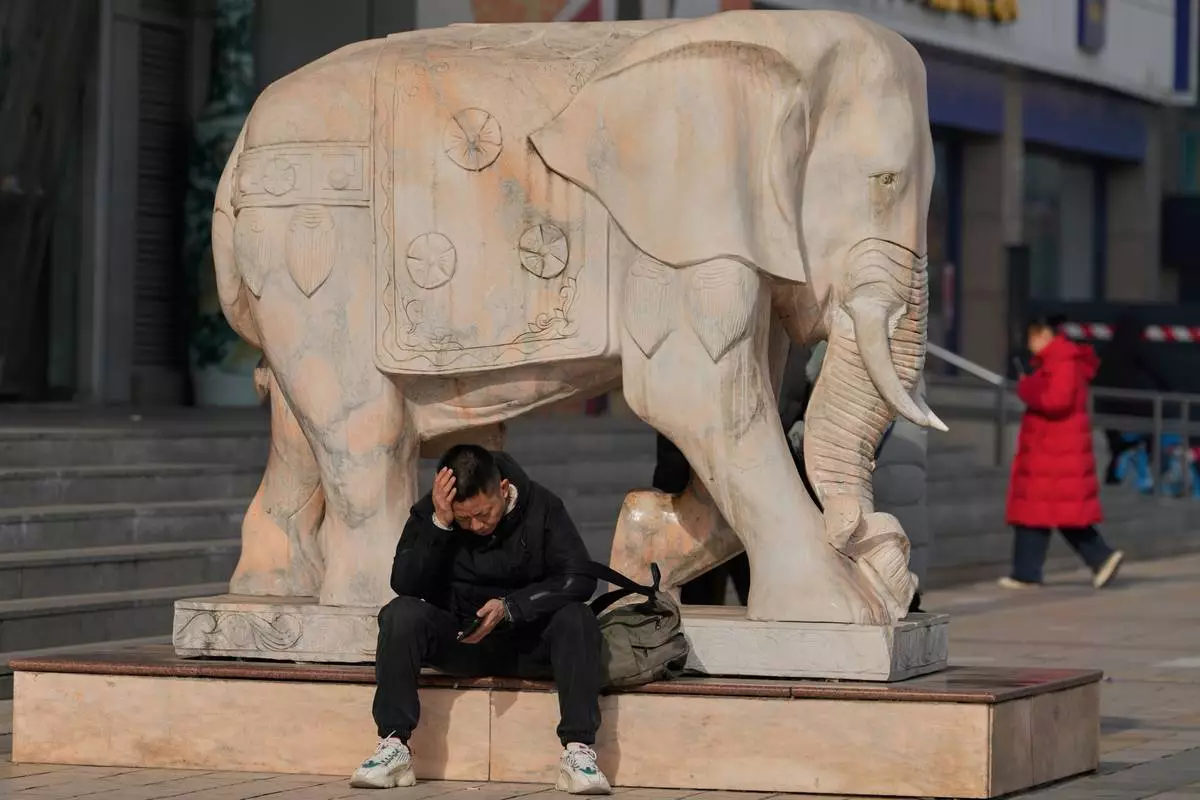
A man looks down near his smartphone in Beijing, China, Thursday, Jan. 15, 2026. (AP Photo/Ng Han Guan)

A man reacts while holding his smartphone in Beijing, China, Thursday, Jan. 15, 2026. (AP Photo/Ng Han Guan)

A man reacts while holding his smartphone in Beijing, China, Thursday, Jan. 15, 2026. (AP Photo/Ng Han Guan)

DUBAI, United Arab Emirates (AP) — Iran closed its airspace to commercial flights for hours without explanation early Thursday as tensions remained high with the United States over Tehran’s bloody crackdown on nationwide protests.

The closure ran for over four hours, according to pilot guidance issued by Iran, which lies on a key East-West flight route. International carriers diverted north and south around Iran, but after one extension, the closure appeared to have expired and several domestic flights were in the air just after 7 a.m.

Around midday, Iranian state television carried a statement from the country's Civil Aviation Authority saying that the nation's “skies are hosting incoming and outgoing flights, and airports are providing services to passengers.” It did not acknowledge the closure.

Iran previously shut its airspace during the 12-day war against Israel in June and when it exchanged fire with Israel during the Israel-Hamas war. However, there were no signs of current hostilities though the closure immediately rippled through global aviation.

“Several airlines have already reduced or suspended services, and most carriers are avoiding Iranian airspace,” said the website SafeAirspace, which provides information on conflict areas and air travel. “The situation may signal further security or military activity, including the risk of missile launches or heightened air defense, increasing the risk of misidentification of civil traffic.”

Iran in the past has misidentified a commercial aircraft as a hostile target. In 2020, Iranian air defense shot down Ukraine International Airlines Flight PS752 with two surface-to-air missiles, killing all 176 people on board. Iran for days adamantly dismissed allegations of downing the plane as Western propaganda before finally acknowledging it.

The airspace closure came as some personnel at a key U.S. military base in Qatar were advised to evacuate. The U.S. Embassy in Kuwait also ordered its personnel to “temporary halt” going to the multiple military bases in the small Gulf Arab country.

The U.N. Security Council scheduled an emergency meeting on Iran at the request of the United States on Thursday afternoon.

U.S. President Donald Trump made a series of vague statements Wednesday that left unclear what American action, if any, would take place against Iran.

In comments to reporters, Trump said he had been told that plans for executions in Iran have stopped, without providing many details. The shift comes a day after Trump told protesters in Iran that “help is on the way” and that his administration would “act accordingly” to respond to the Islamic Republic’s deadly crackdown.

Iranian Foreign Minister Abbas Araghchi also sought to tone down the rhetoric, urging the U.S. to find a solution through negotiation.

Asked by Fox News what he would say to Trump, Araghchi said: “My message is: Between war and diplomacy, diplomacy is a better way, although we don’t have any positive experience from the United States. But still diplomacy is much better than war.”

The change in tone by the U.S. and Iran came hours after the chief of the Iranian judiciary said the government must act quickly to punish the thousands who have been detained.

Activists warned that hangings of detainees could come soon. The security forces’ crackdown on the demonstrations has killed at least 2,615, the U.S.-based Human Rights Activists News Agency reported. The death toll exceeds that of any other round of protest or unrest in Iran in decades and recalls the chaos surrounding the country’s 1979 Islamic Revolution.

Demonstrators burn a poster depicting Iran's Supreme Leader Ayatollah Ali Khamenei during a rally in support of anti-government protests in Iran, in Holon, Israel Wednesday, Jan. 14, 2026. (AP Photo/Ohad Zwigenberg)

Demonstrators burn a poster depicting Iran's Supreme Leader Ayatollah Ali Khamenei during a rally in support of anti-government protests in Iran, in Holon, Israel Wednesday, Jan. 14, 2026. (AP Photo/Ohad Zwigenberg)

A woman mourns next to the flag-draped coffins of a group of security forces, who were killed during anti-government protests, during their funeral ceremony, in Tehran, Iran, Wednesday, Jan. 14, 2026. (AP Photo/Vahid Salemi)

A woman mourns next to the flag-draped coffins of a group of security forces, who were killed during anti-government protests, during their funeral ceremony, in Tehran, Iran, Wednesday, Jan. 14, 2026. (AP Photo/Vahid Salemi)

A man hands out posters of the Iranian Supreme Leader Ayatollah Ali Khamenei during a funeral ceremony for a group of security forces, who were killed during anti-government protests, in Tehran, Iran, Wednesday, Jan. 14, 2026. (AP Photo/Vahid Salemi)

A man hands out posters of the Iranian Supreme Leader Ayatollah Ali Khamenei during a funeral ceremony for a group of security forces, who were killed during anti-government protests, in Tehran, Iran, Wednesday, Jan. 14, 2026. (AP Photo/Vahid Salemi)

People take part in a rally in support of anti-government protests in Iran, Berlin Germany, Wednesday, June 14, 2026. (AP Photo/Ebrahim Noroozi)

People take part in a rally in support of anti-government protests in Iran, Berlin Germany, Wednesday, June 14, 2026. (AP Photo/Ebrahim Noroozi)

Policemen protect the British Embassy during a protest by hardline supporters of the Iranian government, as people ride on their motorbike in Tehran, Iran, Wednesday, Jan. 14, 2026. (AP Photo/Vahid Salemi)

Policemen protect the British Embassy during a protest by hardline supporters of the Iranian government, as people ride on their motorbike in Tehran, Iran, Wednesday, Jan. 14, 2026. (AP Photo/Vahid Salemi)

Recommended Articles