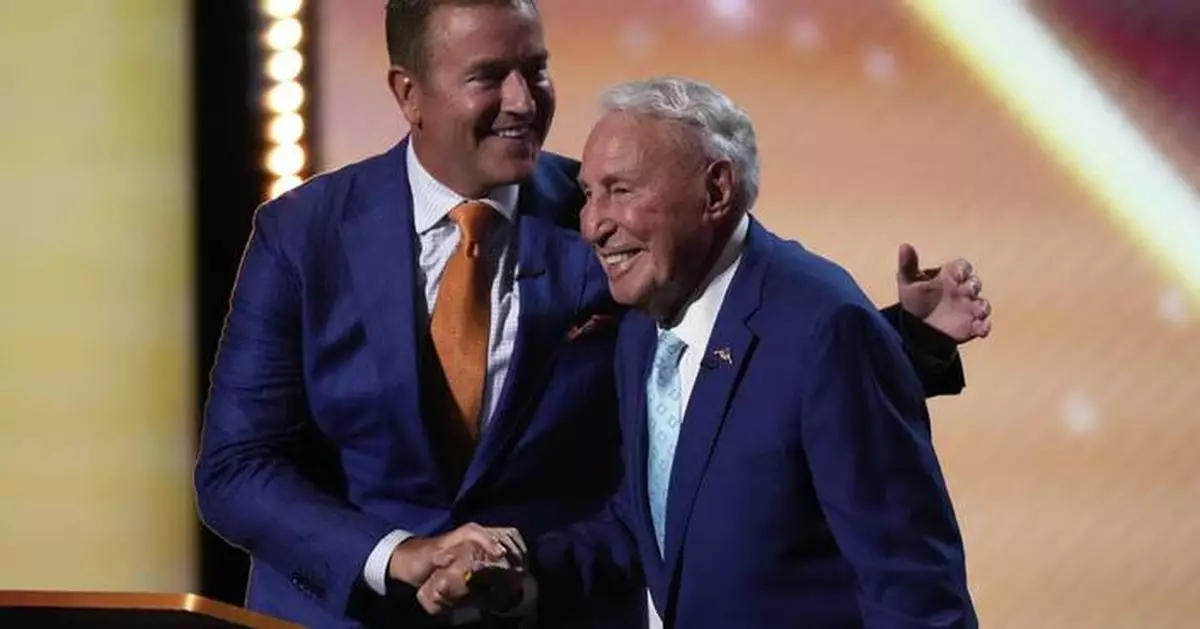
The countdown to Lee Corso’s final appearance on ESPN’s “College GameDay” kicked off when the longtime analyst and former coach was honored at the ESPYS on Wednesday night.
“My goal on TV was to bring a smile to everybody's face. I hope I have done that,” Corso said on stage at the Dolby Theatre in Los Angeles after a video aired and comments by “GameDay” analysts Kirk Herbstreit, Desmond Howard and Pat McAfee.
Corso — the lone remaining member of the show’s original cast who turns 90 in August — announced earlier this year that his final show would be on the opening week of the season. ESPN last month revealed the 39th season of “GameDay” would begin in Columbus, Ohio, before defending national champion Ohio State hosts the Texas Longhorns on Aug. 30.
“This is a unique opportunity we have to weave him into the evening and really begin the process of sending him off with full honors,” ESPN’s president of content Burke Magnus said. “To get him there in person to acknowledge all of his contributions and what he’s meant to both the company and sports, but more importantly the fans, we just think it’s a fitting way to kick off his departure.”
Corso's popular headgear segment started at Ohio State on Oct. 5, 1996, before the Buckeyes faced Penn State. Since then, he has gone 286-144 in 430 selections wearing everything from helmets and mascot heads to dressing up as the Fighting Irish leprechaun from Notre Dame, the Stanford tree and historic figures James Madison and Benjamin Franklin. He has worn 69 different school’s mascot headgear.
Corso got to don Southern California's Trojan helmet one final time on Wednesday night as USC's band, song girls and spirit squad came on stage at the end of the segment.
“I feel like I’ve had the best seat in all of college football for these last 30 years right next to coach, right before he pulled it the headgear out and say something that nobody else would say,” Herbstreit said. “There’s so many lessons and such a special bond I’m so lucky to share with one of the great spirits and great minds college football has ever seen.”
Corso's television career withstood a stroke in 2009 that left him unable to speak for a while. Even though his appearances on the road have decreased in recent seasons, he was in Atlanta in January for the College Football Playoff national title game between Ohio State and Notre Dame.
“With the popularity and cultural phenomenon that ‘GameDay’ became, there’s no one more responsible for that than Lee Corso. The way he changed the way the game was covered with the irreverence, the humor, the lack of a filter, all of those things that sort of set the tone and the standard," said “GameDay” host Rece Davis.
Get poll alerts and updates on the AP Top 25 throughout the season. Sign up here. AP college football: https://apnews.com/hub/ap-top-25-college-football-poll and https://apnews.com/hub/college-football
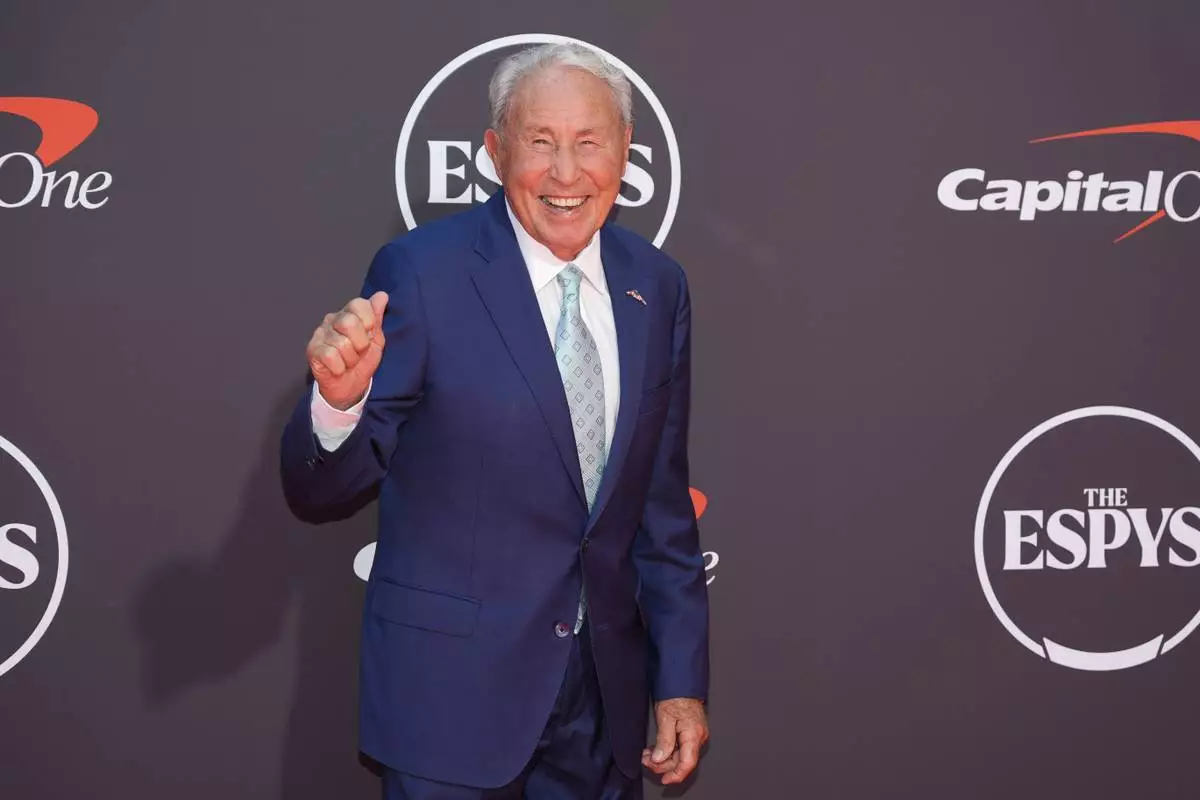
Lee Corso arrives at the ESPY Awards at the Dolby Theatre in Los Angeles, Wednesday, July 16, 2025. (AP Photo/Chris Pizzello)
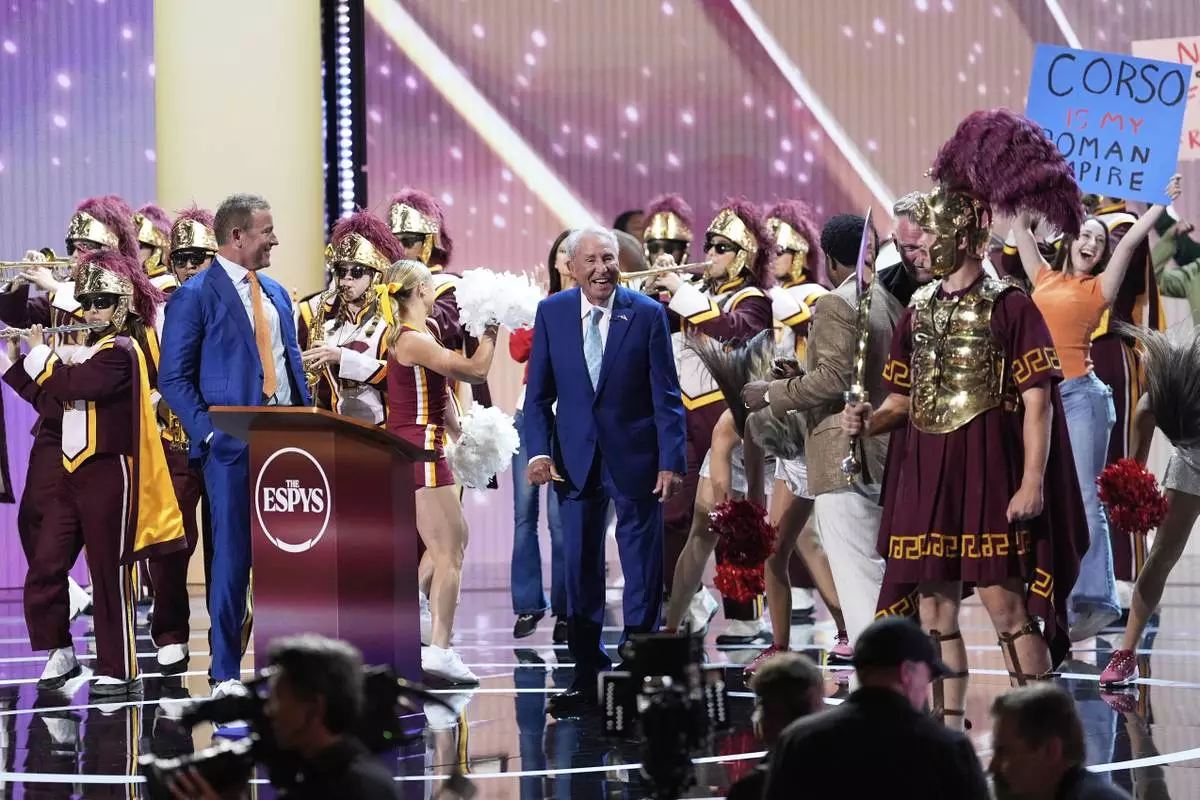
The Southern California band and cheerleaders perform as Lee Corso, middle, is honored on stage at the ESPY Awards at the Dolby Theatre in Los Angeles, Wednesday, July 16, 2025. (AP Photo/Mark J. Terrill)
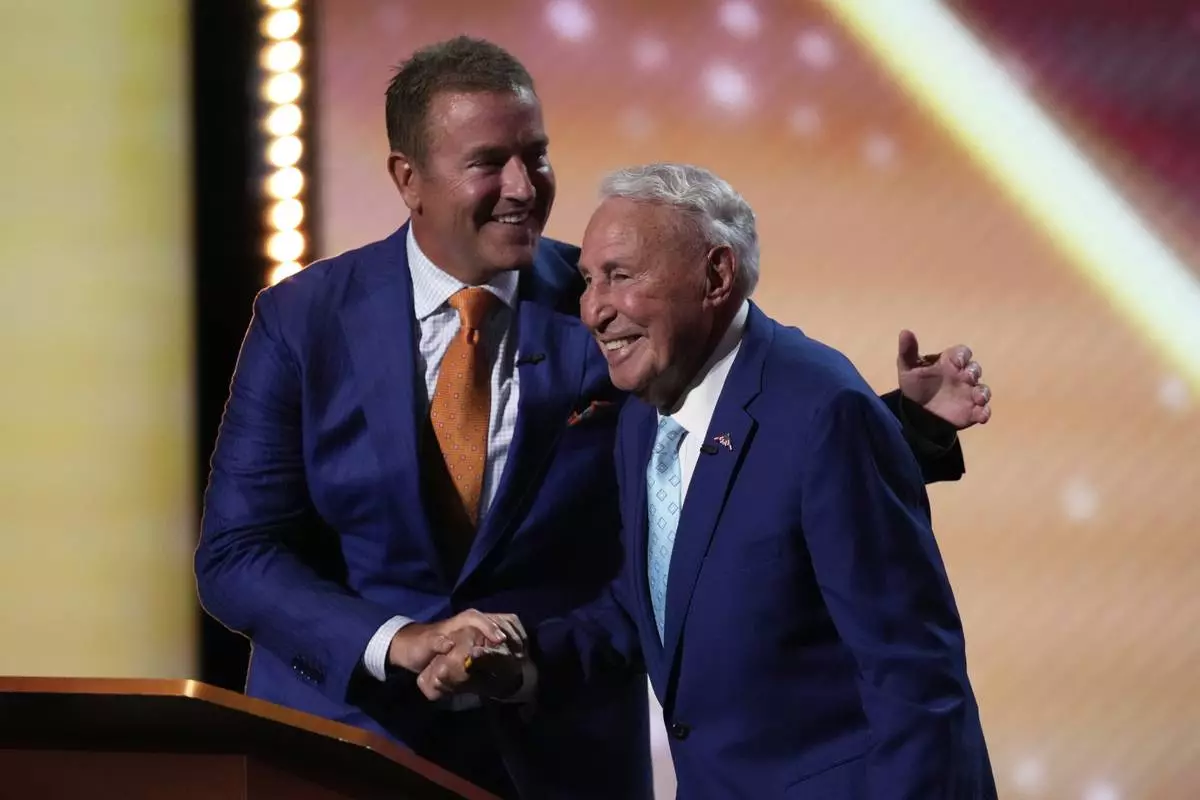
Kirk Herbstreit, left, greets Lee Corso on stage at the ESPY Awards at the Dolby Theatre in Los Angeles, Wednesday, July 16, 2025. (AP Photo/Mark J. Terrill)
YANGON (AP) — Myanmar began a second round of voting Sunday in its first general election since a takeover that installed a military government five years ago.
Voting expanded to additional townships including some areas affected by the civil war between the military government and its armed opponents.
Polling stations opened at 6 a.m. local time in 100 townships across the country, including parts of Sagaing, Magway, Mandalay, Bago and Tanintharyi regions, as well as Mon, Shan, Kachin, Kayah and Kayin states. Many of those areas have recently seen clashes or remain under heightened security, underscoring the risks surrounding the vote.
The election is being held in three phases due to armed conflicts. The first round took place Dec. 28 in 102 of the country’s total 330 townships. A final round is scheduled for Jan. 25, though 65 townships will not take part because of fighting.
Myanmar has a two-house national legislature, totaling 664 seats. The party with a combined parliamentary majority can select the new president, who can name a Cabinet and form a new government. The military automatically receives 25% of seats in each house under the constitution.
Maj. Gen. Zaw Min Tun, the military government's spokesperson, told journalists on Sunday that the two houses of parliament will be convened in March, and the new government will take up its duties in April.
Critics say the polls organized by the military government are neither free nor fair and are an effort by the military to legitimize its rule after seizing power from the elected government of Aung San Suu Kyi in February 2021.
On Sunday, people in Yangon and Mandalay, the two largest cities in the country, were casting their ballots at high schools, government buildings and religious buildings.
At more than 10 polling stations visited by Associated Press journalists in Yangon and Mandalay, voter numbers ranged from about 150 at the busiest site to just a few at others, appearing lower than during the 2020 election when long lines were common.
The military government said there were more than 24 million eligible voters in the election, about 35% fewer than in 2020. The government called the turnout a success, claiming ballots were cast by more than 6 million people, about 52% of the more than 11 million eligible voters in the election's first phase.
Myo Aung, a chief minister of the Mandalay region, said more people turned out Sunday to vote than in the first phase.
“The weaknesses from Dec. 28 vote have been addressed, so I believe the Jan. 11 election to be well organized and successful,” he said.
Maung Maung Naing, who voted at a polling station in Mandalay’s Mahar Aung Myay township, said he wanted a government that will benefit the people.
“I only like a government that can make everything better for livelihoods and social welfare,” he said.
Sandar Min, an independent candidate from Yangon’s Latha township, said she decided to contest the election despite criticism because she wants to work with the government for the good of the country. She hopes the vote will bring change that reduces suffering.
“We want the country to be nonviolent. We do not accept violence as part of the change of the country,” Sandar Min said after casting a vote. “We care deeply about the people of this country.”
While more than 4,800 candidates from 57 parties are competing for seats in national and regional legislatures, only six parties are competing nationwide.
The first phase left the military-backed Union Solidarity and Development Party, or USDP, in a dominant position, winning nearly 90% of those contested seats in that phase in Pyithu Hluttaw, the lower house of parliament. It also won a majority of seats in regional legislatures.
Suu Kyi, Myanmar’s 80-year-old former leader, and her party aren’t participating in the polls. She is serving a 27-year prison term on charges widely viewed as spurious and politically motivated. Her party, the National League for Democracy, was dissolved in 2023 after refusing to register under new military rules.
Other parties also refused to register or declined to run under conditions they deem unfair, while opposition groups have called for a voter boycott.
Tom Andrews, a special rapporteur working with the U.N. human rights office, urged the international community Thursday to reject what he called a “sham election,” saying the first round exposed coercion, violence and political exclusion.
“You cannot have a free, fair or credible election when thousands of political prisoners are behind bars, credible opposition parties have been dissolved, journalists are muzzled, and fundamental freedoms are crushed,” Andrews said.
According to the Assistance Association for Political Prisoners, which keeps detailed tallies of arrests and casualties linked to the nation’s political conflicts, more than 22,000 people are detained for political offenses, and more than 7,600 civilians have been killed by security forces since 2021.
The army’s takeover triggered widespread peaceful protests that soon erupted into armed resistance, and the country slipped into a civil war.
A new Election Protection Law imposes harsh penalties and restrictions for virtually all public criticism of the polls. The authorities have charged more than 330 people under new electoral law for leafleting or online activity over the past few months.
Opposition organizations and ethnic armed groups had previously vowed to disrupt the electoral process.
On Sunday, attacks targeting polling stations and government buildings were reported in at least four of the 100 townships holding polls, with two administrative officials killed, independent online media, including Myanmar Now, reported.
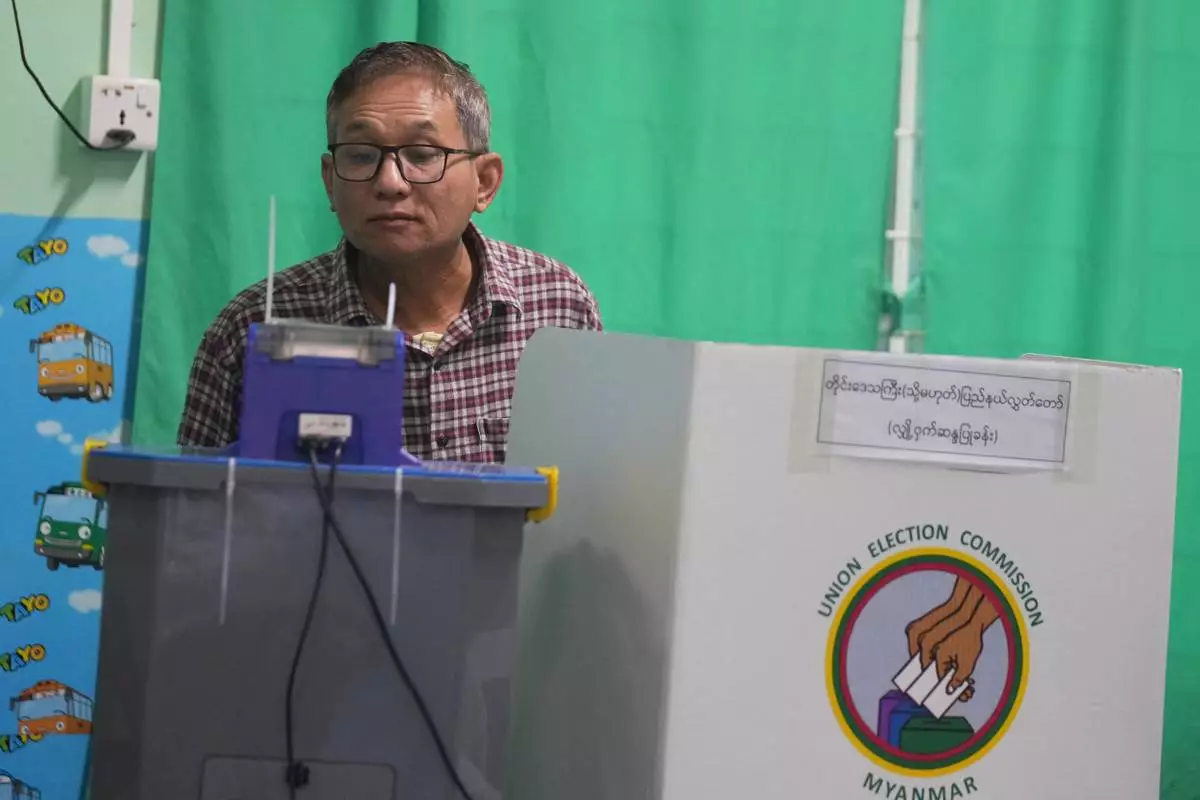
A voter casts ballot at a polling station during the second phase of general election Sunday, Jan. 11, 2026, in Yangon, Myanmar. (AP Photo/Thein Zaw)
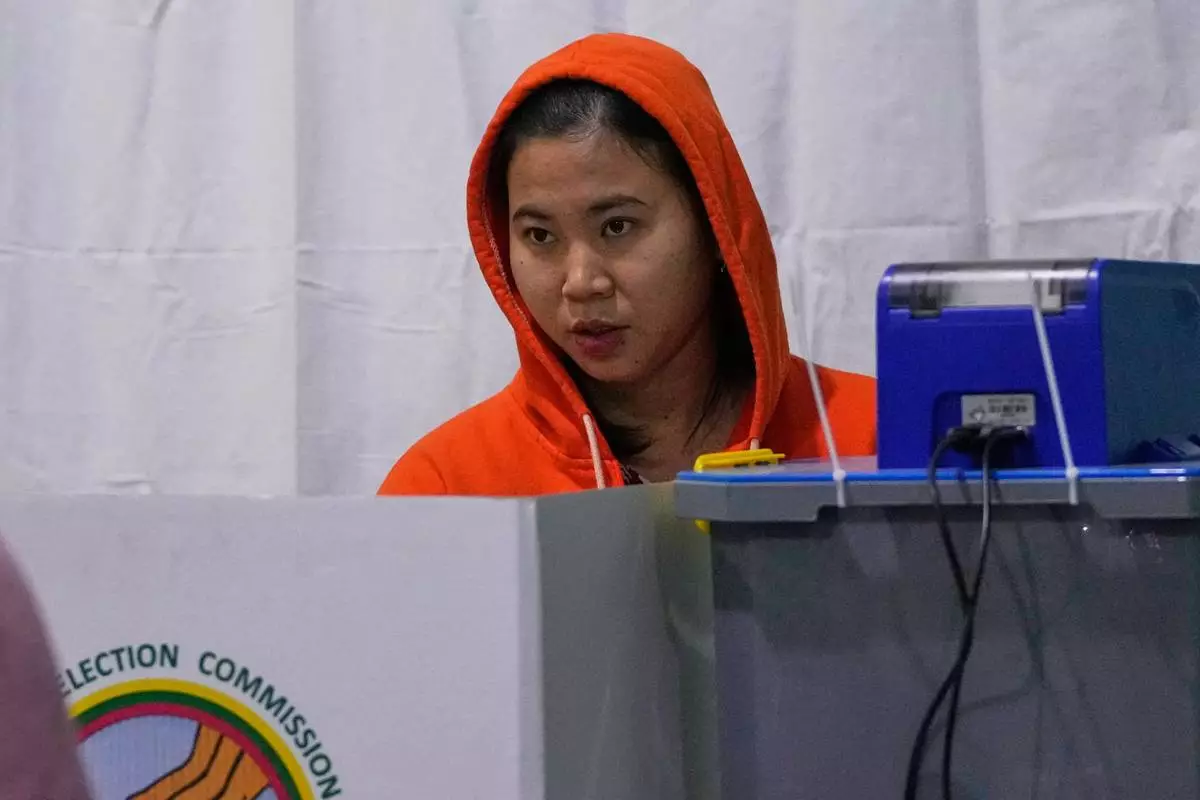
A voter casts ballot at a polling station during the second phase of general election in Mandalay, central Myanmar, Sunday, Jan. 11, 2026. (AP Photo/Aung Shine Oo)
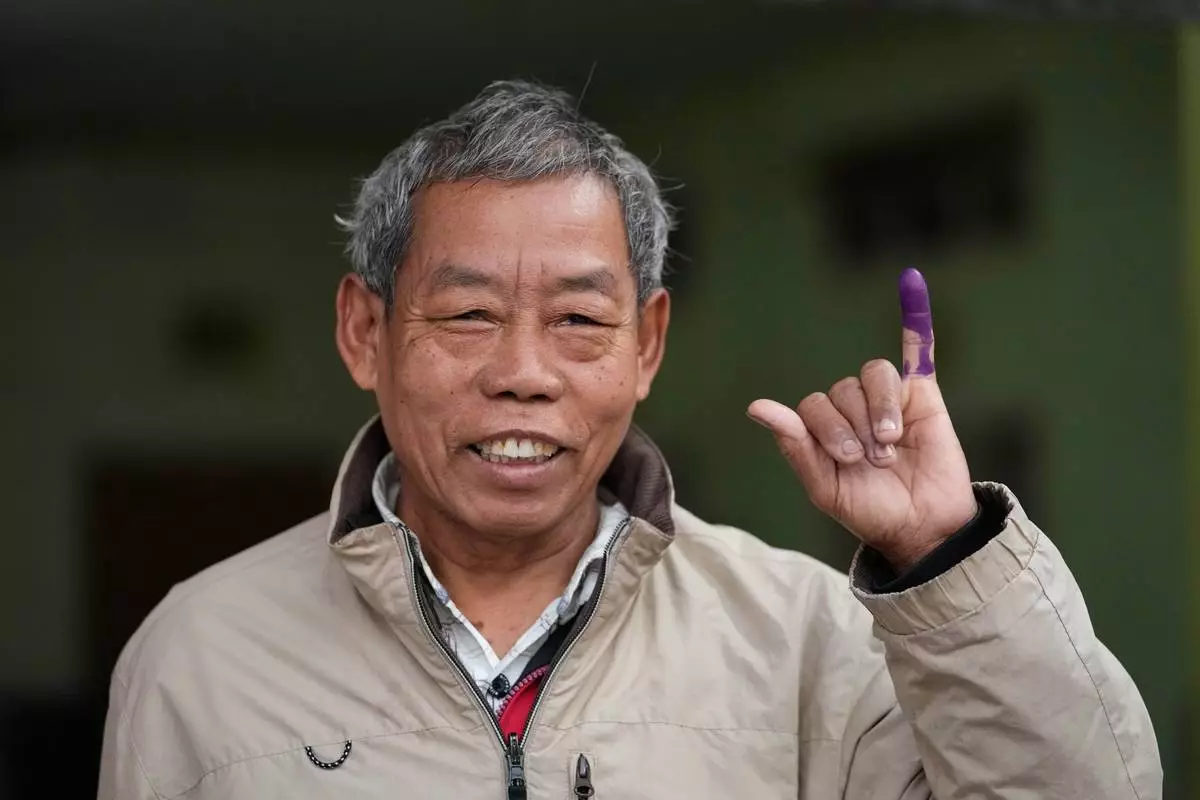
A voter shows his finger, marked with ink to indicate he voted, at a polling station during the second phase of general election in Mandalay, central Myanmar, Sunday, Jan. 11, 2026. (AP Photo/Aung Shine Oo)
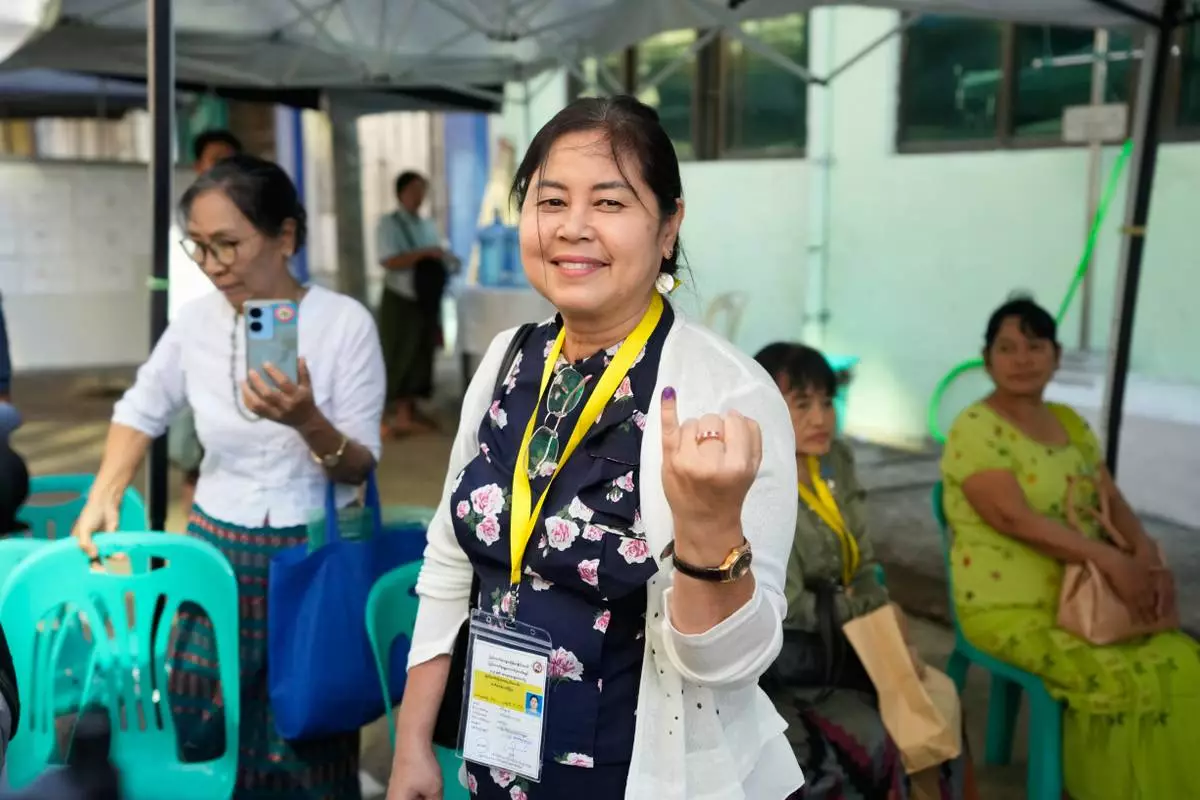
Sandar Min, an individual candidate for an election and former parliament member from ousted leader Aung San Suu Kyi's National League for Democracy (NLD) party, shows off her finger marked with ink indicating she voted at a polling station during the second phase of general election Sunday, Jan. 11, 2026, in Yangon, Myanmar. (AP Photo/Thein Zaw)
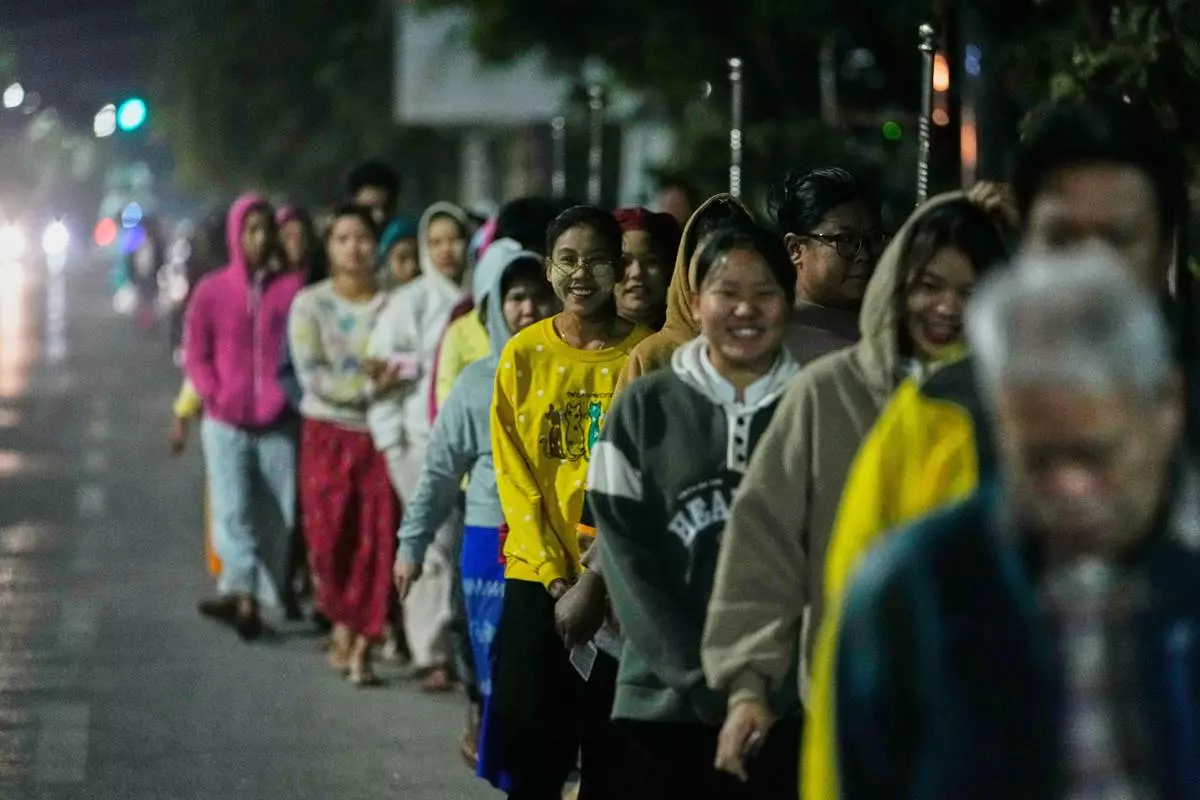
Voters wait for a polling station to open during the second phase of general election in Mandalay, central Myanmar, Sunday, Jan. 11, 2026. (AP Photo/Aung Shine Oo)
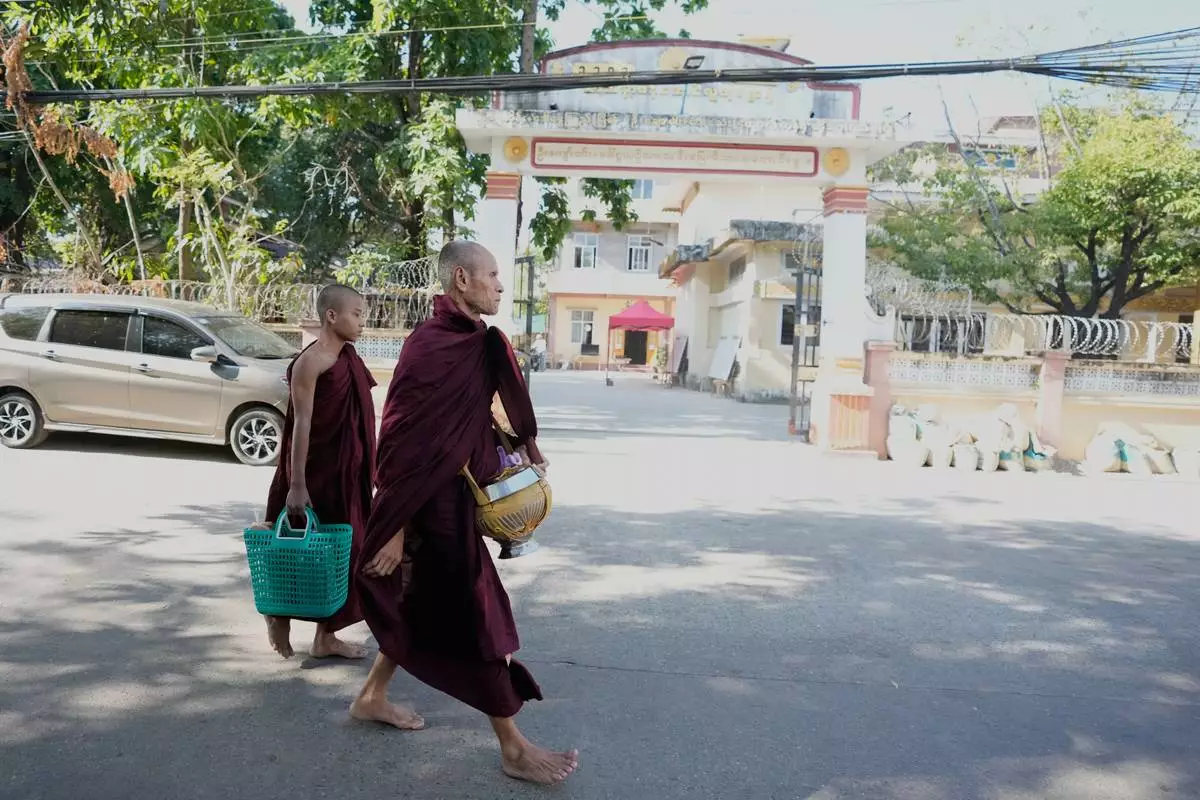
Buddhist monks walk past a polling station opened at a monastery one day before the second phase of the general election in Yangon, Myanmar, Saturday, Jan. 10, 2026. (AP Photo/Thein Zaw)
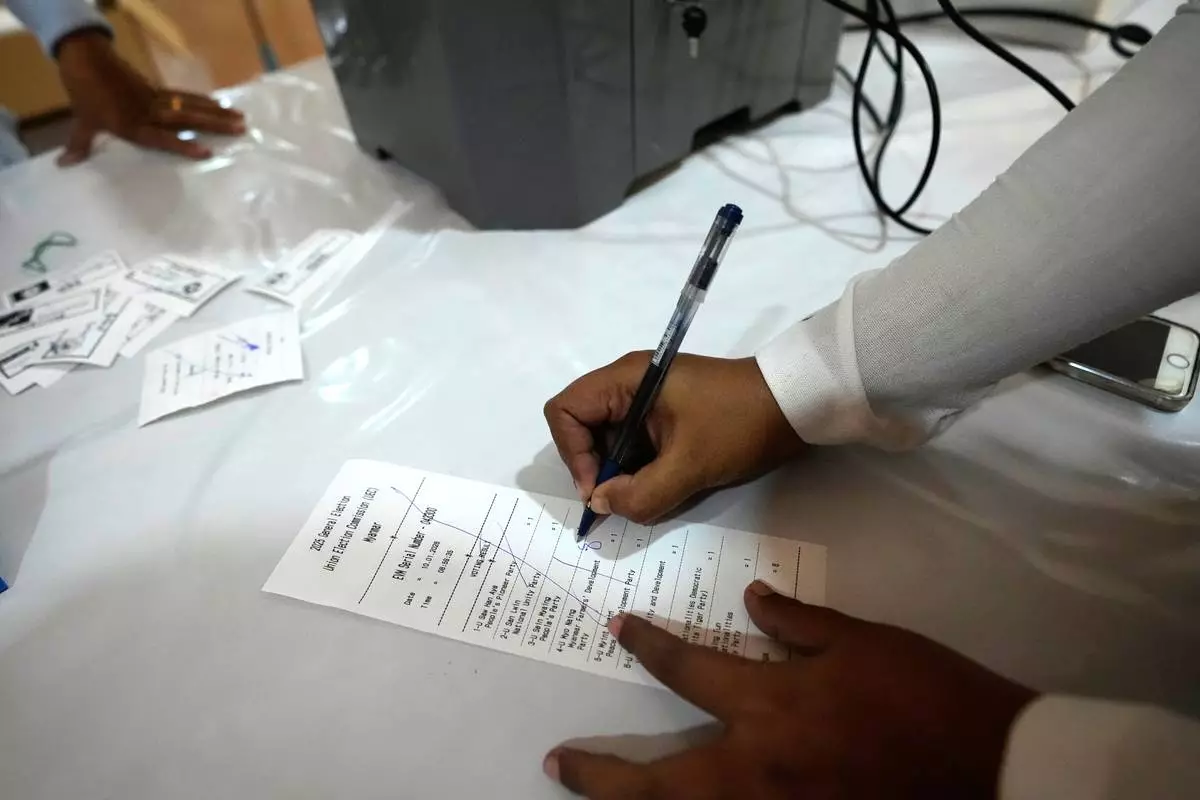
An official of the Union Election Commission checks a sample slip from an electronic voting machine as they prepare to set up a polling station opened at a monastery one day before the second phase of the general election in Yangon, Myanmar, Saturday, Jan. 10, 2026. (AP Photo/Thein Zaw)