Skip to Content Facebook Feature Image

Secretary Yeung Visits CEDD to Discuss Technological Innovations and Landslip Prevention Efforts

HK

Secretary Yeung Visits CEDD to Discuss Technological Innovations and Landslip Prevention Efforts
HK

HK

Secretary Yeung Visits CEDD to Discuss Technological Innovations and Landslip Prevention Efforts

2025-07-18 18:43 Last Updated At:19:23

SCS visits Civil Engineering and Development Department

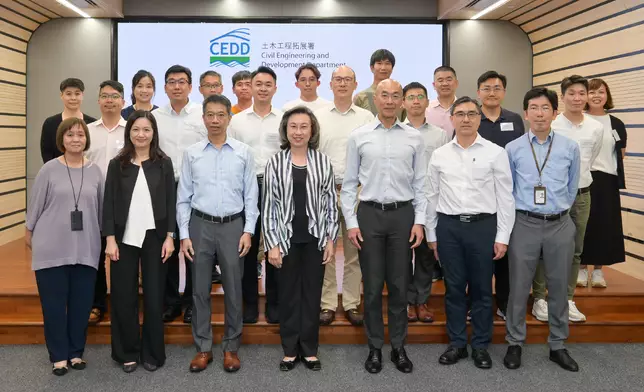
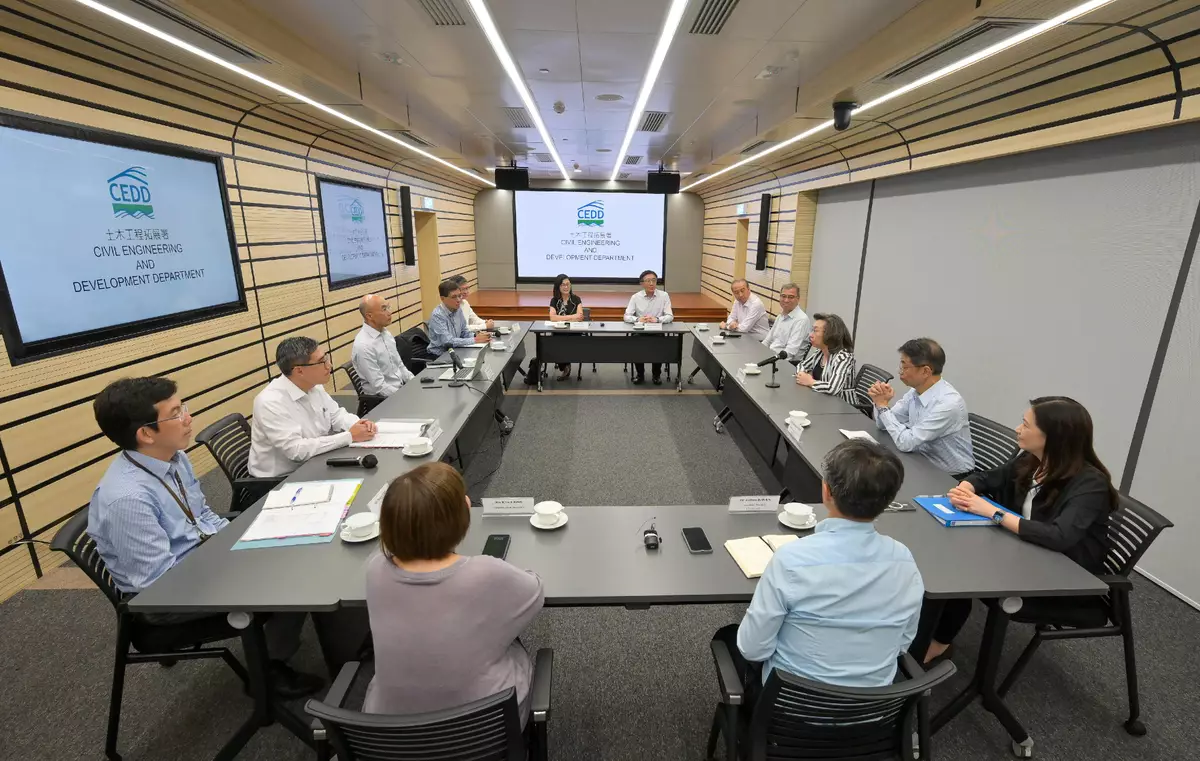
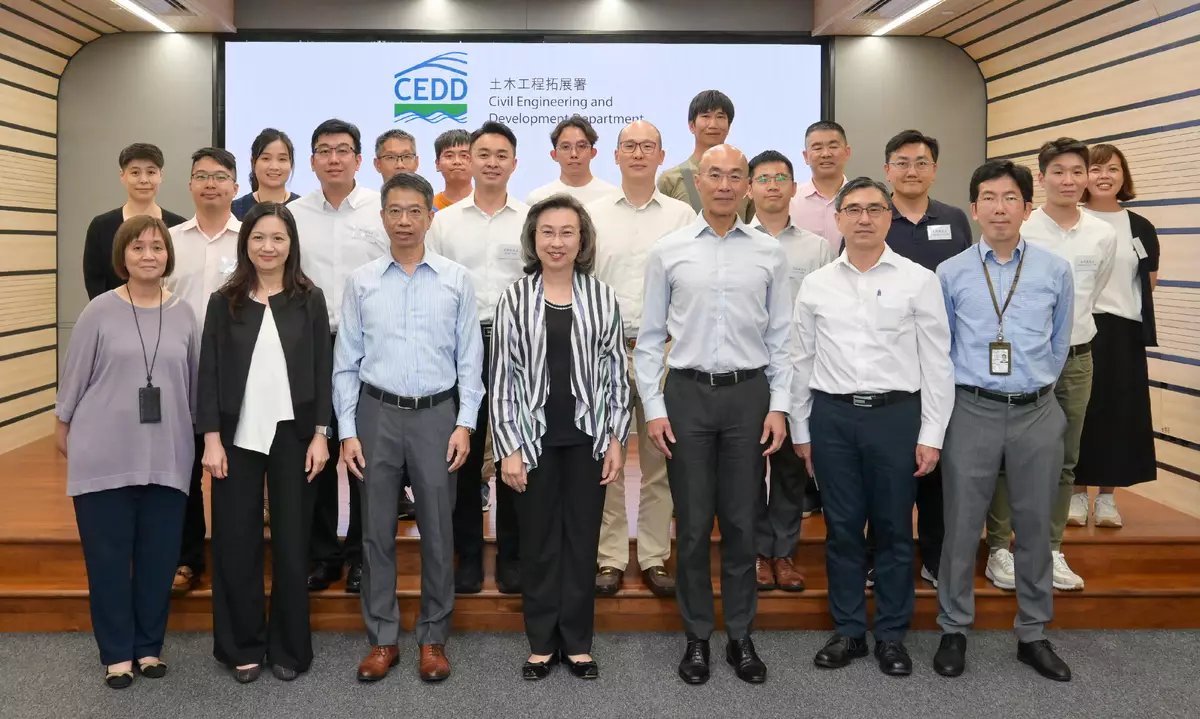
The Secretary for the Civil Service, Mrs Ingrid Yeung, visited the Civil Engineering and Development Department (CEDD) this afternoon (July 18) to exchange views with staff representatives from various grades in the department, and to learn about the department's latest progress in optimising operational efficiency and services through the application of technology, as well as its work in landslip prevention and mitigation and slope safety.

More Images
SCS visits Civil Engineering and Development Department  Source: HKSAR Government Press Releases
SCS visits Civil Engineering and Development Department Source: HKSAR Government Press Releases
SCS visits Civil Engineering and Development Department  Source: HKSAR Government Press Releases

SCS visits Civil Engineering and Development Department Source: HKSAR Government Press Releases
SCS visits Civil Engineering and Development Department  Source: HKSAR Government Press Releases

SCS visits Civil Engineering and Development Department Source: HKSAR Government Press Releases
SCS visits Civil Engineering and Development Department  Source: HKSAR Government Press Releases

SCS visits Civil Engineering and Development Department Source: HKSAR Government Press Releases
SCS visits Civil Engineering and Development Department  Source: HKSAR Government Press Releases

SCS visits Civil Engineering and Development Department Source: HKSAR Government Press Releases

SCS visits Civil Engineering and Development Department  Source: HKSAR Government Press Releases

SCS visits Civil Engineering and Development Department Source: HKSAR Government Press Releases

SCS visits Civil Engineering and Development Department  Source: HKSAR Government Press Releases

SCS visits Civil Engineering and Development Department Source: HKSAR Government Press Releases

SCS visits Civil Engineering and Development Department  Source: HKSAR Government Press Releases

SCS visits Civil Engineering and Development Department Source: HKSAR Government Press Releases

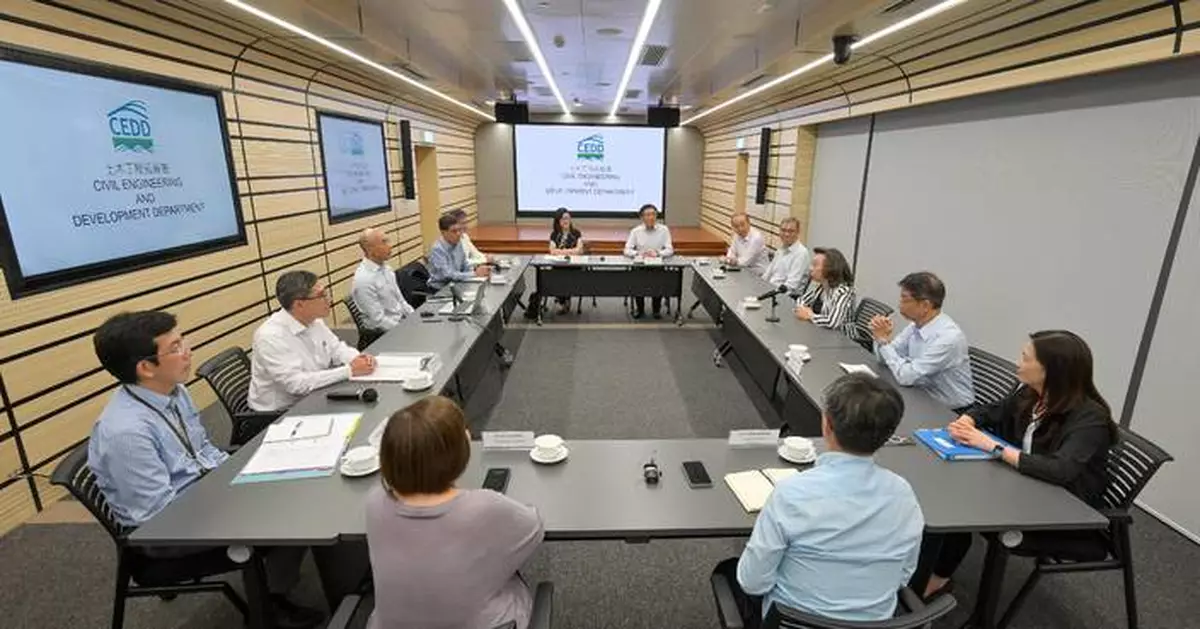
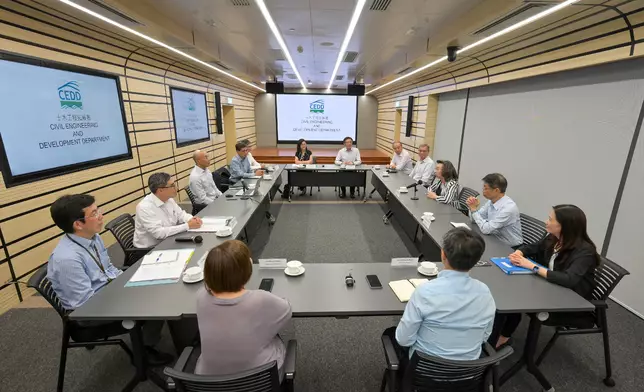
Accompanied by the Permanent Secretary for the Civil Service, Mr Clement Leung, Mrs Yeung first met with the Director of Civil Engineering and Development, Mr Michael Fong, and the directorate staff to learn about the key initiatives of the Civil Engineering Office, the Geotechnical Engineering Office (GEO) and the regional development offices. They also met with staff representatives from various grades in the department to exchange views on matters of concern to them.

Mrs Yeung said, "As the expectations of the community for the civil service are constantly rising and the challenges posed by extreme weather are becoming increasingly severe, I hope my colleagues will continue to strive for excellence, review workflows to enhance efficiency and effectiveness, and respond to changes with smart innovations. This will strengthen the public's sense of fulfilment, happiness and security."

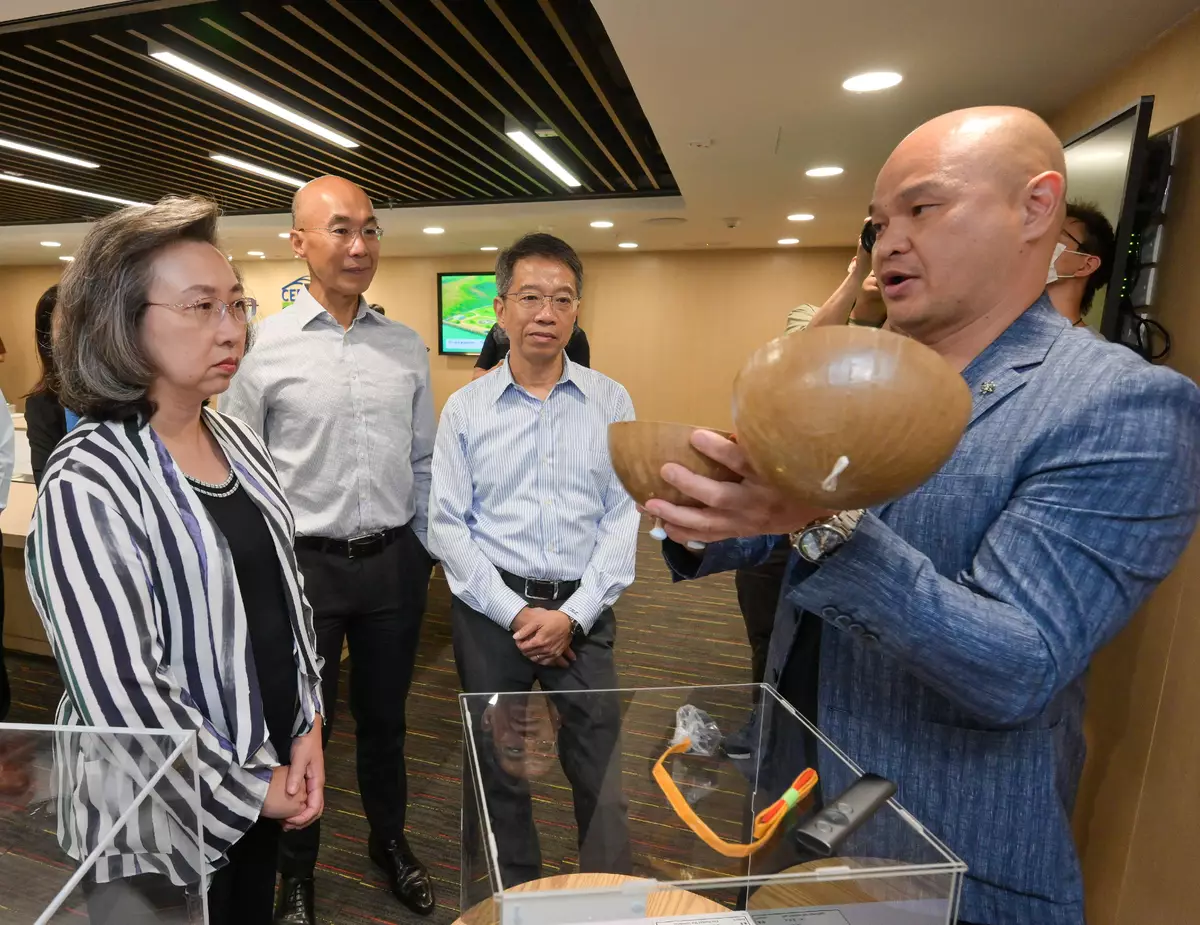
During the visit to the GEO Emergency Control Centre, officers in charge of the centre introduced the Common Operation Picture developed and managed by the department to Mrs Yeung. This electronic system facilitates the sharing of real-time information among different government departments to assist in monitoring emergencies such as landslides, flooding and fallen trees, as well as to enhance contingency co-ordination. The GEO maintains a 24-hour, year-round emergency service to provide geotechnical advice to rescue teams and government departments on any emergency actions to be taken to deal with danger arising from landslides for their determination of co-ordinated responses and mapping plans.

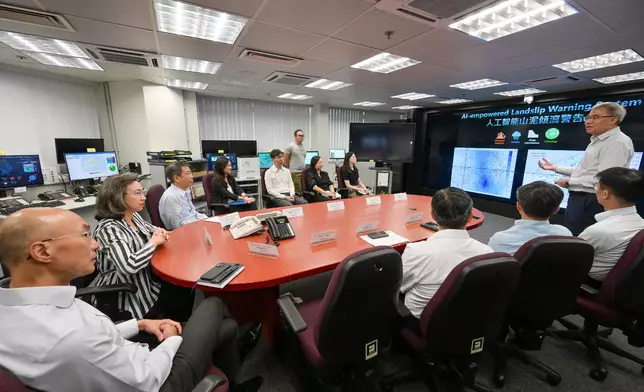
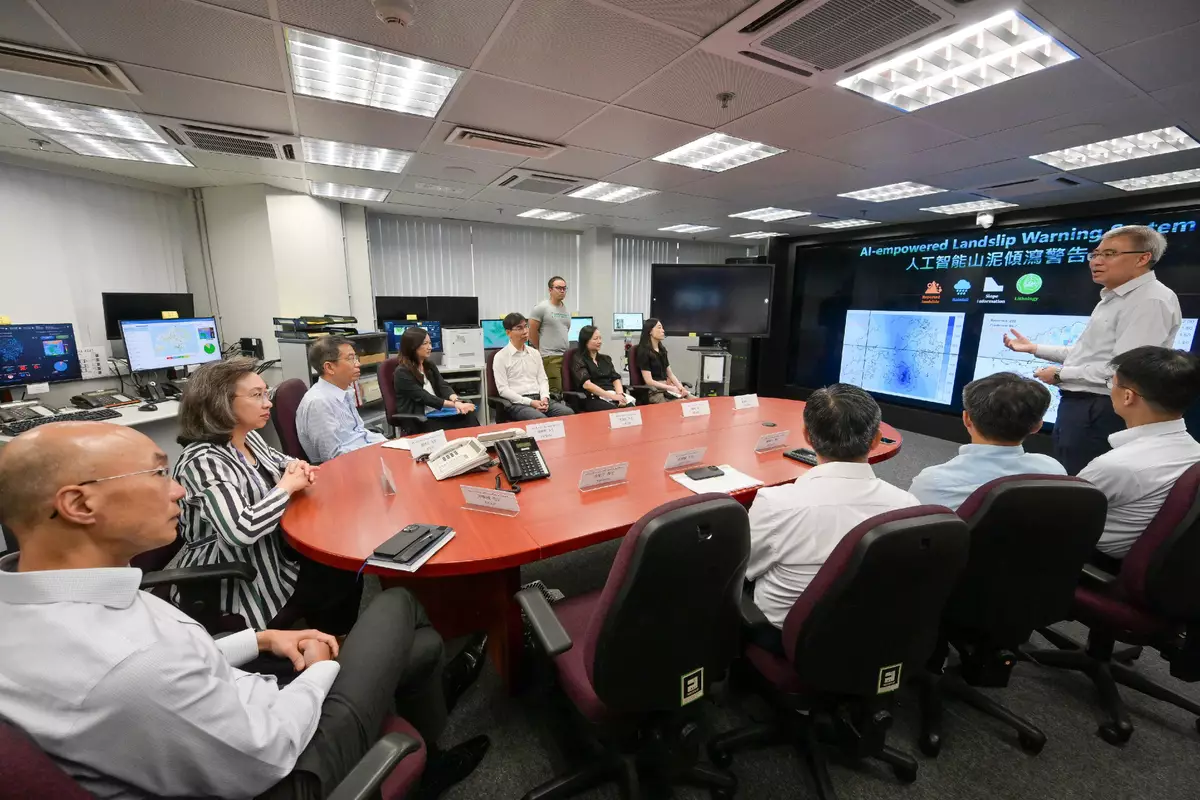
Moreover, Mrs Yeung learned that the CEDD started a trial run of its in-house developed, AI-empowered Landslip Warning System this year, with an aim to issue more accurate Landslip Warnings. Through the cloud technology and the Internet of Things, the system can use Hong Kong's rainfall data, past landslide records and man-made slopes data to identify with higher accuracy the relevant attributes resulting in landslides through big data analysis. This strengthens the understanding of the relationship between rainfall and landslides. The new system can further enhance the accuracy of the predicted number of reported landslides during heavy rainstorms, thereby improving the capabilities of landslide risk assessment, optimising the issuance of Landslip Warnings, and enhancing early warning.

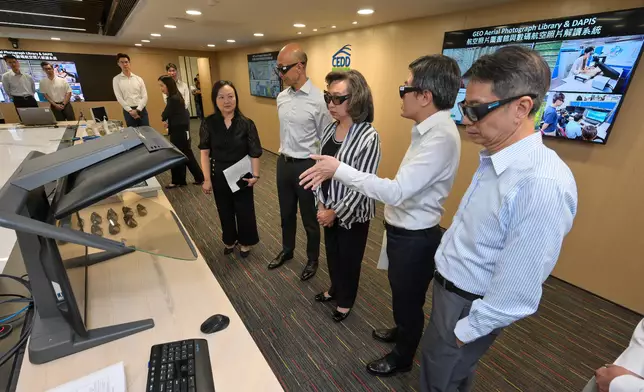
Officers responsible for planning and terrain evaluation also briefed Mrs Yeung on the Digital Aerial Photograph Interpretation System launched last year. The system digitalises historical paper aerial photographs and centralises aerial photo imageries on an instantly accessible digital platform. This not only allows government departments and related organisations to remotely search, view and analyse high-resolution 3D data, but also empowers professionals to map and visualise 3D terrains to support related research for slope safety management and land planning. The system also eliminates the process of physical photo storage and helps shorten construction time, reduce construction costs, and promote environmental efficiency.

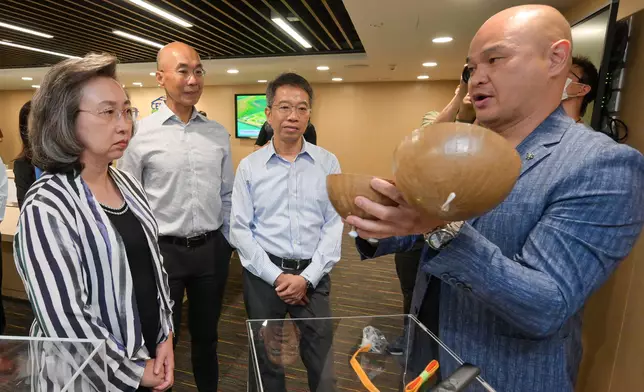
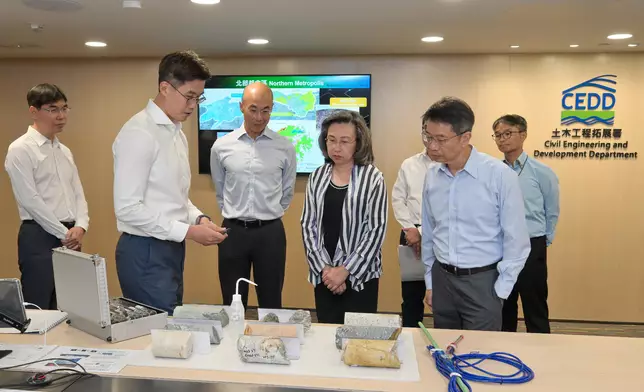
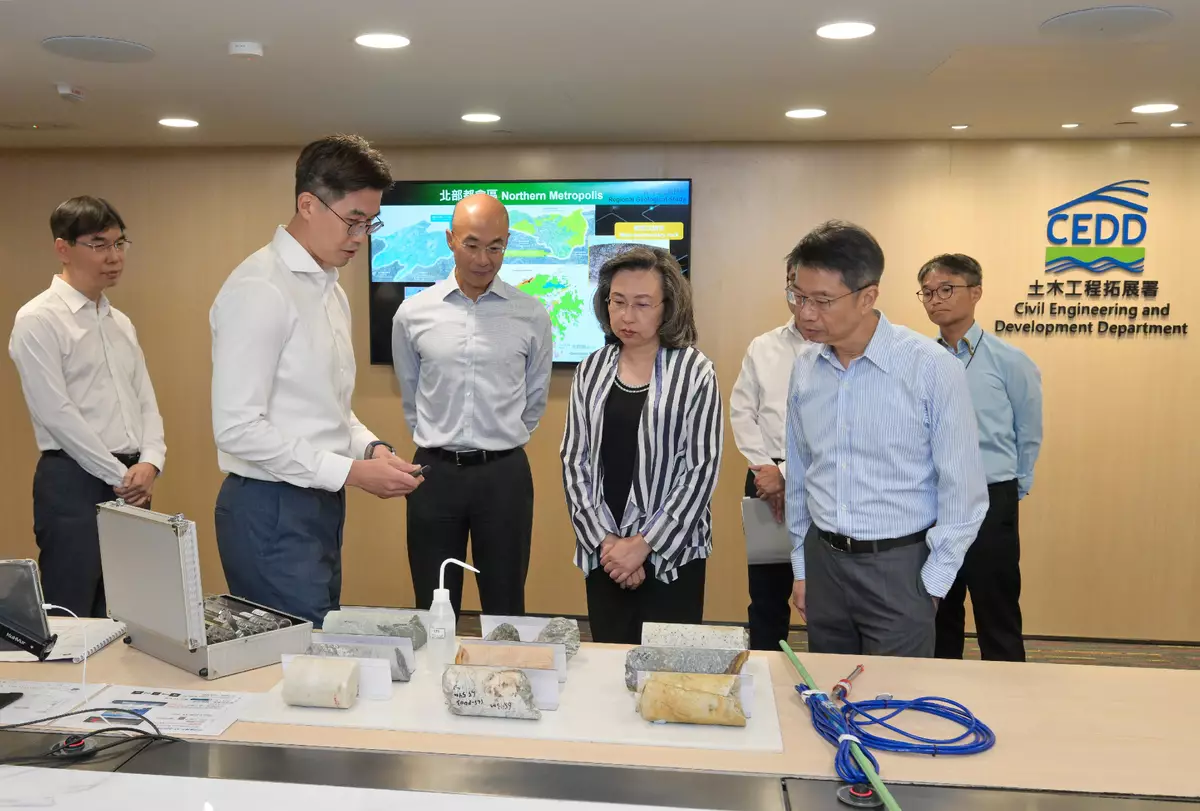
In addition, the department's staff introduced their approaches for enhancing the speed and efficiency to assist in promoting the development of the Northern Metropolis. The Northern Metropolis is located in a geologically complex area with very limited engineering geological data. In order to speed up development and minimise the ground investigation work required across different projects, the GEO initiated a regional ground investigation study in the Northwest New Territories, carrying out ground drilling and rock load tests in strategic areas.
SCS visits Civil Engineering and Development Department  Source: HKSAR Government Press Releases
SCS visits Civil Engineering and Development Department Source: HKSAR Government Press Releases
SCS visits Civil Engineering and Development Department  Source: HKSAR Government Press Releases

SCS visits Civil Engineering and Development Department Source: HKSAR Government Press Releases
SCS visits Civil Engineering and Development Department  Source: HKSAR Government Press Releases

SCS visits Civil Engineering and Development Department Source: HKSAR Government Press Releases
SCS visits Civil Engineering and Development Department  Source: HKSAR Government Press Releases

SCS visits Civil Engineering and Development Department Source: HKSAR Government Press Releases
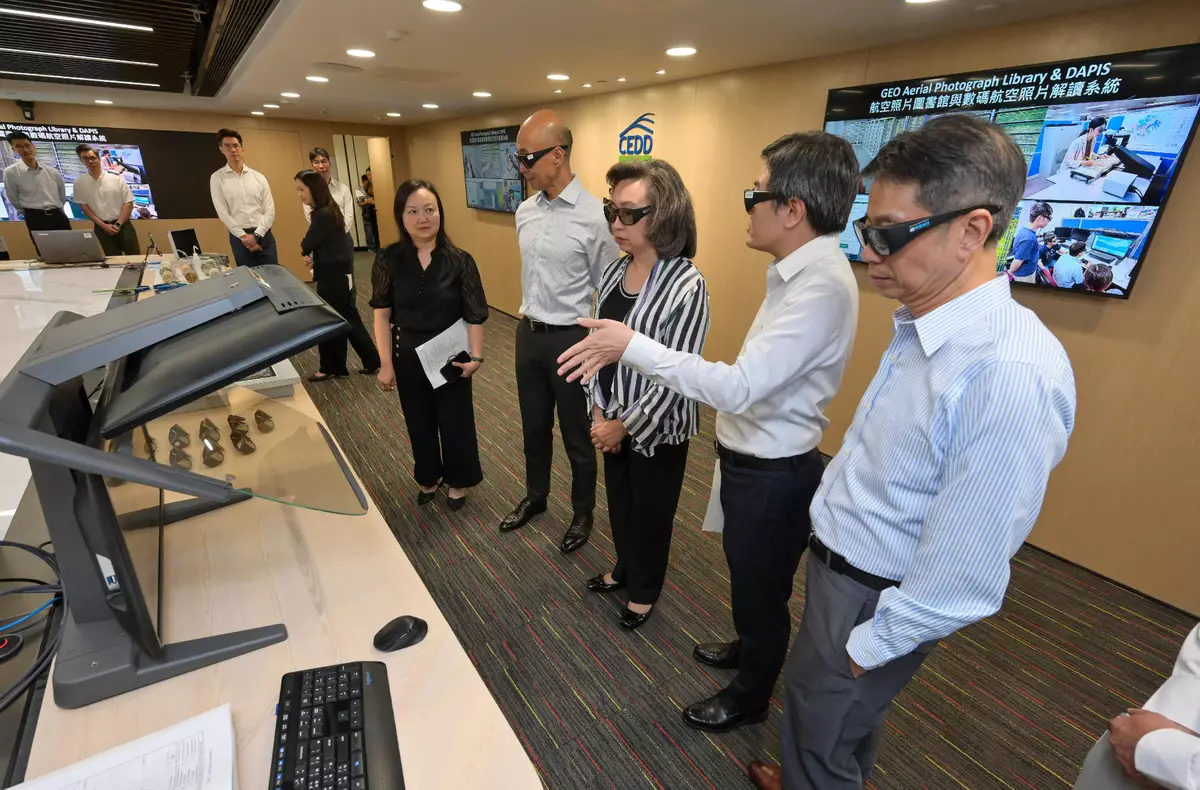
SCS visits Civil Engineering and Development Department  Source: HKSAR Government Press Releases

SCS visits Civil Engineering and Development Department Source: HKSAR Government Press Releases

SCS visits Civil Engineering and Development Department  Source: HKSAR Government Press Releases
SCS visits Civil Engineering and Development Department Source: HKSAR Government Press Releases
SCS visits Civil Engineering and Development Department  Source: HKSAR Government Press Releases
SCS visits Civil Engineering and Development Department Source: HKSAR Government Press Releases
SCS visits Civil Engineering and Development Department  Source: HKSAR Government Press Releases

SCS visits Civil Engineering and Development Department Source: HKSAR Government Press Releases
CHP investigates two suspected food poisoning clusters with epidemiological linkage

The Centre for Health Protection (CHP) of the Department of Health (DH) is today (January 9) investigating two epidemiologically linked suspected food poisoning clusters affecting 39 students from two primary schools. The students developed symptoms after consuming lunch provided by the Sailing Boat Luncheon Production Limited. The CHP reminded the public to maintain good personal, food and environmental hygiene to prevent foodborne diseases.

The first cluster involves 12 boys and 16 girls aged between 6 and 11. They attend a primary school in Sham Shui Po. The investigation revealed that the affected students developed abdominal pain and diarrhoea approximately three to 31 hours after eating school lunch containing fish, chicken cutlets, sauce, garnish and rice, which was provided by the abovementioned school lunch supplier on January 6.

While investigating the first cluster, the CHP of the DH traced the supply chain of the school lunch supplier and identified another cluster, involving eight boys and three girls, aged between 10 and 12, who attend a primary school in Diamond Hill. The investigation revealed that the affected students developed abdominal pain and diarrhoea approximately five to 15 hours after eating lunch containing chicken, cervelat sausage, sauce and fusilli at school yesterday (January 8). The food concerned was also provided by the same school lunch supplier.

None of the affected students required hospitalisation and they are all currently in stable condition.

Officers of the CHP and the Food and Environmental Hygiene Department, including personnel of the Centre for Food Safety (CFS) and the Environmental Hygiene Branch, have inspected the food factory of the school lunch supplier concerned and the kitchen of the first school. They inspected the food storage, the food preparation process and environmental hygiene. Investigation revealed that some food items, such as meat and sauce, were prepared at the food factory, while the other food items, such as rice and garnish, were prepared at the school kitchen. It is suspected that some food items were prepared too early in advance. The CFS immediately instructed the premises concerned to suspend operations for thorough cleaning and disinfection, improve food preparation process and hygiene standards. The CFS has provided food safety and environmental hygiene education to the staff. Food and environmental samples were collected for testing.

The investigation of the CHP and CFS is ongoing.

To prevent foodborne diseases, members of the public are reminded to maintain personal, food and environmental hygiene at all times. When dining out, one should:

  • Avoid eating raw seafood;
  • Be a discerning consumer in choosing cold dishes, including sashimi, sushi and raw oysters at a buffet;
  • Choose pasteurised eggs, egg products or dried egg powder for dishes that often use undercooked eggs;
  • Patronise only reliable and licensed restaurants;
  • Ensure food is thoroughly cooked before eating during a hotpot or barbecue meal;
  • Handle raw and cooked foods carefully and separate them completely during the cooking process;
  • Use two sets of chopsticks and utensils to handle raw and cooked foods;
  • Avoid patronising illegal food hawkers;
  • Drink boiled water;
  • Susceptible populations, including those with weakened immunity, the elderly, pregnant women and young children are at a higher risk of foodborne diseases, so they should not consume raw or undercooked foods;
  • Refrain from trying to use salt, vinegar, wine or wasabi to kill bacteria as they are not effective; and
  • Always wash hands before eating and after going to the toilet.
  • Source: AI-found images

    Source: AI-found images

    Recommended Articles