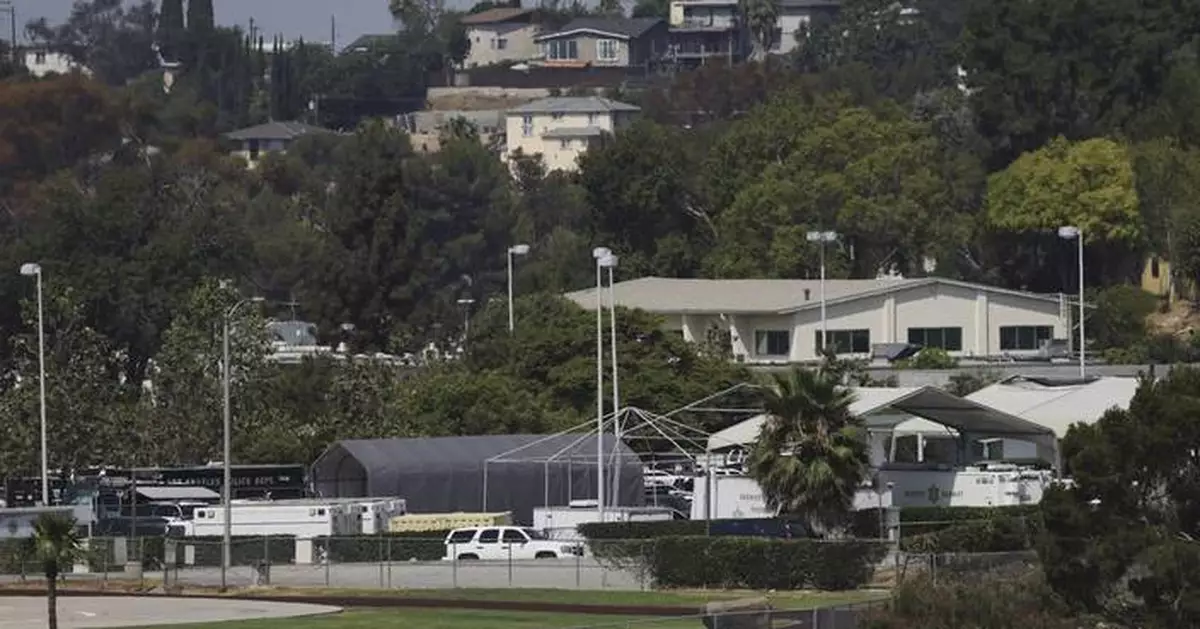
Three members of the arson and explosives unit of the Los Angeles County Sheriff’s Department were killed Friday in a blast at the department's training facility.
It was not immediately clear what they were doing when the explosion happened in a parking lot at the Biscailuz Training Facility or what caused it. However an early line of investigation is examining whether it may have been a training accident, according to a law enforcement official briefed on the matter who was not authorized to discuss it publicly and spoke on condition of anonymity.
The detectives who died were part of a team that undergoes in-depth training and responds to more than 1,000 calls a year, according to the Sheriff Robert Luna.
Here's what to know about law enforcement agencies' arson and explosives units:
Depending on the agency, they can be responsible for everything from bomb disposal to search and prevention operations to arson investigations, according to Mark Lomax, former executive director of the National Tactical Officers Association and a retired major for the Pennsylvania State Police.
In bomb disposal actions, team members might respond to a package or box that could contain an explosive device and then use tools like robots or X-ray devices to “render it safe,” Lomax said.
If there is an explosion, members could be sent to investigate, including working to determine the types of materials used to make the bomb, he said. They may also help with search and prevention at big events using bomb sniffing dogs and scanners.
On the fire side of the unit, team members could be responsible for arson investigations, including determining the cause of a fire and whether it was natural or intentional, Lomax said.
Whether or not an agency has such a unit would likely depend on the size of the department and its location.
There are thousands of police departments in the U.S., and the majority of them are under 50 people, according to Lomax. Smaller departments might not have sufficient personnel, money or equipment to have their own explosives team.
“A lot of times, depending on location, they may use the county sheriff’s department in certain locations or the state police in other locations,” Lomax said.
The team from the Los Angeles County Sheriff’s Department would likely be deployed to smaller cities in the county to help with such incidents as suspicious packages or even to educate the community about what to look out for.
A certified bomb technician would need to have a certification from the FBI, most likely from its Hazardous Devices School in Huntsville, Alabama, Lomax said.
That training includes threat assessment and puts participants in “true-to-life training settings,” according to a video on the FBI's website.
For advanced training, the Bureau of Alcohol, Tobacco, Firearms and Explosives has a national center at the same location, according to Lomax. There is also regional training.
“It's very dangerous, and therefore it demands higher, more advanced training, more advanced equipment," Lomax said.
For arson investigations, officials may go to the National Fire Academy in Maryland or participate in fire investigations training through the Bureau of Alcohol, Tobacco, Firearms and Explosives, according to Lomax. There are also local academies that offer more basic arson investigation courses.
The people on these teams likely were already officers, troopers or deputies and then later took the specialized training, Lomax said.
Explosives training involving actual explosive devices can be very dangerous because there can be many unknowns, according to Lomax.
Everything from the amount of moisture in the air that day to how long the material has been on the shelf could impact an exercise.
“There’s so many different variables that make that type of training extremely, extremely dangerous and hazardous,” Lomax said.
He referenced a 2022 incident in which five bomb technicians were injured by the detonation of an explosive device during a training exercise in Pennsylvania conducted by the FBI’s Philadelphia field office.
And in 2021, there was a catastrophic explosion in Los Angeles as homemade fireworks were being destroyed by a bomb squad. It injured 17 people and damaged dozens of homes, businesses and vehicles.
Associated Press writer Eric Tucker in Washington contributed.
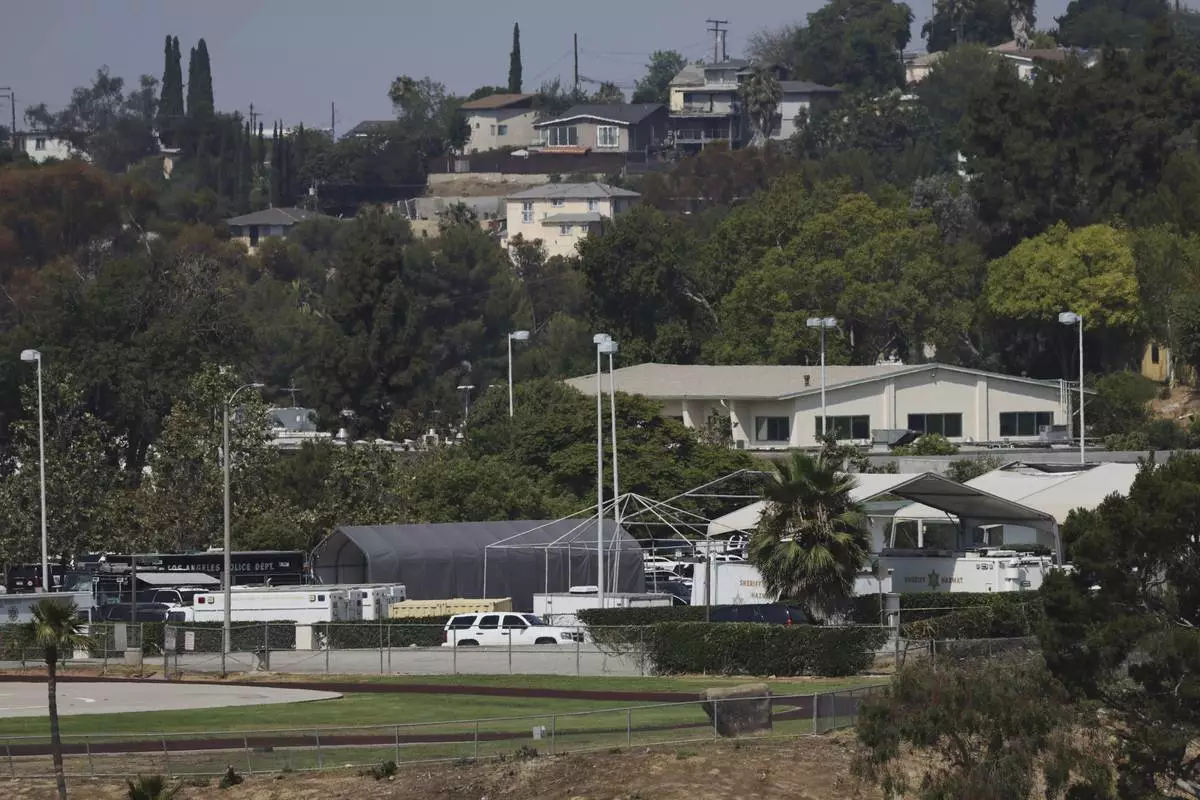
The Biscailuz Training Facility, where an explosion occurred, is shown on Friday, July 18, 2025, in Los Angeles. (AP Photo/Etienne Laurent)
The National Transportation Safety Board on Sunday said it is gathering information about the evacuation of a Frontier Airlines plane after it hit and killed a person on the runway at Denver International Airport during takeoff.
The plane, on route from Denver to Los Angeles International Airport, “reported striking a pedestrian during takeoff at DEN at approximately 11:19 p.m. on Friday,” according to a post on the airport’s official X account.
Passengers were evacuated via slides, and the emergency crew bused them to the terminal. An airport spokesperson said 12 passengers suffered minor injuries and five were taken to hospitals.
Some people on board expressed concern about the evacuation, including being stuck in the plane for several minutes as smoke filled the cabin and left on the tarmac in the cold once they were out. Video also showed some passengers coming down the slide with what looked to be their carry-on bags.
“We are gathering information about the emergency evacuation to determine if it meets criteria for a safety investigation,” NTSB spokesperson Sarah Taylor Sulick said early Sunday, adding that the agency might have more details in a few hours.
Frontier Airlines didn’t respond early Sunday to a request for information about the evacuation.
A spokesman for the Denver Police Departmet said Sunday the investigation into the incident was ongoing and that the identification of the person on the runway will be confirmed and released by the Denver Office of the Medical Examiner.
The person was hit two minutes after jumping the fence and crossing the runway. The person is not believed to be an airport employee.
“We’re stopping on the runway,” the pilot tells the control tower according to the site ATC.com. “We just hit somebody. We have an engine fire.”
The pilot tells the air traffic controller they have “231 souls” on board and that an “individual was walking across the runway.”
The air traffic controller responds that they are “rolling the trucks now” before the pilot tells the tower they “have smoke in the aircraft. We are going to evacuate on the runway.”
Frontier Airlines said in a statement that flight 4345 was the one involved in the collision and that “smoke was reported in the cabin and the pilots aborted takeoff.” It was not clear whether the smoke was linked to the collision.
The airline said the plane was carrying 224 passengers and seven crew members.
“We are investigating this incident and gathering more information in coordination with the airport and other safety authorities,” the airline said.
Passengers said panic took hold on the flight after an engine caught fire and the cabin began filling with smoke.
“Honestly, I thought I was going to die,” passenger Mohamed Hassan told Colorado’s 9NEWS.
“A lot of people next to me were screaming and crying. I just closed my eyes,” he said. "At that time, you’re not really thinking of anything, you know? Because we were just about to take off and I heard that boom, so I wasn’t sure what happened. I just thought something really, really bad happened.”
Passenger Nikil Thalanki told local media outlets that he felt “this jerk” as the plane was about to take off, adding that it felt like the wheels had left the ground but then came back down.
“There was fire on the engine. There was lots of sparks that are happening. Immediately came to a stop,” Thalanki said. "As soon as we saw the sparks on the flight, smoke filled the cabin completely. It was super hard to breathe.”
Kimberly Randle said passengers were panicking and desperate to get off the aircraft.
“In a few minutes, they finally opened the door. People were running to get out of the plane," he said. "It was chaos everywhere.”
The NTSB has for years expressed concerned about evacuations, especially passengers leaving with their carry-ons. In an April report on the evacuation aboard a United Airlines flight at Houston’s George Bush Intercontinental Airport, the NTSB described a troubling scene.
Passengers were evacuated via slides and stairs last year from the jetliner after an engine problem during takeoff caused smoke and fire on the right wing.
Despite the flight attendant telling passengers to remain seated, several began shouting, “fire on the engine, let me get out!” That trigged “widespread panic" and prompted many passengers to get up and start retrieving their belongings. Some climbed over seats and began obstructing the aisle.
Three large men insisted the evacuation occur, pushing past a flight attendant and going down a slide before it had fully deployed – causing it to deflate and become unusable.
“Cabin crew training emphasizes assertive command presence and passenger control during evacuations; however, this event demonstrates how rapidly escalating passenger behavior can affect evacuation dynamics even in the absence of confirmed fire or smoke conditions,” according to the report.
The incident in Denver came a day after a Delta Air Lines employee was killed while on the job at the Orlando International Airport. In a statement, the airline said the employee was killed Thursday night without providing details of the incident or the name of the employee.
“We are focused on extending our full support to family and taking care of our Orlando team during this difficult time,” the airline said. “We are working with local authorities as a full investigation gets underway to determine what occurred.”
AP reporter John Raby contributed from Charleston, West Virginia.
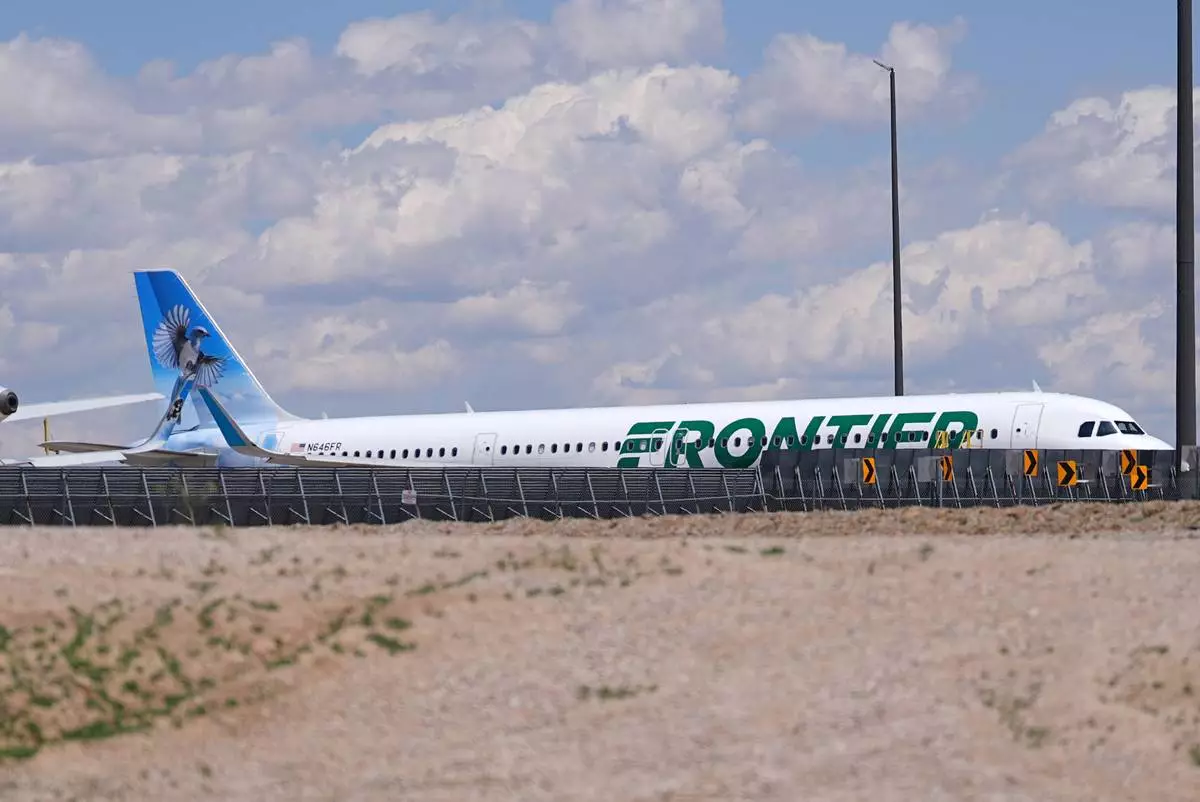
Frontier Airlines jetliner number n646fr sits outside the airlines technical operations center with other jetliners in for service north of Denver International Airport Saturday, May 9, 2026, in Denver. (AP Photo/David Zalubowski)
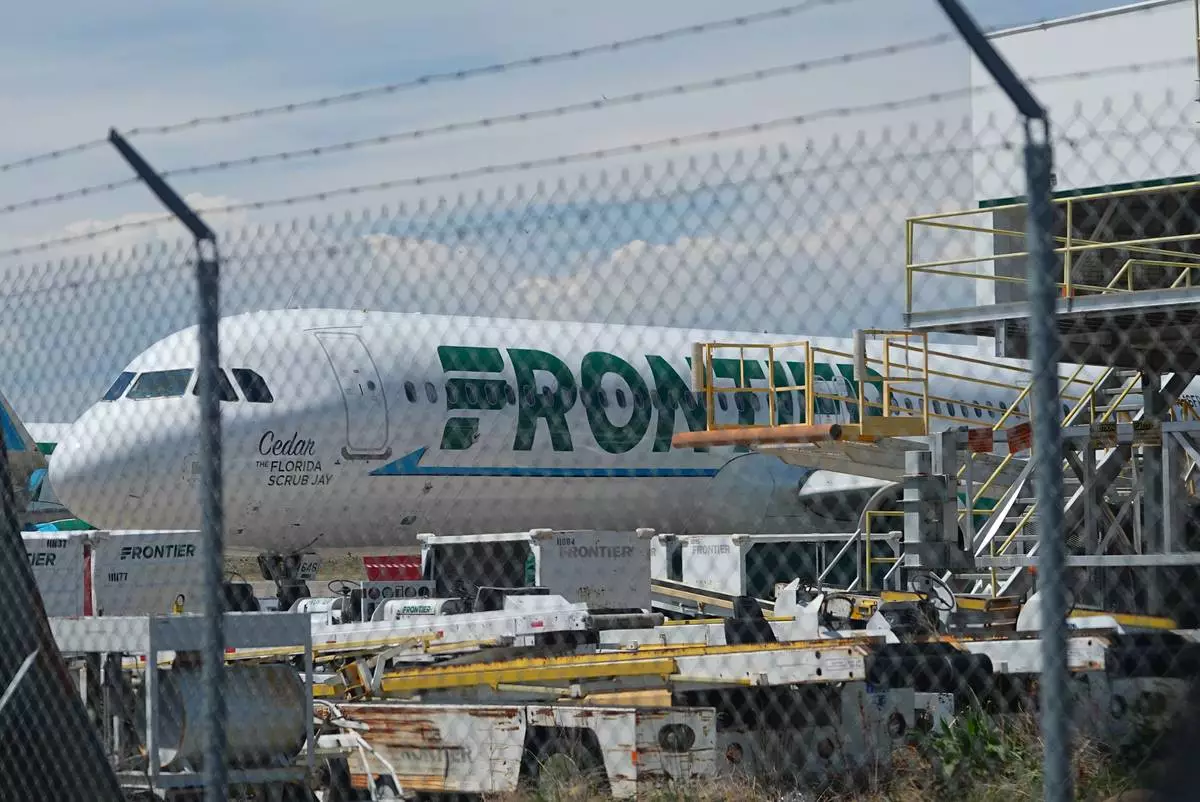
Frontier Airlines jetliner number n646fr sits outside the airlines technical operations center with other jetliners in for service north of Denver International Airport Saturday, May 9, 2026, in Denver. (AP Photo/David Zalubowski)
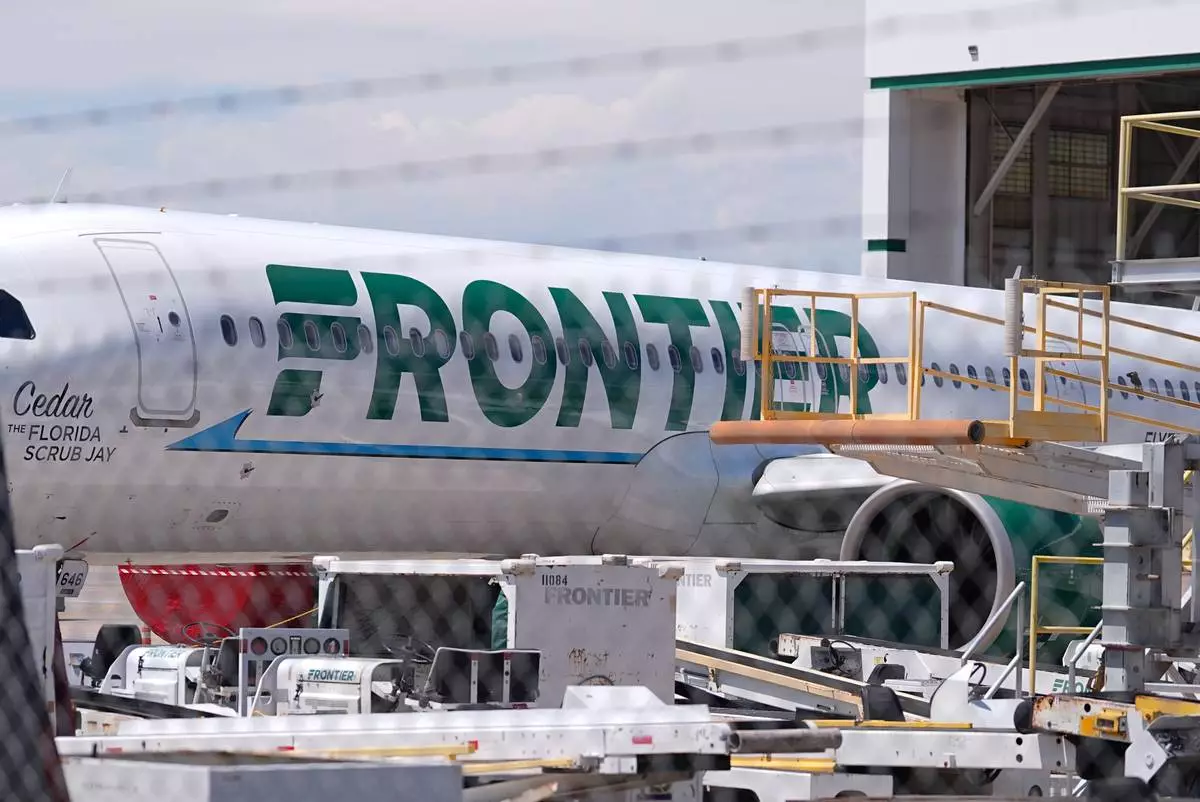
Frontier Airlines jetliner number n646fr sits outside the airlines technical operations center with other jetliners in for service north of Denver International Airport Saturday, May 9, 2026, in Denver. (AP Photo/David Zalubowski)