
Skip to Content Facebook Feature Image

Gene therapy maker Sarepta tells FDA it won't halt shipments despite patient deaths

TECH

Gene therapy maker Sarepta tells FDA it won't halt shipments despite patient deaths
TECH

TECH

Gene therapy maker Sarepta tells FDA it won't halt shipments despite patient deaths

2025-07-19 21:20 Last Updated At:21:31

WASHINGTON (AP) — Drugmaker Sarepta Therapeutics said late Friday it won't comply with a request from the Food and Drug Administration to halt all shipments of its gene therapy following the death of a third patient receiving one of its treatments for muscular dystrophy.

The highly unusual move is a latest in a string of events that have hammered the company's stock for weeks and recently forced it to lay off 500 employees. The company's decision not to comply with the FDA also places future availability of its leading therapy, called Elevidys, in doubt.

The FDA said in a statement Friday night that officials met with Sarepta and requested it suspend all sales but “the company refused to do so.” The agency has the authority to pull drugs from the market, but the cumbersome regulatory process can take months or even years. Instead, the agency usually makes an informal request and companies almost always comply.

“We believe in access to drugs for unmet medical needs but are not afraid to take immediate action when a serious safety signal emerges,” FDA Commissioner Marty Makary said in a statement.

Elevidys is the first gene therapy approved in the U.S. for Duchenne's muscular dystrophy, the fatal muscle-wasting disease that affects males, though it has faced scrutiny since its clearance in 2023. The one-time treatment received accelerated approval against the recommendations of some FDA scientists who doubted its effectiveness.

The FDA granted full approval last year and expanded the therapy’s use to patients 4 years and older, including those who can no longer walk. Previously, it was only available for younger patients who were still walking.

Sarepta said Friday that its scientific review showed “no new or changed safety signals” for younger patients with Duchenne’s who have earlier stages of the disease. The company said it plans to keep the drug available for those patients.

“We look forward to continued discussions and sharing of information with FDA,” the company said in a statement.

Sarepta halted shipments last month of the therapy for older boys with Duchenne’s, which gradually destroys muscle and skeletal strength, resulting in early death. The move followed the deaths of two teenage boys taking the therapy.

The company also confirmed a third death Friday: a 51-year-old patient who was taking an experimental gene therapy in a trial for a different form of muscular dystrophy. Sarepta said it reported the death to the FDA on June 20. The FDA said Friday it placed that trial on hold.

Sarepta noted that the gene therapy involved in the incident uses “a different dose and is manufactured using a different process,” than Elevidys.

All three patient deaths were linked to liver injury, a side effect noted in Sarepta's prescribing information.

Earlier this week Sarepta announced it would add a bold warning to drug and lay off a third of its employees. The company did not mention the third patient death in its news release or conference call announcing those changes, sparking pointed criticism from Wall Street analysts.

Company shares fell more than 35% Friday to close at $14.07.

Cambridge, Massachusetts-based Sarepta has received FDA approval for three other Duchenne’s drugs since 2016, none of which have been confirmed to work. The company has long been criticized for failing to complete several studies needed to secure full FDA approval of its drugs.

The Associated Press Health and Science Department receives support from the Howard Hughes Medical Institute’s Department of Science Education and the Robert Wood Johnson Foundation. The AP is solely responsible for all content.

FILE - The Food and Drug Administration seal is seen at the Hubert Humphrey Building Auditorium in Washington, Tuesday, April 22, 2025. (AP Photo/Jose Luis Magana, File)

FILE - The Food and Drug Administration seal is seen at the Hubert Humphrey Building Auditorium in Washington, Tuesday, April 22, 2025. (AP Photo/Jose Luis Magana, File)

TRENTON, N.J. (AP) — Richard “Dick” Codey, a former acting governor of New Jersey and the longest serving legislator in the state's history, died Sunday. He was 79.

Codey’s wife, Mary Jo Codey, confirmed her husband’s death to The Associated Press.

“Gov. Richard J. Codey passed away peacefully this morning at home, surrounded by family, after a brief illness,” Codey's family wrote in a Facebook post on Codey's official page.

"Our family has lost a beloved husband, father and grandfather -- and New Jersey lost a remarkable public servant who touched the lives of all who knew him," the family said.

Known for his feisty, regular-guy persona, Codey was a staunch advocate of mental health awareness and care issues. The Democrat also championed legislation to ban smoking from indoor areas and sought more money for stem cell research.

Codey, the son of a northern New Jersey funeral home owner, entered the state Assembly in 1974 and served there until he was elected to the state Senate in 1982. He served as Senate president from 2002 to 2010.

Codey first served as acting governor for a brief time in 2002, after Christine Todd Whitman’s resignation to join President George W. Bush’s administration. He held the post again for 14 months after Gov. Jim McGreevey resigned in 2004.

At that time, New Jersey law mandated that the Senate president assume the governor’s role if a vacancy occurred, and that person would serve until the next election.

Codey routinely drew strong praise from residents in polls, and he gave serious consideration to seeking the Democratic nomination for governor in 2005. But he ultimately chose not to run when party leaders opted to back wealthy Wall Street executive Jon Corzine, who went on to win the office.

Codey would again become acting governor after Corzine was incapacitated in April 2007 due to serious injuries he suffered in a car accident. He held the post for nearly a month before Corzine resumed his duties.

After leaving the governor’s office, Codey returned to the Senate and also published a memoir that detailed his decades of public service, along with stories about his personal and family life.

“He lived his life with humility, compassion and a deep sense of responsibility to others,” his family wrote. “He made friends as easily with Presidents as he did with strangers in all-night diners.”

Codey and his wife often spoke candidly about her past struggles with postpartum depression, and that led to controversy in early 2005, when a talk radio host jokingly criticized Mary Jo and her mental health on the air.

Codey, who was at the radio station for something else, confronted the host and said he told him that he wished he could “take him outside.” But the host claimed Codey actually threatened to “take him out,” which Codey denied.

His wife told The Associated Press that Codey was willing to support her speaking out about postpartum depression, even if it cost him elected office.

“He was a really, really good guy,” Mary Jo Codey said. “He said, ‘If you want to do it, I don’t care if I get elected again.’”

Jack Brook contributed reporting from New Orleans.

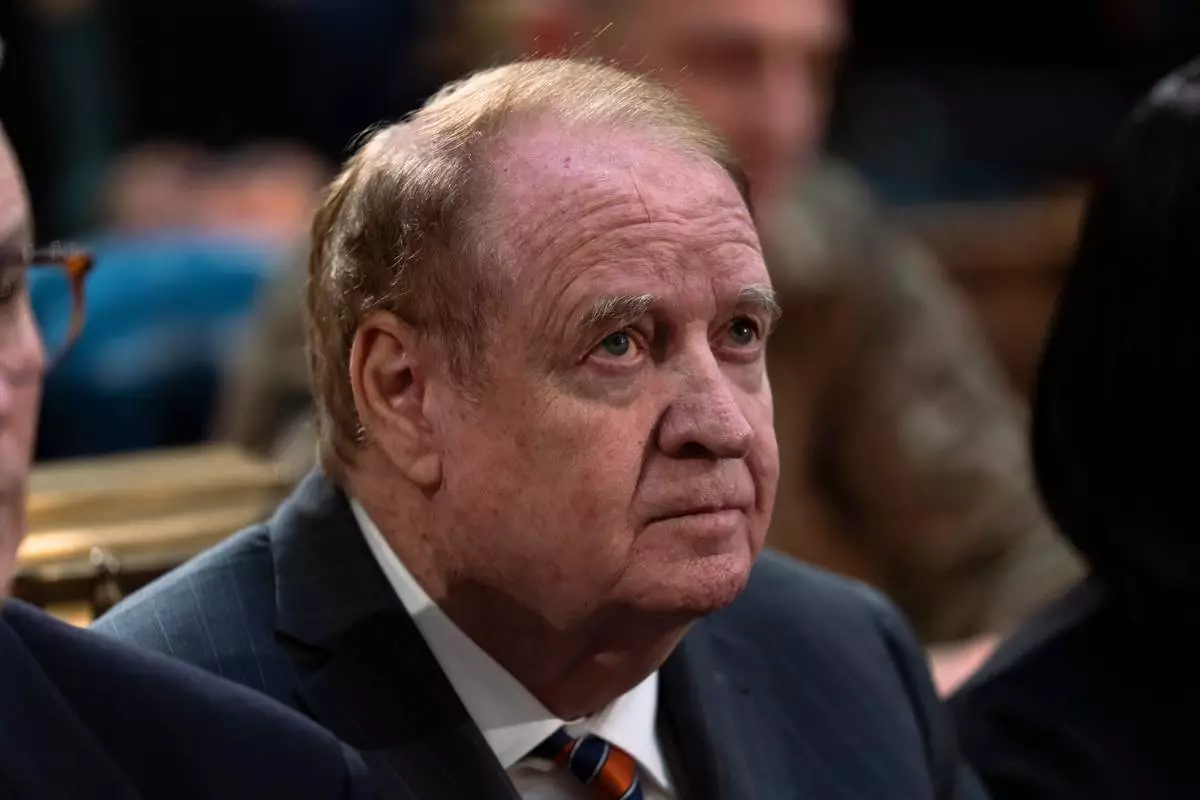
FILE - New Jersey State Sen. and former Democratic Gov. Richard Codey is seen before New Jersey Gov. Phil Murphy delivers his State of the State address to a joint session of the Legislature at the statehouse, in Trenton, N.J., Tuesday, Jan. 10, 2023. (AP Photo/Matt Rourke, File)

FILE - New Jersey State Sen. and former Democratic Gov. Richard Codey is seen before New Jersey Gov. Phil Murphy delivers his State of the State address to a joint session of the Legislature at the statehouse, in Trenton, N.J., Tuesday, Jan. 10, 2023. (AP Photo/Matt Rourke, File)

Recommended Articles