As the world celebrates the Lunar Exploration Day on Sunday, China is deepening its role in international space research, partnering with over 60 other institutions and 17 other nations to advance lunar and deep space exploration.
Earlier this month, China's Deep Space Exploration Laboratory (DSEL) initiated the establishment of the International Deep Space Exploration Association in Hefei City, east China's Anhui Province. The association will serve as a global platform for scientific exchange and innovation in space research.
"The International Deep Space Exploration Association has garnered extensive participation from the global scientific community. It will serve as a vital nexus for multinational scientific collaboration, a shared platform for innovation, and a cradle for human resources development. This also represents the international scientific community's and indeed the global community's strong recognition of China's advancements in space exploration and our efforts in building China into a space power," said DSEL director Wu Weiren. China's upcoming lunar and planetary missions will continue with international collaboration, with the Chang'e-7, the Chang'e-8 and the Tianwen-3 missions all planned to carry foreign payloads.
Previous missions, including the Chang'e-4, the Chang'e-5 and the Chang'e-6, have already hosted scientific instruments from the Netherlands, Sweden, Germany, Saudi Arabia, Pakistan, France and Italy.
"The Deep Space Exploration Laboratory has partnered with other research institutions from over 60 countries to jointly contribute to the development of the International Lunar Research Station. We welcome scientists and research organizations from around the world to participate in this groundbreaking initiative," said Wang Zhongmin, director of DSEL's international cooperation center.
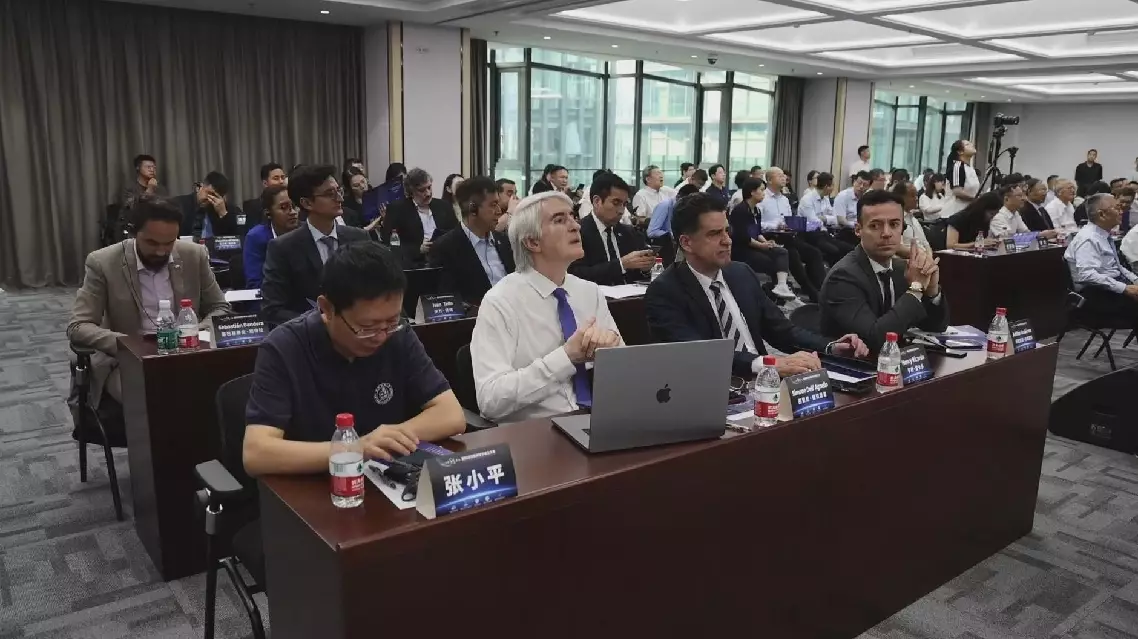
China deepens international space collaboration with over 60 partners