WESLACO, Texas (AP) — These days, Juanita says a prayer every time she steps off the driveway of her modest rural home.
The 41-year-old mother, who crossed into the United States from Mexico more than two decades ago and married an American carpenter, fears federal agents may be on the hunt for her.
Click to Gallery
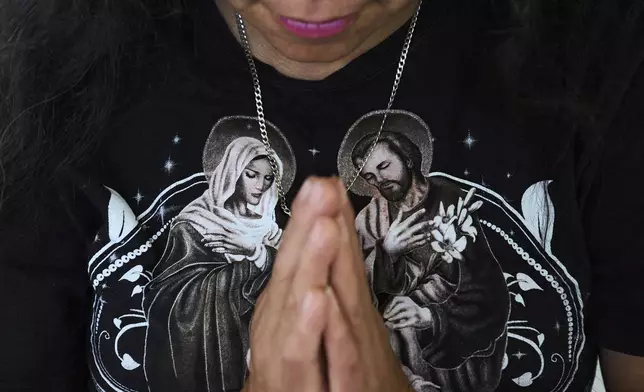
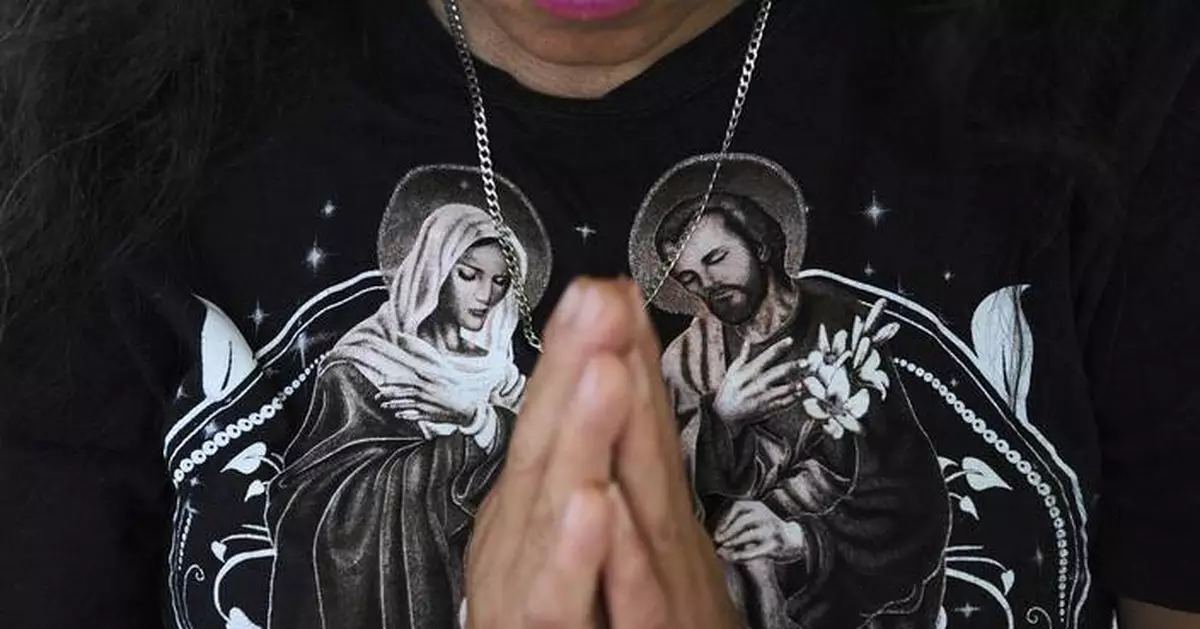
Juanita poses for a portrait in prayer inside a chapel in the Rio Grande Valley, Wednesday, June 18, 2025, in Weslaco, Texas. (AP Photo/Jacquelyn Martin)
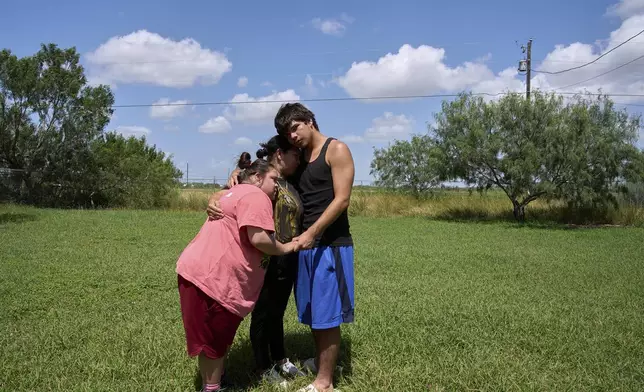
Juanita is hugged by her children, Jose, 15, and daughter Marely, 17, who has Down syndrome, Tuesday, June 17, 2025, during a portrait in Hidalgo County, Texas. (AP Photo/Jacquelyn Martin)
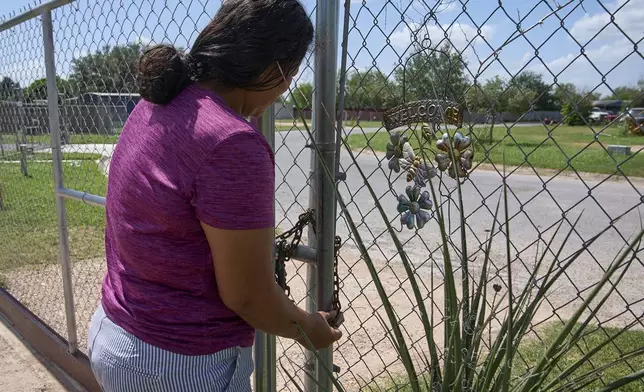
Terrified of being taken away from her children by ICE agents or police, Maria has begun locking her fence with a chain and padlock, Wednesday, June 18, 2025, at her home in Hidalgo County, Texas. (AP Photo/Jacquelyn Martin)
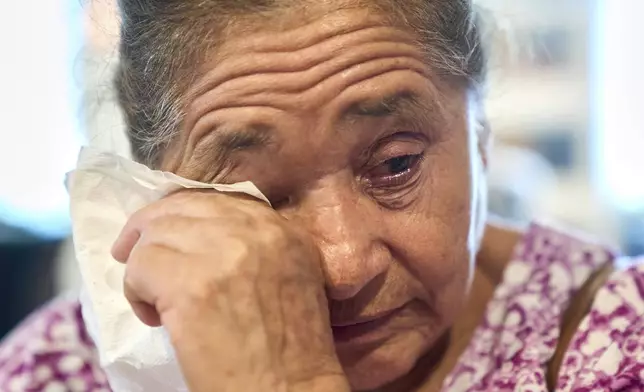
Maria Isabel de Perez, 82, of Welasco, Texas, cries as she recounts how her son was too scared to go to a hospital when he felt intense pain in his abdomen recently, leading to his near-death when his appendix burst, after she attended a diabetes clinic hosted by Holy Family Services, a birth center and women's clinic in the Rio Grande Valley, Wednesday, June 18, 2025, in Weslaco, Texas. (AP Photo/Jacquelyn Martin)
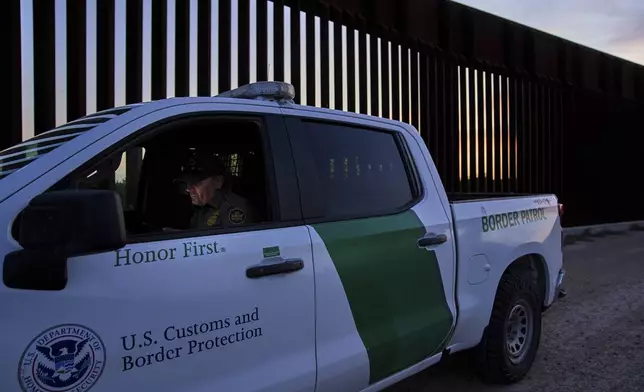
A border patrol agent works by a section of the border wall, Wednesday, June 18, 2025, in Mission, Texas. (AP Photo/Jacquelyn Martin)
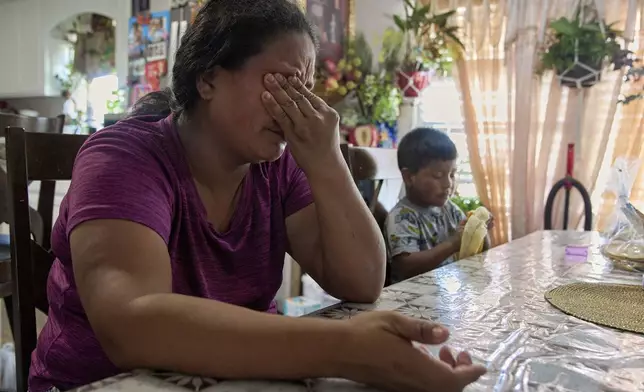
Maria sobs as she recounts how scared and anxious she is for her children, including 4-year-old Juan, if she is taken away by ICE agents, Wednesday, June 18, 2025, while inside her home in Hidalgo County, Texas. (AP Photo/Jacquelyn Martin)
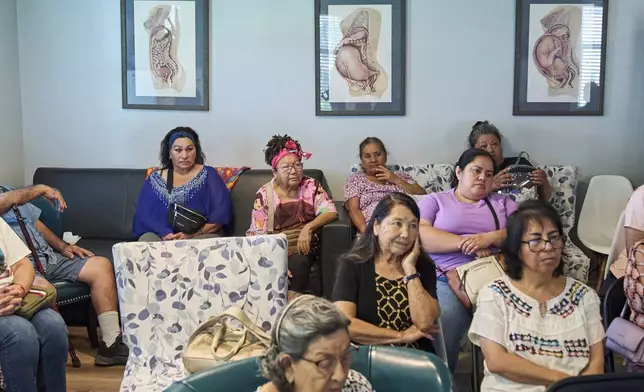
With posters illustrating stages of pregnancy behind them, people attend a health clinic about diabetes held by Holy Family Services, a birth center and women's clinic in the Rio Grande Valley, Wednesday, June 18, 2025, in Weslaco, Texas. (AP Photo/Jacquelyn Martin)
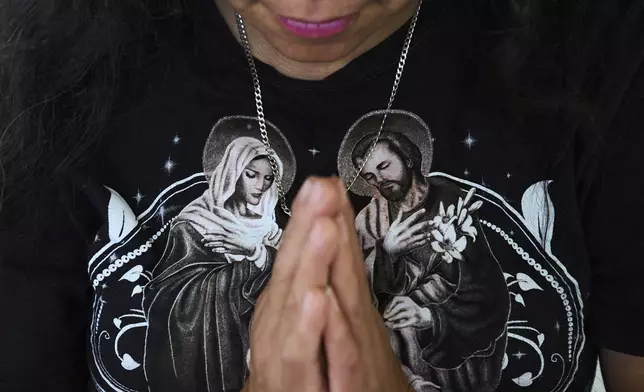
Juanita poses for a portrait in prayer inside the chapel of Holy Family Services, a birth center and women's clinic in the Rio Grande Valley, Wednesday, June 18, 2025, in Weslaco, Texas. (AP Photo/Jacquelyn Martin)
As she was about to leave for the pharmacy late last month, her husband called with a frantic warning: Immigration enforcement officers were swarming the store's parking lot. Juanita, who is prediabetic, skipped filling medications that treat her nutrient deficiencies. She also couldn't risk being detained because she has to care for her 17-year-old daughter, who has Down syndrome.
“If I am caught, who's going to help my daughter?" Juanita asks in Spanish, through an interpreter. Some people quoted in this story insisted that The Associated Press publish only their first names because of concerns over their immigration status.
As the Trump administration intensifies deportation activity around the country, some immigrants — including many who have lived in Texas's southern tip for decades — are unwilling to leave their homes, even for necessary medical care.
Tucked behind the freeway strip malls, roadside taquerias and vast citrus groves that span this 160-mile stretch of the Rio Grande Valley are people like Juanita, who need critical medical care in one of the nation's poorest and unhealthiest regions. For generations, Mexican families have harmoniously settled — some legally, some not — in this predominately Latino community where immigration status was once hardly top of mind.
White House officials have directed federal agents to leave no location unchecked, including hospitals and churches, in their drive to remove 1 million immigrants by year's end. Those agents are even combing through the federal government's largest medical record databases to search for immigrants who may be in the United States illegally.
Deportations and tougher restrictions will come with consequences, says Mark Krikorian, the director of the Center for Immigration Studies, a think tank that favors restrictive immigration policies.
“We shouldn't have let it get out of hand the way we did,” Krikorian says of the previous administration's immigration policies. “Some businesses are going to have difficulties. Some communities are going to face difficulties."
Federal agents' raids began reaching deeper into everyday life across the Rio Grande Valley in June, just as the area's 1.4 million residents began their summer ritual of enduring the suffocating heat.
This working-class stretch of Texas solidly backed Trump in the 2024 election, despite campaign promises to ruthlessly pursue mass deportations. People here, who once moved regularly from the U.S. to Mexico to visit relatives or get cheap dental care, say they didn't realize his deportation campaign would focus on their neighbors.
But in recent weeks, restaurant workers have been escorted out mid-shift and farmers have suddenly lost field workers. Schoolchildren talk openly about friends who lost a parent in raids. More than a dozen were arrested last month at local flea markets, according to local news reports and Border Patrol officials.
Immigrants are staying shut inside their mobiles homes and shacks that make up the “colonias," zoning-free neighborhoods that sometimes don't have access to running water or electricity, says Sandra de la Cruz-Yarrison, who runs the Holy Family Services, Inc. clinic in Weslaco, Texas.
“People are not going to risk it,” de la Cruz-Yarrison says. “People are being stripped from their families.”
Yet people here are among the most medically needy in the country.
Nearly half the population is obese. Women are more likely to be diagnosed with cervical cancer and elderly people are more likely to develop dementia. Bladder cancers can be more aggressive. One out of every four people lives with diabetes.
As much as a third of the population doesn’t have health insurance to cover those ailments. And a quarter of people live in poverty, more than double the national average.
Now, many in this region are on a path to develop worse health outcomes as they skip doctor appointments out of fear, says Dr. Stanley Fisch, a pediatrician who helped open Driscoll Children’s Hospital in the region last year.
“We’ve always had, unfortunately, people who have gone with untreated diabetes for a long time and now it’s compounded with these other issues at the moment,” Fisch says. “This is a very dangerous situation for people. The population is suffering accordingly.”
Elvia was the unlucky — and unsuspecting — patient who sat down for the finger prick the clinic offers everyone during its monthly educational meeting for community members. As blood oozed out of her finger, the monitor registered a 194 glucose level, indicating she is prediabetic.
She balked at the idea of writing down her address for regular care at Holy Family Services' clinic. Nor did she want to enroll in Medicaid, the federal and state funded program that provides health care coverage to the poorest Americans. Although she is a legal resident, some people living in her house do not have legal status.
Fewer people have come to Holy Family Services' clinic with coverage in recent months, says billing coordinator Elizabeth Reta. Over decades, the clinic's midwifery staff has helped birth thousands of babies in bathtubs or on cozy beds in birthing houses situated throughout the campus. But now, Reta says, some parents are too scared to sign those children up for health insurance because they do not want to share too much information with the government.
“Even people I personally know that used to have Medicaid for their children that were born here — that are legally here, but the parents are not — they stopped requesting Medicaid," Reta says.
Their worry is well-founded.
An Associated Press investigation last week revealed that U.S. Immigration and Customs Enforcement officials have gained access to personal health data — including addresses — of the nation's 79 million Medicaid and Children's Health Insurance Program enrollees. The disclosure will allow ICE officials to receive “identity and location information of aliens,” documents obtained by the AP say.
In Texas, the governor started requiring emergency room staff to ask patients about their legal status, a move that doctors have argued will dissuade immigrants from seeking needed care. State officials have said the data will show how much money is spent on care for immigrants who may not be here legally. Federal law requires emergency rooms to treat any patients who come to the doors.
Visits to Holy Family Services' mobile clinic have stopped altogether since Trump took office. The van, which once offered checkups at the doorsteps in the colonias, now sits running on idle. Its constant hum is heard throughout the clinic's campus, to keep medical supplies fresh in the 100-degree temperatures.
“These were hard-hit communities that really needed the services,” de la Cruz-Yarrison says. “People were just not coming after the administration changed.”
Immigrants were less likely to seek medical care during Trump's first term, multiple studies concluded. A 2023 study of well-child visits in Boston, Minneapolis and Little Rock, Arkansas, noted a 5% drop for children who were born to immigrant mothers after Trump was elected in 2016. The study also noted declines in visits when news about Trump's plans to tighten immigration rules broke throughout his first term.
“It’s a really high-anxiety environment where they’re afraid to talk to the pediatrician, go to school or bring their kids to child care,” says Stephanie Ettinger de Cuba, a Boston University researcher who oversaw the study.
A delayed trip to the doctor almost cost 82-year-old Maria Isabel de Perez her son this spring. He refused to seek help for his intense and constant stomach pains for weeks, instead popping Tylenol daily so he could still labor in the farm fields of Arkansas, she says. He put off going to the hospital as rumors swirled that immigration enforcement officials were outside of the hospital.
“He waited and waited because he felt the pain but was too scared to go to the hospital,” she explains in Spanish through an interpreter. “He couldn't go until the appendix exploded.”
Her son is still recovering after surgery and has not been able to return to work, she says.
Perez is a permanent resident who has lived in the United States for 40 years. But all of her children were born in Mexico, and, because she is a green card holder, she cannot sponsor them for citizenship.
Another woman named Maria, meanwhile, only leaves her house to volunteer at a local food bank. She's skipped work on nearby farms. And after last month's arrests, she won't sell clothes for money at the flea market anymore.
So she stuffs cardboard boxes with loaves of bread, potatoes, peppers and beans that will be handed out to the hungry. Before the raids began, about 130 people would drive up to collect a box of food from Maria. But on this sweltering June day, only 68 people show up for food.
She brings home a box weekly to her children, ages 16, 11 and 4, who are spending the summer shut inside. Her 16-year-old daughter has skipped the checkup she needs to refill her depression medication. The teenager, who checks in on friends whose parents have been arrested in immigration raids through a text group chat, insists she is “doing OK.”
Maria left Mexico years ago because dangerous gangs rule her hometown, she explains. She's married now to an American truck driver.
“We're not bad people,” Maria says from her dining room table, where her 4-year-old son happily eats a lime green popsicle. “We just want to have a better future for our children.”
Juanita, the prediabetic mother who hasn't filled her prescriptions out of fear, was not sure when she would brave the pharmacy again. But with a cross hanging around her neck, the devout Catholic says she will say three invocations before she does.
Explains her 15-year-old son, Jose: “We always pray before we leave."
The Associated Press receives support from the National Press Club Journalism Institute’s Public Health Reporting Fellowship, funded by the Common Health Coalition. The AP is solely responsible for all content.
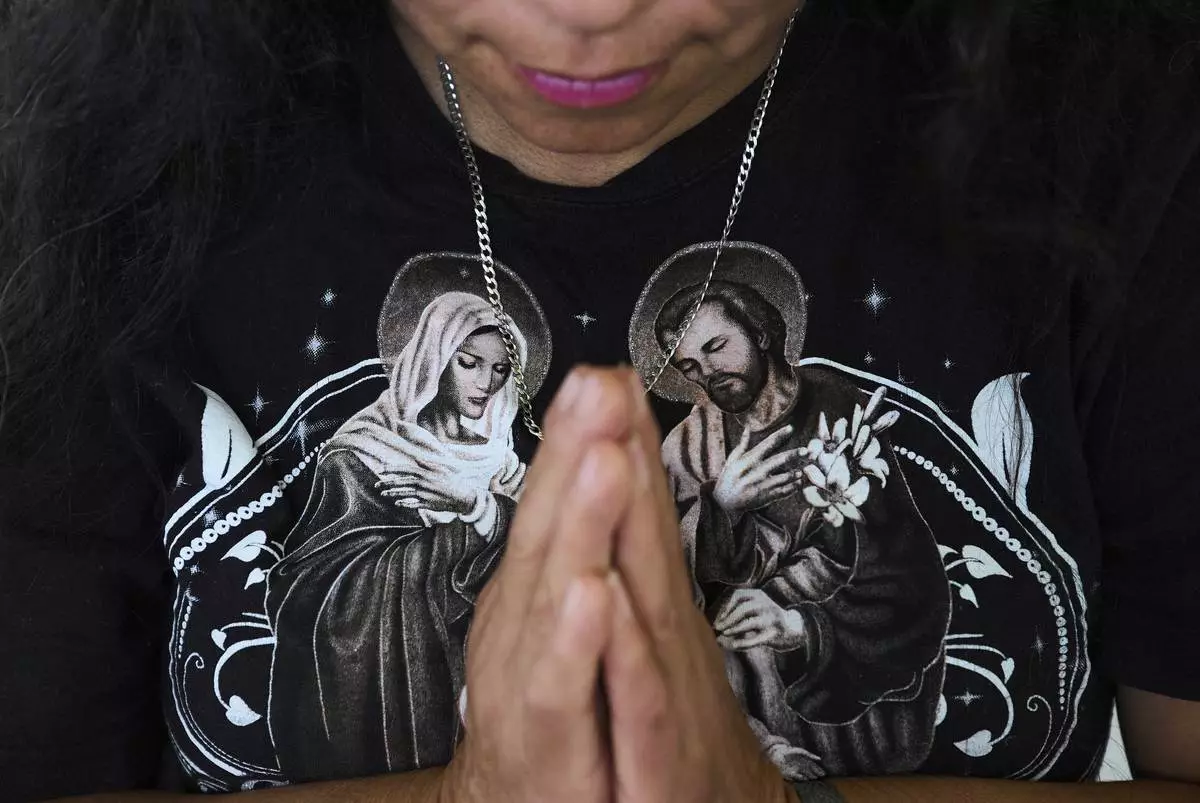
Juanita poses for a portrait in prayer inside a chapel in the Rio Grande Valley, Wednesday, June 18, 2025, in Weslaco, Texas. (AP Photo/Jacquelyn Martin)
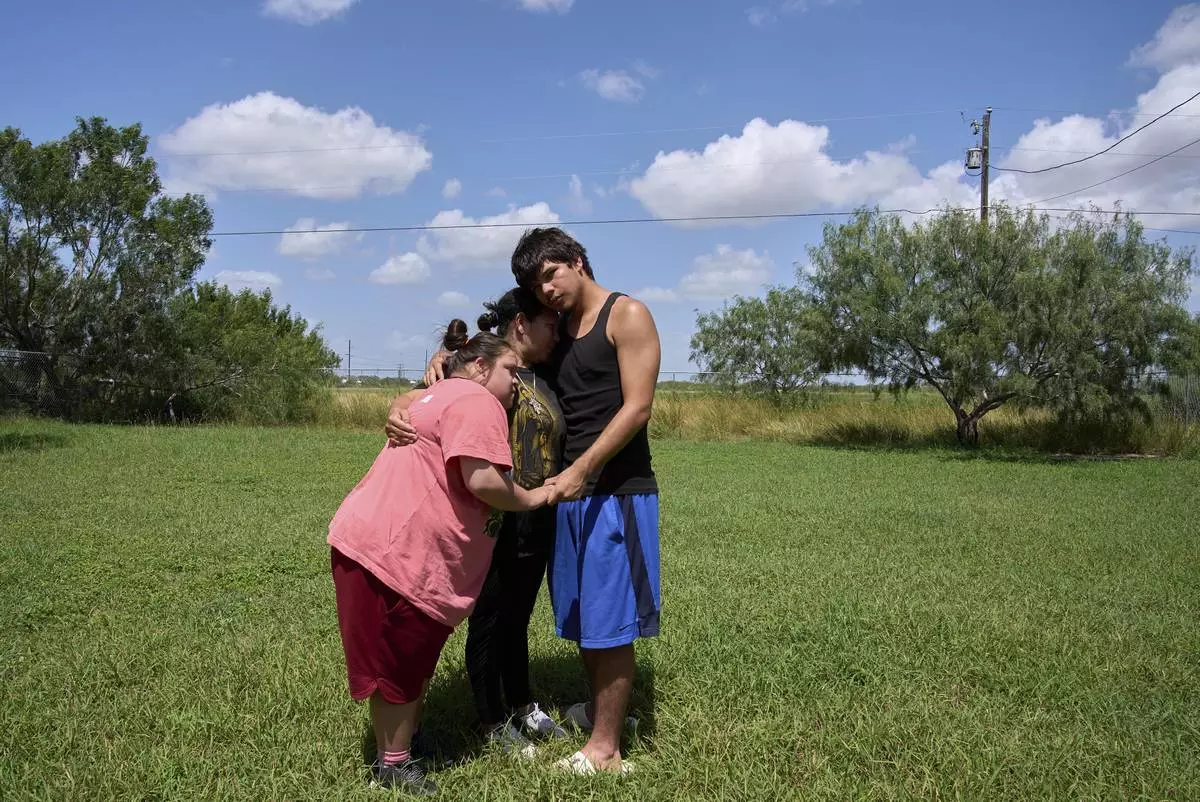
Juanita is hugged by her children, Jose, 15, and daughter Marely, 17, who has Down syndrome, Tuesday, June 17, 2025, during a portrait in Hidalgo County, Texas. (AP Photo/Jacquelyn Martin)
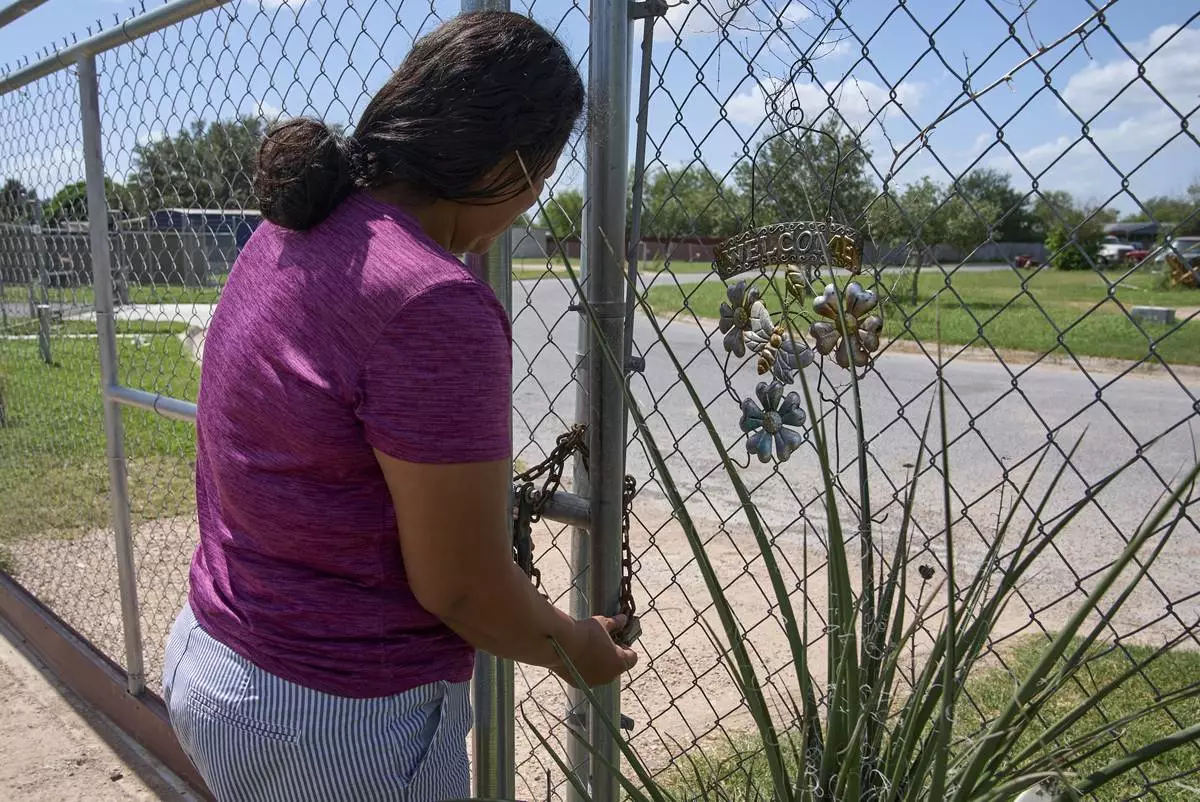
Terrified of being taken away from her children by ICE agents or police, Maria has begun locking her fence with a chain and padlock, Wednesday, June 18, 2025, at her home in Hidalgo County, Texas. (AP Photo/Jacquelyn Martin)
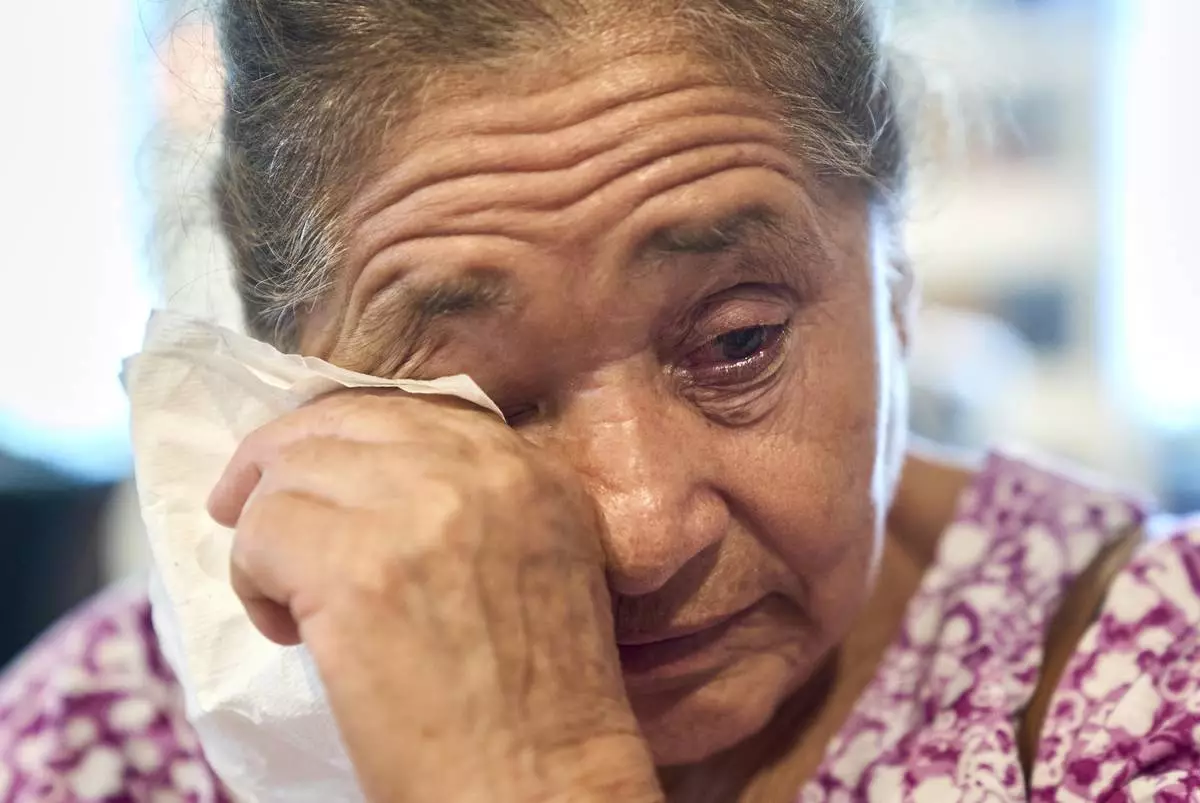
Maria Isabel de Perez, 82, of Welasco, Texas, cries as she recounts how her son was too scared to go to a hospital when he felt intense pain in his abdomen recently, leading to his near-death when his appendix burst, after she attended a diabetes clinic hosted by Holy Family Services, a birth center and women's clinic in the Rio Grande Valley, Wednesday, June 18, 2025, in Weslaco, Texas. (AP Photo/Jacquelyn Martin)
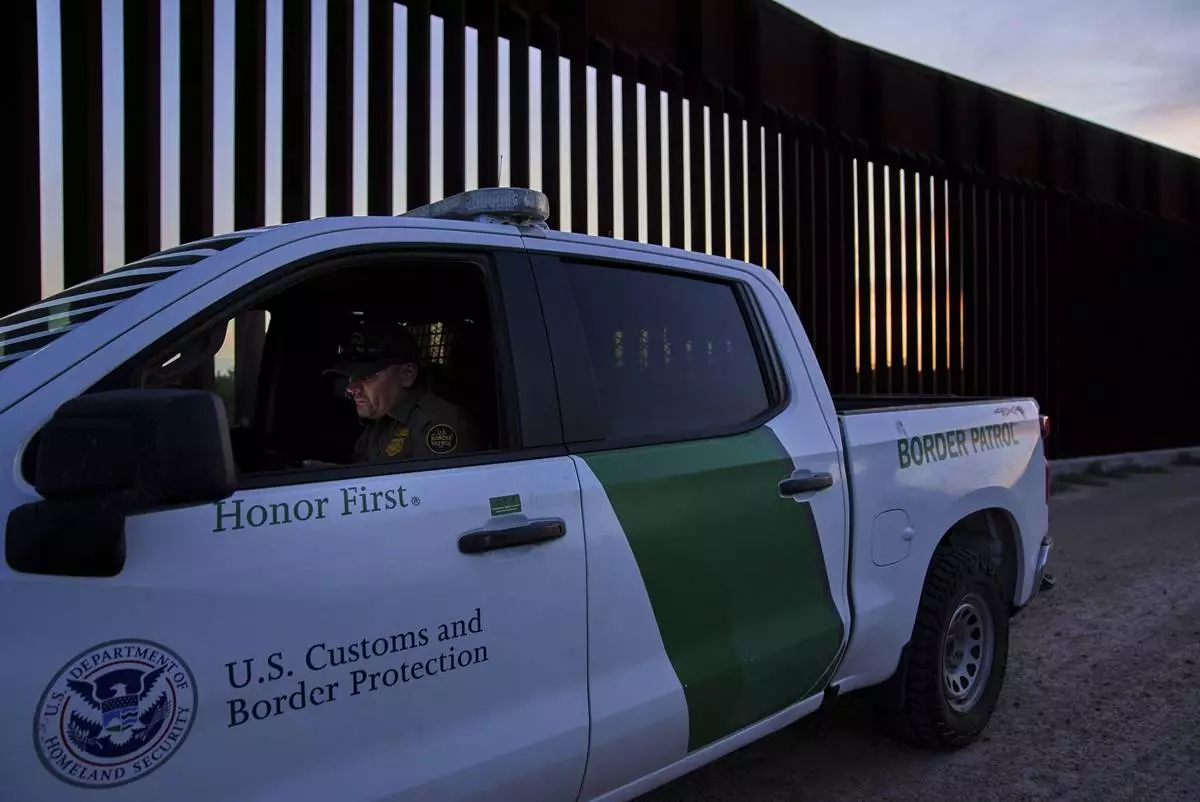
A border patrol agent works by a section of the border wall, Wednesday, June 18, 2025, in Mission, Texas. (AP Photo/Jacquelyn Martin)
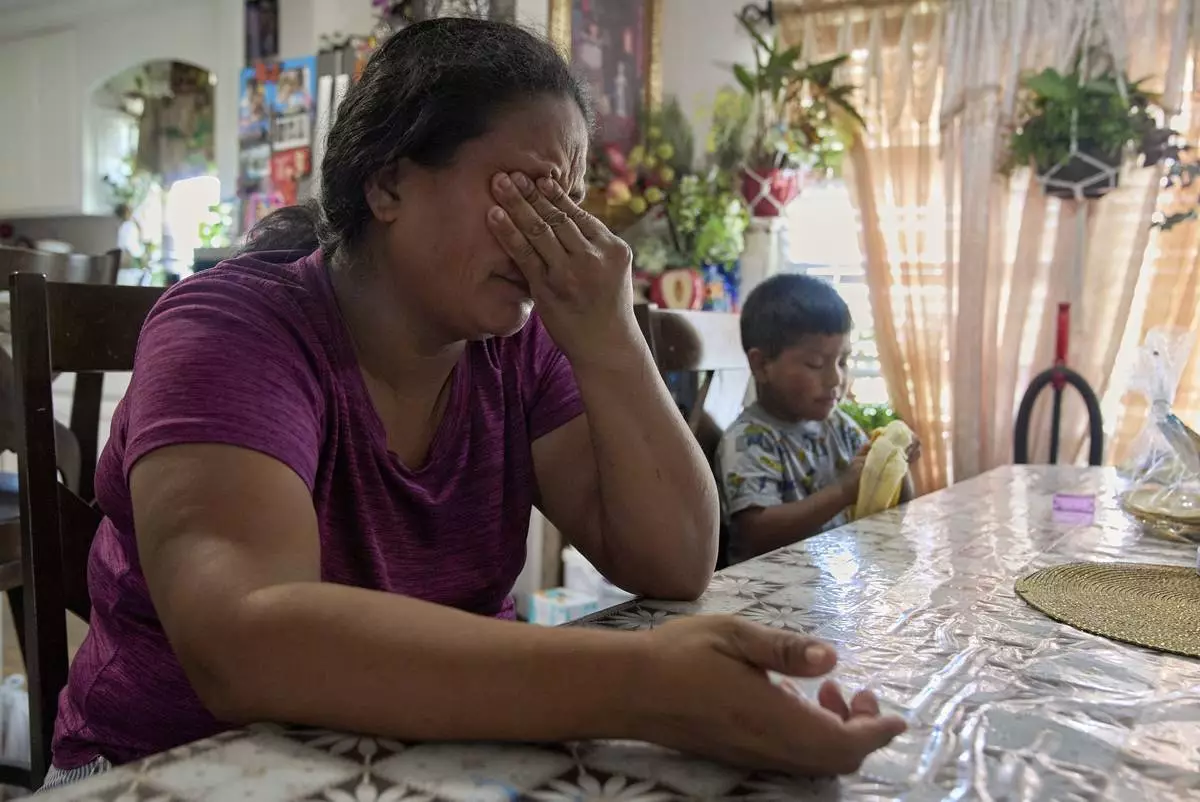
Maria sobs as she recounts how scared and anxious she is for her children, including 4-year-old Juan, if she is taken away by ICE agents, Wednesday, June 18, 2025, while inside her home in Hidalgo County, Texas. (AP Photo/Jacquelyn Martin)
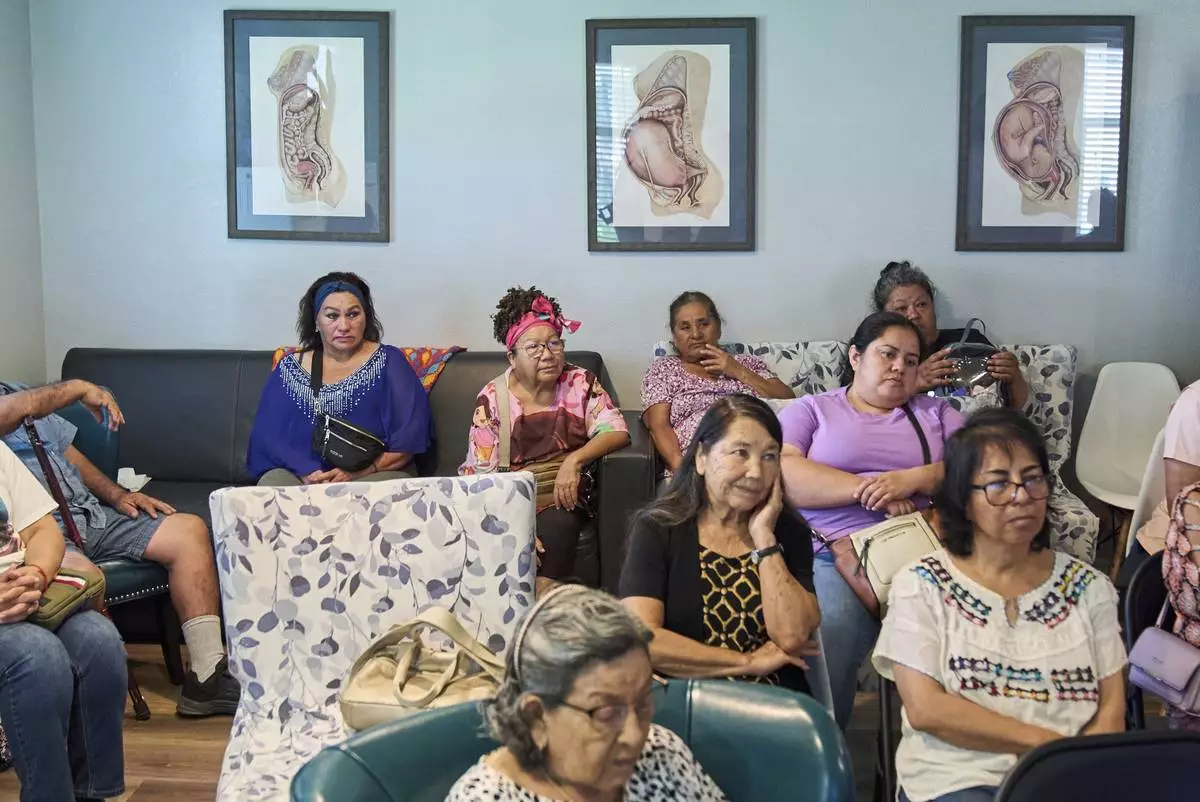
With posters illustrating stages of pregnancy behind them, people attend a health clinic about diabetes held by Holy Family Services, a birth center and women's clinic in the Rio Grande Valley, Wednesday, June 18, 2025, in Weslaco, Texas. (AP Photo/Jacquelyn Martin)
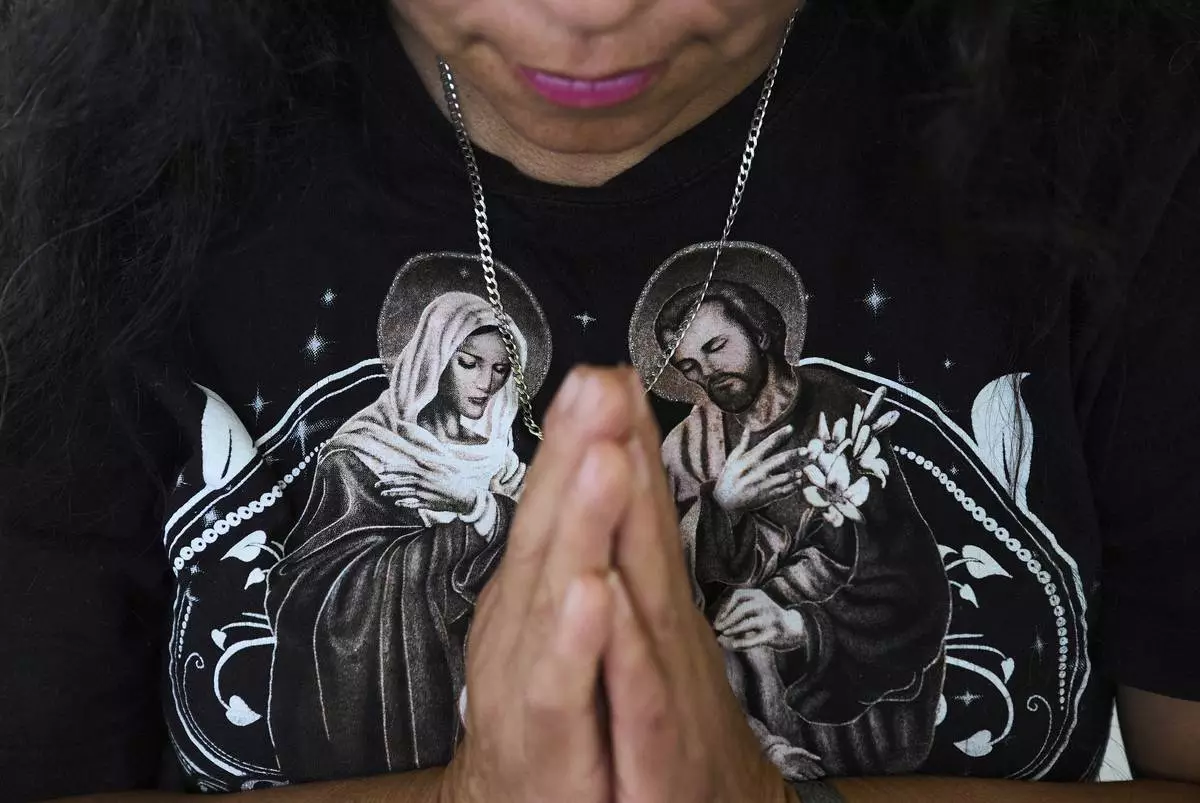
Juanita poses for a portrait in prayer inside the chapel of Holy Family Services, a birth center and women's clinic in the Rio Grande Valley, Wednesday, June 18, 2025, in Weslaco, Texas. (AP Photo/Jacquelyn Martin)