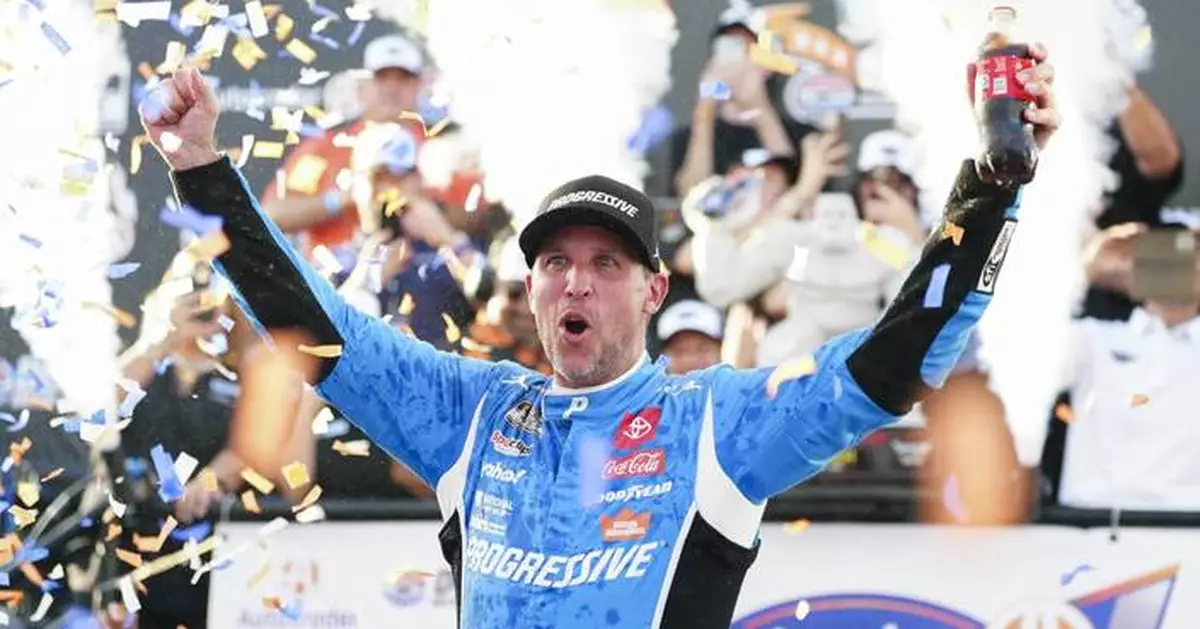
DOVER, Del. (AP) — Denny Hamlin has stood his ground that wins — enough of them to soon earn his place inside NASCAR’s career top-10 list — matter more to his legacy than a championship.
Easy to say, of course, with 58 race victories to zero titles.
Click to Gallery
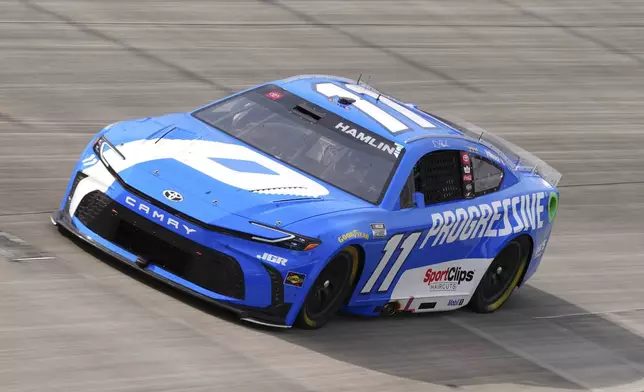
Denny Hamlin drives through Turn 2 during a NASCAR Cup Series auto race at Dover Motor Speedway, Sunday, July 20, 2025, in Dover, Del. (AP Photo/Derik Hamilton)
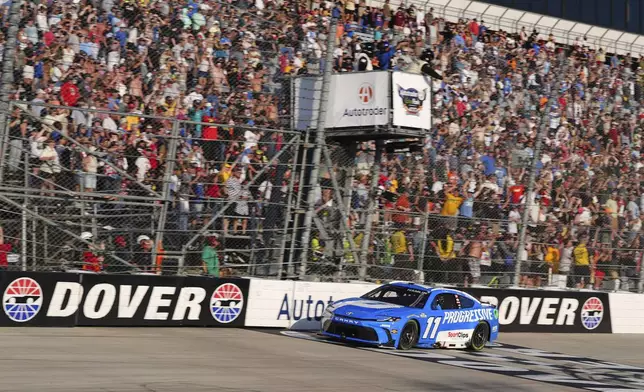
Denny Hamlin crosses the finish line to win a NASCAR Cup Series auto race at Dover Motor Speedway, Sunday, July 20, 2025, in Dover, Del. (AP Photo/Derik Hamilton)
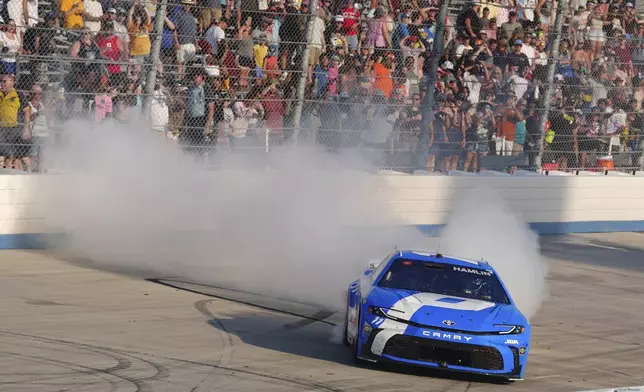
Denny Hamlin celebrates with a burnout after winning a NASCAR Cup Series auto race at Dover Motor Speedway, Sunday, July 20, 2025, in Dover, Del. (AP Photo/Derik Hamilton)
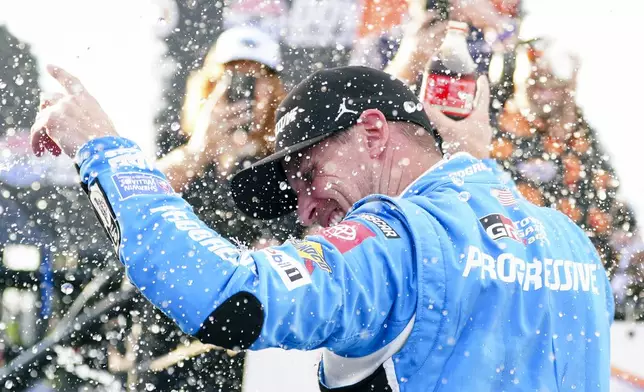
Denny Hamlin celebrates in Victory Lane after winning a NASCAR Cup Series auto race at Dover Motor Speedway, Sunday, July 20, 2025, in Dover, Del. (AP Photo/Derik Hamilton)
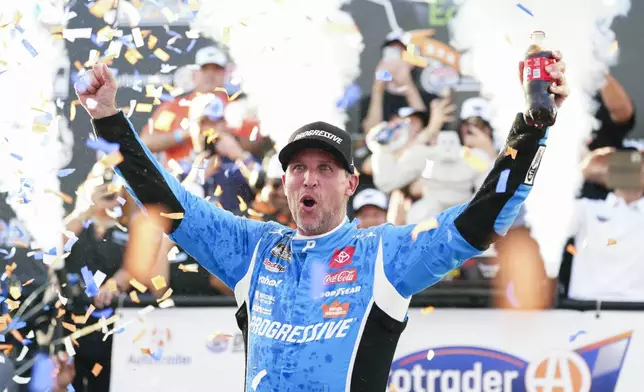
Denny Hamlin celebrates in Victory Lane after winning a NASCAR Cup Series auto race at Dover Motor Speedway, Sunday, July 20, 2025, in Dover, Del. (AP Photo/Derik Hamilton)
The 44-year-old Hamlin, still driving the No. 11 Toyota for Joe Gibbs Racing as he’s done since his rookie season in 2006, is motivated to reach the top 10 this season over the final 15 races of the Cup season. Kevin Harvick is 10th on the career list with 60 and Kyle Busch, still active with Richard Childress Racing, is ninth with 63, giving Hamlin realistic numbers to shoot for the rest of the season.
Best to take advantage at tracks where he’s had success, such as Dover Motor Speedway, where he won Sunday for the second straight year and third time overall, compared with a track like this weekend’s race on the Indianapolis oval, where Hamlin is 0 for 16.
“I don’t think I’ve ever wanted to go back to back so bad,” Hamlin said of Dover. "(Indy’s) a track that I’ve just come so fricking close to winning. I just want to cross off all the major racetracks on our schedule.”
Hamlin is a driver who thrives in the chaos like few others — if any can — in the series. His win at Dover came days after the race team he owns with Michael Jordan suffered a setback in its court fight with NASCAR. He insisted ahead of the race that the legal issues never caused a distraction for him in the race car, then proved it on the mile concrete track with a series-best fourth win of the season.
Maybe more dark clouds — like the ones that opened up Sunday, causing a rain delay just laps ahead of the scheduled finish — can fuel Hamlin at Indy.
“All I can hope is that something happens this week that derails everything and then I’ll do better,” Hamlin said.
Hamlin then turned to a NASCAR employee and cracked, “Maybe it’ll come from them.”
Can Hamlin realistically get to 60 in 2025? He won eight times in 2010, six times in 2019 and seven in 2020, all totals that would get him to 60 this year.
“When you get him in a situation where he’s got the ball in his hands and it’s time to go win the race, he finds a way to do that most times,” crew chief Chris Gayle said.
It’s a fitting analogy for a race team owned by a former NFL coach.
At his pace, Hamlin remains a contender to cash in this November at Phoenix Raceway and win his first NASCAR championship — even if he lost out on the $1 million prize in the series’ first In-season challenge.
The idea for the challenge was largely championed by Hamlin, a three-time Daytona 500 winner who floated the idea of a midseason tournament on his “Actions Detrimental” podcast. When NASCAR bought into the idea and announced the creation of the tournament last year, Hamlin called the tournament on social media “such a win for our sport and drivers.” He jokingly added, “I will collect my 1M royalty next season.”
Hamlin earned the No. 1 seed — and was promptly eliminated in the first race by Ty Dillon, the No. 32 seed.
Dillon faces Ty Gibbs next week at Indianapolis to decide the first winner of the tournament.
Hamlin said the five-race, bracket-style tournament overall was a success — but not without a few kinks. Some of the seeding was off, such as Shane van Gisbergen not qualifying for the field, then ripping off consecutive wins on the Chicago street race and Sonoma Raceway during the tournament races.
And sure, everyone loves a Cinderella in March. But two in July isn’t necessarily making the tournament the NASCAR story of the summer.
“I think it has been unfortunate, right, you probably had a lot of the top seeds get knocked out pretty early in it, but overall, I thought the implementation of it has been good,” Hamlin said.
The other side of the argument is this: Would any fan or media outlet really care about a pair of winless drivers such as Gibbs (the sixth seed) or Dillon at this point of the season without $1 million at stake?
“For a team like us, at this point in the season, we’re not exactly where we want to be yet, but we’re trending in a good direction,” Dillon said on TNT. “Our story doesn’t get told in years past. It’s mainly the guys trying to fight for the points position. It’s the guys running up front, trying to win the race. But our story and our growth in the year stops getting told. I’m grateful we’ve been able to show our personality as a team.”
Unlike the All-Star race where the winner pockets $1 million, the driver with the best finish earns the cash prize, a ring, jackets and a trophy.
Dillon had luck on his side during his run, with his lone top-10 finish coming in the first race in Atlanta. He advanced in that race after Hamlin crashed out and finished 31st. Dillon twice has finished 20th, including at Dover. He has a best finish of 13th in five career races on the Indy oval.
Gibbs, the grandson of team owner and football and NASCAR Hall of Famer Joe Gibbs, and Dillon have failed to win in a combined 374 Cup races. Dillon has only two career top-five finishes in a career that dates to 2014. The 22-year-old Gibbs has a much better pedigree, winning the 2022 Xfinity Series title, a series in which he was a 12-time winner. He has six top 10s already this season and could make NASCAR’s playoffs on points.
Gibbs has three straight top 10s in the tournament, including a fifth-place finish at Dover. Gibbs finished 23rd on the Indy oval last season.
He’s done enough to impress his grandfather.
“There’s some people there that we got off to a terrible start, it was awful, (but) I had people on that group that came to me encouraging me, ideas for me, after it. I think they care for Ty. It just was a huge deal,” the 84-year-old Gibbs said. “This sport will really measure you. But those guys have fought back.”
AP auto racing: https://apnews.com/hub/auto-racing
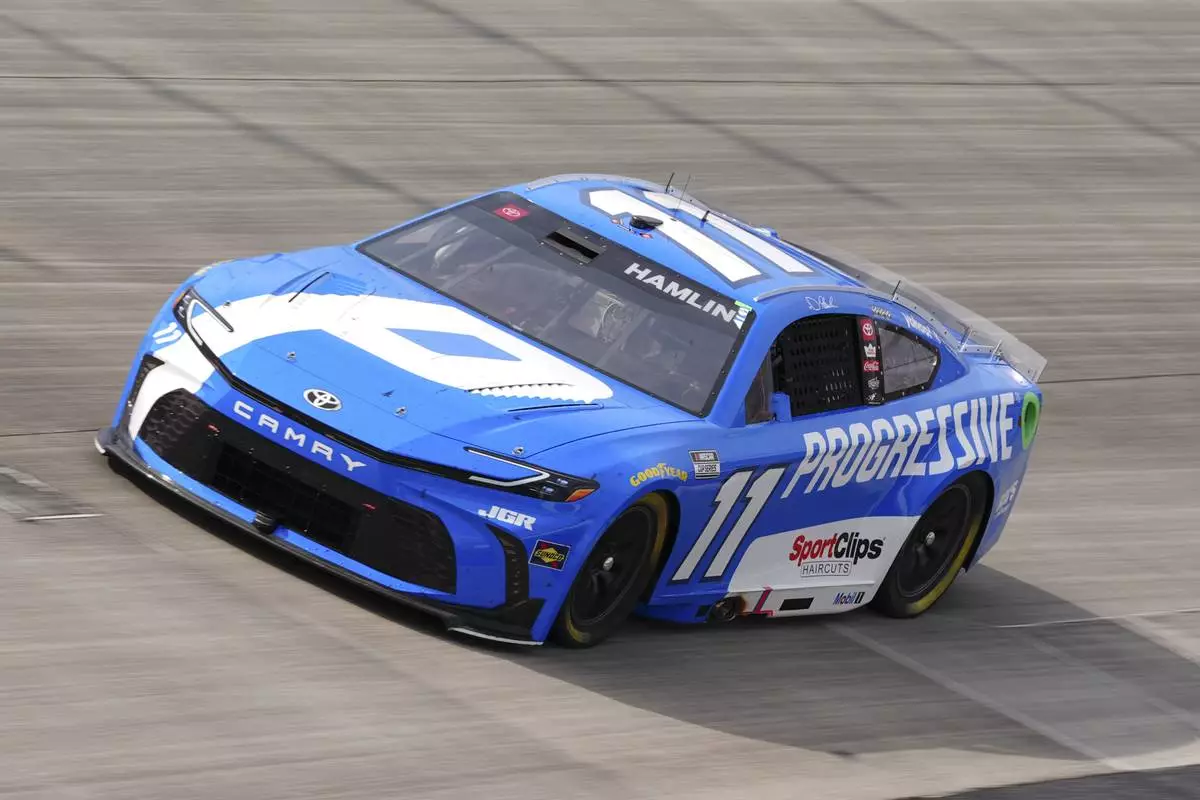
Denny Hamlin drives through Turn 2 during a NASCAR Cup Series auto race at Dover Motor Speedway, Sunday, July 20, 2025, in Dover, Del. (AP Photo/Derik Hamilton)
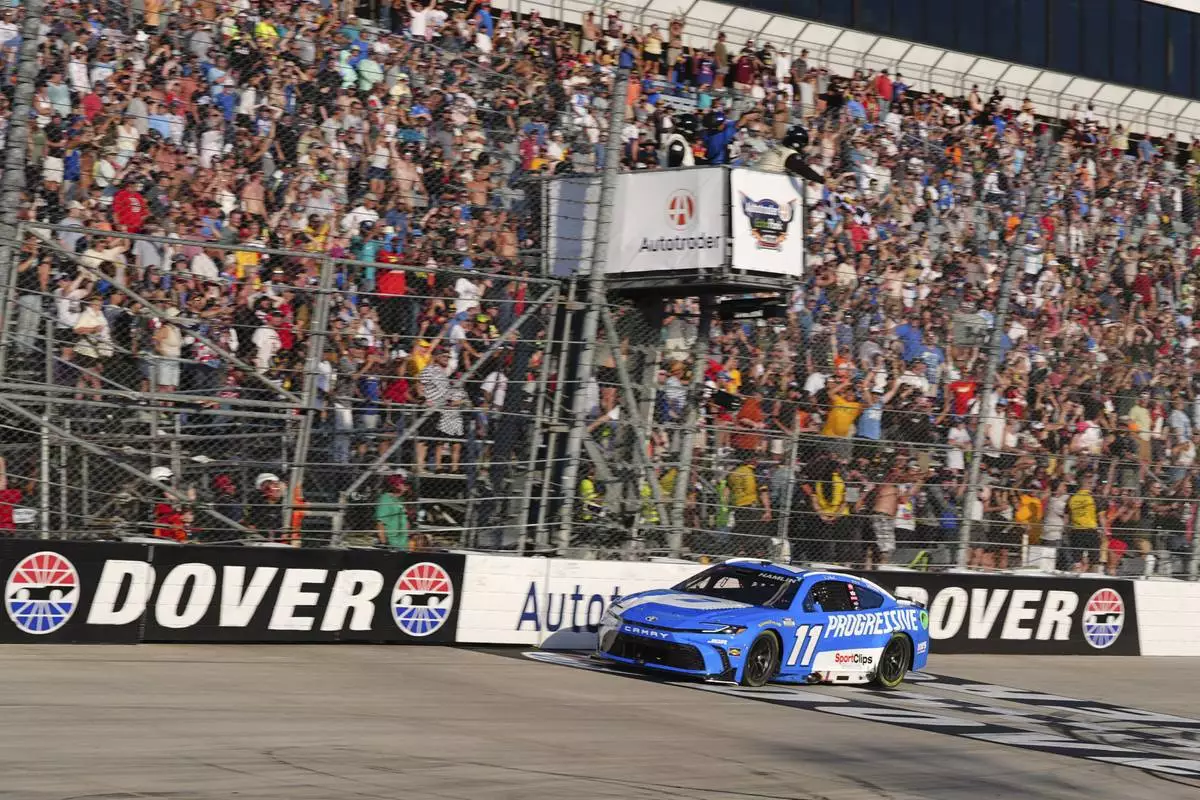
Denny Hamlin crosses the finish line to win a NASCAR Cup Series auto race at Dover Motor Speedway, Sunday, July 20, 2025, in Dover, Del. (AP Photo/Derik Hamilton)
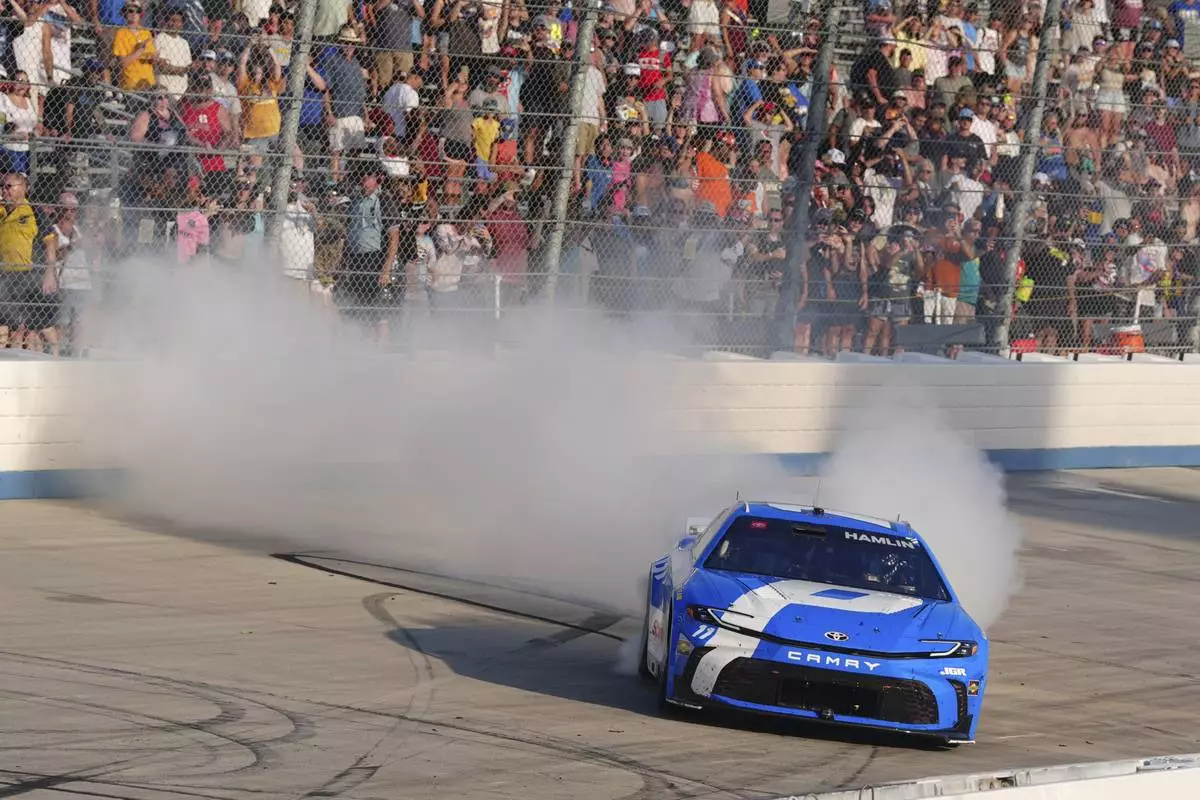
Denny Hamlin celebrates with a burnout after winning a NASCAR Cup Series auto race at Dover Motor Speedway, Sunday, July 20, 2025, in Dover, Del. (AP Photo/Derik Hamilton)
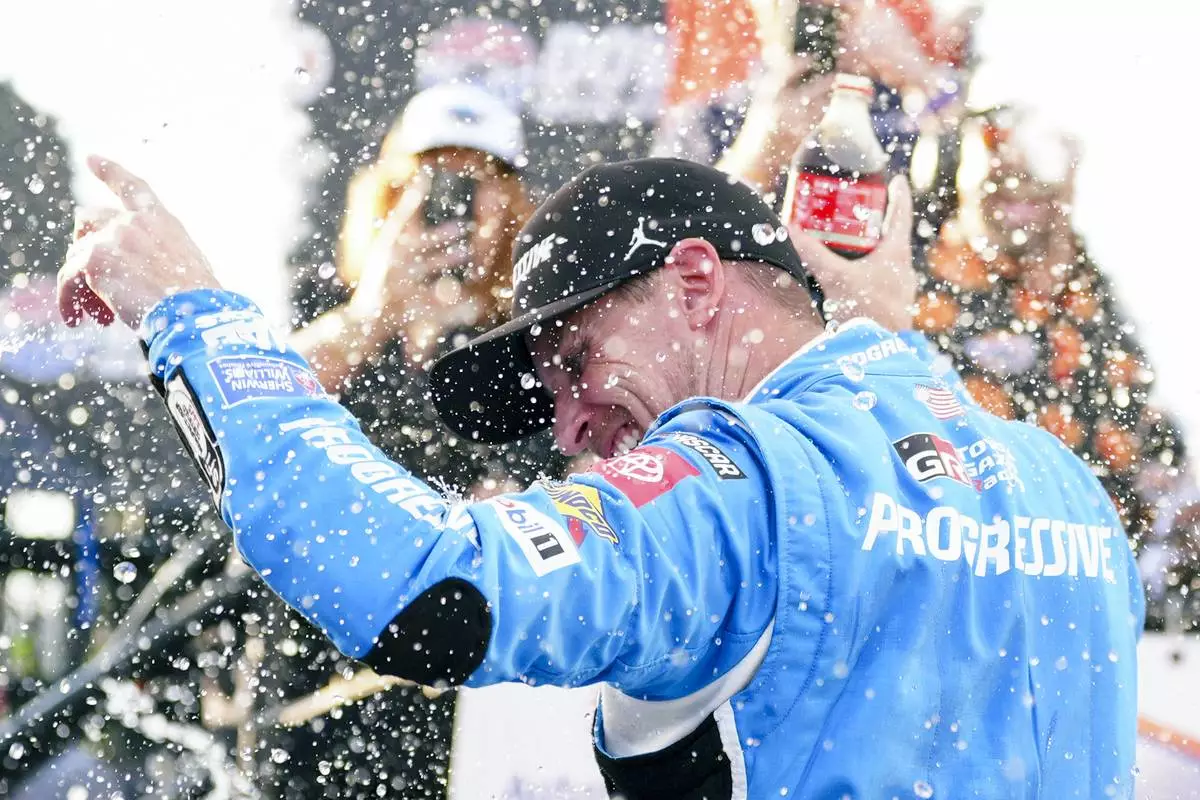
Denny Hamlin celebrates in Victory Lane after winning a NASCAR Cup Series auto race at Dover Motor Speedway, Sunday, July 20, 2025, in Dover, Del. (AP Photo/Derik Hamilton)
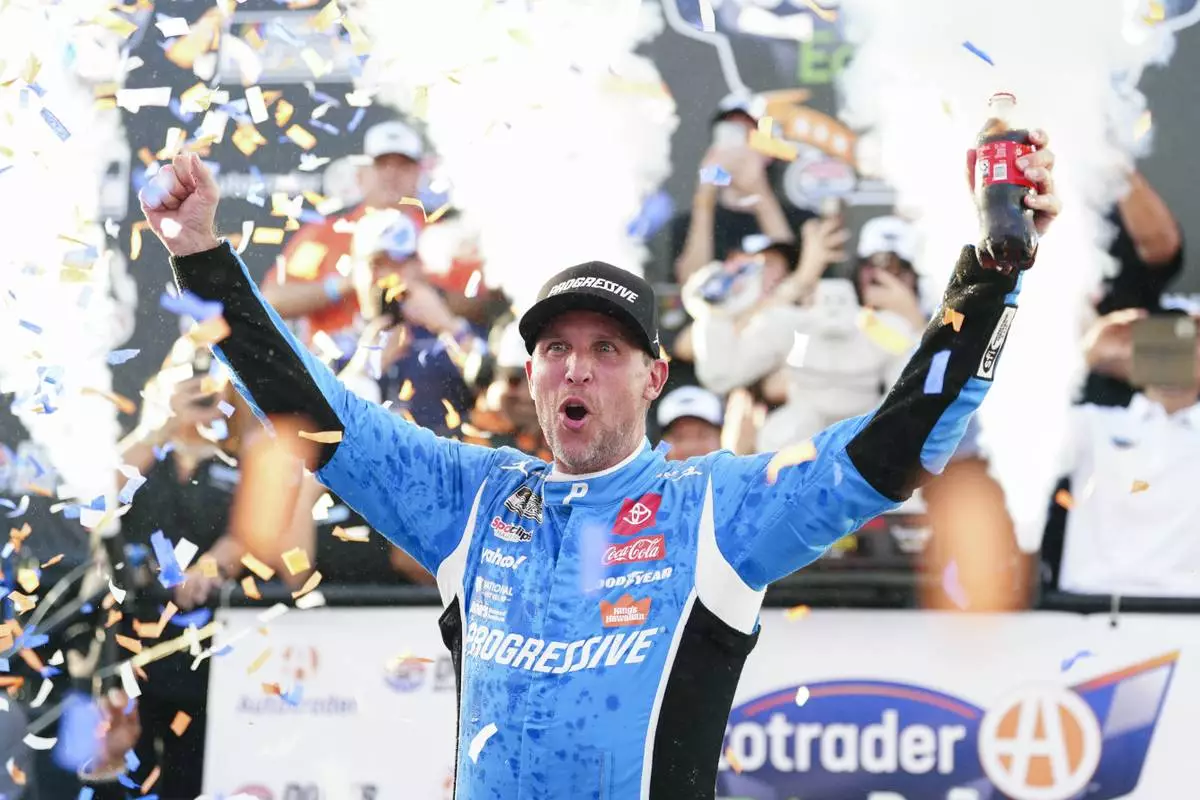
Denny Hamlin celebrates in Victory Lane after winning a NASCAR Cup Series auto race at Dover Motor Speedway, Sunday, July 20, 2025, in Dover, Del. (AP Photo/Derik Hamilton)