BISMARCK, N.D. (AP) — The pilot of a regional airliner flying over North Dakota made an unexpected sharp turn to avoid a possible midair collision with a military B-52 bomber that was in its flight path over the weekend.
The Friday incident is detailed in a video taken by a passenger and posted to social media as Delta Flight 3788 approached the Minot International Airport for landing. In the video, the SkyWest pilot can be heard over the plane's intercom system explaining that he made the hard bank after spotting a B-52 bomber in his flight path.
“Sorry about the aggressive maneuver. It caught me by surprise,” the pilot can be heard saying on the video. "This is not normal at all. I don’t know why they didn’t give us a heads up.”
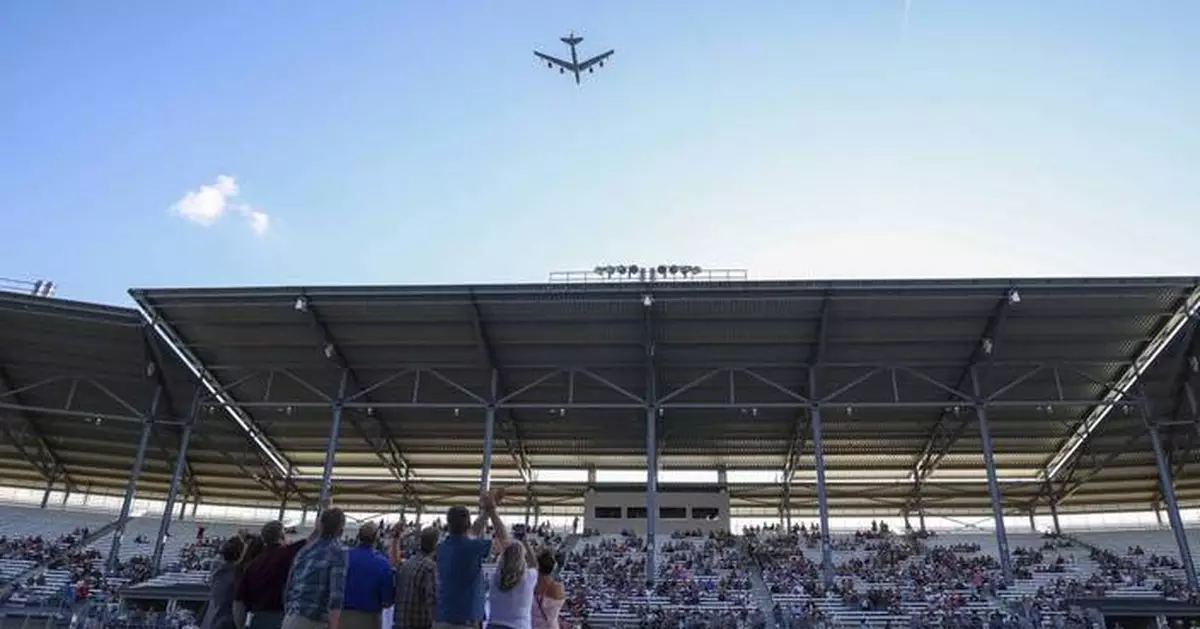
An Air Force spokesperson confirmed Monday that a B-52 bomber assigned to nearby Minot Air Force Base conducted a flyover Friday of the North Dakota State Fair, which is held in Minot. The Air Force is “looking into” the incident, the spokesman said.
The North Dakota incident comes nearly six months after a midair collision between an Army helicopter and a jetliner over Washington, D.C., that killed all 67 people aboard the two aircraft. That collision and subsequent close calls with Army helicopters over the nation's capital put the spotlight on the interaction between military and civilian flights. Officials have focused on improving communications between the two and making sure that air traffic controllers know where military aircraft are at all times because the Army helicopters around Washington were flying with a key locating device turned off.
SkyWest, a regional carrier for Delta and other large airlines, said the Friday flight had departed from the Minneapolis-St. Paul International Airport and landed safely in Minot after performing a “go-around” maneuver when another aircraft became visible in the SkyWest plane’s flight path. Minot is 100 miles (160 kilometers) north of Bismarck, North Dakota’s capital city, and about 50 miles (80 kilometers) from the Canadian border.
Minot Air Force Base is about 10 miles (16 kilometers) north of Minot, North Dakota’s fourth-largest city. The base is home to 26 B-52 bombers, intercontinental ballistic missile operations and more than 5,400 military personnel.
In the video, the pilot noted that Minot’s small airport does not operate radar and directs flights visually. When the airport tower instructed the SkyWest flight to make a right turn upon approach, the pilot said he looked in that direction and saw the bomber in his flight path. He informed the tower and made a hard turn to avoid the bomber, he said.
“I don’t know how fast they were going, but they were a lot faster than us,” the pilot said of the bomber.
Passengers can be heard applauding as the pilot wrapped up his explanation.
The Federal Aviation Administration issued a statement Monday morning simply saying it's investigating the incident. By midafternoon, it had issued a second statement to note that air traffic services were provided by a private company that services the Minot air traffic control tower.
“These controllers are not FAA employees,” the agency said.
Some small airports like Minot’s don’t have their own radar systems on site. In fact, the vast majority of the nation’s airports don’t even have towers. But regional FAA radar facilities do oversee traffic all across the country and help direct planes in and out of airports like Minot. The Minot airport typically handles between 18 and 24 flights a day.
The pilot's frustration is evident in the video.
“The Air Force base does have radar, and nobody said, ‘Hey, there’s a B-52 in the pattern,'” the pilot told passengers.
SkyWest said it is also investigating.
——-
This story has been corrected to show the dateline is Bismarck, North Dakota, not Bismarck, Nebraska, and that the pilot turned the plane to avoid the bomber's path.
——-
Beck reported from Omaha, Nebraska. AP writer Josh Funk contributed to this report from Omaha.

This photo from the North Dakota Governor's Office shows a B-52 bomber from Minot Air Force Base in a flyover at the North Dakota State Fair on Friday, July 18, 2025, in Minot, N.D.. (North Dakota Governor's Office via AP)
BRUSSELS (AP) — Belgium insisted on Thursday that its European Union partners must provide ironclad guarantees that it will be protected from Russian retaliation before it would back a massive loan for Ukraine. Ukrainian President Volodymyr Zelenskyy pleaded for a decision now to keep Ukraine afloat in the new year.
At a summit in Brussels with exceptionally high stakes for both the EU and Ukraine, the 27-nation bloc’s leaders are set to decide on whether to use tens of billions of euros in frozen Russian assets to underwrite a loan to meet Ukraine’s military and financial needs over the next two years.
The bulk of the assets — some 193 billion euros ($227 billion) as of September — are held in the Brussels-based financial clearing house Euroclear. Russia’s Central Bank sued Euroclear last week.
“Give me a parachute and we’ll all jump together,” Prime Minister Bart De Wever told members of the Belgian parliament just before the summit began. “If we have confidence in the parachute that shouldn’t be a problem.”
Belgium fears that Russia will strike back and would prefer that the bloc borrow the money on international markets. It wants frozen assets held in other European countries to be thrown into the pot as well, and for its partners to guarantee that Euroclear will have the funds it needs should it come under legal attack.
European officials say Russia is waging a campaign of sabotage and disruption across the continent. The Central Bank lawsuit ramped up pressure on Belgium and its European partners ahead of the summit.
The “reparations loan” plan would see the EU give 90 billion euros ($106 billion) to Ukraine. Countries like the U.K., Canada and Norway would make up any shortfall.
Russia's claim to the assets would still stand, but the assets would remain locked away at least until the Kremlin ends its war on Ukraine and pays for the massive damage it's caused.
In mapping out the loan plan, the European Commission set up safeguards to protect Belgium, but De Wever remains unconvinced.
“I have not yet seen a text that could satisfactorily address Belgium’s concerns," he said. "I hope to see one today.”
De Wever insisted that Belgium remains “a faithful ally” of Ukraine and wants to continue to help.
Soon after arriving in Brussels, Zelenskyy sat down with the Belgian prime minister to make his case for freeing up the frozen funds. The war-ravaged country is at risk of bankruptcy and needs new money by spring.
“Ukraine has the right to this money because Russia is destroying us, and to use these assets against these attacks is absolutely just,'' Zelenskyy told a news conference.
In an appeal to Belgian citizens who share their leader's worries about retaliation, Zelenskyy said, “One can fear certain legal steps in courts from the Russian Federation, but it’s not as scary as when Russia is at your borders.''
“So while Ukraine is defending Europe, you must help Ukraine.”
Whatever method they use, the EU leaders have pledged to meet most of Ukraine's needs in 2026 and 2027. The International Monetary Fund estimates that would amount to 137 billion euros ($160 billion).
“We have to find a solution today," European Commission President Ursula von der Leyen told reporters. EU Council President António Costa, who is chairing the meeting, has vowed to keep leaders negotiating until an agreement is reached, even if it takes days.
Polish Prime Minister Donald Tusk said: “Now we have a simple choice. Either money today or blood tomorrow."
EU envoys have worked around the clock in recent weeks to flesh out the details and narrow differences among the 27 member countries. If enough countries object, the plan could be blocked. There is no majority support for a plan B of raising the funds on international markets.
German Chancellor Friedrich Merz said that he hopes Belgium's concerns can be addressed.
"The reactions of the Russian president in recent hours show how necessary this is. In my view, this is indeed the only option. We are basically faced with the choice of using European debt or Russian assets for Ukraine, and my opinion is clear: We must use the Russian assets.”
Hungary and Slovakia oppose von der Leyen’s plan for a reparations loan. Apart from Belgium, Bulgaria, Italy and Malta are also undecided.
“I would not like a European Union in war," said Hungarian Prime Minister Viktor Orbán, who sees himself as a peacemaker. He’s also Russian President Vladimir Putin’s closest ally in Europe. “To give money means war.”
Orbán described the loan plan as “a dead end.''
The outcome of the summit has significant ramifications for Europe's place in negotiations to end the war. The United States wants assurances that the Europeans are intent on supporting Ukraine financially and backing it militarily, even as the peace talks drag on with few results so far.
The loan plan in particular also poses important challenges to the way the bloc goes about its business. Should a two-thirds majority of EU leaders decide to impose the scheme on Belgium, which has most to lose, the impact on decision-making in Europe would be profound.
The EU depends on consensus, and finding voting majorities and avoiding vetoes in the future could become infinitely more complex if one of the EU's founding members is forced to weather an attack on its interests by its very own partners.
De Wever too must weigh whether the cost of holding out against a majority is worth the hit his government's credibility would take in Europe.
Whatever is decided, the process does not end at this summit. Legal experts would have to convert any political deal into a workable agreement, and some national parliaments may have to weigh in before the loan money could start flowing to Ukraine.
Associated Press Writers Kirsten Grieshaber in Berlin and Illia Novikov in Kyiv contributed to this report.
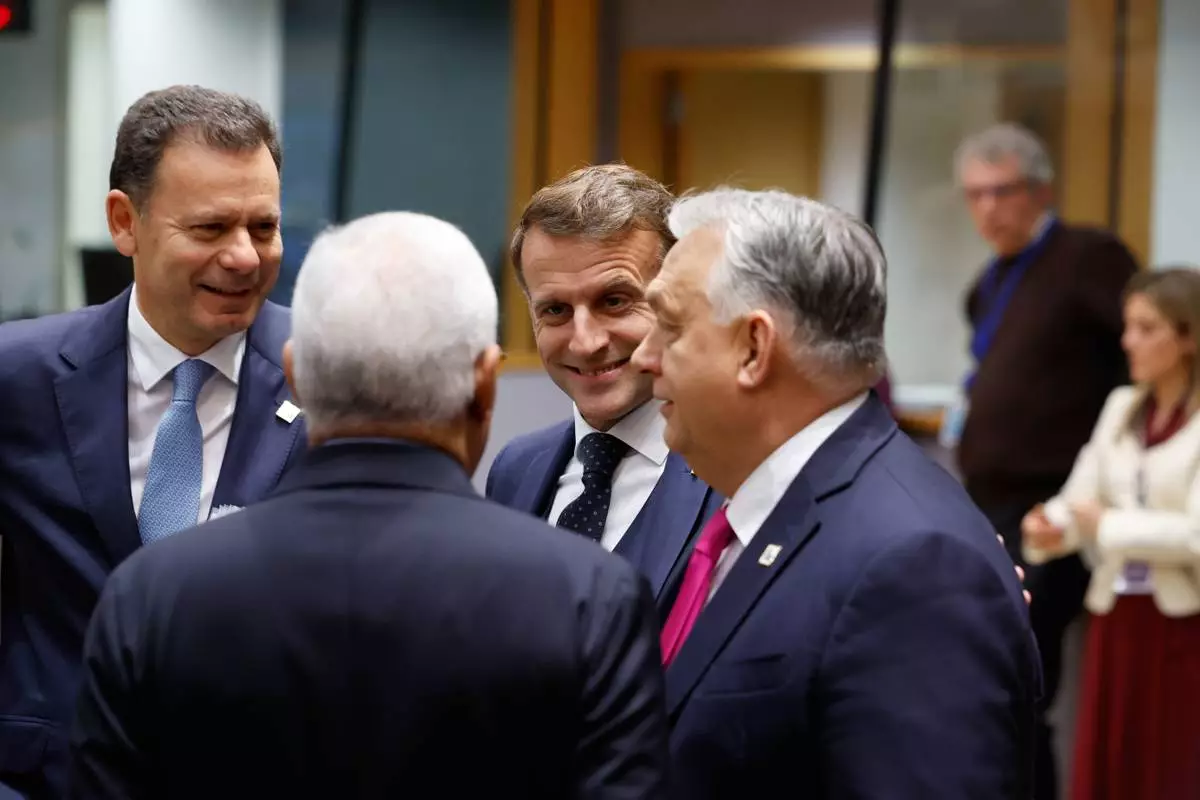
From left, Portugal's Prime Minister Luis Montenegro, European Council President Antonio Costa, French President Emmanuel Macron and Hungary's Prime Minister Viktor Orban during a round table meeting at the EU Summit in Brussels, Thursday, Dec. 18, 2025. (AP Photo/Geert Vanden Wijngaert)
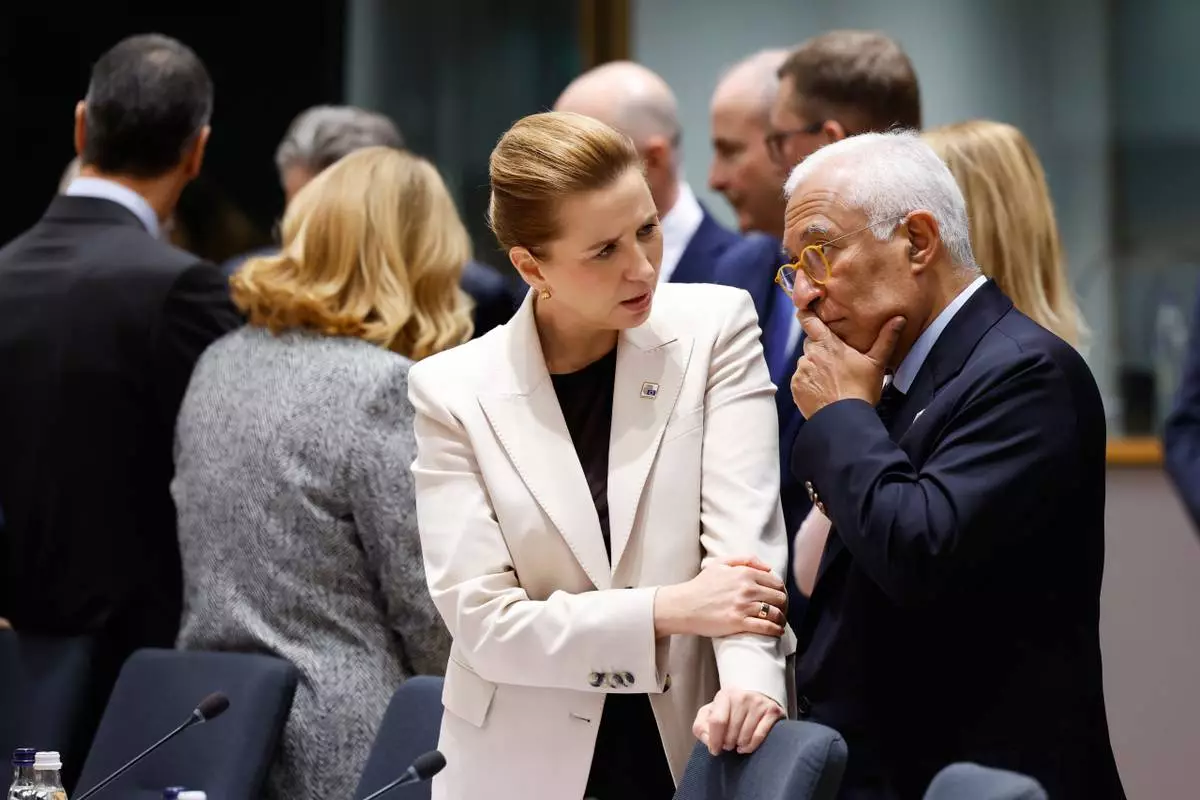
European Council President Antonio Costa, center right, speaks with Denmark's Prime Minister Mette Frederiksen, center left, during a round table meeting at the EU Summit in Brussels, Thursday, Dec. 18, 2025. (AP Photo/Geert Vanden Wijngaert)
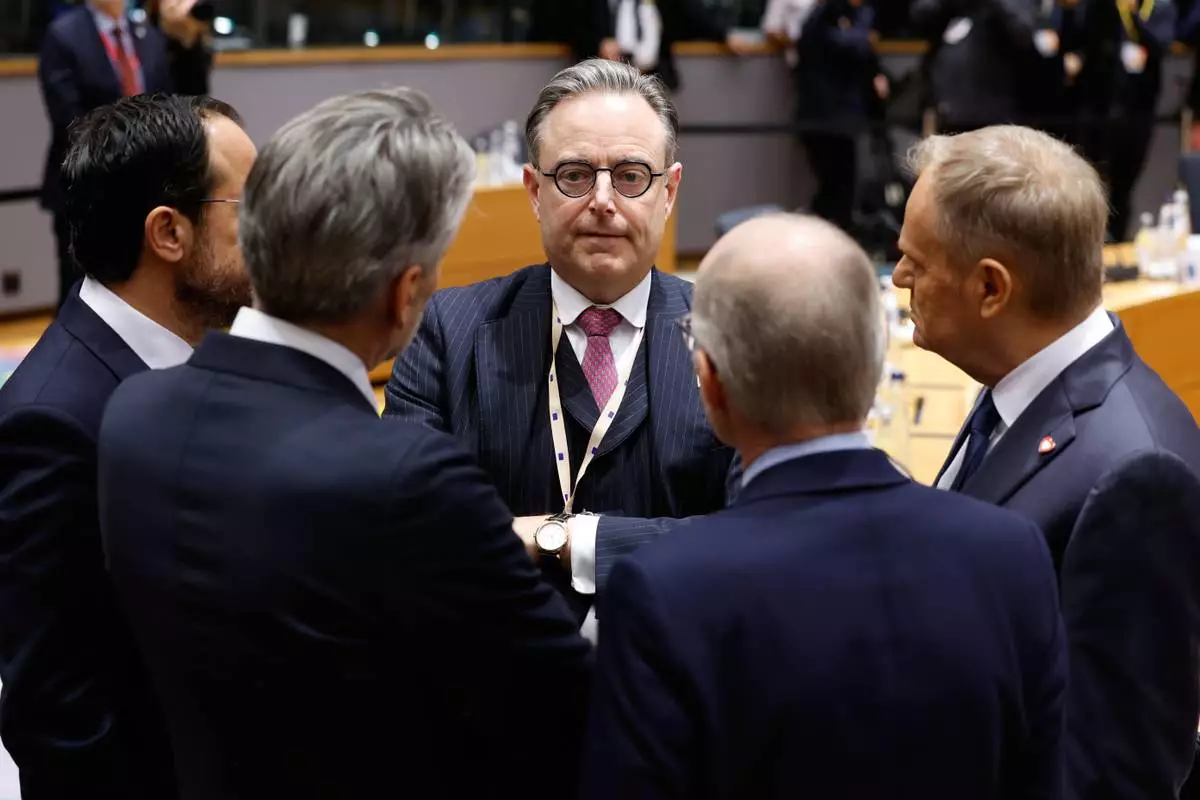
Belgium's Prime Minister Bart De Wever, center, speaks with from left, Cypriot President Nikos Christodoulides, Netherland's Prime Minister Dick Schoof, Luxembourg's Prime Minister Luc Frieden and Poland's Prime Minister Donald Tusk during a round table meeting at the EU Summit in Brussels, Thursday, Dec. 18, 2025. (AP Photo/Geert Vanden Wijngaert)
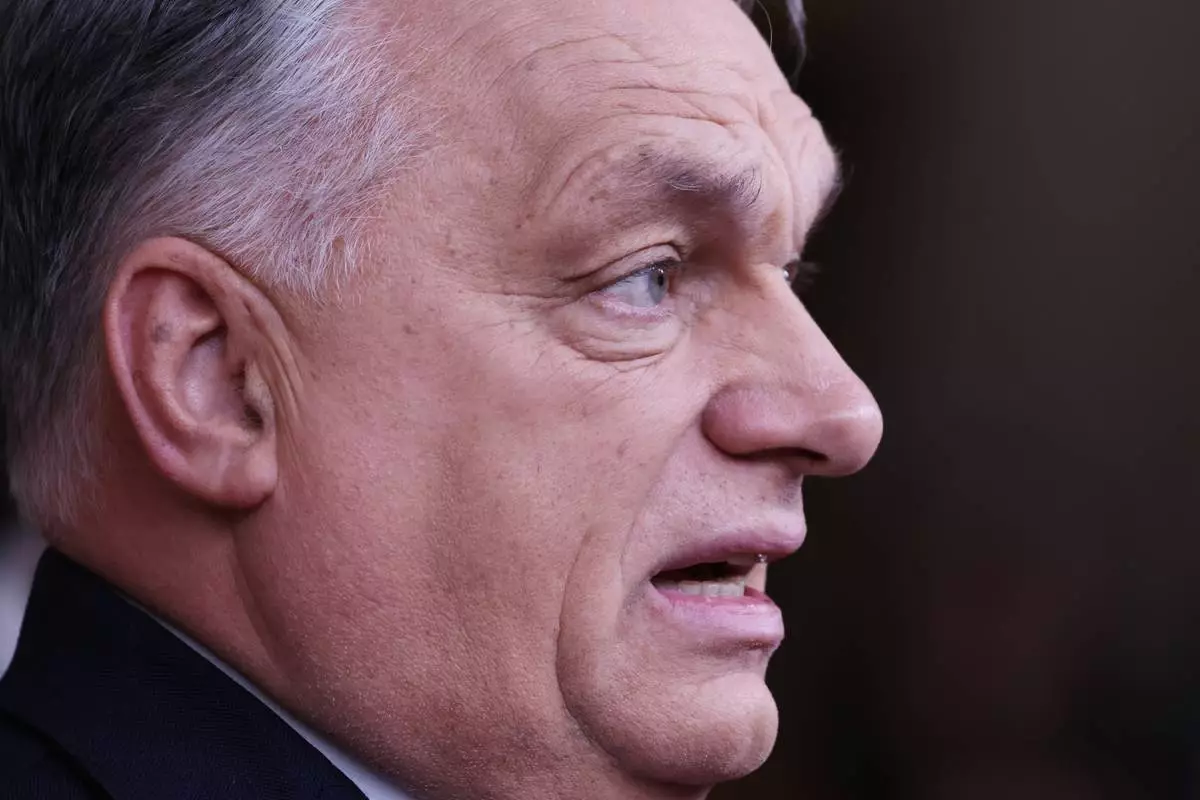
Hungary's Prime Minister Viktor Orban speaks with the media as he arrives for the EU Summit in Brussels, Thursday, Dec. 18, 2025. (AP Photo/Geert Vanden Wijngaert)
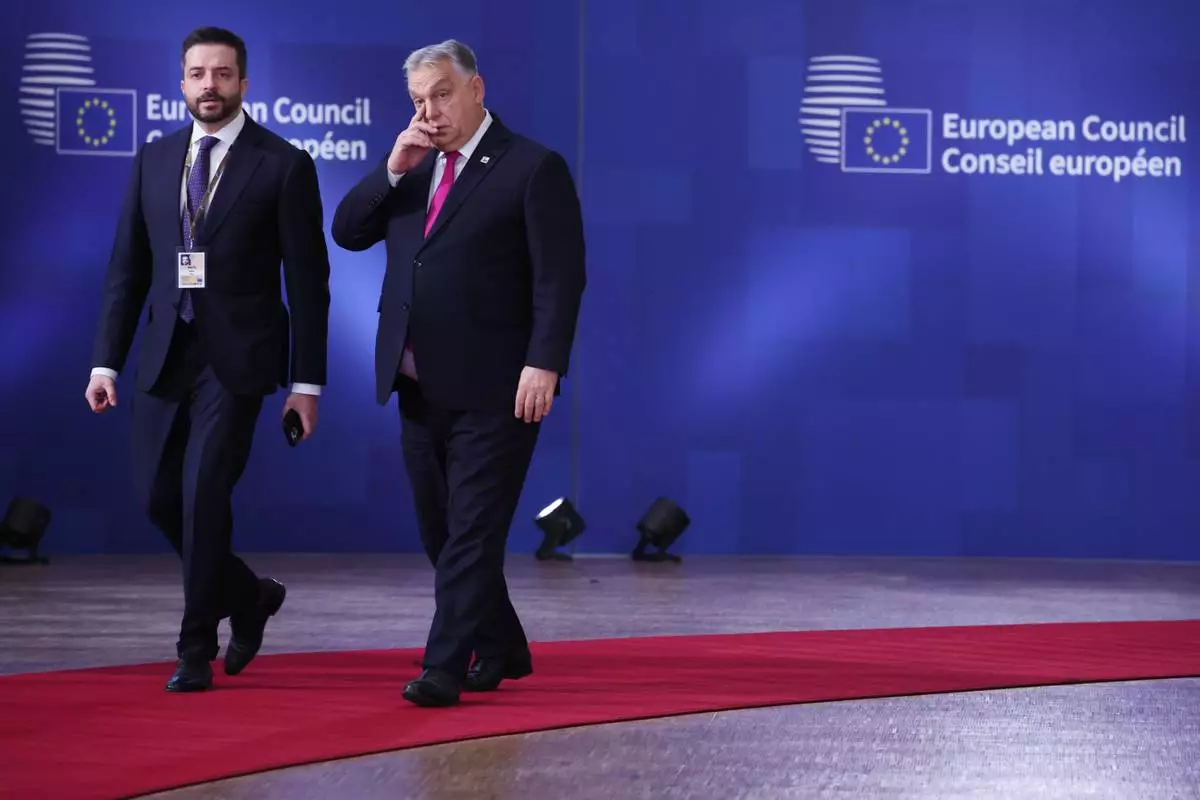
Hungary's Prime Minister Viktor Orban, right, arrives for the EU Summit in Brussels, Thursday, Dec. 18, 2025. (AP Photo/Omar Havana)
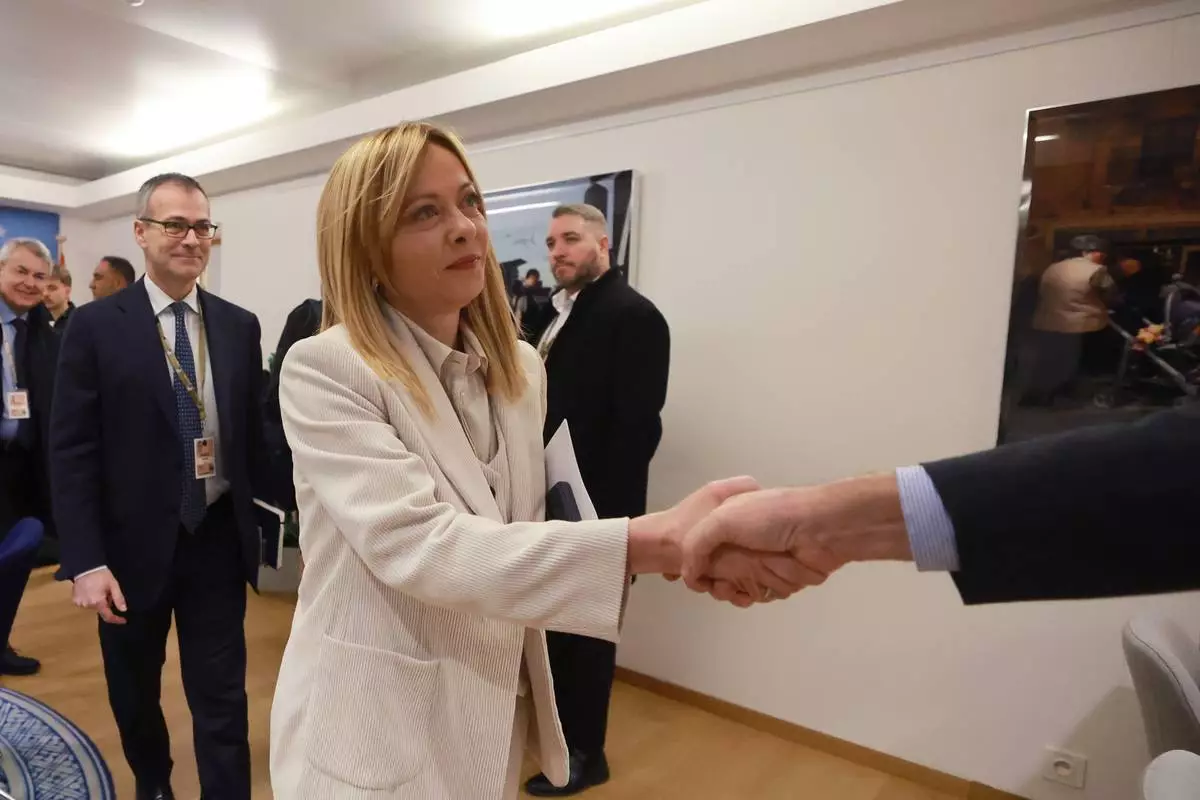
Italy's Prime Minister Giorgia Meloni, center, is greeted as she arrives for a round table meeting on migration at the EU Summit in Brussels, Thursday, Dec. 18, 2025. (AP Photo/Olivier Hoslet, Pool Photo via AP)
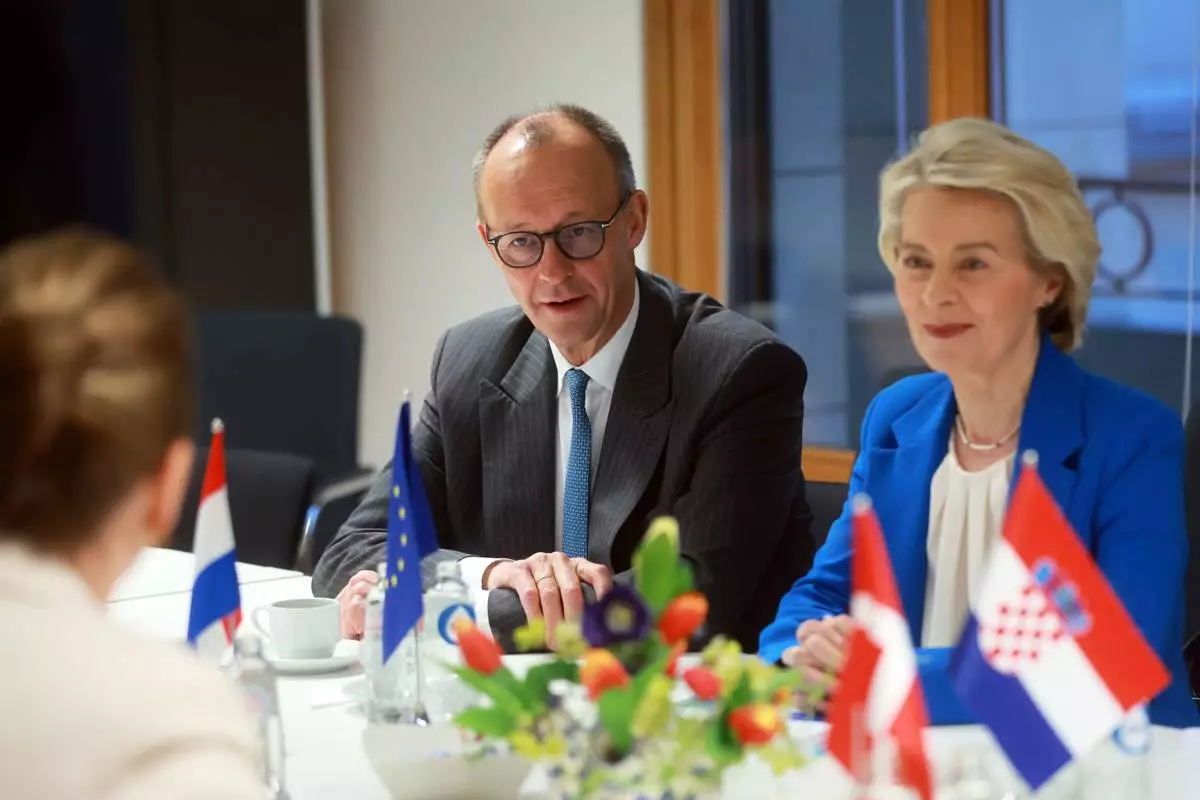
European Commission President Ursula von der Leyen, right, and Germany's Chancellor Friedrich Merz, left, attend a round table meeting on migration at the EU Summit in Brussels, Thursday, Dec. 18, 2025. (AP Photo/Olivier Hoslet, Pool Photo via AP)

FILE - A view of the headquarters of Euroclear in Brussels, on Oct. 23, 2025. (AP Photo/Geert Vanden Wijngaert, File)