Skip to Content Facebook Feature Image

Environmentalists' lawsuit to halt 'Alligator Alcatraz' filed in wrong court, Florida official says

News

Environmentalists' lawsuit to halt 'Alligator Alcatraz' filed in wrong court, Florida official says
News

News

Environmentalists' lawsuit to halt 'Alligator Alcatraz' filed in wrong court, Florida official says

2025-07-22 04:42 Last Updated At:04:50

Florida's top emergency official asked a federal judge on Monday to resist a request by environmentalists to halt an immigration detention center known as “Alligator Alcatraz” in the middle of the Florida Everglades because their lawsuit was filed in the wrong jurisdiction.

Even though the property is owned by Miami-Dade County, Florida's southern district is the wrong venue for the lawsuit since the detention center is located in neighboring Collier County, which is in the state's middle district. Decisions about the facility also were made in Tallahassee and Washington, Kevin Guthrie, executive director for the Florida Division of Emergency Management, said in a court filing.

“And all the detention facilities, all the buildings, and all the paving at issue are sited in Collier County, not Miami-Dade,” Guthrie said.

Paul Schwiep, an attorney for the environmental groups, responded during a virtual court hearing on Monday that the southern district was the proper venue since “a substantial portion of the events” took place in Miami-Dade County.

Later, in a statement, Schwiep called the state's concerns about the jurisdiction “an obvious attempt at judge-shopping” since the newly-assigned judge presiding over the case, U.S. District Judge Kathleen Williams, had recently found Florida Attorney General James Uthmeier in contempt for ignoring her orders in another case.

“The state had no objection to venue in the Southern District of Florida until this case was reassigned to Judge Williams,” Schwiep said. "The state of Florida commandeered the detention center site from Miami-Dade County, the site is partially within Miami-Dade County, the county is a defendant, and the case was appropriately filed in Miami-Dade County.”

Environmental groups filed the lawsuit against federal and state officials in Florida's southern district last month, asking for the project being built on an airstrip in the heart of the Florida Everglades to be halted because the process didn't follow state and federal environmental laws.

Williams scheduled a July 30 hearing to consider whether the lawsuit was filed in the correct court. She also said during Monday's hearing that she was going to hold off ruling on the environmental groups' request for a temporary restraining order and temporary injunction stopping the project until an Aug. 6 hearing in Miami.

The lawsuit was filed before the facility was opened to detainees, and Schwiep estimated during Monday's hearing that 900 people have been sent to “Alligator Alcatraz” in the past three weeks. Given that pace, Schwiep said the environmental groups' goal wanted to halt further construction and the movement of additional people to the facility.

Critics have condemned the facility as a cruel and inhumane threat to the ecologically sensitive wetlands, while Florida Gov. Ron DeSantis and other Republican state officials have defended it as part of the state’s aggressive push to support President Donald Trump’s crackdown on illegal immigration.

U.S. Homeland Security Secretary Kristi Noem has praised Florida for coming forward with the idea, as the department looks to significantly expand its immigration detention capacity.

This story has been corrected to reflect that the date of the hearing over the jurisdiction question is July 30, not June 30.

Follow Mike Schneider on the social platform Bluesky: @mikeysid.bsky.social.
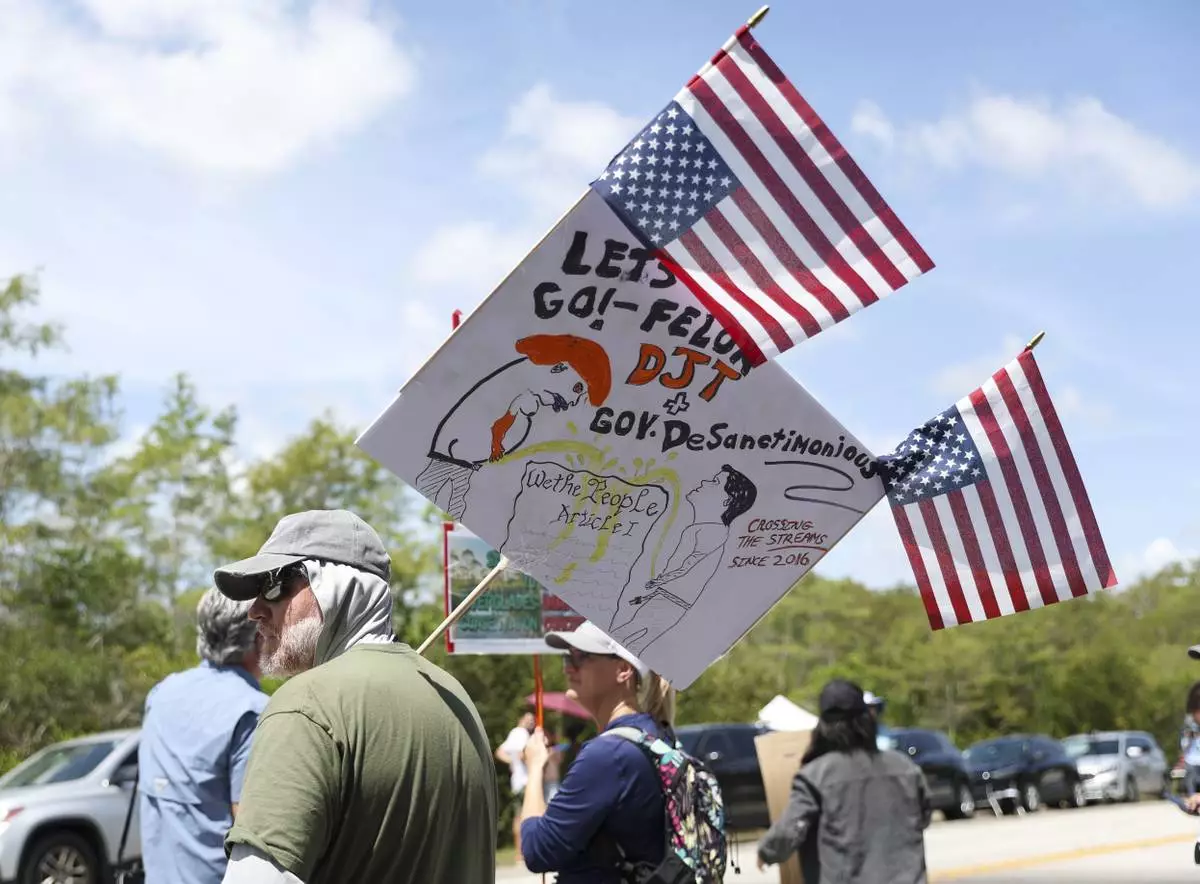
A protester stands outside the migrant detention dubbed "Alligator Alcatraz" at the Dade-Collier Training and Transition Facility, Saturday, July 12, 2025, in Ochopee, Fla. (AP Photo/Alexandra Rodriguez)

A protester stands outside the migrant detention dubbed "Alligator Alcatraz" at the Dade-Collier Training and Transition Facility, Saturday, July 12, 2025, in Ochopee, Fla. (AP Photo/Alexandra Rodriguez)

A federal judge in Minnesota on Thursday ordered the release of a Liberian man four days after heavily armed immigration agents broke into his home using a battering ram and arrested him.

U.S. District Judge Jeffrey Bryan said in his ruling that the agents violated Garrison Gibson’s Fourth Amendment rights against unlawful search and seizure.

“To arrest him, Respondents forcibly entered Garrison G.’s home without his consent and without a judicial warrant,” he said.

The Department of Homeland Security has been ramping up immigration arrests in Minnesota in what the department has called its largest enforcement operation. DHS says its officers have arrested more than 2,500 people since Nov. 29.

Marc Prokosch, Gibson’s attorney, said he was “thrilled” by the judge's order. He had filed a habeas corpus petition, used by courts to determine if an imprisonment is legal, and called the arrest a “blatant constitutional violation" since the agents did not have a proper warrant.

Gibson’s wife was inside their Minneapolis home with the couple’s 9-year-old child during the raid. Prokosch said she was deeply shaken by the arrest.

Gibson, 37, was being held at an immigration detention center in Albert Lea after being held at a large camp on the Fort Bliss Army base in El Paso, Texas, according to ICE’s detainee locator.

DHS did not immediately respond to an email from The Associated Press requesting comment on the order and has not responded to a prior email with follow-up questions about Gibson’s case.

Gibson, who fled the Liberian civil war as a child, had been ordered removed from the U.S., apparently because of a 2008 drug conviction that was later dismissed by the courts. He had remained in the country legally under what’s known as an order of supervision, with the requirement that he meet regularly with immigration authorities.

Only days before his arrest, Gibson had checked in with immigration authorities at regional immigration offices — the same building where agents have been staging enforcement raids in recent weeks.

Bryan said in his Thursday order that he agrees with Gibson's assertions that since he had already been released on an order of supervision, officials “violated applicable regulations” by not giving him enough notice that it had been revoked and the reasoning, as well as not providing him an interview right after he was detained.

Tricia McLaughlin, a spokesperson for the Homeland Security Department, had said that Gibson has “a lengthy rap sheet (that) includes robbery, drug possession with intent to sell, possession of a deadly weapon, malicious destruction and theft.” She did not indicate if those were arrests, charges or convictions.

Court records indicate Gibson’s legal history shows only the one felony in 2008, along with a few traffic violations, minor drug arrests and an arrest for riding public transportation without paying the fare.

The Twin Cities — the latest target in President Donald Trump’s immigration enforcement campaign — has been wracked by fear and anger in the aftermath of the killing of Renee Good, who was shot Jan. 7 during a confrontation with agents. On Wednesday, a man was shot and wounded by an immigration officer who had been attacked with a shovel and broom handle.

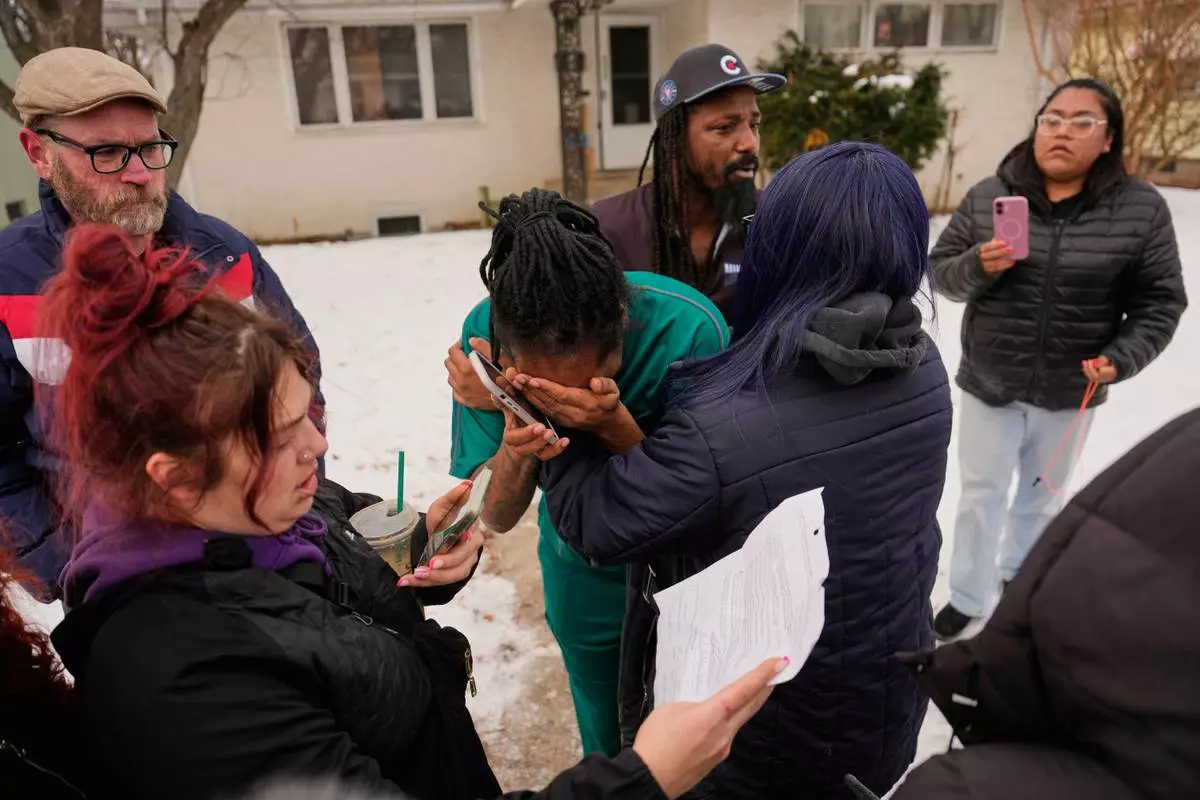
A family member, center, reacts after federal immigration officers make an arrest Sunday, Jan. 11, 2026, in Minneapolis. (AP Photo/John Locher)

A family member, center, reacts after federal immigration officers make an arrest Sunday, Jan. 11, 2026, in Minneapolis. (AP Photo/John Locher)

Recommended Articles