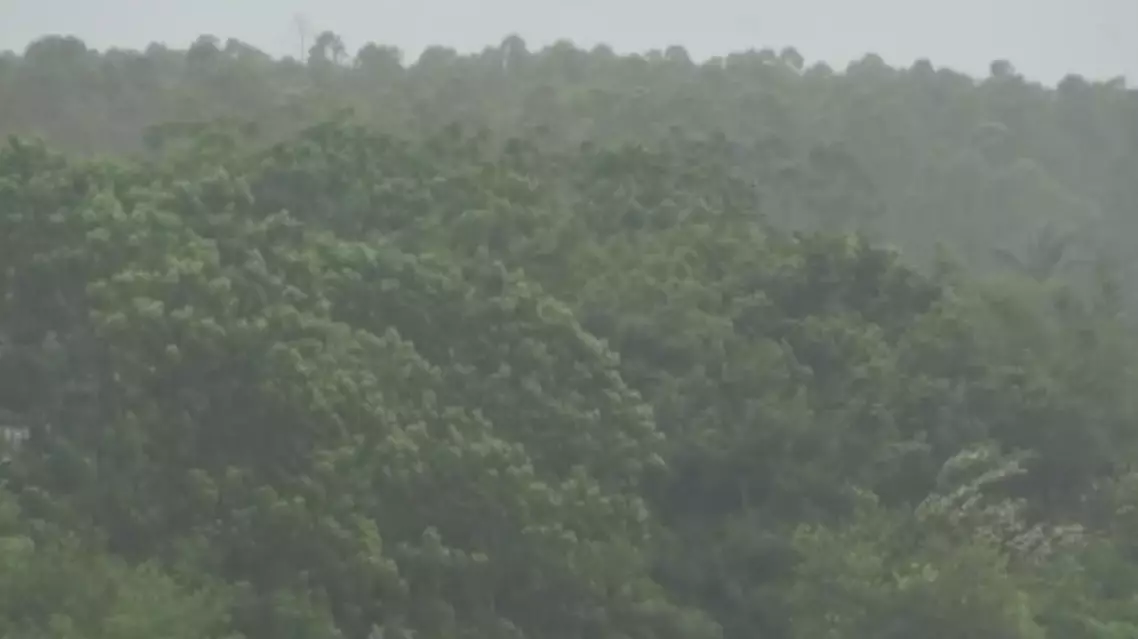
Coastal regions in South China, including Guangdong, Fujian, and Guangxi are mobilizing efforts to minimize losses from Typhoon Wipha, the year's sixth storm, while prioritizing residents' safety.
With Typhoon Wipha's impact on Guangdong gradually easing, provincial authorities downgraded the wind control emergency response from Level II to Level IV as of 11:00 Monday.
According to the provincial meteorological observatory, heavy rainfall is expected to continue in cities and counties across southern Guangdong on Monday. Typhoon-induced winds and rainfall will ease substantially across Guangdong starting from Tuesday.
All localities and departments across Guangdong are still urged to maintain heightened vigilance through reinforced 24/7 duty rotations and interagency coordination meetings, while implementing comprehensive preventive measures against typhoons, heavy rainfall, and potential secondary disasters.
Disaster recovery operations are underway, with prioritized repairs to critical infrastructure including transport networks, power grids, and telecommunications.
Typhoon Wipha made its second landfall near Hailing Island in Yangjiang in Guangdong at around 20:15 Sunday as a strong tropical storm, bringing a maximum wind speed of 25 meters per second near its center, the provincial meteorological observatory said.
China has a four-tier emergency response system, with Level I being the most severe response.
East China's Fujian Province activated a Level-IV flood control emergency response at 08:00 Monday as Typhoon Wipha moves closer, according to the provincial flood control and drought relief headquarters.
Under the influence of the outer circulation of Typhoon Wipha, coastal areas of Fujian have experienced heavy to torrential rainfall since Sunday.
According to weather authorities, multiple areas in the province are forecast to experience heavy rainfall over the next three days.
The headquarters has urged heightened vigilance in response to the severe weather. All localities and departments are required to promptly activate or adjust emergency response measures while enhancing monitoring, early warning, and joint consultation for risk assessment.
They have been instructed to meticulously plan and implement comprehensive prevention and response measures for rainstorm disasters, as well as secondary hazards, including mountain floods, small and medium-sized river floods, geological hazards, and urban waterlogging.
Typhoon Wipha also brought heavy rainfall in Guangxi Zhuang Autonomous Region. Torrential rains are forecast to affect southern areas from Sunday to Tuesday, according to the regional meteorological bureau.
At 10:00 Sunday, the regional meteorological observatory raised the typhoon alert from Level IV to Level III and upgraded its emergency response for major meteorological disasters related to typhoons to Level III.
The typhoon is expected to directly impact Weizhou Island, according to the region's maritime authorities. To ensure navigational safety, ferry services between the Beihai city port and Weizhou Island were suspended starting Sunday afternoon.
At present, Guangxi has completed the evacuation of coastal vessels and personnel. A total of 180 large ships have been moved outside the typhoon zone, 641 vessels are taking shelter at the inner harbor, and over 3,200 offshore workers have been evacuated.
Due to the impact of Wipha, several areas in Yulin City have experienced strong winds. This has caused the metal roofing of a residential building to be blown off on Saturday, hanging precariously between two residential buildings and posing a risk of falling.
Local firefighters responded quickly and arrived at the scene. After approximately two hours of relief efforts, they successfully cleared the metal roofing.
South China's coastal regions mobilize disaster relief amid Typhoon Wipha