SAN ANTONIO--(BUSINESS WIRE)--Jul 21, 2025--
NatureSweet®, the leading branded tomato company in North America, is sounding the alarm on the U.S. government’s decision to terminate the longstanding Tomato Suspension Agreement (TSA) —a move that threatens to upend the fresh tomato supply chain, severely reduce availability, and put food safety at risk for American consumers.
This press release features multimedia. View the full release here: https://www.businesswire.com/news/home/20250721487909/en/
Nearly 70% of the fresh tomatoes consumed in the U.S. are imported from Mexico, especially during the winter months when domestic production is limited. The sudden imposition of duties will create serious disruptions in supply, particularly for key varieties like grape and cherry tomatoes, which are largely grown in Mexico. This decision will mean fewer options, less availability, and higher prices in the produce aisle for both consumers and retailers.
“As a vertically integrated greenhouse grower, NatureSweet manages every step of the process—from growing and harvesting to packaging and distribution—which gives us the ability to absorb some of the cost shocks and all of the additional administrative burden,” says Rodolfo Spielmann, President and CEO of NatureSweet. “But we operate in a thin-margin industry in which our model is unique, and most growers and distributors are separate. Many smaller growers might not have this flexibility, and this new burden will push some to the brink.”
The ripple effects of these pressures are more than just economics. Food safety and product quality are also at risk as reduced supply may force less-resourced growers to cut corners or leave the market entirely. Increased reliance on open-field operations, which are harder to monitor and more vulnerable to contamination could further elevate food safety risks.
For nearly 30 years, the TSA has provided a framework that protects Florida growers while supporting a diverse and resilient tomato market across North America. NatureSweet urges all stakeholders to return to the table and negotiate a new agreement that preserves consumer access to safe, high-quality, and affordable tomatoes.
“Our tomatoes are grown year-round in greenhouses and ripened naturally on the vine—unlike many field-grown Florida tomatoes, which are picked green and artificially ripened with gas,” said Skip Hulett, Chief Legal Officer of NatureSweet. “That’s why we’re the #1 branded tomato in the U.S. Consumers trust us for consistent flavor, quality, safety, and integrity —and we’re committed to maintaining those standards.”
NatureSweet will continue to do everything possible to minimize price impacts and safeguard quality, but the company is calling for a collaborative, long-term solution that benefits growers, retailers, and consumers alike.
Hulett adds “Let’s not turn a trade dispute into a food crisis. Let’s fix this—before the damage becomes permanent.”
About NatureSweet® (NS Brands, Ltd.)
NatureSweet® is the leading brand in snacking tomatoes and a trusted provider for greenhouse-grown vegetables. As the largest vertically integrated controlled environment agriculture company and greenhouse grower in North America, it operates on more than 1,500 acres of greenhouse space, growing premium tomatoes, cucumbers, and sweet peppers. The company’s team of nearly 10,000 associates ensures every product is handpicked at peak freshness, delivering exceptional quality and flavor to supermarkets across the U.S., Mexico, and Canada. Its mission is to transform the lives of agricultural workers in North America through a profitable business model that encourages other companies to replicate it. With a commitment to sustainability and social responsibility, NatureSweet has earned B Corp, Fair Trade, and Equitable Food Initiative (EFI) certifications.


NatureSweet, the number one tomato brand.
NatureSweet, the number one branded tomato.
KYIV, Ukraine (AP) — Russia launched a second major drone and missile bombardment of Ukraine in four days, officials said Tuesday, aiming again at the power grid and apparently snubbing U.S.-led peace efforts as the war approaches the four-year mark.
Russia fired almost 300 drones, 18 ballistic missiles and seven cruise missiles at eight regions overnight, Ukrainian President Volodymyr Zelenskyy said on social media.
One strike in the northeastern Kharkiv region killed four people at a mail depot, and several hundred thousand households were without power in the Kyiv region, Zelenskyy said. The daytime temperature in the capital was -12 C (around 10 F). The streets were covered with ice, and the city rumbled with the noise from generators.
Four days earlier, Russia also sent hundreds of drones and dozens of missiles in a large-scale overnight attack and, for only the second time in the war, it used a powerful new hypersonic missile that struck western Ukraine in what appeared to be a clear warning to Kyiv’s NATO allies that it won’t back down.
On Monday, the United States accused Russia of a “ dangerous and inexplicable escalation ” of the fighting, when the Trump administration is trying to advance peace negotiations.
Tammy Bruce, the U.S. deputy ambassador to the United Nations, told an emergency meeting of the U.N. Security Council that Washington deplores “the staggering number of casualties” in the conflict and condemns Russia’s intensifying attacks on energy and other infrastructure.
Russia has sought to deny Ukrainian civilians heat and running water in the freezing winter months over the course of the war, hoping to wear down public resistance to Moscow’s full-scale invasion, which began on Feb. 24, 2022. Ukrainian officials describe the strategy as “weaponizing winter.”
In Ukraine’s Kharkiv region, the Russian attack also wounded 10 people, local authorities said.
In the southern city of Odesa, six people were wounded in the attack, said Oleh Kiper, the head of the regional military administration. The strikes damaged energy infrastructure, a hospital, a kindergarten, an educational facility and a number of residential buildings, he said.
Zelenskyy said that Ukraine is counting on quicker deliveries of agreed upon air defense systems from the U.S. and Europe, as well as new pledges of aid, to counter Russia’s latest onslaught.
Meanwhile, Russian air defenses shot down 11 Ukrainian drones overnight, Russia’s Ministry of Defense said Tuesday. Seven were reportedly destroyed over Russia’s Rostov region, where Gov. Yuri Slyusar confirmed an attack on the coastal city of Taganrog, about 40 kilometers (about 24 miles) east of the Ukrainian border, in Kyiv's latest long-range attack on Russian war-related facilities.
Ukraine’s military said domestically-produced drones hit a drone manufacturing facility in Taganrog. The Atlant Aero plant carries out design, manufacturing and testing of Molniya drones and components for Orion unmanned aerial vehicles, according to the General Staff of the Armed Forces of Ukraine. Explosions and a fire were reported at the site, with damage to production buildings confirmed, the General Staff said.
It wasn't possible to independently verify the reports.
Katie Marie Davies contributed to this report from Manchester, England.
Follow AP’s coverage of the war in Ukraine at https://apnews.com/hub/russia-ukraine
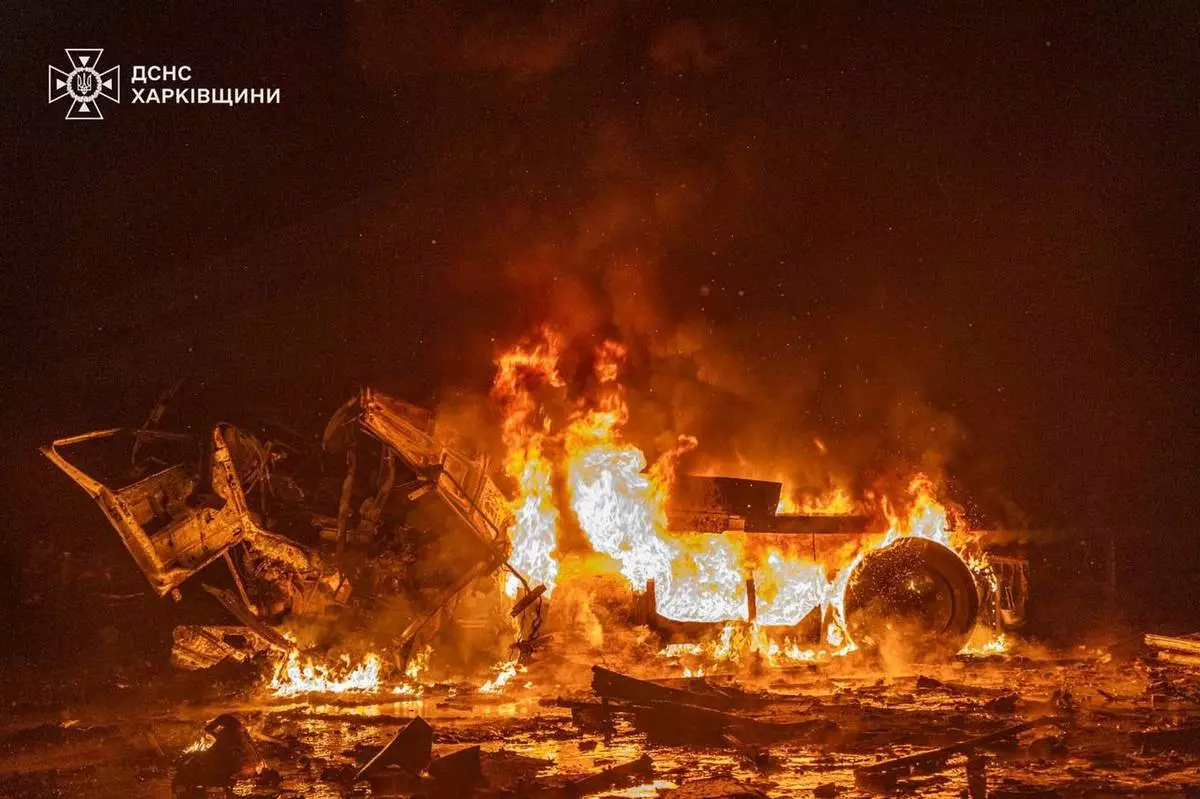
In this photo provided by the Ukrainian Emergency Service, emergency services personnel work to extinguish a fire following a Russian attack in Kharkiv, Ukraine, Tuesday, Jan. 13, 2026. (Ukrainian Emergency Service via AP)
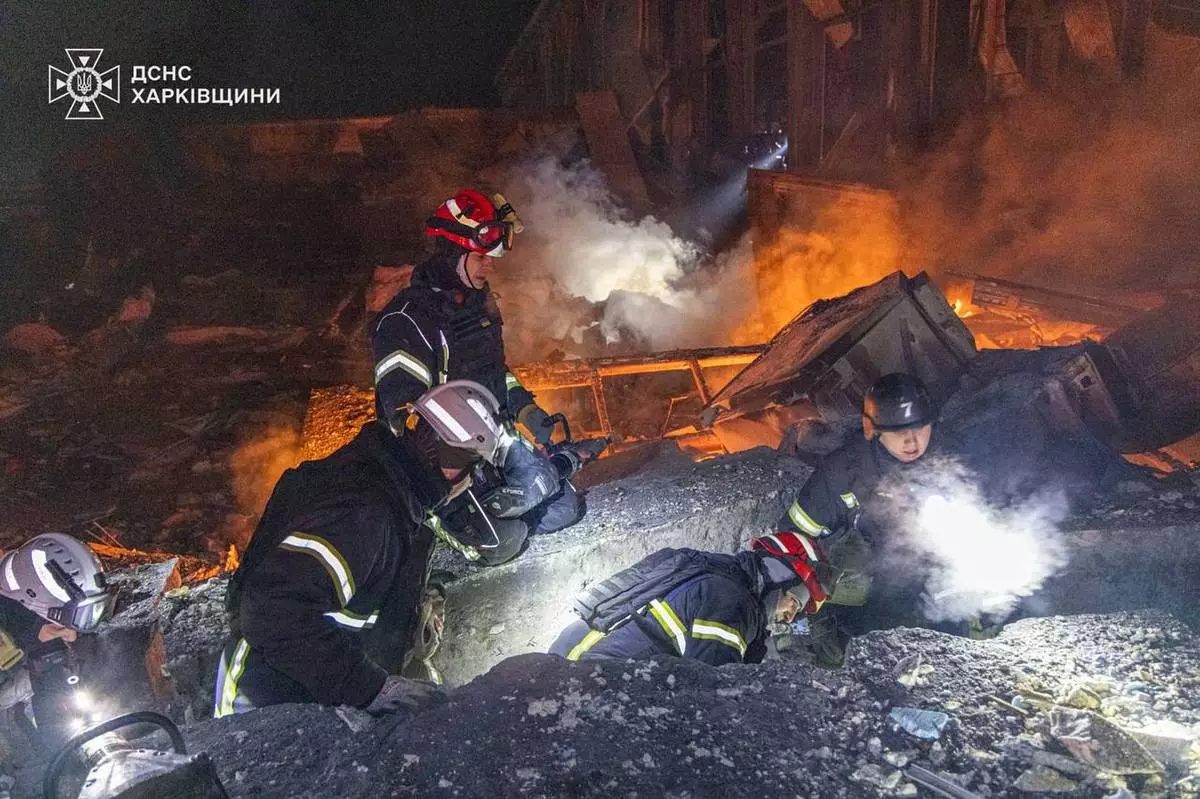
In this photo provided by the Ukrainian Emergency Service, emergency services personnel work to extinguish a fire following a Russian attack in Kharkiv, Ukraine, Tuesday, Jan. 13, 2026. (Ukrainian Emergency Service via AP)
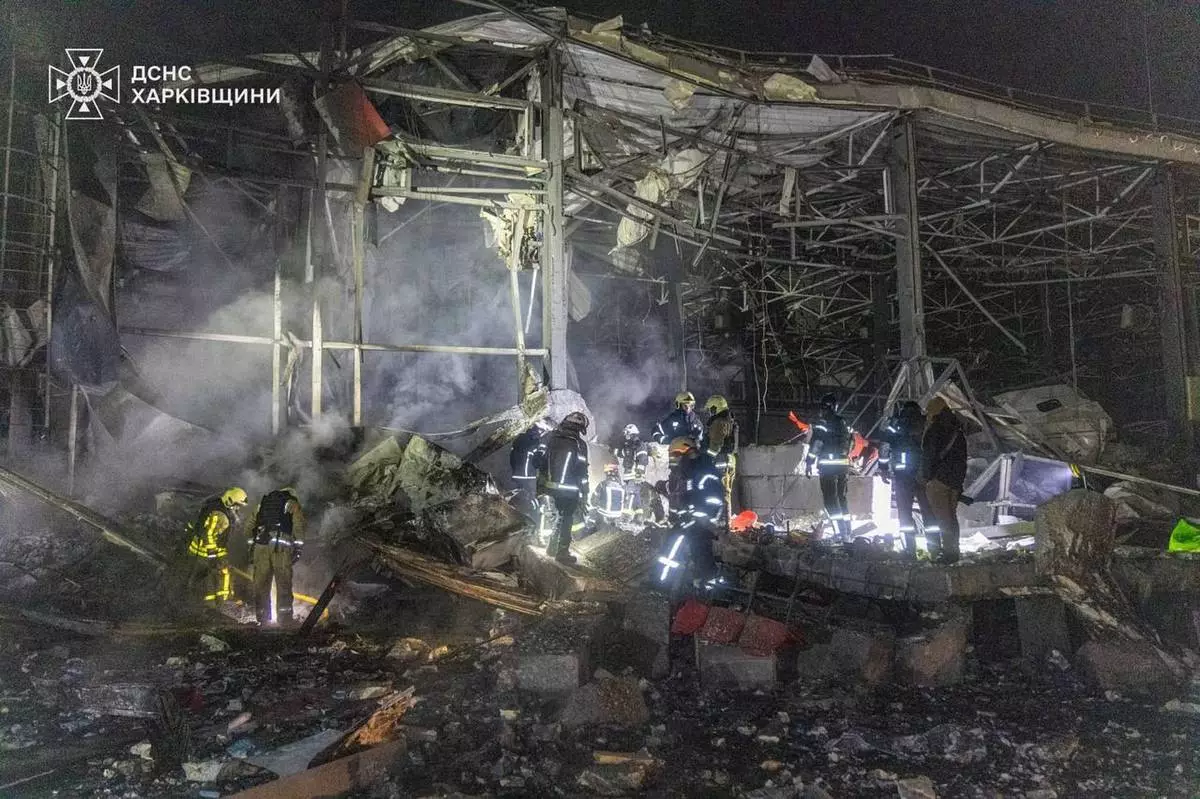
In this photo provided by the Ukrainian Emergency Service, emergency services personnel work to extinguish a fire following a Russian attack in Kharkiv, Ukraine, Tuesday, Jan. 13, 2026. (Ukrainian Emergency Service via AP)
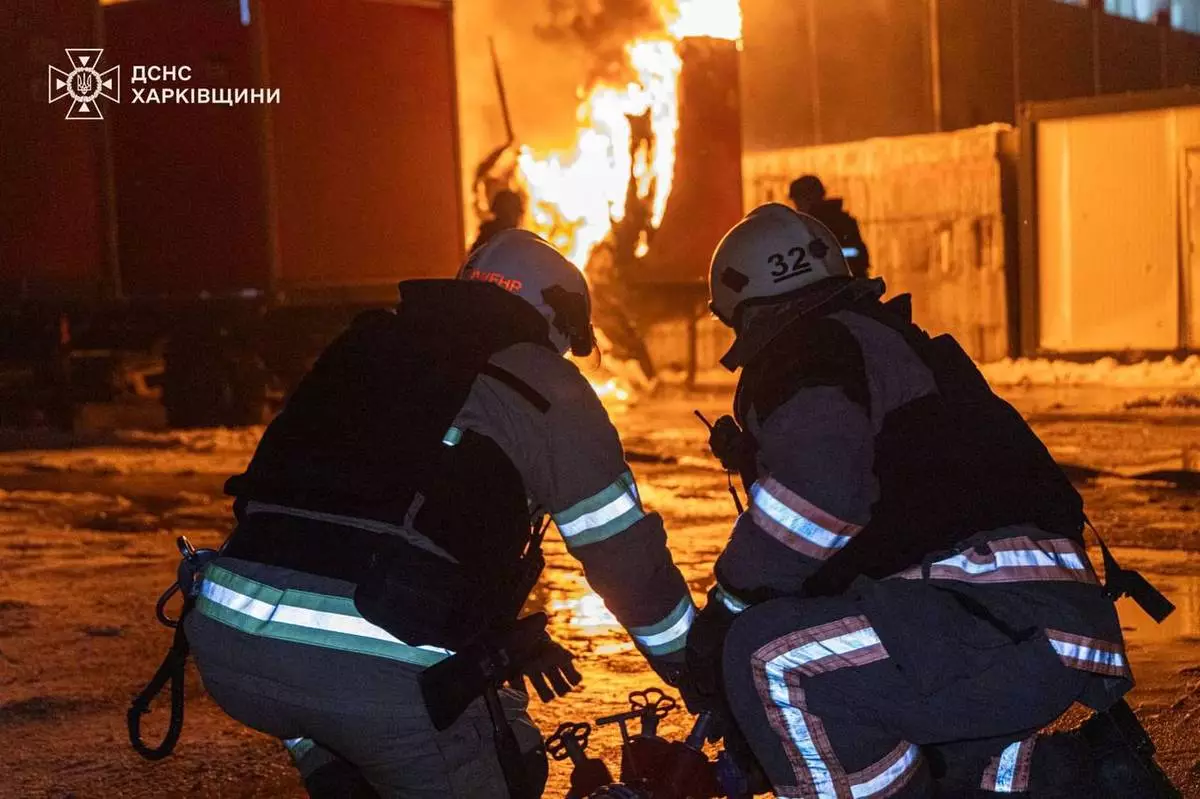
In this photo provided by the Ukrainian Emergency Service, emergency services personnel work to extinguish a fire following a Russian attack in Kharkiv, Ukraine, Tuesday, Jan. 13, 2026. (Ukrainian Emergency Service via AP)
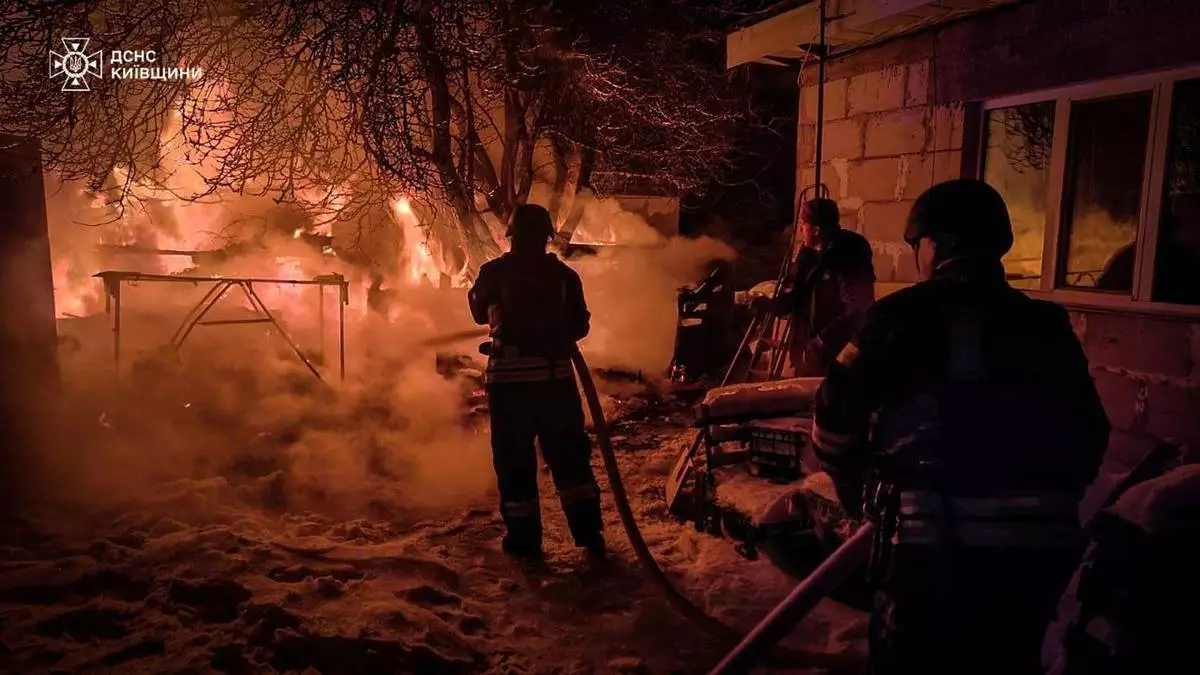
In this photo provided by the Ukrainian Emergency Service, emergency services personnel work to extinguish a fire following a Russian attack in Kyiv region, Ukraine, Tuesday, Jan. 13, 2026. (Ukrainian Emergency Service via AP)