Skip to Content Facebook Feature Image

Swarms of Russian drones attack Ukraine nightly as Moscow puts new emphasis on the deadly weapon

News

Swarms of Russian drones attack Ukraine nightly as Moscow puts new emphasis on the deadly weapon
News

News

Swarms of Russian drones attack Ukraine nightly as Moscow puts new emphasis on the deadly weapon

2025-07-22 12:09 Last Updated At:12:40

The long-range Russian drones come in swarms each night, buzzing for hours over Ukraine by the hundreds, terrorizing the population and attacking targets from the industrial east to areas near its western border with Poland.

Russia now often batters Ukraine with more drones in a single night than it did during some entire months in 2024, and analysts say the barrages are likely to escalate. On July 8, Russia unleashed more than 700 drones — a record.

More Images
FILE - In this photo taken from video distributed by Russian Defense Ministry Press Service on July 17, 2025, a Russian serviceman operates a "Supercam" drone in an undisclosed location in Ukraine. (Russian Defense Ministry Press Service via AP, File)
FILE - In this photo taken from video distributed by Russian Defense Ministry Press Service on July 17, 2025, a Russian serviceman operates a "Supercam" drone in an undisclosed location in Ukraine. (Russian Defense Ministry Press Service via AP, File)

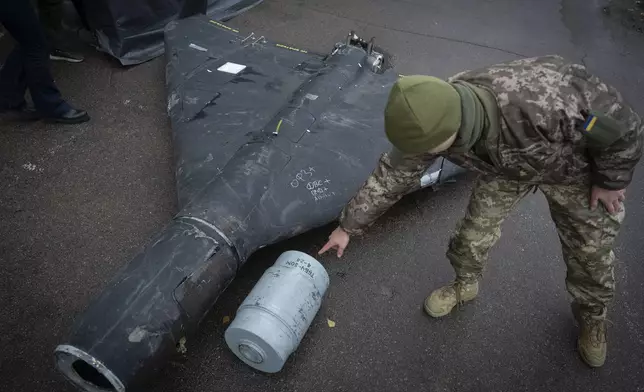
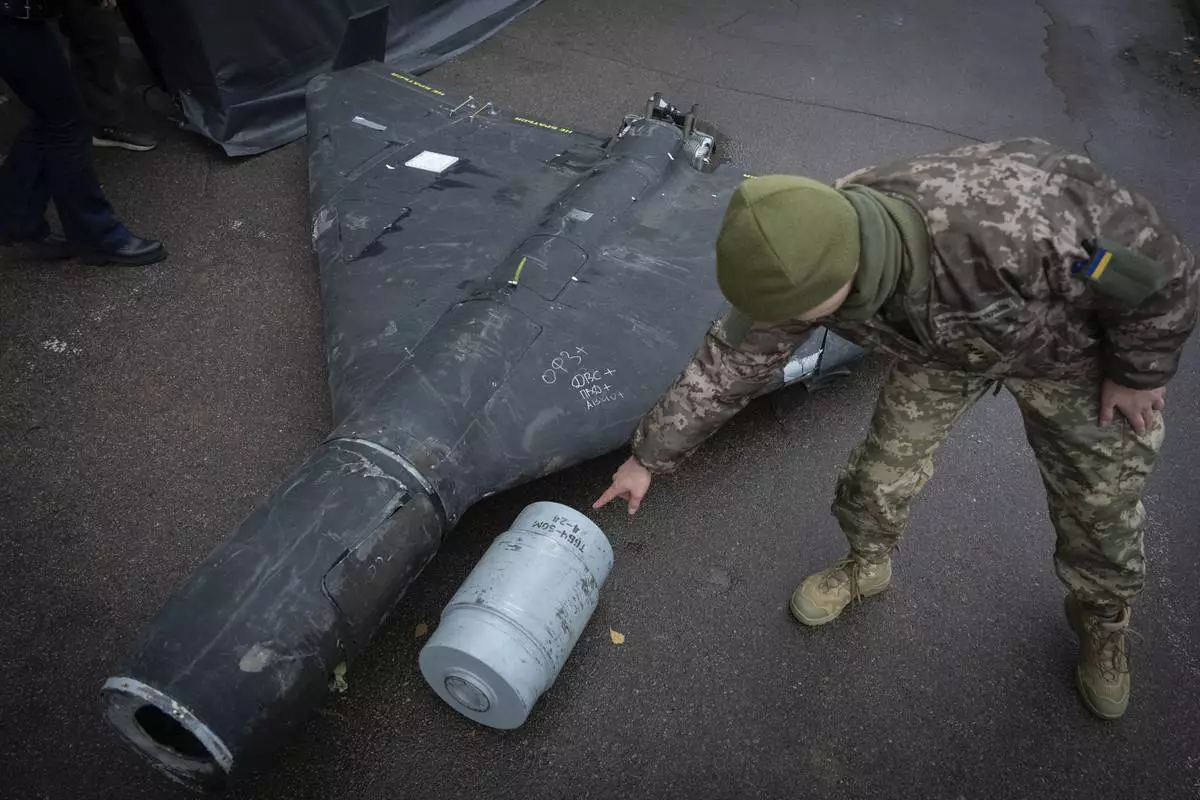
FILE - A Ukrainian officer shows a thermobaric charge from a downed Russian drone in a research laboratory in an undisclosed location in Ukraine on, Nov. 14, 2024. (AP Photo/Efrem Lukatsky, File)
FILE - A Ukrainian officer shows a thermobaric charge from a downed Russian drone in a research laboratory in an undisclosed location in Ukraine on, Nov. 14, 2024. (AP Photo/Efrem Lukatsky, File)

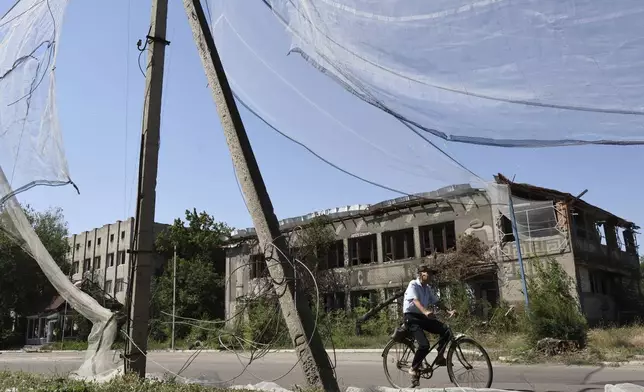
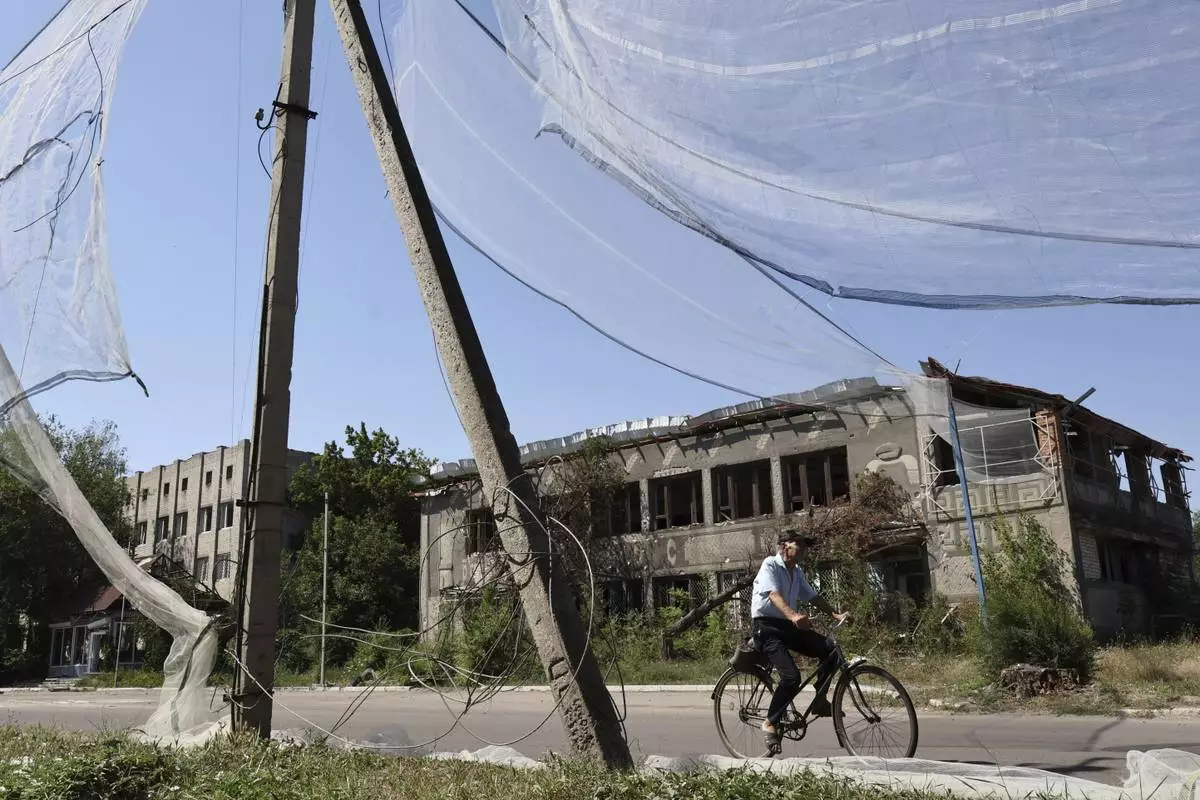
FILE - In this photo provided by Ukraine's 65th Mechanized Brigade press service, a resident rides a bike along the street under an anti-drone net in Orikhiv in Ukraine’s Zaporizhzhia region, July 15, 2025. (Andriy Andriyenko/Ukraine's 65th Mechanized Brigade via AP, File)
FILE - In this photo provided by Ukraine's 65th Mechanized Brigade press service, a resident rides a bike along the street under an anti-drone net in Orikhiv in Ukraine’s Zaporizhzhia region, July 15, 2025. (Andriy Andriyenko/Ukraine's 65th Mechanized Brigade via AP, File)

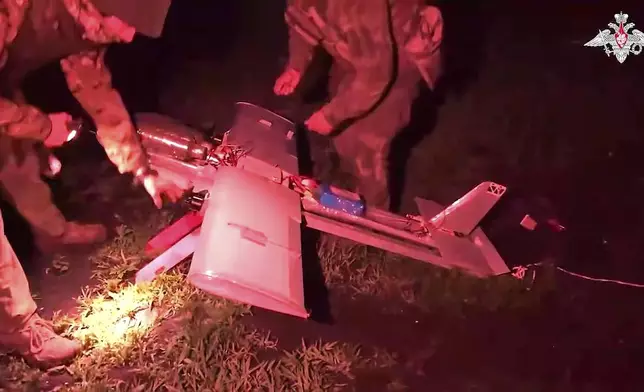
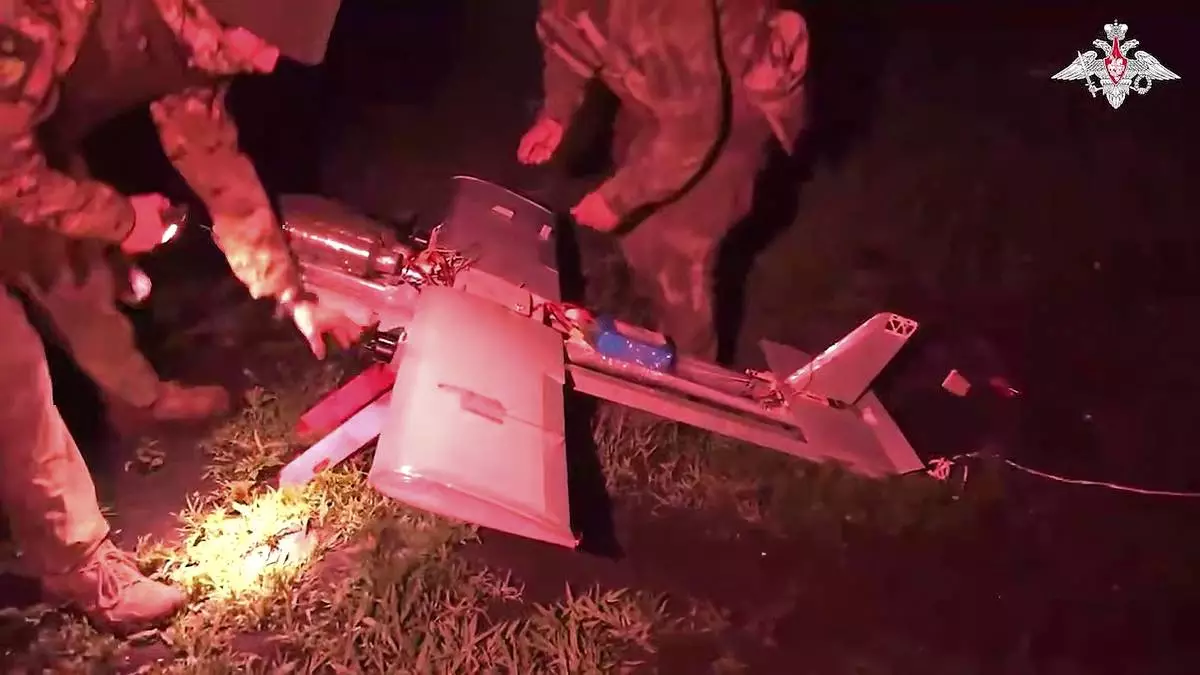
FILE - In this photo taken from video distributed by Russian Defense Ministry Press Service on July 18, 2025, Russian soldiers prepare a strike drone aircraft to fly toward Ukrainian positions in an undisclosed location. (Russian Defense Ministry Press Service via AP, File)
FILE - In this photo taken from video distributed by Russian Defense Ministry Press Service on July 18, 2025, Russian soldiers prepare a strike drone aircraft to fly toward Ukrainian positions in an undisclosed location. (Russian Defense Ministry Press Service via AP, File)

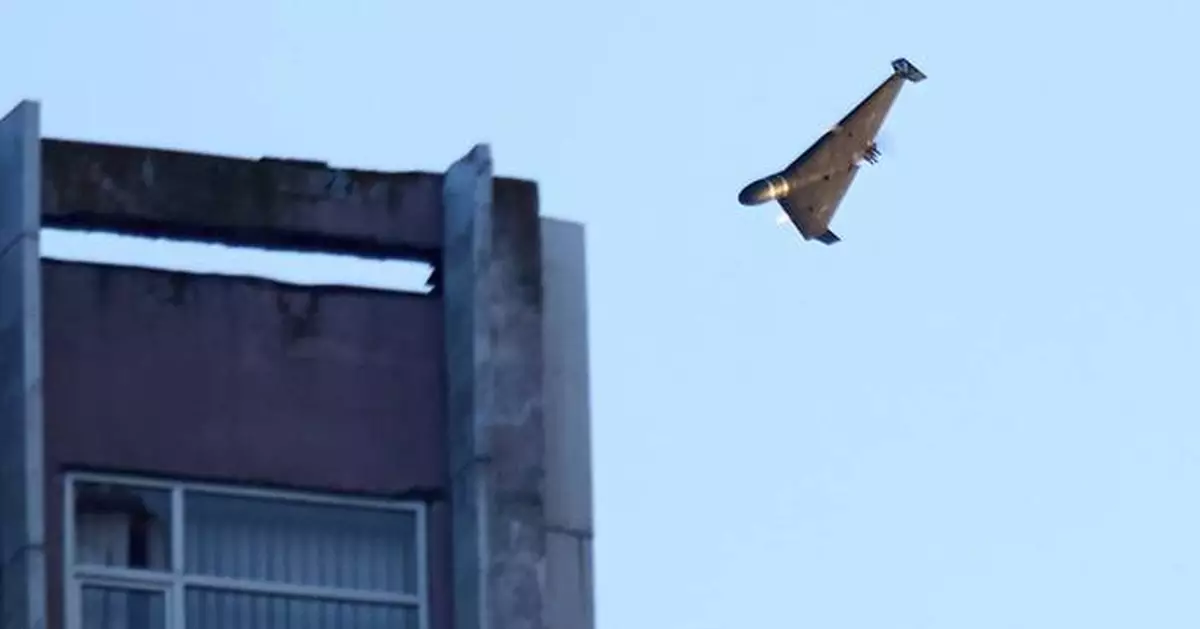
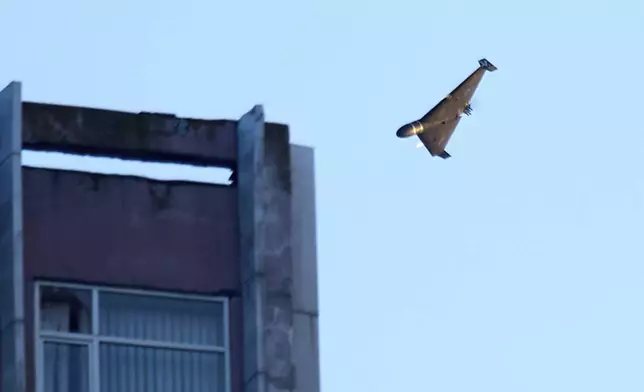
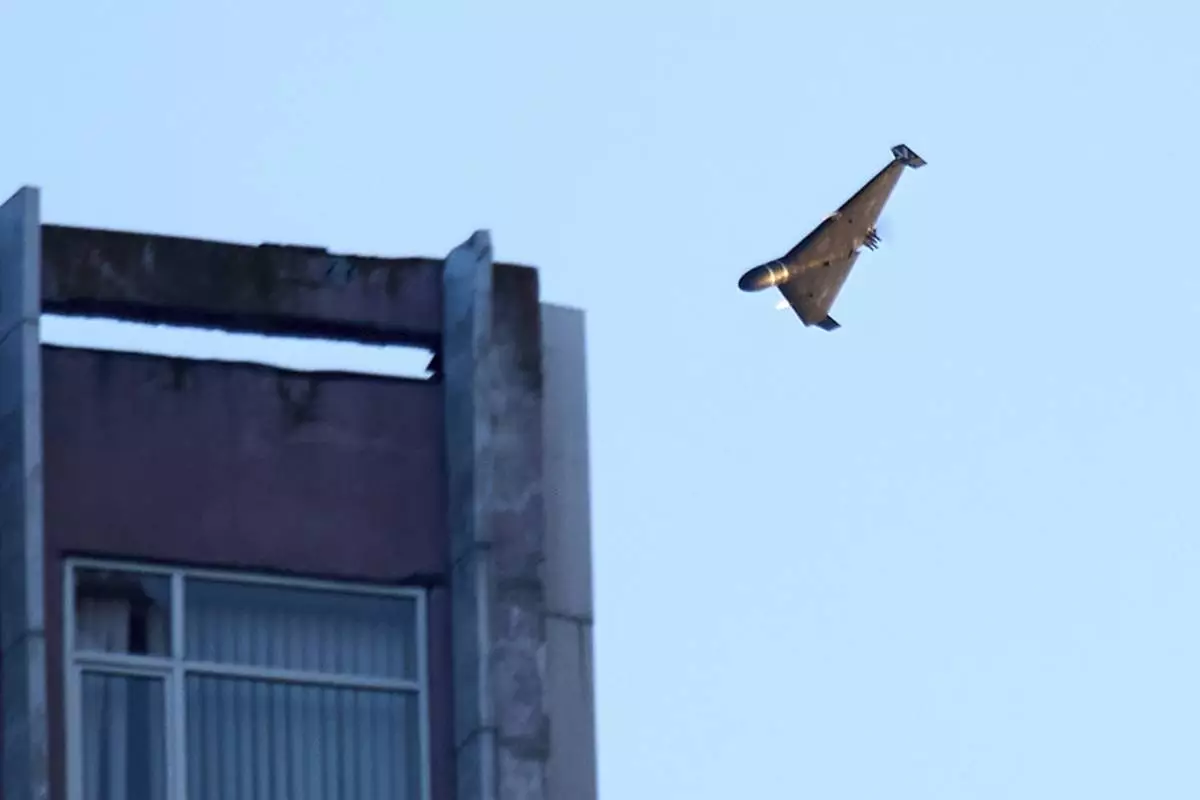
FILE - A Russian drone attacks a building during a Russian missile and drone air attack in Kyiv, Ukraine, June 17, 2025. (AP Photo/Efrem Lukatsky, File)

FILE - A Russian drone attacks a building during a Russian missile and drone air attack in Kyiv, Ukraine, June 17, 2025. (AP Photo/Efrem Lukatsky, File)

Some experts say that number could soon top 1,000 a day.

The spike comes as U.S. President Donald Trump has given Russia until early September to reach a ceasefire or face new sanctions -– a timeframe Moscow is likely to use to inflict as much damage as possible on Ukraine.

Russia has sharply increased its drone output and appears to keep ramping it up. Initially importing Shahed drones from Iran early in the 3 1/2-year-old war, Russia has boosted its domestic production and upgraded the original design.

The Russian Defense Ministry says it's turning its drone force into a separate military branch. It also has established a dedicated center for improving drone tactics and better training for those flying them.

Russian engineers have changed the original Iranian Shahed to increase its altitude and make it harder to intercept, according to Russian military bloggers and Western analysts. Other modifications include making it more jamming-resistant and able to carry powerful thermobaric warheads. Some use artificial intelligence to operate autonomously.

The original Shahed and its Russian replica — called “Geran,” or “geranium” — have an engine to propel it at 180 kph (just over 110 mph). A faster jet version is reportedly in the works.

The Washington-based Institute for the Study of War noted that cooperation with China has allowed Russia to bypass Western sanctions on imports of electronics for drone production. Ukraine’s military intelligence estimates that Russia receives up to 65% of components for its Geran drones from China. Beijing rejects the claims.

Russia initially launched its production of the Iranian drones at factory in Alabuga, located in Tatarstan. An Associated Press investigation found employees at the Alabuga plant included young African women who said they were duped into taking jobs there. Geran production later began at a plant in Udmurtia, west of the Ural Mountains. Ukraine has launched drone attacks on both factories but failed to derail production.

A report Sunday by state-run Zvezda TV described the Alabuga factory as the world's biggest attack drone plant.

“It’s a war of drones. We are ready for it,” said plant director Timur Shagivaleyev, adding it produces all components, including engines and electronics, and has its own training school.

The report showed hundreds of black Geran drones stacked in an assembly shop decorated with Soviet-style posters. One featured images of the father of the Soviet nuclear bomb, Igor Kurchatov, legendary Soviet space program chief, Sergei Korolyov, and dictator Josef Stalin, with the words: “Kurchatov, Korolyov and Stalin live in your DNA.”

The Russian military has improved its tactics, increasingly using decoy drones named “Gerbera” for a type of daisy. They closely resemble the attack drones and are intended to confuse Ukrainian defenses and distract attention from their more deadly twins.

By using large numbers of drones in one attack, Russia seeks to overwhelm Ukrainian air defenses and keep them from targeting more expensive cruise and ballistic missiles that Moscow often uses alongside the drones to hit targets like key infrastructure facilities, air defense batteries and air bases.

Former Russian Defense Ministry press officer Mikhail Zvinchuk, who runs a popular war blog, noted the Russian military has learned to focus on a few targets to maximize the impact. The drones can roam Ukraine's skies for hours, zigzagging past defenses, he wrote.

“Our defense industries’ output allows massive strikes on practically a daily basis without the need for breaks to accumulate the necessary resources,” said another military blogger, Alexander Kots. “We no longer spread our fingers but hit with a punching fist in one spot to make sure we hit the targets.”

Ukraine relies on mobile teams armed with machine guns as a low-cost response to the drones to spare the use of expensive Western-supplied air defense missiles. It also has developed interceptor drones and is working to scale up production, but the steady rise in Russian attacks is straining its defenses.

Despite international sanctions and a growing load on its economy, Russia’s military spending this year has risen 3.4% over 2024, according to the Stockholm International Peace Research Institute, which estimated it at the equivalent of about $200 billion. While budgetary pressures could increase, it said, the current spending level is manageable for the Kremlin.

Over 1.5 million drones of various types were delivered to the military last year, said President Vladimir Putin.

Frontelligence Insight, a Ukraine-based open-source intelligence organization, reported this month that Russia launched more than 28,000 Shahed and Geran drones since the full-scale invasion began in 2022, with 10% of the total fired last month alone.

While ballistic and cruise missiles are faster and pack a bigger punch, they cost millions and are available only in limited quantities. A Geran drone costs only tens of thousands of dollars — a fraction of a ballistic missile.

The drones' range of about 2,000 kilometers (1,240 miles) allows them to bypass some defenses, and a relatively big load of 40 kilograms (88 pounds) of explosives makes them a highly effective instrument of what the Center for Strategic and International Studies calls “a cruel attritional logic.”

CSIS called them ”the most cost-effective munition in Russia’s firepower strike arsenal."

“Russia’s plan is to intimidate our society,” Ukrainian President Volodymyr Zelenskyy said, adding that Moscow seeks to launch 700 to 1,000 drones a day. Over the weekend, German Maj. Gen. Christian Freuding said in an interview that Russia aims for a capability of launching 2,000 drones in one attack.

Along the more than 1,000-kilometer (600-mile) front line, short-range attack drones have become prolific and transformed the fighting, quickly spotting and targeting troops and weapons within a 10-kilometer (6-mile) kill zone.

Russian drone units initially were set on the initiative of midlevel commanders and often relied on equipment purchased with private donations. Once drones became available in big numbers, the military moved last fall to put those units under a single command.

Putin has endorsed the Defense Ministry’s proposal to make drones a separate branch of the armed forces, dubbed the Unmanned Systems Troops.

Russia has increasingly focused on battlefield drones that use thin fiber optic cables, making them immune to jamming and have an extended range of 25 kilometers (over 15 miles). It also has set up Rubicon, a center to train drone operators and develop the best tactics.

Such fiber optic drones used by both sides can venture deeper into rear areas, targeting supply, support and command structures that until recently were deemed safe.

Michael Kofman, a military expert with the Carnegie Endowment for International Peace, said the Russian advancements have raised new defensive challenges for Ukraine.

“The Ukrainian military has to evolve ways of protecting the rear, entrenching at a much greater depth,” Kofman said in a recent podcast.
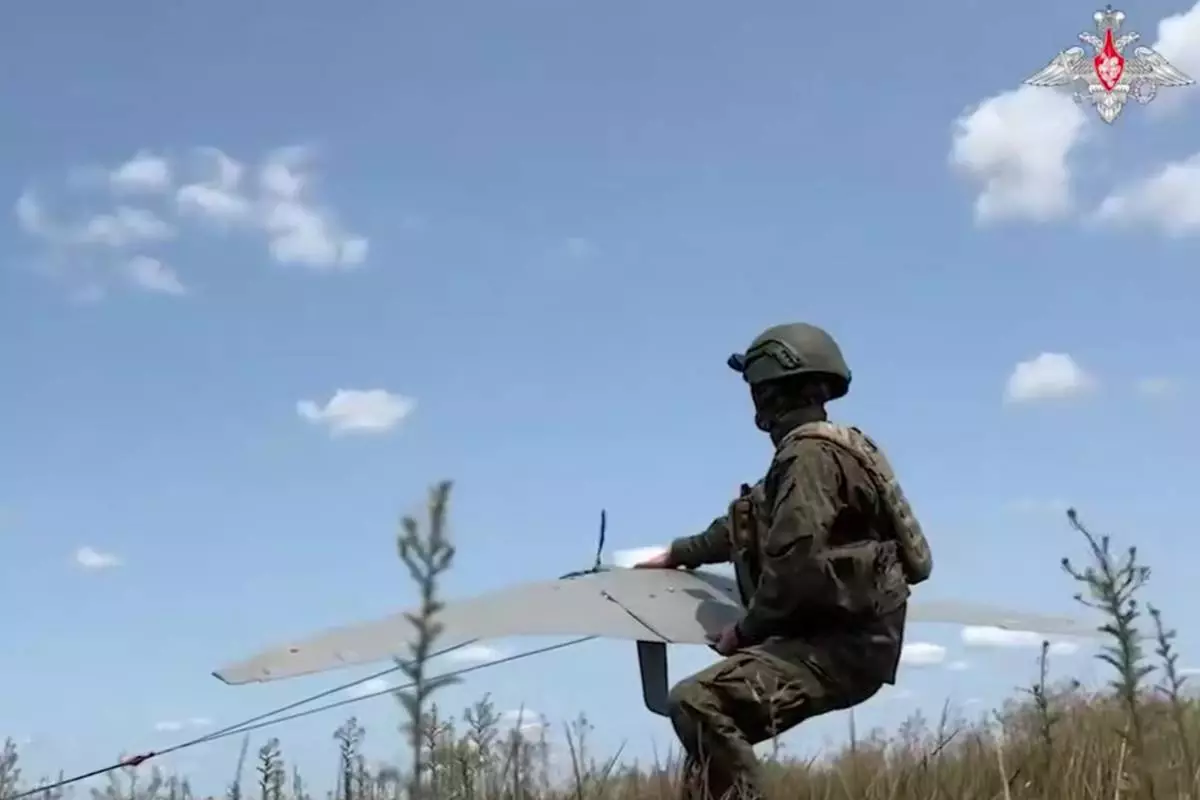
FILE - In this photo taken from video distributed by Russian Defense Ministry Press Service on July 17, 2025, a Russian serviceman operates a "Supercam" drone in an undisclosed location in Ukraine. (Russian Defense Ministry Press Service via AP, File)
FILE - In this photo taken from video distributed by Russian Defense Ministry Press Service on July 17, 2025, a Russian serviceman operates a "Supercam" drone in an undisclosed location in Ukraine. (Russian Defense Ministry Press Service via AP, File)

FILE - A Ukrainian officer shows a thermobaric charge from a downed Russian drone in a research laboratory in an undisclosed location in Ukraine on, Nov. 14, 2024. (AP Photo/Efrem Lukatsky, File)
FILE - A Ukrainian officer shows a thermobaric charge from a downed Russian drone in a research laboratory in an undisclosed location in Ukraine on, Nov. 14, 2024. (AP Photo/Efrem Lukatsky, File)

FILE - In this photo provided by Ukraine's 65th Mechanized Brigade press service, a resident rides a bike along the street under an anti-drone net in Orikhiv in Ukraine’s Zaporizhzhia region, July 15, 2025. (Andriy Andriyenko/Ukraine's 65th Mechanized Brigade via AP, File)
FILE - In this photo provided by Ukraine's 65th Mechanized Brigade press service, a resident rides a bike along the street under an anti-drone net in Orikhiv in Ukraine’s Zaporizhzhia region, July 15, 2025. (Andriy Andriyenko/Ukraine's 65th Mechanized Brigade via AP, File)

FILE - In this photo taken from video distributed by Russian Defense Ministry Press Service on July 18, 2025, Russian soldiers prepare a strike drone aircraft to fly toward Ukrainian positions in an undisclosed location. (Russian Defense Ministry Press Service via AP, File)
FILE - In this photo taken from video distributed by Russian Defense Ministry Press Service on July 18, 2025, Russian soldiers prepare a strike drone aircraft to fly toward Ukrainian positions in an undisclosed location. (Russian Defense Ministry Press Service via AP, File)

FILE - A Russian drone attacks a building during a Russian missile and drone air attack in Kyiv, Ukraine, June 17, 2025. (AP Photo/Efrem Lukatsky, File)

FILE - A Russian drone attacks a building during a Russian missile and drone air attack in Kyiv, Ukraine, June 17, 2025. (AP Photo/Efrem Lukatsky, File)
SEOUL, South Korea (AP) — A South Korean court sentenced former President Yoon Suk Yeol to five years in prison Friday in the first verdict from eight criminal trials over the martial law debacle that forced him out of office and other allegations.

Yoon was impeached, arrested and dismissed as president after his short-lived imposition of martial law in December 2024 triggered huge public protests calling for his ouster.

The most significant criminal charge against him alleges that his martial law enforcement amounted to a rebellion, and the independent counsel has requested the death sentence in the case that is to be decided in a ruling next month.

Yoon has maintained he didn’t intend to place the country under military rule for an extended period, saying his decree was only meant to inform the people about the danger of the liberal-controlled parliament obstructing his agenda. But investigators have viewed Yoon’s decree as an attempt to bolster and prolong his rule, charging him with rebellion, abuse of power and other criminal offenses.

In Friday’s case, the Seoul Central District Court sentenced Yoon for defying attempts to detain him, fabricating the martial law proclamation, and sidestepping a legally mandated full Cabinet meeting and thus depriving some Cabinet members who were not convened of their due rights to deliberate on his decree.

Judge Baek Dae-hyun said in the televised ruling that imposing “a grave punishment” was necessary because Yoon hasn’t shown remorse and has only repeated “hard-to-comprehend excuses.” The judge also restoring legal systems damaged by Yoon’s action was necessary.

Yoon’s defense team said they will appeal the ruling, which they believe was “politicized” and reflected “the unliberal arguments by the independent counsel.” Yoon’s defense team argued the ruling “oversimplified the boundary between the exercise of the president’s constitutional powers and criminal liability.”

Prison sentences in the multiple, smaller trials Yoon faces would matter if he is spared the death penalty or life imprisonment at the rebellion trial.

Park SungBae, a lawyer who specializes in criminal law, said there is little chance the court would decide Yoon should face the death penalty in the rebellion case. He said the court will likely issue a life sentence or a sentence of 30 years or more in prison.

South Korea has maintained a de facto moratorium on executions since 1997 and courts rarely hand down death sentences. Park said the court would take into account that Yoon’s decree didn’t cause casualties and didn’t last long, although Yoon hasn’t shown genuine remorse for his action.

South Korea has a history of pardoning former presidents who were jailed over diverse crimes in the name of promoting national unity. Those pardoned include strongman Chun Doo-hwan, who received the death penalty at a district court over his 1979 coup, the bloody 1980 crackdowns of pro-democracy protests that killed about 200 people, and other crimes.

Some observers say Yoon will likely retain a defiant attitude in the ongoing trials to maintain his support base in the belief that he cannot avoid a lengthy sentence but could be pardoned in the future.

On the night of Dec. 3, 2024, Yoon abruptly declared martial law in a televised speech, saying he would eliminate “anti-state forces” and protect “the constitutional democratic order.” Yoon sent troops and police officers to encircle the National Assembly, but many apparently didn’t aggressively cordon off the area, allowing enough lawmakers to get into an assembly hall to vote down Yoon’s decree.

No major violence occurred, but Yoon's stunt caused the biggest political crisis in South Korea and rattled its diplomacy and financial markets. For many, his decree, the first of its kind in more than four decades in South Korea, brought back harrowing memories of past dictatorships in the 1970s and 1980s, when military-backed leaders used martial law and emergency measures to deploy soldiers and tanks on the streets to suppress demonstrations.

After Yoon's ouster, his liberal rival Lee Jae Myung became president via a snap election last June. After taking office, Lee appointed three independent counsels to look into allegations involving Yoon, his wife and associates.

Yoon's other trials deal with charges like ordering drone flights over North Korea to deliberately inflame animosities to look for a pretext to declare martial law. Other charges accuse Yoon of manipulating the investigation into a marine’s drowning in 2023 and receiving free opinion surveys from an election broker in return for a political favor.

A supporter of former South Korean President Yoon Suk Yeol shouts slogans outside Seoul Central District Court, in Seoul, South Korea, Friday, Jan. 16, 2026. (AP Photo/Lee Jin-man)

A supporter of former South Korean President Yoon Suk Yeol shouts slogans outside Seoul Central District Court, in Seoul, South Korea, Friday, Jan. 16, 2026. (AP Photo/Lee Jin-man)

Supporters of former South Korean President Yoon Suk Yeol hold signs and flags outside Seoul Central District Court, in Seoul, South Korea, Friday, Jan. 16, 2026. (AP Photo/Lee Jin-man)

Supporters of former South Korean President Yoon Suk Yeol hold signs and flags outside Seoul Central District Court, in Seoul, South Korea, Friday, Jan. 16, 2026. (AP Photo/Lee Jin-man)

A supporter of former South Korean President Yoon Suk Yeol waits for a bus carrying former South Korean President Yoon Suk Yeol outside Seoul Central District Court, in Seoul, South Korea, Friday, Jan. 16, 2026. (AP Photo/Lee Jin-man)

A supporter of former South Korean President Yoon Suk Yeol waits for a bus carrying former South Korean President Yoon Suk Yeol outside Seoul Central District Court, in Seoul, South Korea, Friday, Jan. 16, 2026. (AP Photo/Lee Jin-man)

Supporters of former South Korean President Yoon Suk Yeol hold signs as police officers stand guard outside Seoul Central District Court, in Seoul, South Korea, Friday, Jan. 16, 2026. (AP Photo/Lee Jin-man)

Supporters of former South Korean President Yoon Suk Yeol hold signs as police officers stand guard outside Seoul Central District Court, in Seoul, South Korea, Friday, Jan. 16, 2026. (AP Photo/Lee Jin-man)

Supporters of former South Korean President Yoon Suk Yeol hold signs and flags outside Seoul Central District Court, in Seoul, South Korea, Friday, Jan. 16, 2026. (AP Photo/Lee Jin-man)

Supporters of former South Korean President Yoon Suk Yeol hold signs and flags outside Seoul Central District Court, in Seoul, South Korea, Friday, Jan. 16, 2026. (AP Photo/Lee Jin-man)

Supporters of former South Korean President Yoon Suk Yeol hold signs outside Seoul Central District Court, in Seoul, South Korea, Friday, Jan. 16, 2026. (AP Photo/Lee Jin-man)

Supporters of former South Korean President Yoon Suk Yeol hold signs outside Seoul Central District Court, in Seoul, South Korea, Friday, Jan. 16, 2026. (AP Photo/Lee Jin-man)

A picture of former South Korean President Yoon Suk Yeol is placed on a board as supporters gather outside Seoul Central District Court, in Seoul, South Korea, Friday, Jan. 16, 2026. (AP Photo/Lee Jin-man)

A picture of former South Korean President Yoon Suk Yeol is placed on a board as supporters gather outside Seoul Central District Court, in Seoul, South Korea, Friday, Jan. 16, 2026. (AP Photo/Lee Jin-man)

Recommended Articles