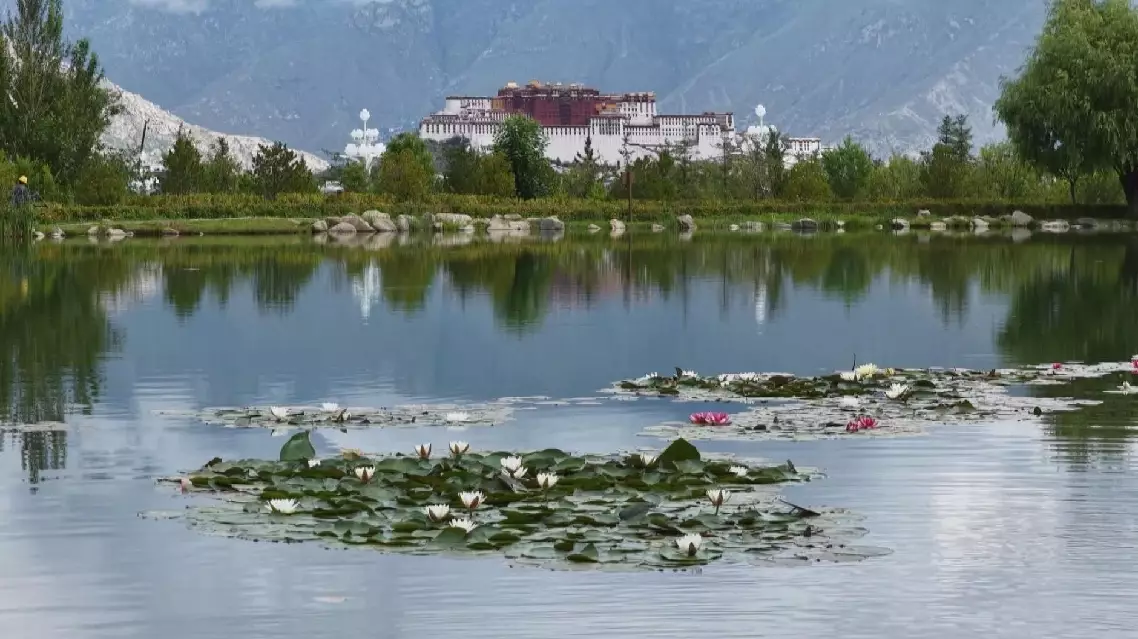
A newly-built ecological corridor along the Lhasa River in southwest China's Xizang Autonomous Region is reshaping the landscape of Lhasa, an ancient city with a history of more than 1,300 years, blending modern sustainability with traditional charm.
The ecological corridor program, as part of the second phase of Lhasa's urban water system ecological restoration project, has been basically completed so far. Spanning 4.1 kilometers, it connects Lhasa's Xianzu Island and Sun Island with the city center.
The program includes sluice gate reinforcement, bridge construction, waterfront ecological enhancements, and installation of digital management systems.
"After our entire water system is connected, the water will pass through the west side of the Potala Palace. There is also a park behind this west side. We draw water from the Lhasa River through the Zhonggan Canal, which is equivalent to bringing water into the city. In this way, the river water will finally return to the Lhasa River after circulating through the city," said Zhang Zhenping, deputy director of Lhasa's Water Resources Bureau.
The Lhasa River, a key tributary of the Yarlung Tsangpo River, winds through the city of Lhasa.
Once a major source of sandstorms due to its exposed gravel banks, the river used to directly impact high-quality development of the city.
"In fact, the city doesn't lack water. Lhasa has abundant water resources, but these valuable resources hadn't been systematically developed and properly managed," said Ding Yang, design manager of the ecological corridor program.
Via the program, the river has undergone systematic restoration, with efforts made to transform floodgates into ecological sluices, and restore a four-kilometer transition zone between the aquatic and terrestrial environment, in order to improve habitats for fish and birds while reducing urban flood risks.
As the project progresses, new additions like walking trails and riverside picnic groves are transforming the once-barren river banks into lush landscape, bringing vitality to Lhasa.
"Many trees have been grown here, making this place quite pleasant and cool. There is also river water here. The feeling here is quite good. The environment is quite good, and the roads have been well built," said Dorje Thokme, a local resident.
A highlight of the program is a water-screen display along the river, combining projections, fountains, and dynamic controls to boost night-time tourism.
"With special care from the Communist Party Central Committee, substantial financial support totaling 2.7 billion yuan (about 376.4 million U.S. dollars) has been invested in a series of projects to manage the Lhasa River. These initiatives have allowed residents to witness the new development of a modernizing Lhasa," Zhang said.
The riverfront landscape is also fueling local businesses.
Trinley Namgyal, a local restaurant owner, said that his restaurant is fully booked every day as the floortop dining area offers breathtaking waterfront views.
"The project that the Lhasa municipal government has launched has transformed the waterfront views along the Lhasa River, which is our mother river, making this area so beautiful. It has greatly boosted Lhasa's tourism, which will keep getting better year after year," said Trinley Namgyal.
As new life is breathed into the waterways of the Lhasa River, the city balances ecological resilience with cultural vibrancy, embracing a greener future.
Lhasa's new eco-corridor transforms ancient city