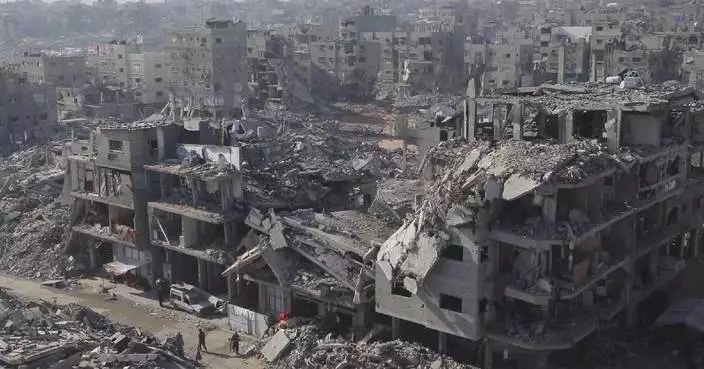
Israel launched air and ground offensive on Deir al-Balah in central Gaza Strip on Monday, forcing yet another mass evacuation of Palestinian civilians who had been previously displaced to the city.
Deir al-Balah had been the only city in Gaza that had not yet endured major Israeli ground operations during the more than 21 months of conflict.
Click to Gallery
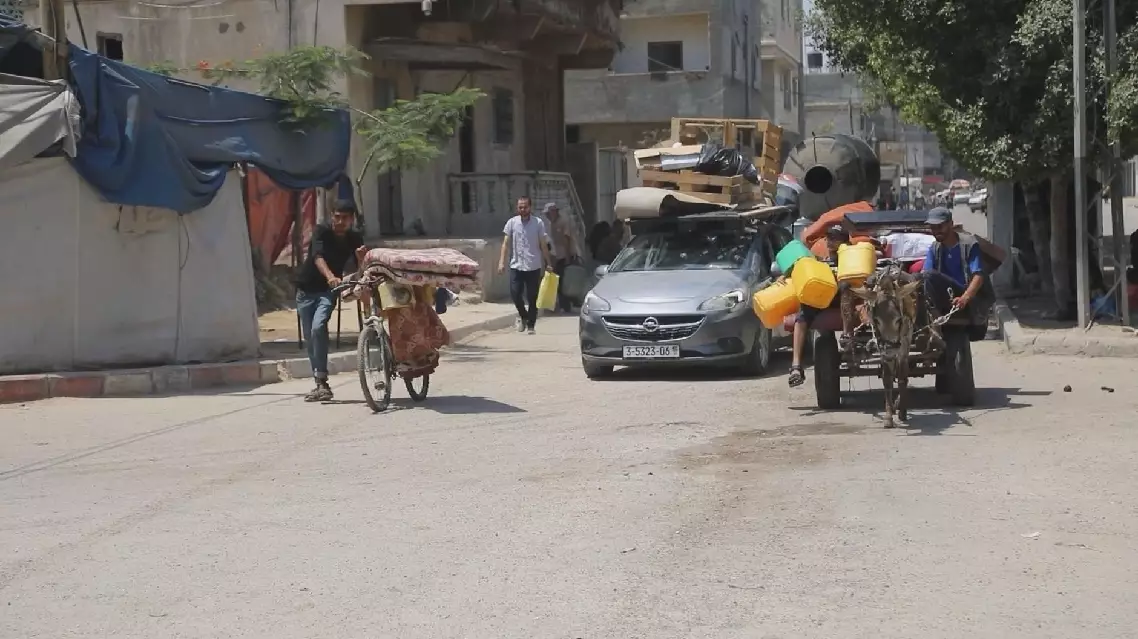
Israeli assault forces new mass displacement in central Gaza city
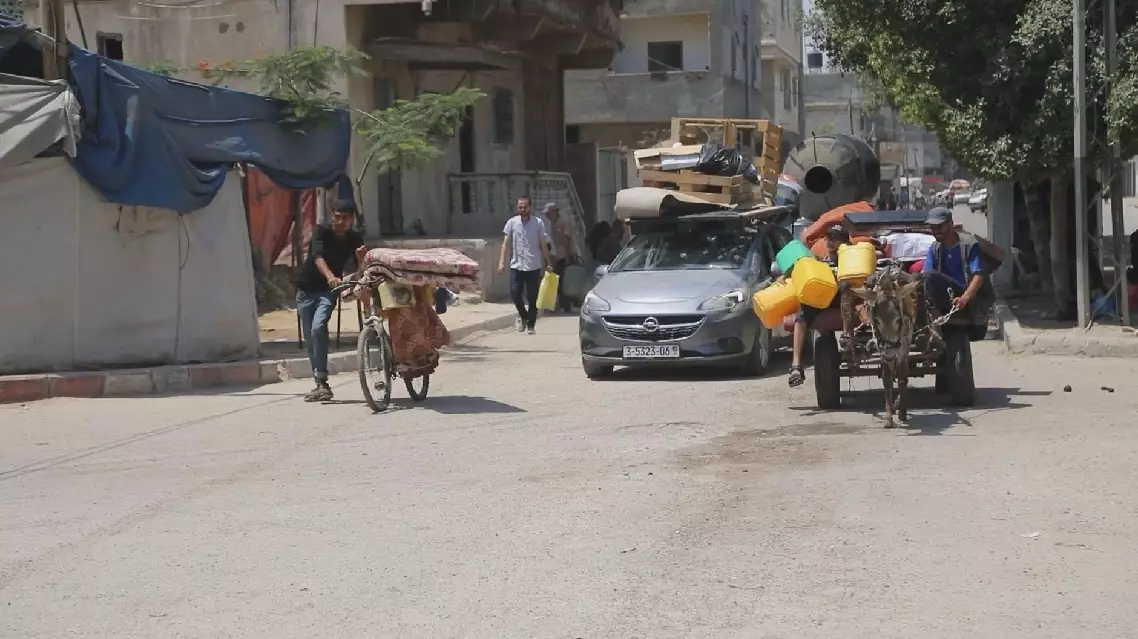
Israeli assault forces new mass displacement in central Gaza city
Israeli assault forces new mass displacement in central Gaza city
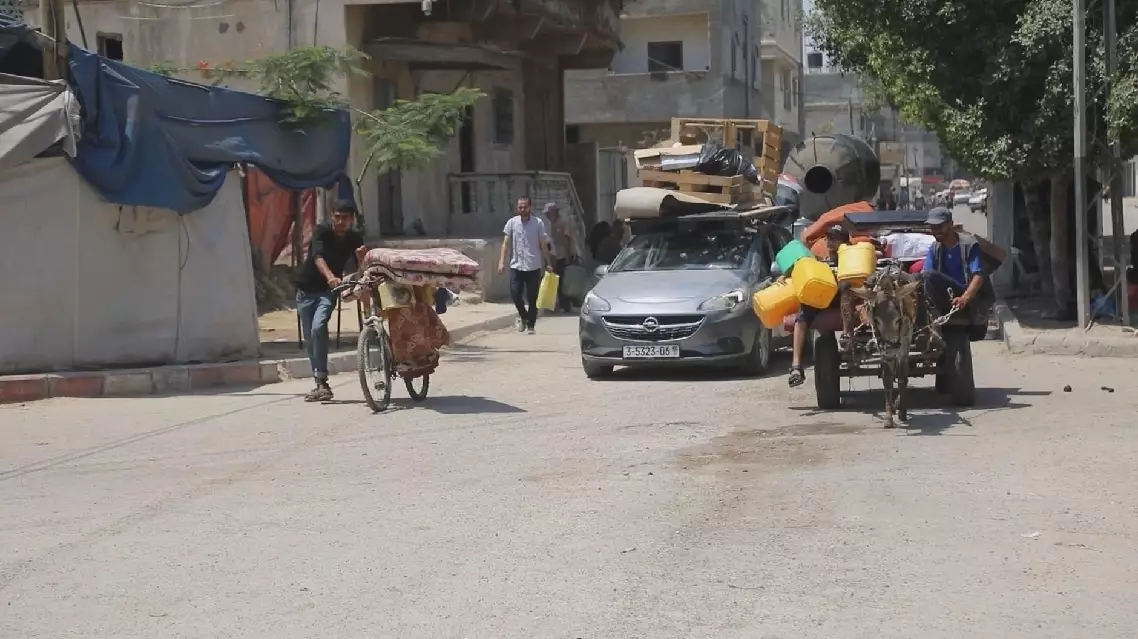
Israeli assault forces new mass displacement in central Gaza city
Israeli assault forces new mass displacement in central Gaza city
Israeli assault forces new mass displacement in central Gaza city
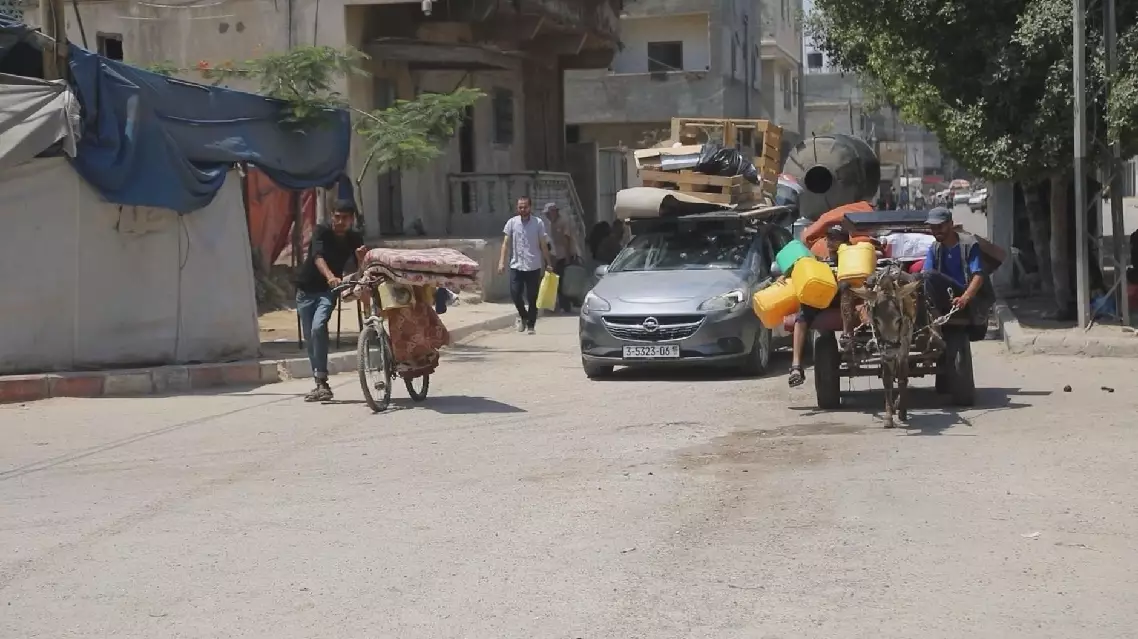
Israeli assault forces new mass displacement in central Gaza city
Israeli assault forces new mass displacement in central Gaza city
Israeli assault forces new mass displacement in central Gaza city
Israeli assault forces new mass displacement in central Gaza city
The day before, the Israeli military reportedly ordered Palestinians to evacuate an area of nearly six square kilometers, dropping thousands of leaflets in the city. An Israel Defense Forces (IDF) spokesperson said the military "continues to operate with great force to destroy the enemy's capabilities and terrorist infrastructure in the area."
An estimated 50,000 to 80,000 people Palestinians were in Deir al-Balah when the Israeli evacuation order was issued, according to the United Nations Office for the Coordination of Humanitarian Affairs (OCHA).
The latest displacement has unfolded amid a widespread hunger crisis, which "has reached new and astonishing levels of desperation," the UN World Food Programme (WFP) warned in a statement on Monday.
Against a background of sporadic explosions and artillery fire, many fled the city on Monday carrying whatever belongings they had. Some left by car, some used donkey carts, and some simply walked, with the elderly and children in tow.
Speaking with China Global Television Network (CGTN), several fleeing Palestinians condemned the repeated Israeli evacuation orders that have deprived them of a normal sense of life.
"This is our 10th displacement, from Khan Younis to Rafah, from Rafah to the European Hospital, then here, and now from here to the coastal area. It's enough. Enough! We want to live in peace; we don't want wars, because they have only brought us destruction," said Abu Al-Sayyed, a displaced Palestinian man.
"I still don't know where I will go. Every time, displacement happens again, and we can't find water or toilets. It's extremely difficult. And aside from the war itself, we are also facing a war for food," lamented a Palestinian man named Ahmad Al-Haw.
Israel has so far restricted Palestinians' access to 70 percent of Gaza, either by declaring large areas as no-go zones or issuing forced displacement orders.
The newly designated area for evacuation includes several humanitarian warehouses, medical facilities and critical water facilities, according to OCHA, which warned that any damage to this infrastructure "will have life-threatening consequences."
With this latest order, the area of Gaza under displacement orders or within Israeli-militarized zones has risen to nearly 88 percent, leaving 2.1 million civilians - almost the entire Gazan population - squeezed into a fragmented 12 percent of the strip, where "essential services have collapsed," OCHA added.
"We fled at midnight and have been on the streets since. We have no money, and we left our belongings behind. This is the fourth time we're being displaced. They claim there are safe areas, but that's not true. They're bombing everywhere," Abdullah Rafee, an elderly Palestinian, told CGTN.
Monday's offensive comes a day after the Israeli gunfire inflicted what was believed to be the highest death toll of Palestinian aid seekers in a single day since October 2023, with 94 killed at multiple humanitarian aid distribution sites in Gaza, the local health authorities said late on Sunday.
Israeli assault forces new mass displacement in central Gaza city
Israeli assault forces new mass displacement in central Gaza city
Israeli assault forces new mass displacement in central Gaza city
Israeli assault forces new mass displacement in central Gaza city
Israeli assault forces new mass displacement in central Gaza city
Israeli assault forces new mass displacement in central Gaza city
Israeli assault forces new mass displacement in central Gaza city
Israeli assault forces new mass displacement in central Gaza city
Israeli assault forces new mass displacement in central Gaza city
Israeli assault forces new mass displacement in central Gaza city