JUNEAU, Alaska (AP) — A small plane that crashed in 2023 while carrying moose meat for hunters in remote western Alaska, killing the husband of former U.S. Rep. Mary Peltola, was overweight for takeoff and encountered drag from a set of antlers mounted outside, federal investigators said in a report released Tuesday.
The National Transportation Safety Board, in its final report on the crash that killed Eugene Peltola Jr., who was the only person on board the aircraft, listed several factors among its probable cause findings. They included decisions by Peltola to fly the plane above its maximum takeoff weight and affix a set of moose antlers on the right wing strut that caused a drag, along with turbulent flight conditions in the area.
Downdrafts, “along with the overweight airplane and the added drag and lateral weight imbalance caused by the antlers on the right wing, would likely have resulted in the airplane having insufficient power and/or control authority to maneuver above terrain,” the report states.
The Piper PA-18-150 Super Cub crashed Sept. 12, 2023, northeast of the small western Alaska community of St. Mary’s. Peltola had days earlier taken five hunters, a guide and equipment from the community of Holy Cross to an airstrip at St. Mary's. The group set up camp next to the runway, which was near hilly terrain and about 70 miles (113 kilometers) northwest of Holy Cross, the agency said.
The day before the crash, the group got a moose and made plans with Peltola, via satellite messaging devices, for him to transport the meat, the NTSB said. On the day of the crash, Peltola had already picked up a load of meat and had returned for another. He did not use scales to weigh the cargo, the agency said.
Two hunters were at the site when the crash occurred and provided aid to Peltola, the agency previously reported. Peltola died of his injuries within about two hours, the agency said.
“Given the remote location of the accident site, which was about 400 miles from a hospital, and accessible only by air, providing the pilot with prompt medical treatment following the accident was not possible,” Tuesday's report states.
The agency said carrying antlers on the outside of a plane is a common practice in Alaska but requires formal approval from the Federal Aviation Administration, with a notation in the plane's logbooks. “There was no evidence that such approval had been granted for the accident airplane,” the report states.
Peltola was a former Alaska regional director for the Bureau of Indian Affairs and worked for decades for the U.S. Fish and Wildlife Service. He had received his commercial pilot’s license in 2004, requiring him to use corrective lenses at all distances, according to an FAA database.
His death came almost exactly a year after Mary Peltola was sworn in as Alaska’s lone U.S. House member, following a special election for the seat. Mary Peltola, who is Yup’ik, was the first Alaska Native in Congress.
She won a full, two-year term in November 2022 but lost her reelection bid last November. She has kept a relatively low public profile since then.
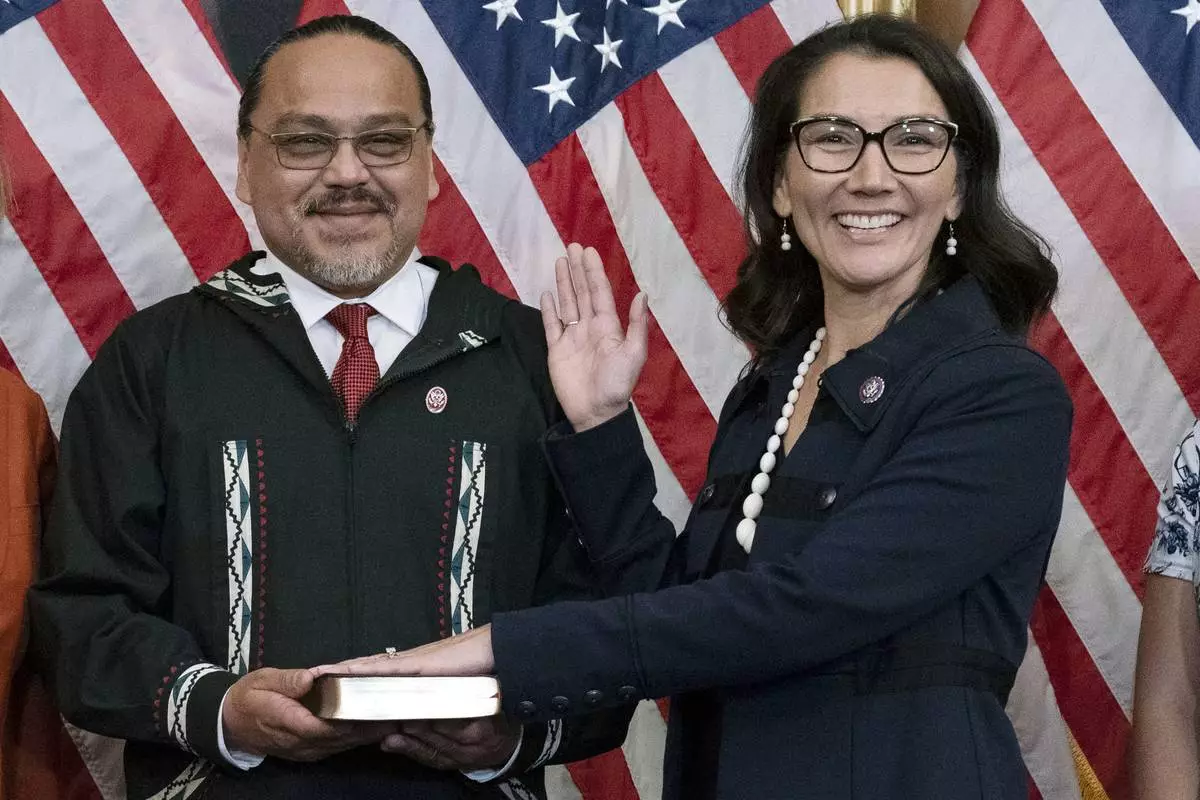
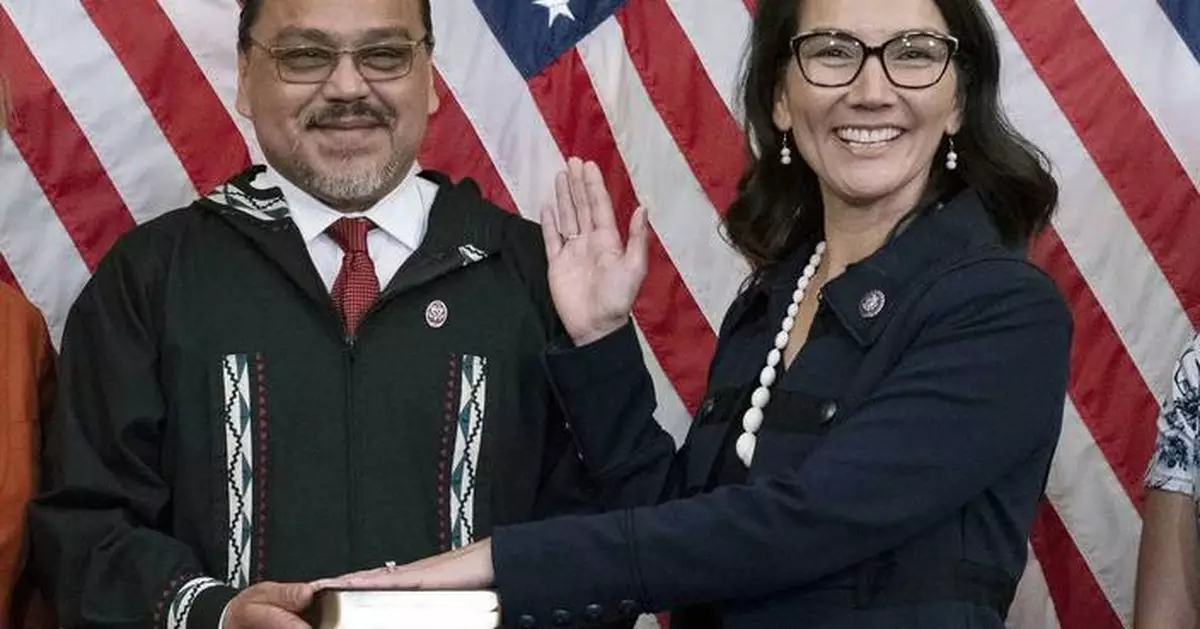
FILE - Eugene "Buzzy" Peltola Jr. holds the Bible during a ceremonial swearing-in for his wife, Rep. Mary Peltola, D-Alaska, on Capitol Hill in Washington, Sept. 13, 2022. (AP Photo/Jose Luis Magana, File)
PITTSBURGH (AP) — Lamar Jackson thought it was over. That the Baltimore Ravens' unwieldy season would end up in a familiar spot: the playoffs.
Then, rookie kicker Tyler Loop's potential game-winning field goal from 44 yards out drifted a little right. And then a little further right. And then a little further right still.
By the time it fluttered well wide of the goalposts, the playoffs were gone. So was Jackson's certainty after a 26-24 loss to Pittsburgh on Sunday night sent the Ravens into what could be a turbulent offseason.
“I'm definitely stunned, man,” Jackson said. “I thought we had it in the bag. ... I don't know what else we can do.”
Jackson, who never really seemed fully healthy during his eighth season as he battled one thing after another, did his part. The two-time NFL MVP passed for 238 yards and three touchdowns, including two long connections with Zay Flowers in the fourth quarter that put the Ravens (8-9) in front.
It just wasn't enough. Baltimore's defense, which played most of the second half without star safety Kyle Hamilton after Hamilton entered the concussion protocol, wilted against 42-year-old Steelers quarterback Aaron Rodgers.
Rodgers passed for a season-high 294 yards, including a 26-yard flip to a wide-open Calvin Austin with 55 seconds to go after a defender slipped, symbolic of a season in which Baltimore's defense only occasionally found its form.
Still, the Ravens had a chance when Jackson found Isaiah Likely for a 28-yard gain on fourth down from midfield. A couple of snaps later, the 24-year-old Loop walked on to try to lift Baltimore to its third straight division title.
Instead, the rookie said he “mishit” it. Whatever it was, it never threatened to sneak between the goalposts.
“It’s disappointing,” Loop said.
Loop was talking about the game. He might as well have been talking about his team's season.
The Ravens began 1-5 as Jackson dealt with injuries and the defense struggled to get stops. Baltimore found a way to briefly tie the Steelers for first in late November, only to then split its next four games, including a home loss to Pittsburgh.
Still, when Jackson and the Ravens walked onto the Acrisure Stadium turf on Sunday night in the 272nd and final game of the NFL regular season, Baltimore was confident. The Ravens drilled Pittsburgh in the opening round of the playoffs a year ago behind the ever-churning legs of running back Derrick Henry.
When Henry ripped off a gain of 40-plus yards on the game's first offensive snap, it looked like it was going to be more of the same. While Henry did rush for 126 yards and joined Hall of Famer Barry Sanders as the only running backs in NFL history to have five 1,500-yard seasons, he was less effective in the second half.
Even that first run was telling of what night it was going to be, as an illegal block by wide receiver Zay Flowers cost Baltimore some field position. The Ravens ended up scoring on the drive anyway, thanks to a 38-yard fourth-down flip from Jackson to a wide-open Devontez Walker, but it started a pattern that was hard to shake as several steps forward were met with one step back on a night the Ravens finished with nine penalties for 78 yards.
“We were having a lot of penalties, which kept stopping drives," Jackson said. “But I'm proud of my guys because we kept overcoming. We kept overcoming adversity and situations like this. Divisional games (can) be like that sometimes.”
Particularly when the Steelers are on the other side of the line of scrimmage. Pittsburgh has won 10 of the last 13 meetings. And while a handful of them have been in late-season matchups with the Ravens already assured of reaching the playoffs, the reality is the Steelers have been able to regularly do something that most others have not: found a way to beat Jackson.
“It comes down to situations like this,” Jackson said. “Two-point conversion one year. Field goal another year. And again this year. Just got to find a way to get that win here.”
And figure out who is going to be around to help get it.
Head coach John Harbaugh's 18th season in Baltimore ended with the Ravens missing the playoffs for just the second time in eight years. Jackson turns 29 this week and is still one of the most electric players in the league.
Yet Harbaugh and Jackson have yet to find a way to have that breakthrough season that Harbaugh enjoyed with Joe Flacco in 2013 when the Ravens won the Super Bowl.
There was hope when the season began that the roadblocks that have long been in the franchise's way — Kansas City and Patrick Mahomes chief among them — would be gone.
While the Ravens did get their way in a sense — the Chiefs will watch the playoffs from afar for the first time in a decade after a nightmarish season of their own — it never all came together.
Jackson declined to endorse Harbaugh returning for a 19th season, saying the loss was still too fresh to zoom out on what it might mean for the franchise going forward.
Harbaugh, for his part, certainly seems up for running it back in the fall.
“I love these guys,” he said afterward. “I love these guys.”
AP NFL: https://apnews.com/hub/nfl
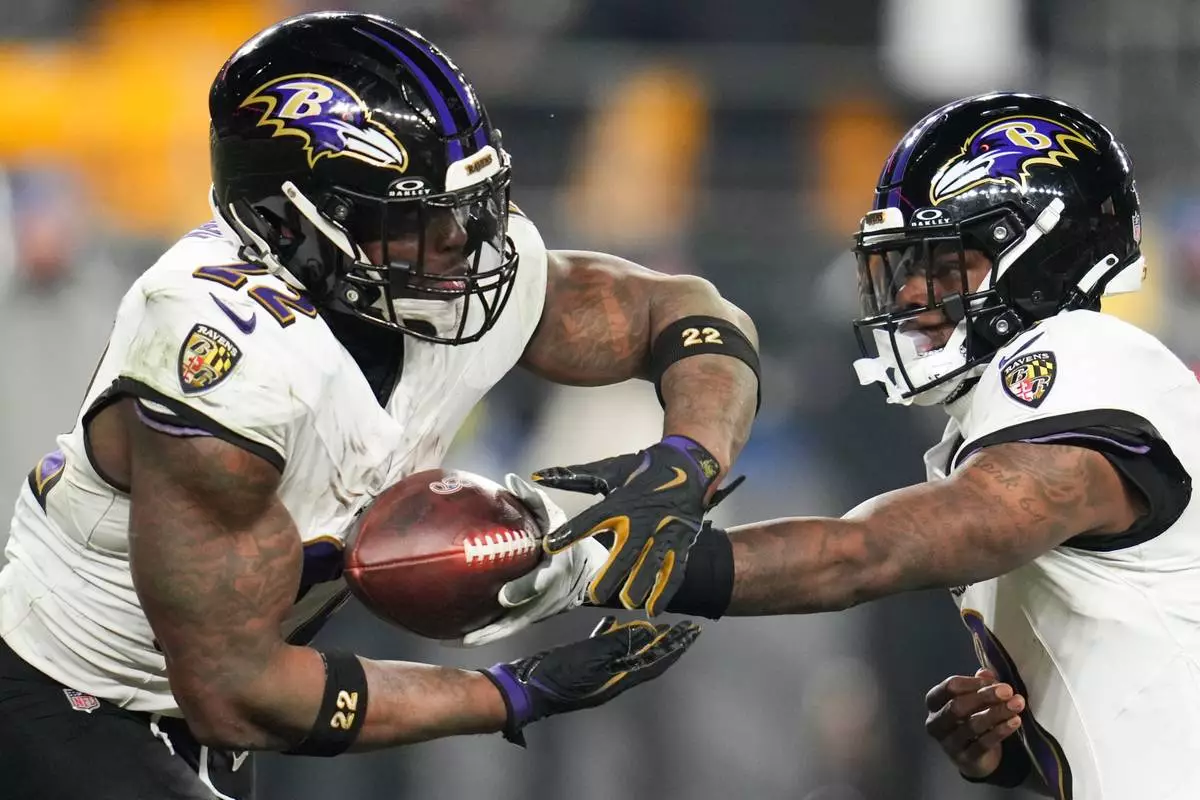
Baltimore Ravens quarterback Lamar Jackson, right, hands the ball off to running back Derrick Henry (22) during the first half of an NFL football game against the Pittsburgh Steelers, Sunday, Jan. 4, 2026, in Pittsburgh. (AP Photo/Gene J. Puskar)
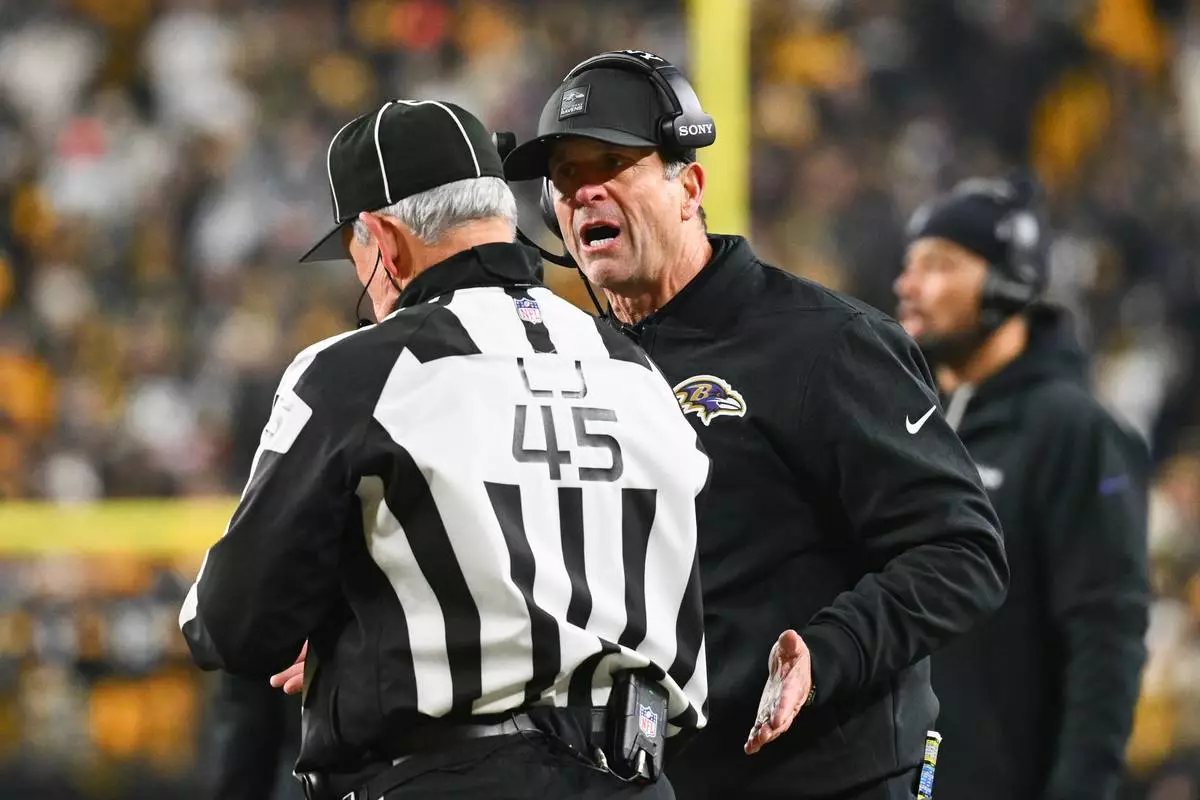
Baltimore Ravens head coach John Harbaugh talks with an offical during the second half of an NFL football game against the Pittsburgh Steelers, Sunday, Jan. 4, 2026, in Pittsburgh. (AP Photo/Justin Berl)
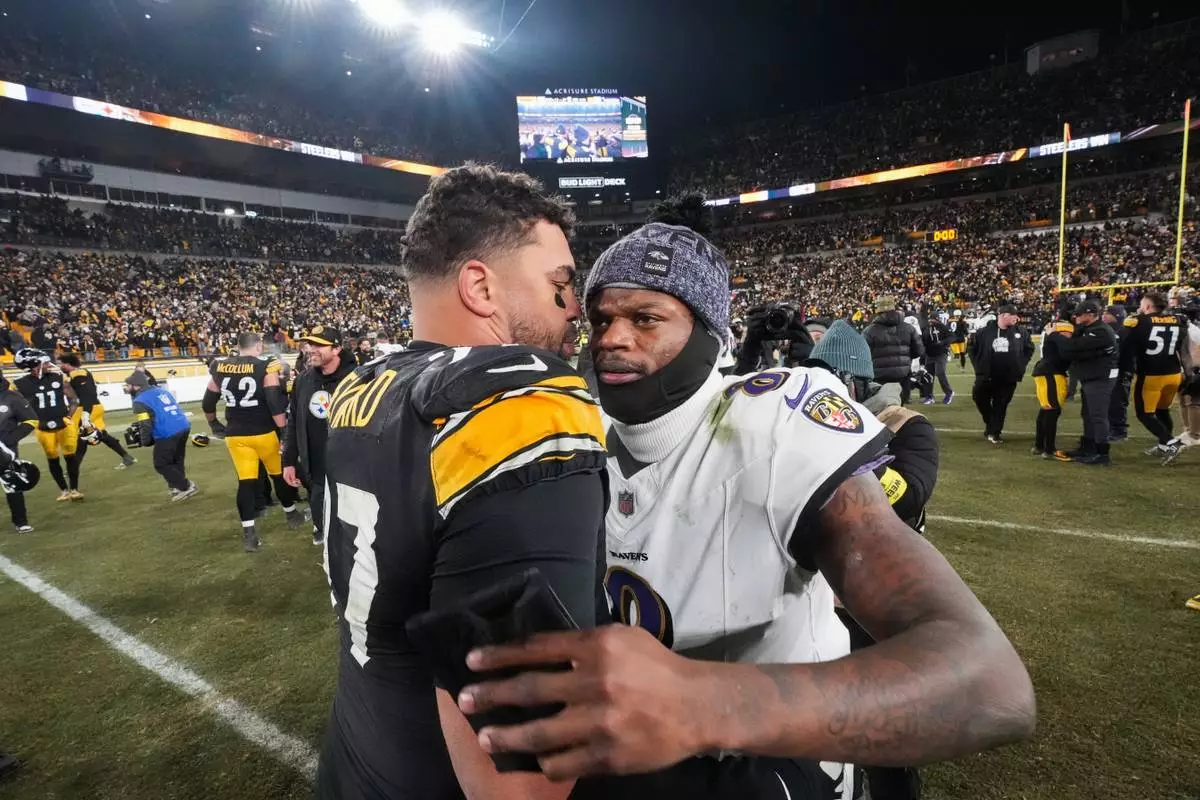
Pittsburgh Steelers defensive tackle Cameron Heyward, left, greets Baltimore Ravens quarterback Lamar Jackson (8) after an NFL football game Sunday, Jan. 4, 2026, in Pittsburgh. (AP Photo/Gene J. Puskar)
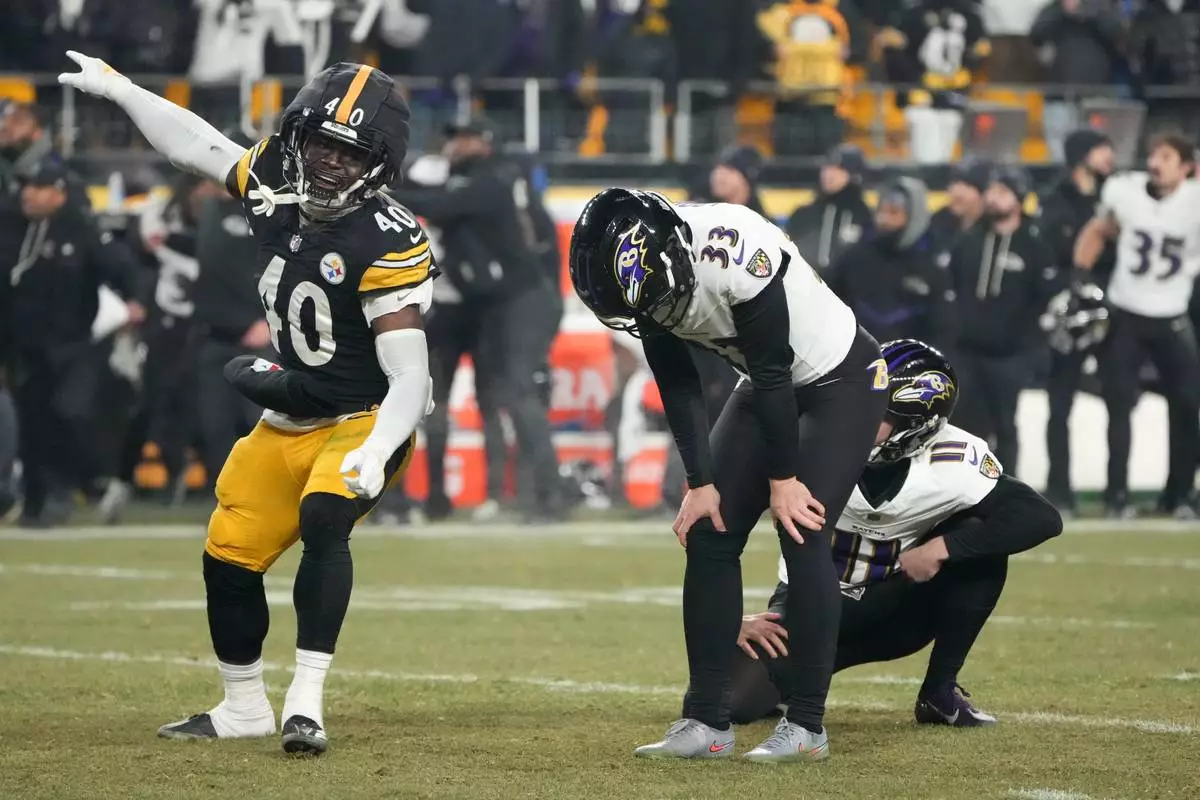
Pittsburgh Steelers safety Jabrill Peppers (40) reacts after Baltimore Ravens kicker Tyler Loop (33) missed a field goal attempt in the second half of an NFL football game against the Pittsburgh Steelers, Sunday, Jan. 4, 2026, in Pittsburgh. (AP Photo/Gene J. Puskar)