Skip to Content Facebook Feature Image

Oroqen elder keeps Inner Mongolia's minority traditions alive through folk songs

China

China

China

Oroqen elder keeps Inner Mongolia's minority traditions alive through folk songs

2025-07-23 05:41 Last Updated At:06:17

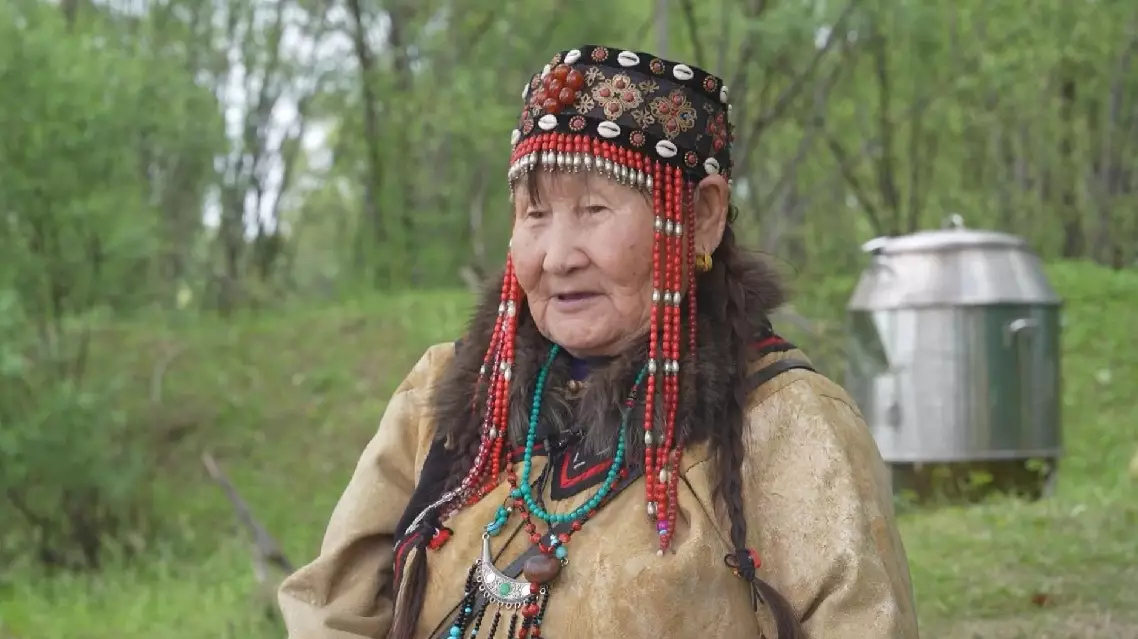
81-year-old Oroqen elder Nei Shumei is preserving her community's rich cultural heritage and inspiring younger generations by singing traditional Zandaren folk songs, showcasing how art beautifully connects the past to the future.

Living in north China's Inner Mongolia Autonomous Region, she belongs to one of the smallest ethnic groups in China, with a population of less than 10,000. Nei's heartfelt performances have brought attention to the traditional Oroqen music form, Zandaren.

Last year, a short video of Nei singing went viral. Her pure and clear singing touched many viewers. Because of her, many people learned about the Oroqen and grew fond of Zandaren music.

"Zandaren is inherited from the elders in our primeval forest and is unforgettable. When we're happy, we sing about whatever we see, especially when good friends come to visit," said Nei.

The Oroqen have no written language, relying solely on oral traditions. Historically, all skills and stories were transmitted this way, leading to a limited understanding of Oroqen culture.

In recent years, Oroqen culture and various intangible cultural heritage skills have gained recognition. Nei hopes to use her singing to help more people understand Zandaren.

The video of Nei gained attention on a social media account dedicated to Oroqen culture, run by Beijing director Li Jingyang. He was drawn to the area while filming a documentary ten years ago and decided to stay to document the traditional skills at risk of being lost.

"I realized that an elderly person is like a living museum. Every day, I feel like I'm racing against time, and that might be why I decided to stay here from Beijing," said Li.

In 2022, during his research on Zandaren, Li met Nei, and the first video he filmed became a hit.

"They enjoy listening to my voice, saying it's beautiful and youthful, and that I sing really well," said Nei.

Summer is the busy season for tourism in the Oroqen region, with many visitors coming specifically to see Nei. Nei's schedule is full, but she loves it and eagerly looks forward to singing for everyone each day.

"In the past, she didn't like going out. Now, she eagerly asks about events, saying she wants to participate. 'If there's an event, call me! As long as I can move, I'll sing as much as I can. The kids love it, so I'll sing for them.' She hopes that through her efforts, she can foster better conditions and opportunities for her hometown and the younger generation in our region," said Li.

"The legacy will be passed down forever, a variety of traditions that we can't forget. It's important to pass this on to the next generation so they remember the heritage of Zandaren," said Nei.
Oroqen elder keeps Inner Mongolia's minority traditions alive through folk songs


Oroqen elder keeps Inner Mongolia's minority traditions alive through folk songs

Years of war in South Sudan have left the East African country littered with landmines that may take more years to remove.

South Sudan had hoped to clear all anti-personnel minefields and cluster munitions in the country by this year.

However, the government says efforts are complicated by a lack of funding, continued insecurity and flooding in the country.

The United Nations says more than 5,000 South Sudanese have been killed or injured by landmines and unexploded ordnance since South Sudan's independence 15 years ago.

"In our country mine action is not only for clearing land but also for protecting civilians, supporting peacekeeping mobility, enabling humanitarian operations and creating safe conditions for returns, recovery and socio-economic growth," said Jurkuch Barach Jurkuch, chairperson of the South Sudan National Mine Action Authority.

South Sudan has fertile land that could be crucial to achieving the government's goal of national food self-sufficiency.

However, for far too long, landmines and other unexploded munitions have severely hindered farming activities.

"We are implementing critical interventions including survey, clearance, [safe destruction of explosive ordnance] and explosive ordnance risk education," said Albino Akol Atak, South Sudan's Minister of Humanitarian Affairs.

The government says the risk education initiatives equip farmers and community members with the knowledge and skills to identify potential threats and adopt safe practices.

The United Nations Mine Action Service in South Sudan says it has now destroyed more than one million explosive devices and 4.2 million bullets.

Families torn apart by landmines can be found all over South Sudan. The UN says the threat from the remnants of the country's long civil war is still huge.

"People living in these areas, even there is no accident, nothing happens, it doesn't mean that the hazard is out, so anything they see, anything they get, they still need to report it through the normal reporting system, informing the government," said Clement Aswali, a United Nations Mine Action Operations specialist.

South Sudan's government says most of the country's landmines are left over from the 21-year war between the then northern and Southern Sudanese people which ended in 2005. However, another war between 2013 and 2018 also left behind dangerous explosives.

South Sudan struggles to clear mines left by civil war

South Sudan struggles to clear mines left by civil war

Recommended Articles