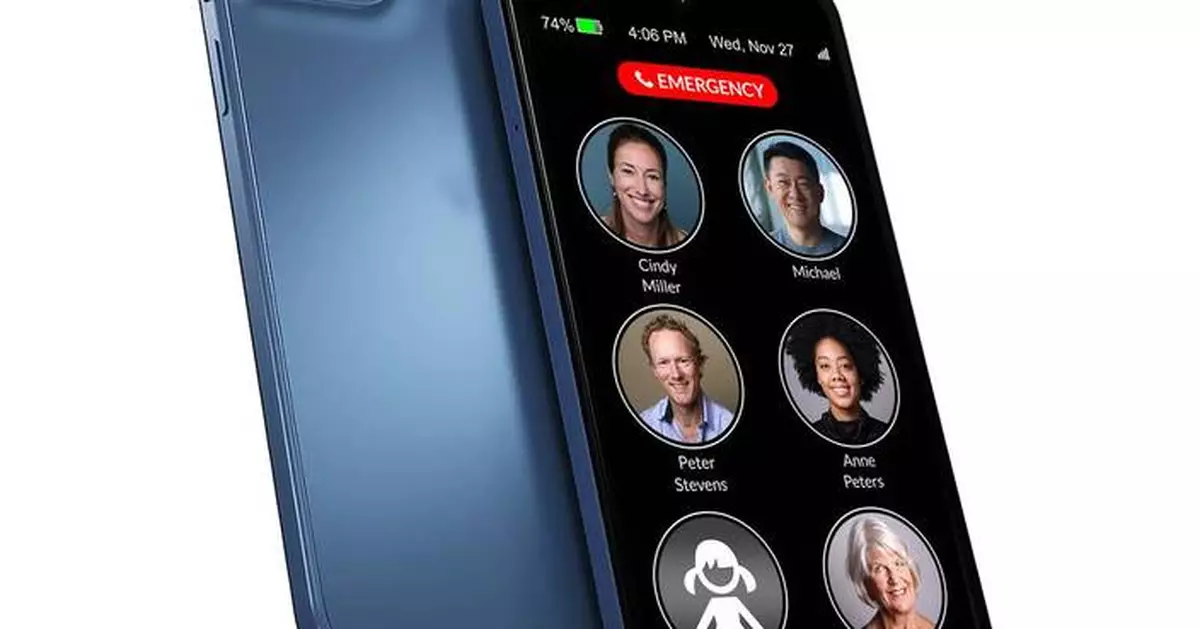
Skip to Content Facebook Feature Image

Verizon Starts Selling the RAZ Memory Cell Phone to Help Seniors and Caregivers

News

Verizon Starts Selling the RAZ Memory Cell Phone to Help Seniors and Caregivers
News

News

Verizon Starts Selling the RAZ Memory Cell Phone to Help Seniors and Caregivers

2025-07-23 19:33 Last Updated At:19:50

CABIN JOHN, Md.--(BUSINESS WIRE)--Jul 23, 2025--

RAZ Mobility ( www.razmobility.com ) is pleased to announce that its award-winning RAZ Memory Cell Phone is now also sold by Verizon, one of the world’s leading wireless providers. Verizon sells the Phone as an unlocked device on its website ( www.verizon.com/smartphones/raz-memory-cell-phone-unlocked/ ).

This press release features multimedia. View the full release here: https://www.businesswire.com/news/home/20250723747592/en/

The RAZ Memory Cell Phone is designed to help older adults stay connected with family and friends after they have difficulty using standard phones. The Phone is used by older adults experiencing cognitive decline, vision loss, hand tremors, and those who prefer an easy-to-use experience. It provides an intuitive experience for older adults and allows caregivers to manage the phone’s contacts, settings, and other features, from anywhere in the world through the RAZ Care mobile app, which caregivers install onto their smartphone.

Robert Felgar, the CEO of RAZ Mobility, explained that “the RAZ Memory Cell Phone offers many unique features that help older adults and their caregivers. A few of those features include loneliness alerts, charging reminders, and the ability to limit incoming calls to contacts to prevent phone fraud. We look forward to bringing these, and many other capabilities, to Verizon customers.”

The hardware used for the RAZ Memory Cell Phone is supplied by Motorola Mobility, which has been a valued partner to RAZ Mobility in the development of this important device.

Rick Robinson, VP and GM at the AgeTech Collaborative™ from AARP, added that “both RAZ Mobility and Verizon are participants in the AgeTech Collaborative™ from AARP ecosystem. We are gratified to see that their participation led to innovation and collaboration that benefits older adults.”

About RAZ Mobility

RAZ Mobility’s signature product is the RAZ Memory Cell Phone, which won the GLOMO Award in the Tech4Good – Best Use of Mobile for Accessibility and Inclusion category at the Mobile World Congress in Barcelona in 2025. The RAZ Memory Cell Phone is designed to help individuals with dementia, mild cognitive impairment, vision loss, hand tremors, and seniors who prefer simplicity. The unique phone makes it very easy for seniors and allows caregivers to control the phone from anywhere in the world through its remote manage feature and the RAZ Care app. For more information about the RAZ Memory Cell Phone and features, visit https://www.razmobility.com/solutions/memory- cellphone/.
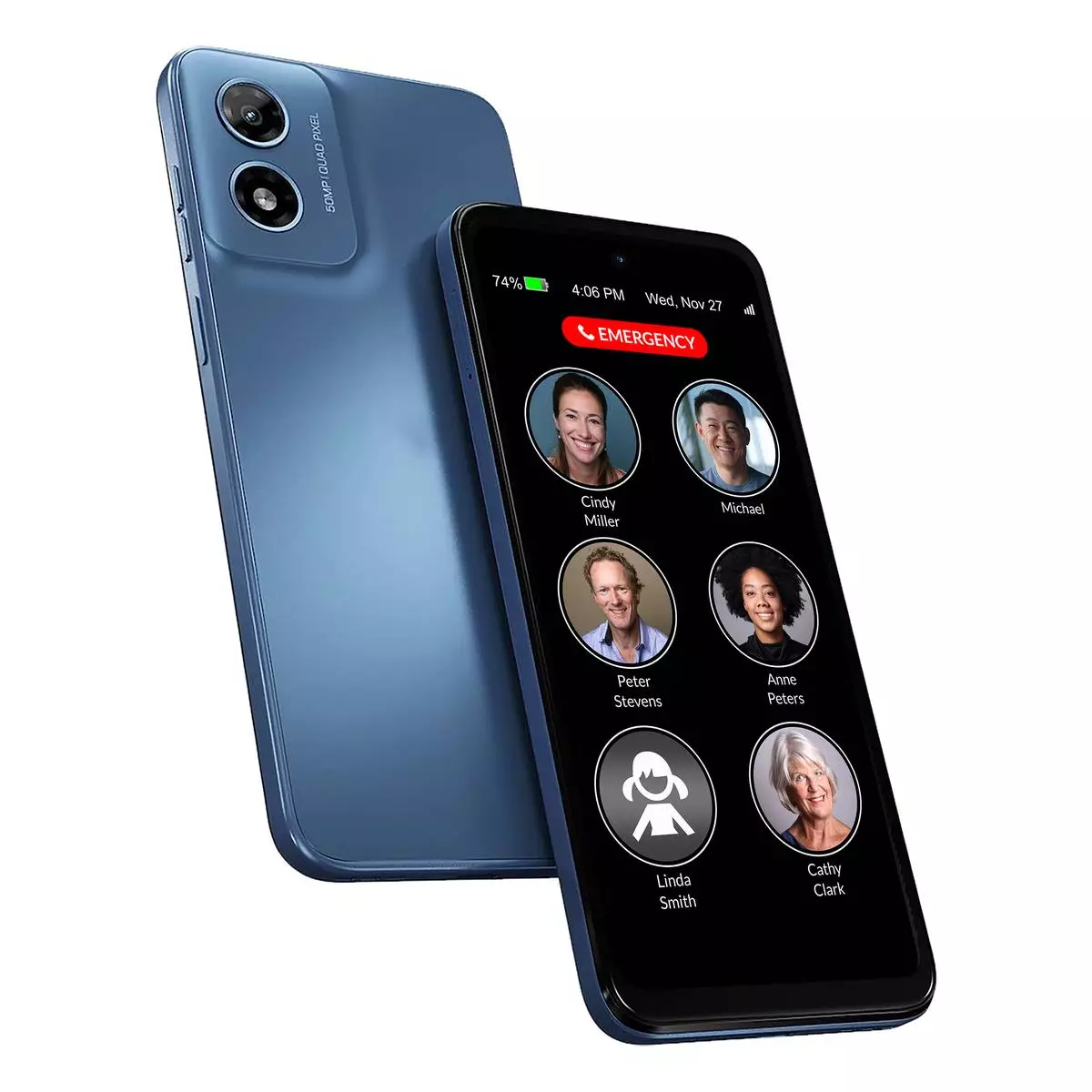
The RAZ Memory Cell Phone is a groundbreaking cell phone for seniors with dementia, cognitive decline, vision loss, or seniors who prefer an easy-to-use experience.
The RAZ Memory Cell Phone is a groundbreaking cell phone for seniors with dementia, cognitive decline, vision loss, or seniors who prefer an easy-to-use experience.

CAPE CANAVERAL, Fla. (AP) — NASA fueled its moon rocket Wednesday for humanity’s first lunar trip in more than half a century, aiming for an evening liftoff with four astronauts.

Tensions were high as hydrogen fuel started flowing into the rocket hours ahead of the planned launch. Dangerous hydrogen leaks erupted during a countdown test earlier this year, forcing a lengthy flight delay.

But no significant leaks occurred by the time Wednesday's fueling wrapped up. The launch team loaded more than 700,000 gallons of fuel (2.6 million liters) into the 32-story Space Launch System rocket on the pad, setting the stage for the Artemis II crew to board.

“It is time to fly,” commander Reid Wiseman said on the eve of launch via X. Favorable weather was forecast.

Three Americans and one Canadian will fly around the moon without stopping or even orbiting — then head straight back for a Pacific splashdown. They will set a new distance record for the farthest humans have traveled from Earth as they zoom some 4,000 miles (6,400 kilometers) beyond the moon and then hang a U-turn.

Astronauts last flew to the moon during Apollo 17 in 1972.

Artemis II is the opening shot of NASA's grand plans for a permanent moon base. The space program is aiming for a moon landing near the lunar south pole in 2028.

“The next era of exploration begins,” NASA Administrator Jared Isaacman posted on X.

Best wishes already have started to pour in, including from England's King Charles III to Canadian Space Agency astronaut Jeremy Hansen.

Hansen will become the first non-U. S. citizen to launch to the moon. The crew also includes Christina Koch and Victor Glover, the first woman and first Black astronaut, respectively, destined for the moon.

“In this historic moment, you stand as a bridge between nations and generations,” the king wrote in a letter to Hansen, “and I commend you for your courage, discipline and vision that have brought you to this threshold.”

The Associated Press Health and Science Department receives support from the Howard Hughes Medical Institute’s Department of Science Education and the Robert Wood Johnson Foundation. The AP is solely responsible for all content.

NASA's Artermis II moon rocket sits on Launch Pad 39-B at the Kennedy Space Center hours ahead of a planned launch attempt Wednesday, April 1, 2026, in Cape Canaveral, Fla. (AP Photo/Chris O'Meara)

NASA's Artermis II moon rocket sits on Launch Pad 39-B at the Kennedy Space Center hours ahead of a planned launch attempt Wednesday, April 1, 2026, in Cape Canaveral, Fla. (AP Photo/Chris O'Meara)

This photo provided by NASA shows NASA astronauts Reid Wiseman, Artemis II commander, from left, Victor Glover, Artemis II pilot, Christina Koch, Artemis II mission specialist, and CSA (Canadian Space Agency) astronaut Jeremy Hansen, Artemis II mission specialist, right, in a group photograph as they visit NASA's Artemis II SLS (Space Launch System) rocket and Orion spacecraft, Monday, March 30, 2026, at Launch Complex 39B of NASA's Kennedy Space Center, in Cape Canaveral, Fla. (Bill Ingalls/NASA via AP)

This photo provided by NASA shows NASA astronauts Reid Wiseman, Artemis II commander, from left, Victor Glover, Artemis II pilot, Christina Koch, Artemis II mission specialist, and CSA (Canadian Space Agency) astronaut Jeremy Hansen, Artemis II mission specialist, right, in a group photograph as they visit NASA's Artemis II SLS (Space Launch System) rocket and Orion spacecraft, Monday, March 30, 2026, at Launch Complex 39B of NASA's Kennedy Space Center, in Cape Canaveral, Fla. (Bill Ingalls/NASA via AP)

NASA's Artermis II moon rocket sits on Launch Pad 39-B at the Kennedy Space Center hours ahead of planned liftoff Wednesday, April 1, 2026, in Cape Canaveral, Fla. (AP Photo/Chris O'Meara)

NASA's Artermis II moon rocket sits on Launch Pad 39-B at the Kennedy Space Center hours ahead of planned liftoff Wednesday, April 1, 2026, in Cape Canaveral, Fla. (AP Photo/Chris O'Meara)

Recommended Articles