COLOMBO, Sri Lanka (AP) — The remains of four Italian divers who died deep inside an underwater cave earlier this month while diving in the Maldives were repatriated early Saturday, a Maldivian government spokesperson said.
The four coffins arrived at Milan’s Malpensa Airport in the middle of the day. The bodies were taken to a morgue and autopsies were due to begin on Monday, according to Italian news agency LaPresse.
Five Italian divers went missing on May 14 while exploring the cave about 50 meters (160 feet) in Vaavu Atoll. The body of their Italian diving instructor was recovered outside the cave at the time and has already been returned home.
A high-risk operation to recover the bodies faced hurdles and was initially suspended after Mohamed Mahudhee, a Maldivian military diver who was part of the recovery team, was killed. Three Finnish expert deep and cave divers joined the mission and located the four bodies last week in the innermost chamber of the cave at a depth of around 60 meters (200 feet). The recreational diving limit in the Maldives is 30 meters (98 feet).
Maldives President’s Spokesman Mohamed Hussain Shareef said Saturday two investigations were initiated; one into the death of the five divers and the other probing how Mahudhee died while on duty. Shareef also said Italy agreed to share any findings of autopsies on the repatriated bodies.
The victims have been identified as Monica Montefalcone, an associate professor of ecology at the University of Genoa; her daughter, Giorgia Sommacal; marine biologist Federico Gualtieri; researcher Muriel Oddenino; and diving instructor Gianluca Benedetti.
Government spokesperson Ahmed Shaam said earlier the four bodies were found “pretty much together.”
While the divers had a permit, authorities didn’t know from their proposal the exact location of the cave they were exploring, and at least two of the dead were not on the list of researchers that had been submitted, according to Maldivian authorities.
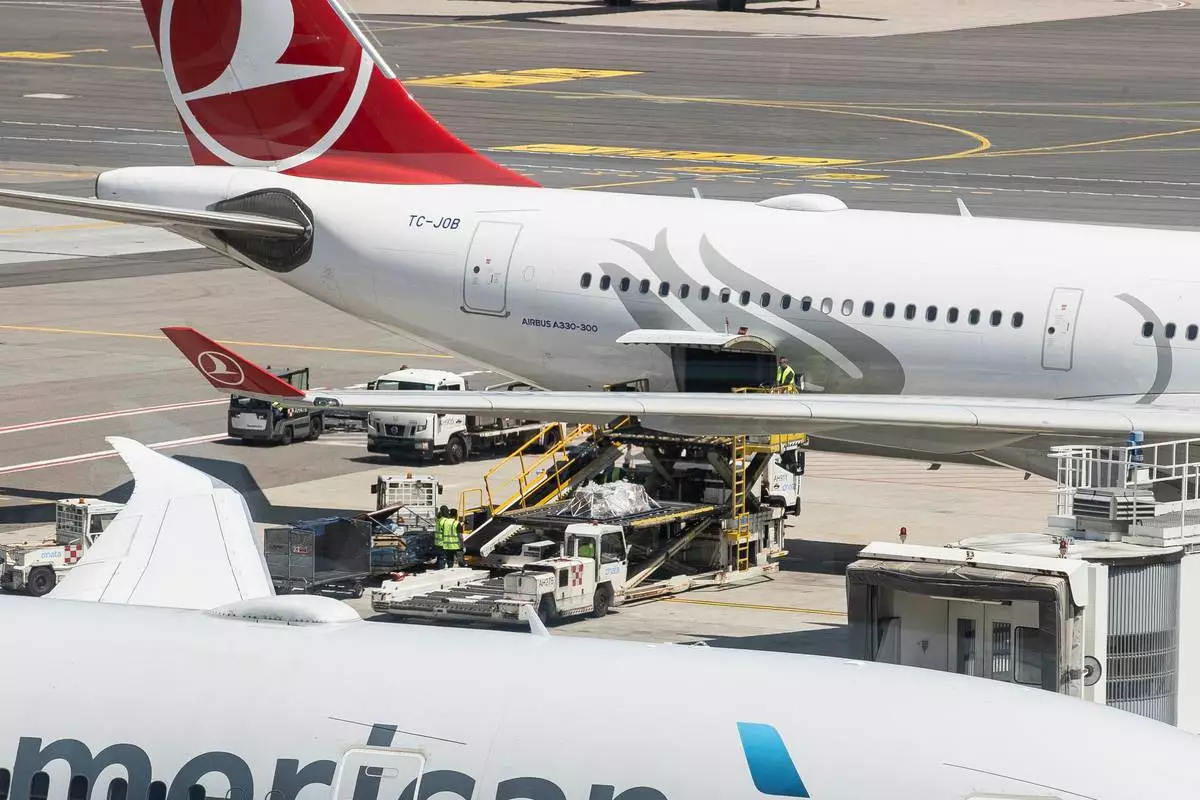
Coffins carrying the bodies of the divers who died in the Maldives are unloaded from a plane at Milan's Malpensa airport, Italy, Saturday, May 23, 2026. (Marco Ottico/LaPresse via AP)
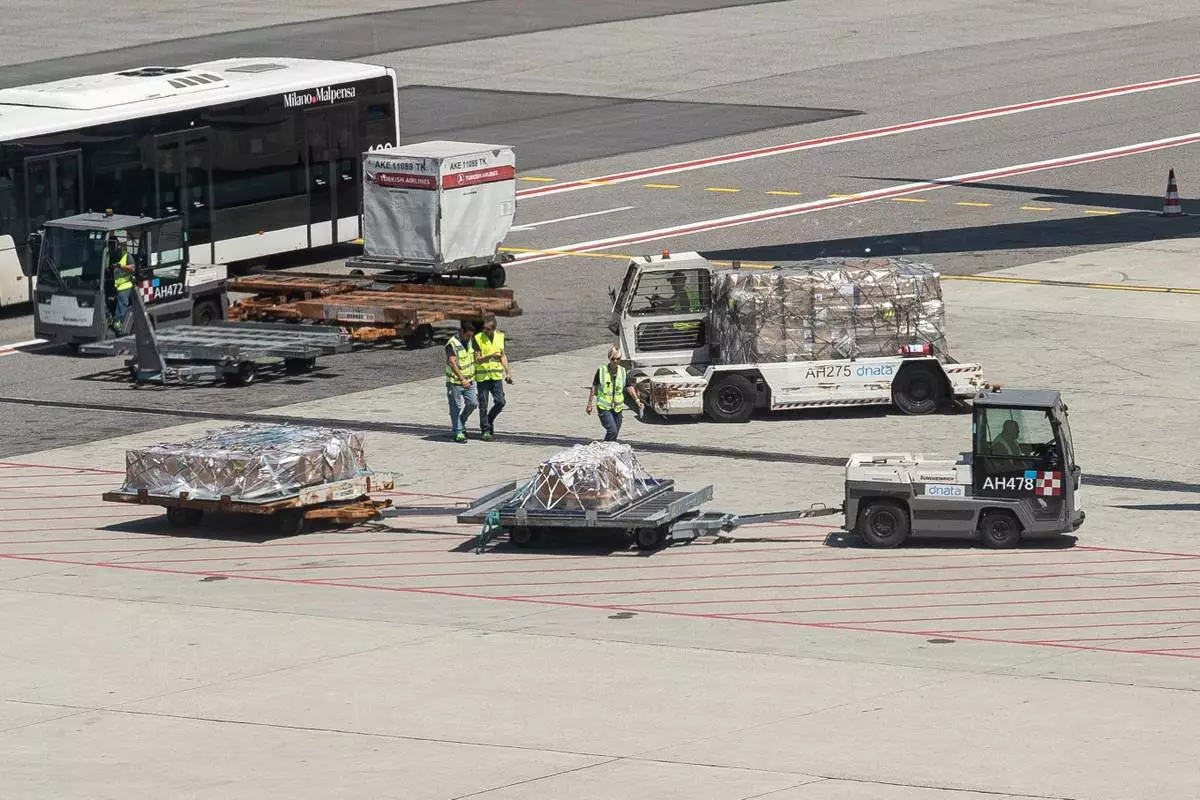
Coffins carrying the bodies of the divers who died in the Maldives arrive at Milan's Malpensa airport, Italy, Saturday, May 23, 2026. (Marco Ottico/LaPresse via AP)
JOHANNESBURG (AP) — When South African infectious disease specialist Lucille Blumberg checked her email on the morning of May 1, while the country was celebrating the Labor Day holiday, an urgent message caught her attention.
A U.K.-based colleague had written about a passenger from a cruise ship sailing thousands of miles away in the Atlantic Ocean who had been evacuated and admitted to a Johannesburg hospital with suspected pneumonia. Others aboard the vessel were also sick.
The colleague, who monitors diseases in remote British overseas territories in the South Atlantic Ocean, asked Blumberg to follow up on the passenger, who had been evacuated from the ship in one of the territories, Ascension Island.
Blumberg and other experts at South Africa’s National Institute for Communicable Diseases were suddenly thrown into the race to identify the cause of an outbreak aboard the Dutch cruise ship MV Hondius.
“Even though it was a public holiday, we moved, we moved really fast," Blumberg told The Associated Press. "It was busy. There were many conversations. There were online discussions, and there was laboratory testing happening at the time.”
Within 24 hours, they had determined that the man’s illness was caused by hantavirus, a rare rodent-borne virus. While he is improving, three other passengers have died and others have fallen sick.
The elderly British man had arrived at a private hospital in Johannesburg days earlier and was seriously ill, but health workers weren’t sure of the underlying cause.
By the time he was evacuated from the ship, two elderly Dutch passengers who had been on board the MV Hondius cruise liner had already died, but there had been little alarm. Ascension Island health authorities had reported a cluster of illnesses on the ship that appeared to be pneumonia to the World Health Organization.
At first, Blumberg and her colleagues thought it might be Legionella, a bacterium that causes a serious form of pneumonia, Legionnaires’ disease. Or maybe bird flu.
"I called my infectious disease colleagues, and we had a caucus, and we discussed the usual ones,” Blumberg said. “Legionella is well described in outbreaks in hotels and on cruise ships, and influenza certainly is. These people had visited islands where avian influenza is well documented.”
Tests on all those were negative. The experts also ran an extensive panel of tests for other respiratory diseases. Also, all negative.
The team then began looking more closely at where the ship came from — Argentina — and the fact that passengers on board were avid bird watchers and had reportedly been to parts of South America where there were birds, but also rodents.
That pushed the South African disease experts toward another theory: the rare, rodent-borne hantavirus infection, which is found in parts of South America.
“It’s a well-described, not common, but it’s a well-described virus in Chile and Argentina,” Blumberg said. She added that their work was aided by collaboration with hantavirus experts from South America and the United States, facilitated by the WHO, the U.N. health agency.
“You can get onto a Zoom (call) online and ask your questions and get advice. This is not something every day. So that was quite extraordinary,” Blumberg said.
By then, it was Saturday morning. Blumberg called the head of the only laboratory in South Africa that can test for hantavirus.
“I said, we want to do hanta, and she said, ‘yeah, I’m coming.'”
The tests, carried out on the sick man's blood samples, came back positive for hantavirus that afternoon. The team did a second set of tests to be sure, Blumberg said.
Those positive tests, which also identified the Andes strain of hantavirus, allowed the WHO to inform the cruise ship what it was dealing with and announce an outbreak on board. While hantavirus is not easily spread from person to person, the WHO says the Andes virus can be transmitted between people.
The test results also led Blumberg to rush to collect blood samples from a Dutch woman — one of the first two cruise passengers to die — who had disembarked from the ship with her husband's body on the island of St. Helena and flown to South Africa, where she died.
A posthumous hantavirus test on her was also positive.
“It was a bit of a wow moment,” Blumberg said. “And at least once you know what you’re dealing with, it’s much easier to respond.”
The British man who was the first confirmed case of hantavirus infection from the cruise ship is improving in hospital, South Africa's health ministry has said. Meanwhile, the ship has arrived at the Dutch port of Rotterdam, where it was disinfected, and the remaining crew members disembarked.
“I’ve been doing outbreaks for 25 years. That’s what we do. We do them every day," she said. "I think the important thing was to respond immediately to a question that clearly was urgent and then to take it from there.”
AP coverage of the cruise ship hantavirus outbreak: https://apnews.com/hub/hantavirus
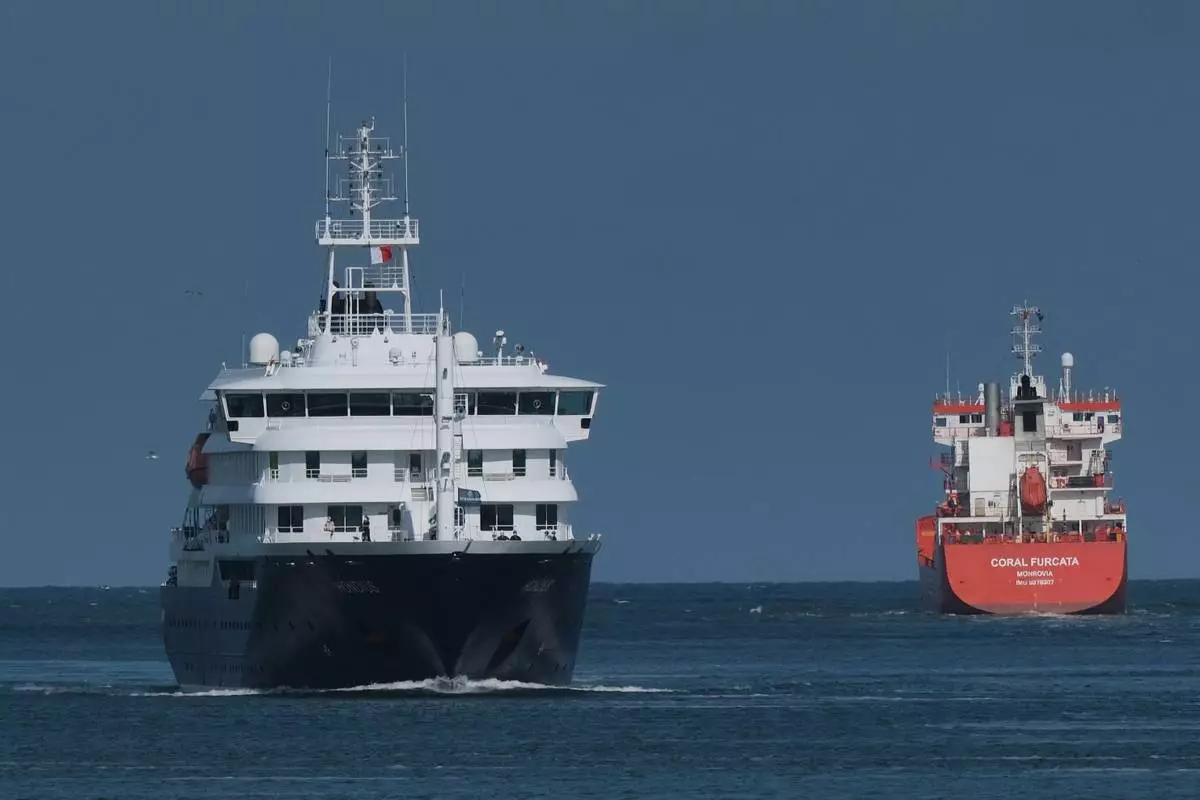
The MV Hondius cruise ship arrives at the Port of Rotterdam, Netherlands, Monday, May 18, 2026. (AP Photo/Patrick Post)
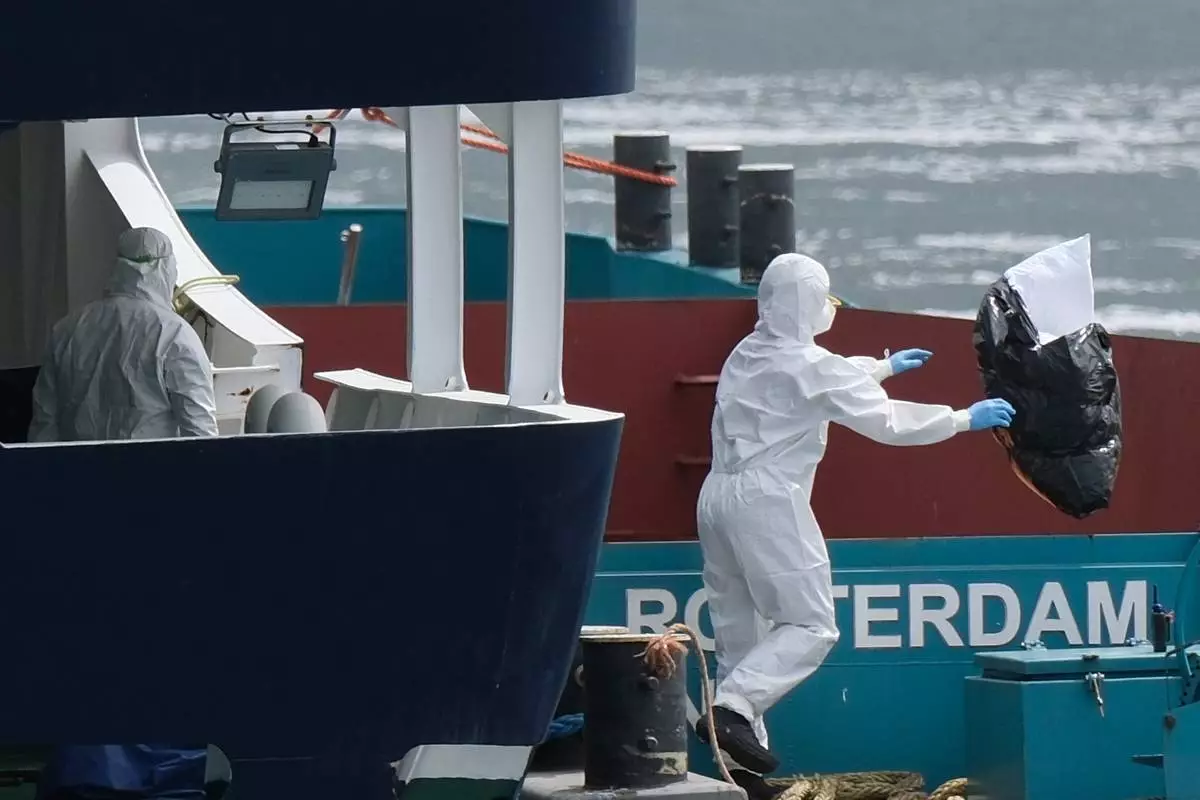
People in protective gear remove waste from the MV Hondius cruise ship after its arrival at the Port of Rotterdam, Netherlands, Monday, May 18, 2026. (AP Photo/Patrick Post)