ARLINGTON, Va. & REYKJAVIK, Iceland--(BUSINESS WIRE)--Jul 23, 2025--
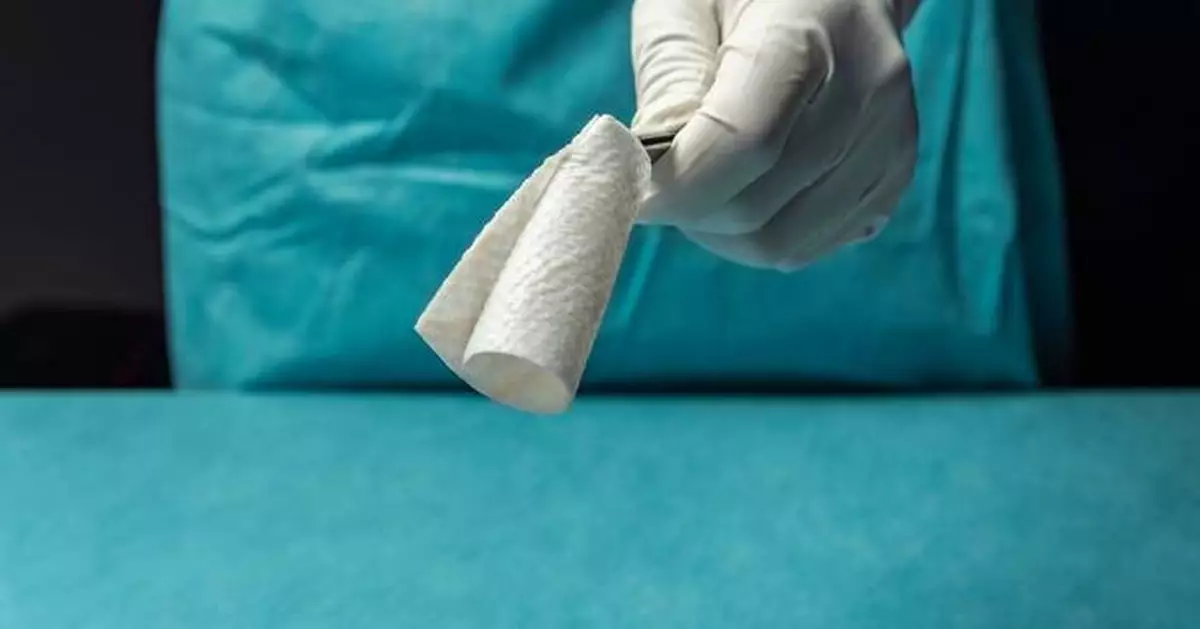
Kerecis, the company pioneering the use of fish-tissue in cellular therapy and tissue regeneration, will debut its latest innovation, SurgiBind® Tendon Protect, at the American Podiatric Medical Association’s (APMA) Annual Scientific Meeting in Grapevine, Texas, July 24-27, 2025. The new biologic graft is designed for tendon procedures where no significant tissue loss is present and will be spotlighted during educational and interactive sessions throughout the conference.
This press release features multimedia. View the full release here: https://www.businesswire.com/news/home/20250723324805/en/
APMA 2025
As part of its presence at APMA 2025, Kerecis will exhibit at Booth #805 and host a clinical education event, “Taste of Iceland,” on Friday, July 25, from 7:00 to 9:00 PM at Mission Plaza, Gaylord Texan Resort. During the session, Dr. James Cottom, DPM, will present “Gliding into Enhanced Tendon Outcomes with Intact Fish Skin,” a talk exploring the clinical use of SurgiBind® Tendon Protect in tendon repair procedures. Attendees will also have the opportunity to learn more about the broader application of intact fish-tissue grafts while sampling traditional Icelandic cuisine.
Designed for Tendon Protection and Surgical Efficiency
Each year, an estimated 500,000 tendon procedures are performed in the United States, many of which aim to preserve or restore movement following tendon injury. SurgiBind® Tendon Protect is intended to be wrapped around a repaired tendon during surgery and is cleared for implantation to reinforce soft tissue where weakness exists.
The product is a solid, intact fish-tissue based graft, sustainably sourced from North Atlantic cod, and is bioresorbable, non-crosslinked, and designed to be sutured and positioned with ease in the surgical field.
“Tendon Protect was developed in response to a need consistently identified by surgeons. Namely, coverage for repaired tendons that is straightforward to use and compatible with surgical workflows,” said Fertram Sigurjonsson, Founder and CEO of Kerecis. “The result is a graft that is structurally sound and easy to handle, offering an alternative to mammalian-derived products.”
Clinical Use
SurgiBind® Tendon Protect is intended for use in ambulatory surgical centers (ASCs) and hospital outpatient departments (HOPDs), providing a physical covering around repaired tendons where there is no significant tissue loss. Its strength and pliability support secure placement and suture fixation and reduces the risk of readmissions or revision procedures related to scarring or adhesion, factors that can increase overall treatment costs and affect reimbursement.
Audit-Ready™
To support providers, Kerecis offers coding and reimbursement guidance through its Audit-Ready™ program, designed to align with U.S. payor requirements, reduce administrative burden, and streamline claims and documentation.
Available Nationwide
SurgiBind® Tendon Protect marks the continued expansion of the Kerecis SurgiBind® portfolio, which now includes options for general surgical, trauma, and tendon-related procedures. The product is currently available across the United States through Kerecis’ direct sales force.
About Kerecis
Kerecis, founded by Fertram Sigurjonsson, develops intact fish tissue derived products for cellular therapy, tissue regeneration, and protection. When grafted onto damaged human tissue or implanted, the patented material supports the body’s own processes to heal and regenerate. Because no disease-transfer risk exists between cold-water fish and humans, Kerecis products are only gently processed and retain their similarity to human tissue. The gentle processing preserves the material’s original three-dimensional structure, maintaining its inherent natural strength, complexity, and molecules (such as fatty acids). Clinical studies show that Kerecis products heal wounds faster than competitors. Kerecis is the only global manufacturer of medical devices containing intact fish-tissue and is the fastest growing company in the U.S. xenograft biologics skin market. Products include SurgiBind®/SurgiClose®, GraftGuide®, MariGen®, and Shield™ for various medical applications. Committed to the UN Sustainable Development Goals, Kerecis uses sustainably sourced Icelandic fish processed with renewable energy. Kerecis is a part of Coloplast, a leading supplier of intimate healthcare products. For more information about Kerecis and its clinical research, visit www.kerecis.com.
Trademarks and registered trademarks are the property of their respective owners.
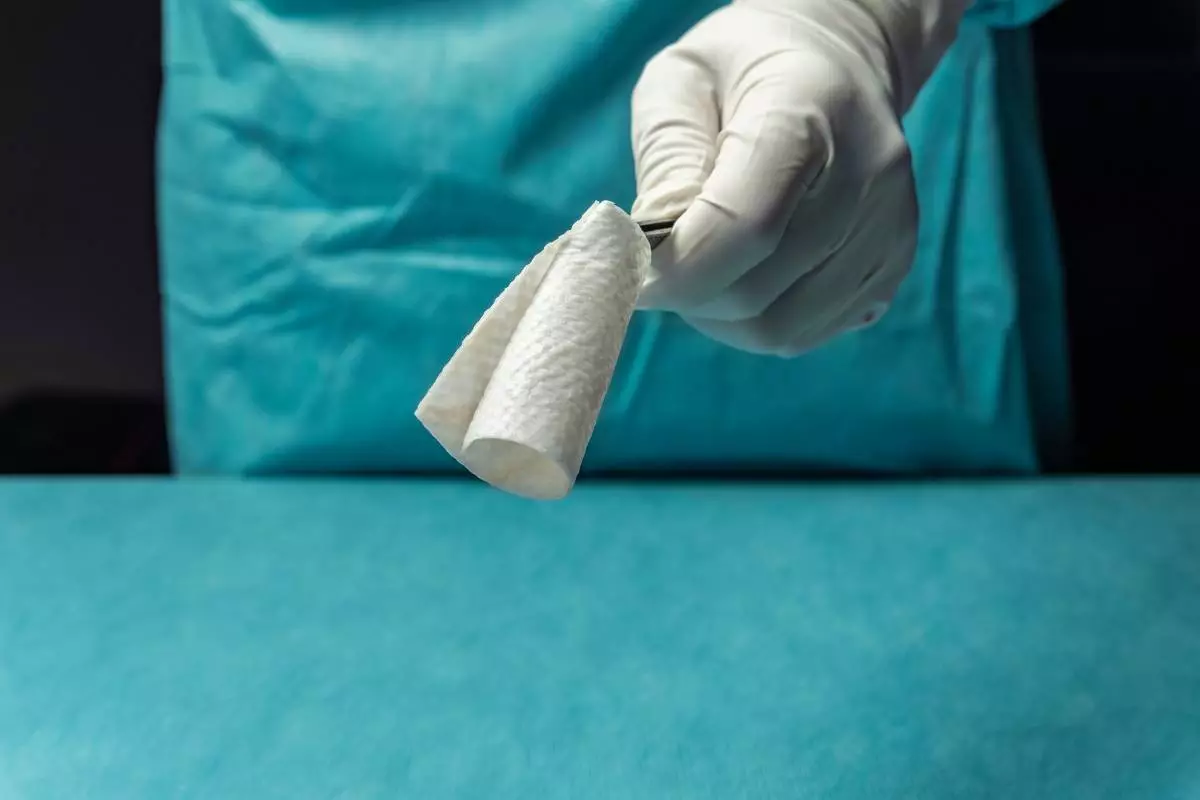
SurgiBind® Tendon Protect by Kerecis
WASHINGTON (AP) — U.S. forces in the Caribbean Sea have seized another sanctioned oil tanker that the Trump administration says has ties to Venezuela, part of a broader U.S. effort to take control of the South American country’s oil.
The U.S. Coast Guard boarded the tanker, named Veronica, early Thursday, Homeland Security Secretary Kristi Noem wrote on social media. The ship had previously passed through Venezuelan waters and was operating in defiance of President Donald Trump’s "established quarantine of sanctioned vessels in the Caribbean,” she said.
U.S. Southern Command said Marines and sailors launched from the aircraft carrier USS Gerald R. Ford to take part in the operation alongside a Coast Guard tactical team, which Noem said conducted the boarding as in previous raids. The military said the ship was seized “without incident.”
Several U.S. government social media accounts posted brief videos that appeared to show various parts of the ship’s capture. Black-and-white footage showed at least four helicopters approaching the ship before hovering over the deck while armed troops dropped down by rope. At least nine people could be seen on the deck of the ship.
The Veronica is the sixth sanctioned tanker seized by U.S. forces as part of the effort by Trump’s administration to control the production, refining and global distribution of Venezuela’s oil products and the fourth since the U.S. ouster of Venezuela President Nicolás Maduro in a surprise nighttime raid almost two weeks ago.
The Veronica last transmitted its location on Jan. 3 as being at anchor off the coast of Aruba, just north of Venezuela’s main oil terminal. According to the data it transmitted at the time, the ship was partially filled with crude.
Days later, the Veronica became one of at least 16 tankers that left the Venezuelan coast in contravention of the quarantine that U.S. forces have set up to block sanctioned ships, according to Samir Madani, the co-founder of TankerTrackers.com. He said his organization used satellite imagery and surface-level photos to document the ship movements.
The ship is currently listed as flying the flag of Guyana and is considered part of the shadow fleet that moves cargoes of oil in violation of U.S. sanctions.
According to its registration data, the ship also has been known as the Gallileo, owned and managed by a company in Russia. In addition, a tanker with the same registration number previously sailed under the name Pegas and was sanctioned by the Treasury Department for being associated with a Russian company moving cargoes of illicit oil.
As with prior posts about such raids, Noem and the military framed the seizure as part of an effort to enforce the law. Noem argued that the multiple captures show that “there is no outrunning or escaping American justice.”
Speaking to reporters at the White House later Thursday, Noem declined to say how many sanctioned oil tankers the U.S. is tracking or whether the government is keeping tabs on freighters beyond the Caribbean Sea.
“I can’t speak to the specifics of the operation, although we are watching the entire shadow fleet and how they’re moving,” she told reporters.
But other officials in Trump's Republican administration have made clear they see the actions as a way to generate cash as they seek to rebuild Venezuela’s battered oil industry and restore its economy.
Trump met with executives from oil companies last week to discuss his goal of investing $100 billion in Venezuela to repair and upgrade its oil production and distribution. His administration has said it expects to sell at least 30 million to 50 million barrels of sanctioned Venezuelan oil.
Associated Press writer Ben Finley contributed to this report.
This story has been corrected to show the Veronica is the fourth, not the third, tanker seized by U.S. forces since Maduro’s capture and the ship also has been known as the Gallileo, not the Galileo.

Homeland Security Secretary Kristi Noem speaks with reporters at the White House, Thursday, Jan. 15, 2026, in Washington. (AP Photo/Alex Brandon)

Homeland Security Secretary Kristi Noem speaks with reporters at the White House, Thursday, Jan. 15, 2026, in Washington. (AP Photo/Evan Vucci)

Homeland Security Secretary Kristi Noem speaks with reporters at the White House, Thursday, Jan. 15, 2026, in Washington. (AP Photo/Evan Vucci)

Homeland Security Secretary Kristi Noem speaks with reporters at the White House, Thursday, Jan. 15, 2026, in Washington. (AP Photo/Evan Vucci)

Homeland Security Secretary Kristi Noem speaks with reporters at the White House, Thursday, Jan. 15, 2026, in Washington. (AP Photo/Evan Vucci)

U.S. Homeland Security Secretary Kristi Noem speaks during a press conference, Thursday, Jan. 8, 2026, in New York. (AP Photo/Yuki Iwamura)

U.S. Homeland Security Secretary Kristi Noem speaks at a news conference at Harry Reid International Airport, Nov. 22, 2025, in Las Vegas. (AP Photo/Ronda Churchill, File)