LOS ANGELES (AP) — Shohei Ohtani homered for the fifth consecutive game on Wednesday, tying a Los Angeles Dodgers franchise record.
Yankees star Aaron Judge was the last player to homer in five consecutive games, accomplishing that feat last year.
Ohtani, who leads the National League with 37 home runs, homered in the first inning off Minnesota Twins starter Chris Paddack. He hit a slow curveball 441 feet to center. He carried the bat midway down the first-base line and then did a bat flip.
He didn’t hit a home run later in the game with the Dodgers trailing, but his presence was felt. With two outs and the Twins leading by one run, Rocco Baldelli elected to put Ohtani — the potential winning run — on base. Esteury Ruiz drew a walk to load the bases, setting the stage for Freddie Freeman, who delivered a two-run hit to left field. Betts and Ohtani scored to give the Dodgers a 4-3 win.
Ohtani did not speak to the media after the game.
“It was the right decision,” Dave Roberts said of Baldelli intentionally walking Ohtani. “He’s got five in a row now (games with homers), which is pretty impressive. He continues to use the big part of the field and hit breaking balls, hit fastballs, so that’s been really good. And so that’s been really good. And yeah, I mean, Shohei comes up with a chance to win the game so you got to take your chances with their closer and against Esteury (Ruiz). And fortunately, Esteury put together a good at bat to get Freddie up there.”
Asked if he was surprised the Twins made that move, Roberts said: “No, no, I wasn’t surprised. It was the right decision. Just didn’t work out.”
This is the seventh time in Dodgers history that a player has homered in five consecutive games. Ohtani joins Max Muncy, Joc Pederson, Adrian Gonzalez, Matt Kemp, Shawn Green and Roy Campanella in that club.
Ohtani, a three-time MVP, is batting .276 with 70 RBIs. He’s also pitched well in six games and is scheduled to throw four innings on Monday in Cincinnati as he is getting close in his buildup as a starter, coming back from his second right UCL repair surgery.
With an off day on Thursday, Ohtani’s next chance to see if he can homer in six consecutive games will be against the Red Sox in Boston.
The record for consecutive games with a home run is eight, which has been held for a long time by Dale Long, Ken Griffey Jr. and Don Mattingly. Griffey Jr. was the last player to do it in 1993.
Roberts was asked if he thinks Ohtani can reach eight consecutive games.
“Well, I don’t know that answer," Roberts said. "I do know that if he has the same approach that he’s had the last week, that Green Monster is very short. So any fly ball that he hits will be a homer. So he’s just got to continue to have that same approach when we go to Boston, and then we’ll see what happens.”
AP MLB: https://apnews.com/hub/mlb
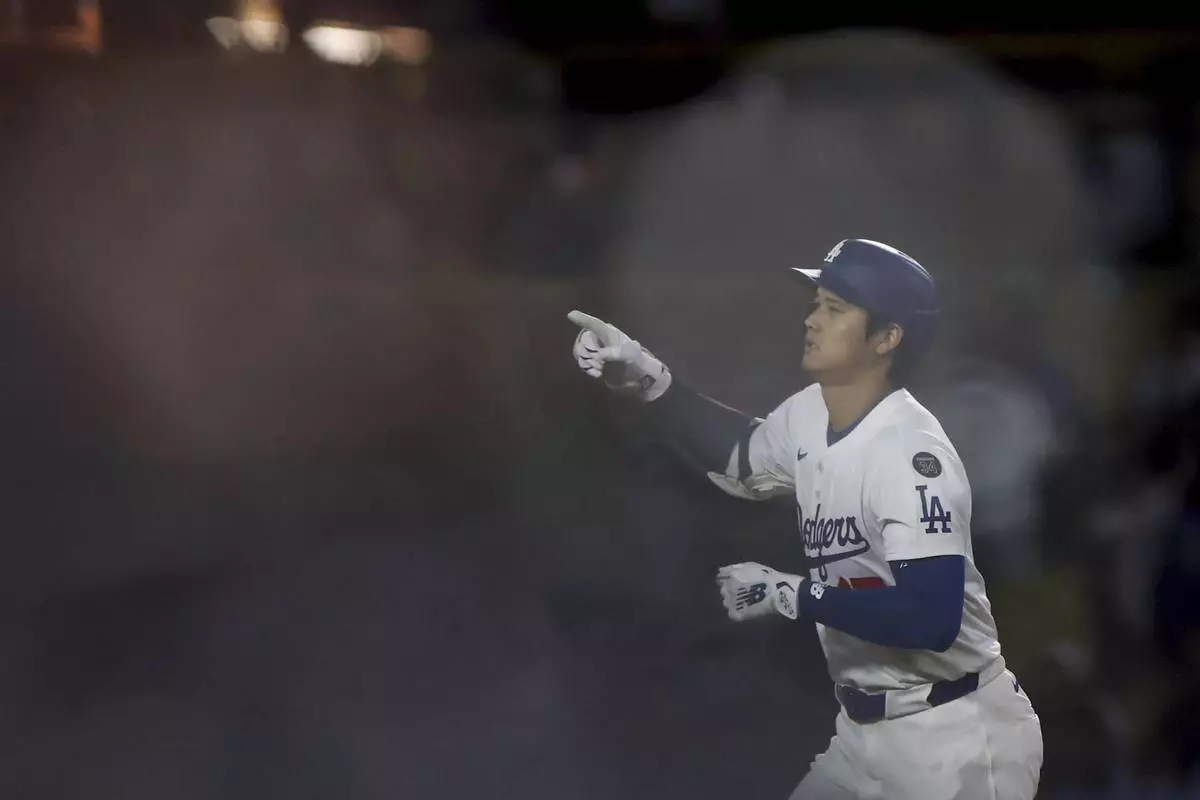
Los Angeles Dodgers designated hitter Shohei Ohtani runs the bases after hitting a home run during the ninth inning of a baseball game against the Minnesota Twins Tuesday, July 22, 2025, in Los Angeles. (AP Photo/Eric Thayer)
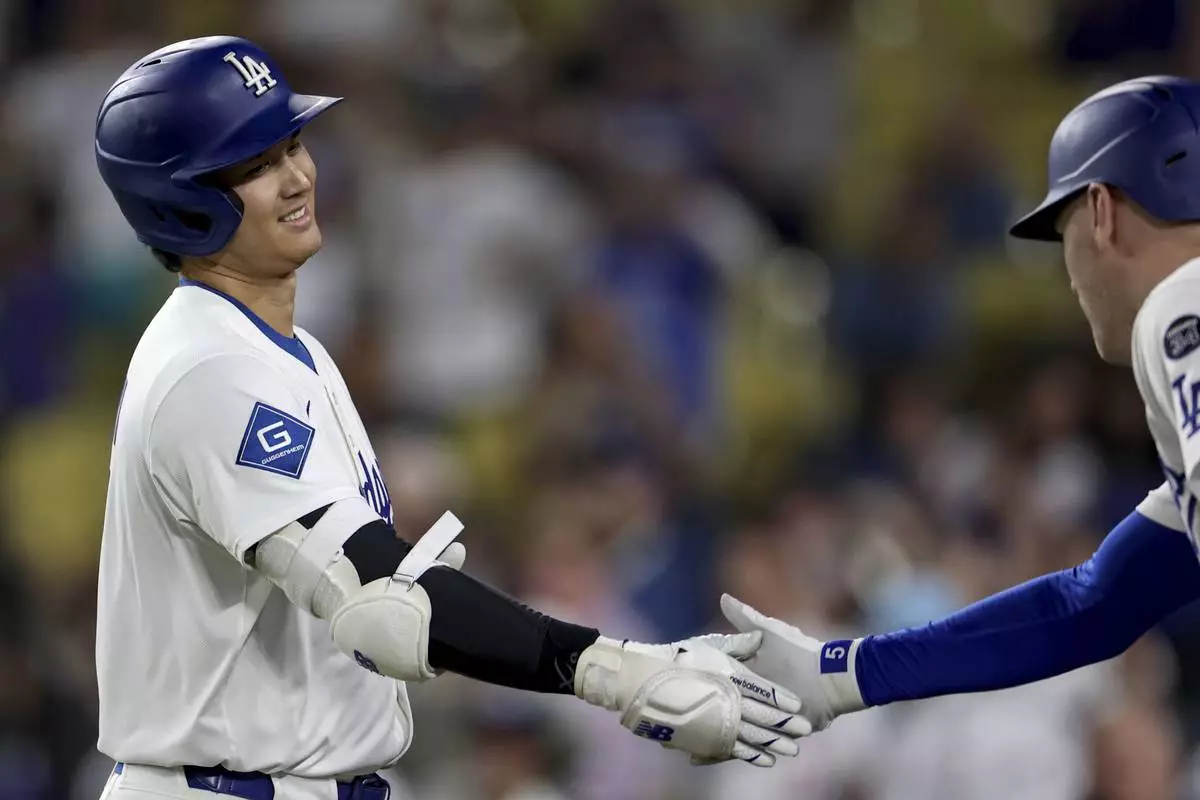
Los Angeles Dodgers designated hitter Shohei Ohtani is congratulated by teammate Freddie Freeman after hitting a home run during the ninth inning of a baseball game against the Minnesota Twins Tuesday, July 22, 2025, in Los Angeles. (AP Photo/Eric Thayer)

Los Angeles Dodgers designated hitter Shohei Ohtani runs the bases after hitting a home run during the ninth inning of a baseball game against the Minnesota Twins Tuesday, July 22, 2025, in Los Angeles. (AP Photo/Eric Thayer)
The dispute between the United States and Europe over the future of Greenland isn’t the first time the allies have been at loggerheads.
Deep disagreements have flared up from time to time since World War II, bringing trans-Atlantic diplomatic crises.
Here’s a look at some of them.
When France, the United Kingdom and Israel invaded Egypt in 1956, aiming to topple Egyptian President Gamal Abdel Nasser and take back control of the Suez Canal, the U.S. employed heavy diplomatic and economic pressure to stop it.
The U.S. intervention severely strained Washington’s relations with London and Paris, which were key allies during the Cold War, and was a milestone in Europe’s waning postwar influence.
While European countries except France gave diplomatic backing to the U.S., they refused to provide troops.
Street protests in Europe against the war had a significant political cost for the continent’s governments, which had to reconcile their support for the U.S. with an erosion of their domestic popularity, and were a burden on trans-Atlantic relations.
Russia’s deployment of its new SS-20 missiles that could quickly hit targets in Western Europe compelled NATO to install U.S. Pershing nuclear-tipped ballistic missiles and cruise missiles in Europe in order to maintain the balance of the nuclear arms threat.
The move ignited an uproar on the continent, where fears of a new arms race deepened. Huge anti-nuclear peace demonstrations, with protesters often aiming their ire at Washington, filled the streets of European capitals in the 1980s.
The U.S. invasion of Iraq in 2003 sparked a major crisis in relations with Europe, especially France and Germany after they refused to support the attack on President Saddam Hussein’s government.
Washington officials rebuked Paris and Berlin, with U.S. Defense Secretary Donald Rumsfeld referring to them as “Old Europe” and praising Eastern European countries as “New Europe.”
As part of its “war on terror,” the United States captured and sometimes kidnapped suspects, and then transferred them to locations in countries where they were interrogated and often tortured outside the reach of U.S. law.
While some European governments were complicit in the program, a public outcry forced political leaders to denounce the practice.
When U.S. President Donald Trump returned to the White House in January 2025, he upended three years of American policy toward Russia’s invasion of Ukraine.
Trump spoke warmly of Russian President Vladimir Putin, was cold toward Ukrainian President Volodymyr Zelenskyy, and then significantly reduced U.S. military aid for Kyiv.
Alarmed European leaders, who see their own security at stake in Ukraine, have pressed Trump to be on Ukraine’s side.
The Trump administration set out a new national security strategy last December that portrayed European allies as weak.
It was scathing of their migration and free speech policies, suggested they face the “prospect of civilizational erasure” and cast doubt on their long-term reliability as American partners.
With relations between the U.S. and Europe deteriorating, Trump threatened the continent last July with heavy trade tariffs in what was seen as a deeply hostile move.
Trump initially announced tariffs of 30% on the 27-nation European Union, which is the biggest trading partner of the United States. Both sides later agreed to a trade framework setting a 15% tariff on most goods.

People protest against Trump's policy towards Greenland in front of the US consulate in Nuuk, Greenland, Saturday, Jan. 17, 2026. (AP Photo/Evgeniy Maloletka)
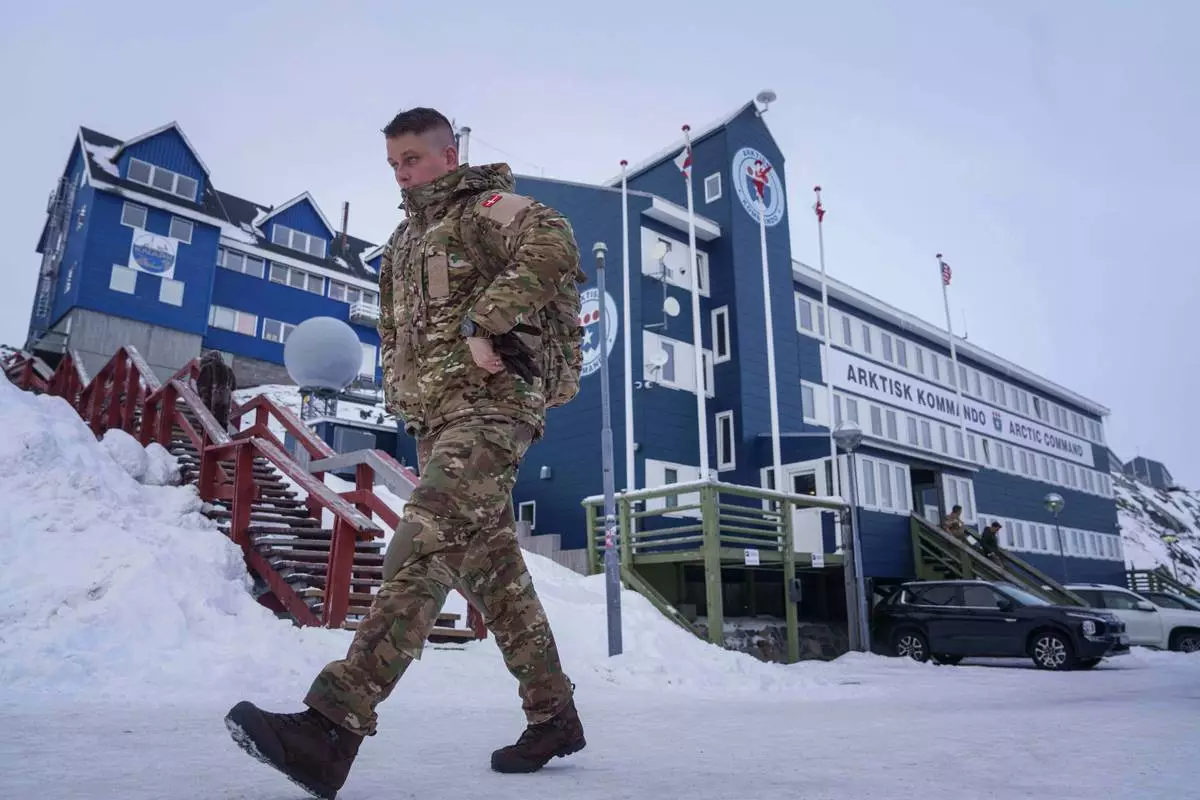
A Danish serviceman walks in front of Joint Arctic Command center in Nuuk, Greenland, on Friday, Jan. 16, 2026. (AP Photo/Evgeniy Maloletka)