WASHINGTON (AP) — Director of National Intelligence Tulsi Gabbard this month declassified material she claimed proved a “treasonous conspiracy” by the Obama administration in 2016 to politicize U.S. intelligence in service of casting doubt on the legitimacy of Donald Trump’s presidential election victory.
As evidence, Gabbard cited newly declassified emails from Obama officials and a 5-year-old classified House report in hopes of undermining the intelligence community's conclusion Russian President Vladimir Putin wanted to boost Trump and denigrate his Democratic opponent, Hillary Clinton.
Russia’s activities during the 2016 election remain some of the most examined events in recent history. The Kremlin's campaign and the subsequent U.S. government response were the subject of at least five major investigations by the Republican-led House and Senate intelligence committee; two Justice Department special counsels; and the department's inspector general.
Those investigations either concluded — or accepted the conclusion — that Russia embarked on a campaign to interfere in the election through the use of social media and hacked material.
The House-led probe, conducted by Trump allies, also concurred Russia ran an election interference campaign but said the purpose was to sow chaos in the U.S. rather than boost Trump. Several of the reports criticize the actions of Obama administration officials, particularly at the FBI, but don't dispute the fundamental findings Moscow sought to interfere in the election.
The Associated Press has reviewed those reports to evaluate how Gabbard’s claims stack up:
CLAIM: “The intelligence community had one assessment: that Russia did not have the intent and capability to try to impact the outcome of the U.S. election leading up to Election Day. The same assessment was made after the election.” — Gabbard to Fox News on Tuesday.
The documents Gabbard released do not support her claim. She cites a handful of emails from 2016 in which officials conclude Russia had no intention of manipulating the U.S. vote count through cyberattacks on voting systems.
President Barack Obama's administration never alleged voting infrastructure was tampered with. Rather, officials have said, Russian operatives hacked emails of prominent Democrats that were subsequently released through WikiLeaks and launched a covert social media campaign to sow discord and inflame U.S. public opinion. More than two dozen Russians were indicted in 2018 in connection with those efforts.
Republican-led investigations in Congress have affirmed that conclusion, and the emails that Gabbard released do not contradict that finding.
CLAIM: “There was a shift, a 180-degree shift, from the intelligence community's assessment leading up to the election to the one that President Obama directed be produced after Donald Trump won the election that completely contradicted those assessments that had come previously.” — Gabbard to Fox News on Tuesday.
There was no shift.
The emails Gabbard released show that a Department of Homeland Security official in August 2016 told then-Director of National Intelligence James Clapper there was “no indication of a Russian threat to directly manipulate the actual vote count.”
The public assessment the Obama administration made public in January 2017 reached the same conclusion: “DHS assesses that the types of systems Russian actors targeted or compromised were not involved in vote tallying."
CLAIM: The Obama administration "manufactured the January 2017 Intelligence Community Assessment that they knew was false promoting the LIE that Vladimir Putin and the Russian government helped President Trump win the 2016 election.” — Gabbard on Truth Social Wednesday.
The material declassified this week reveals some dissent within the intelligence community about whether Putin wanted to help Trump or simply inflame the U.S. public. That same question led to a partisan divide on the House Intelligence panel when it examined the matter several years later.
Gabbard’s memo released last week cites a “whistleblower” who she says served in the intelligence community at the time and who is quoted as saying that he could not “concur in good conscience” with the intelligence community's judgment that Russia had a “decisive preference” for Trump.
Such dissent and debate are not unusual in the drafting of intelligence reports. The Republican-led Senate Intelligence Committee examined whether there was any political interference in the Obama administration’s conclusions and reported that “all analysts expressed that they were free to debate, object to content, and assess confidence levels, as is normal and proper.”
In 2018, Putin directly addressed the question of whether he preferred Trump at a press conference in Helsinki even as he sidestepped a question about whether he directed any of his subordinates to help Trump.
“Yes, I did,” Putin said. “Because he talked about bringing the U.S.-Russia relationship back to normal.”
CLAIM: “They used already discredited information like the Steele dossier — they knew it was discredited at the time.” — Gabbard to Fox News on Tuesday.
The dossier refers to a collection of opposition research files compiled by a former British spy, Christopher Steele, whose work was funded by Democrats during the 2016 election.
Those files included uncorroborated tips and salacious gossip about Trump’s ties to Russia, but the importance to the Russia investigation has sometimes been overstated.
It was not the basis for the FBI’s decision to open an investigation in July 2016 into potential coordination between the Trump campaign and Russia, the Justice Department's inspector general found. Some of the records released by Gabbard this week also reveal that it was a Central Intelligence Agency human source close to the Kremlin that the agency primarily relied on for its conclusion that Putin wanted to help Trump and hurt Clinton, not the Steele dossier.
FBI agents on the case didn't even come to possess the dossier until weeks into their inquiry. Even so, Trump supporters have seized on the unverified innuendo in the document to undercut the broader Russia investigation. Many of Steele’s claims have since been discredited or denied.
It is true, however, that the FBI and Justice Department relied in part on the Steele dossier to obtain surveillance warrants to eavesdrop on the communications of a former Trump campaign adviser, the inspector general found. FBI agents continued to pursue those warrants even after questions arose about the credibility of Steele's reporting.
The dossier was also summarized — over the objections of then-CIA Director John Brennan, he has said — in a two-page annex to the classified version of the intelligence community assessment.
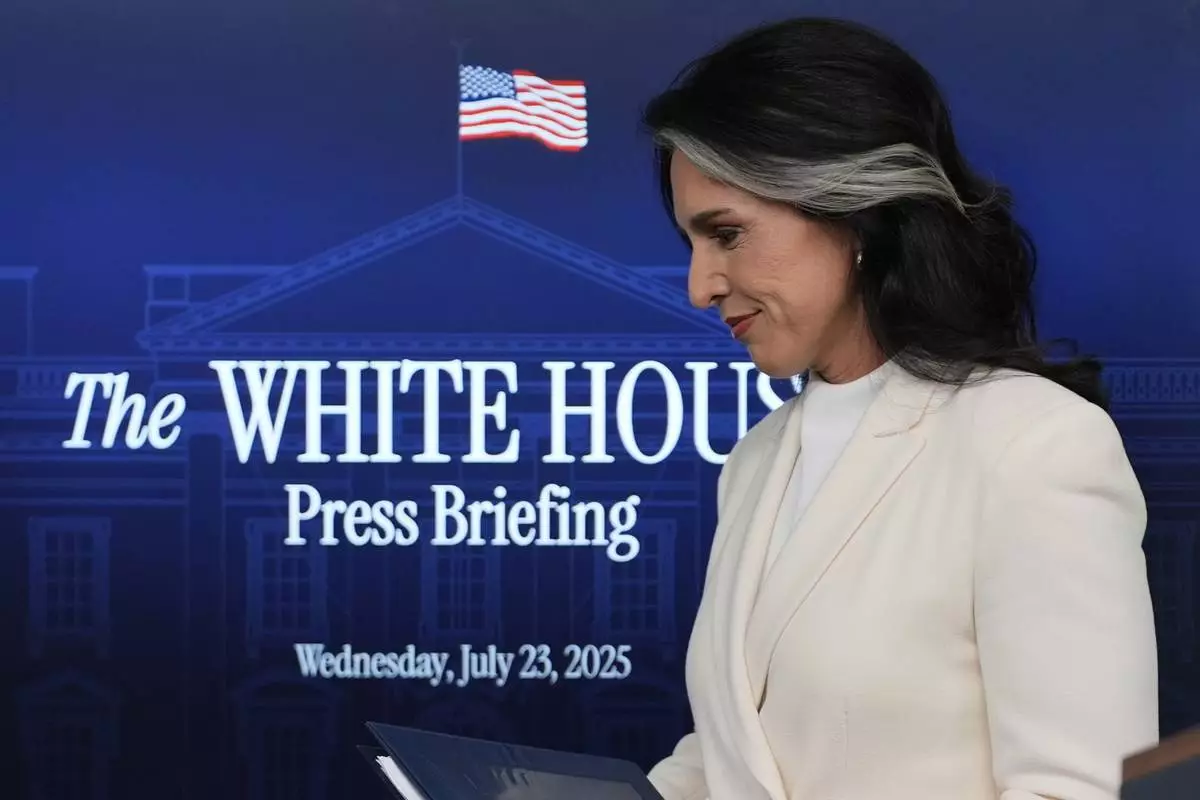
Director of National Intelligence Tulsi Gabbard departs after speaking with reporters in the James Brady Press Briefing Room at the White House, Wednesday, July 23, 2025, in Washington. (AP Photo/Julia Demaree Nikhinson)
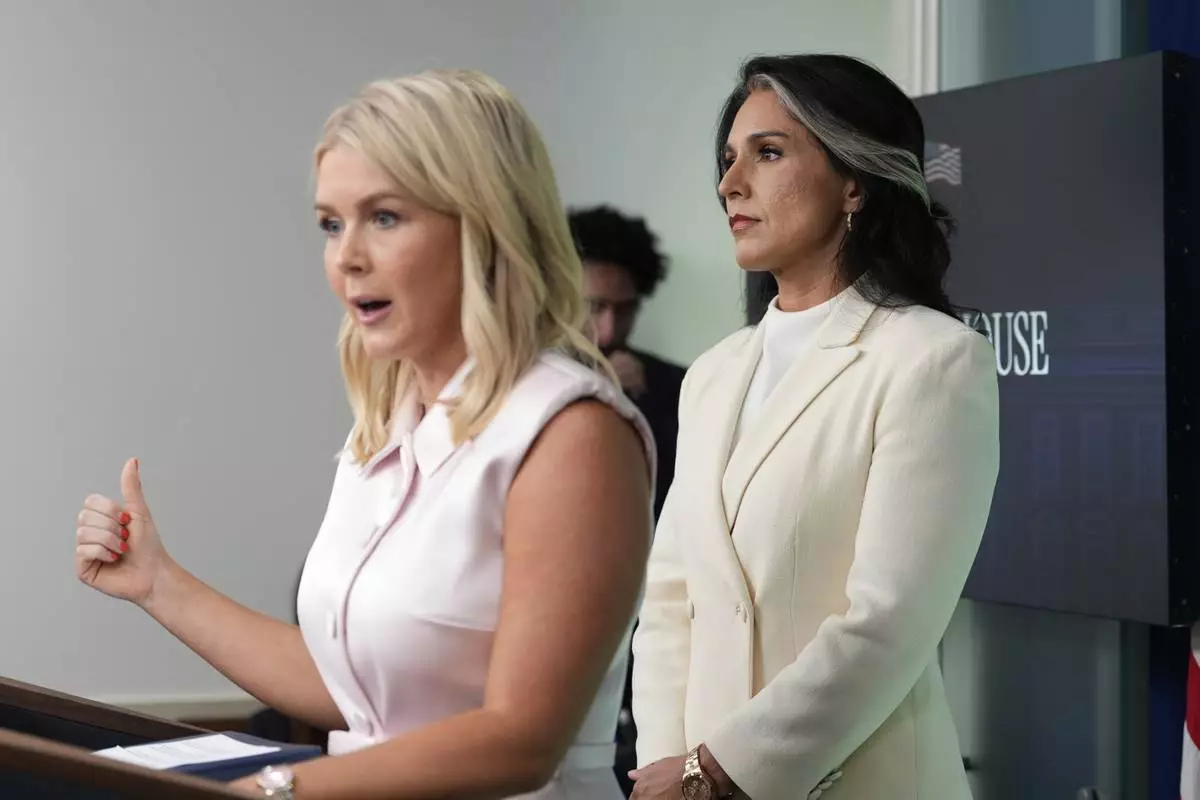
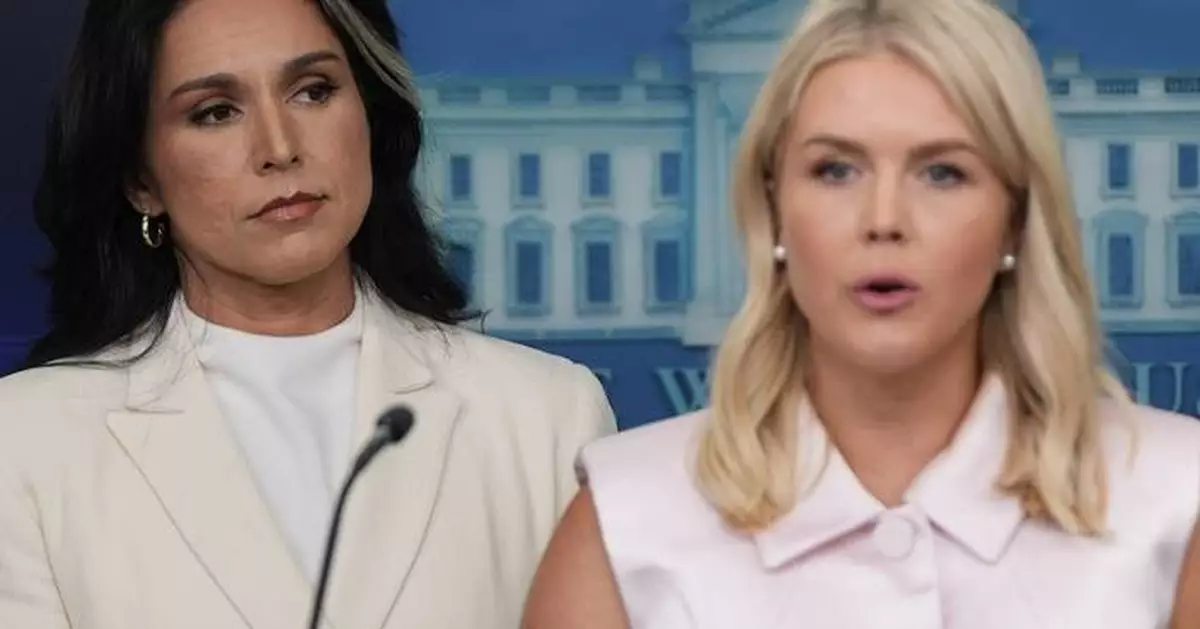
White House press secretary Karoline Leavitt and Director of National Intelligence Tulsi Gabbard, speak with reporters in the James Brady Press Briefing Room at the White House, Wednesday, July 23, 2025, in Washington. (AP Photo/Alex Brandon)
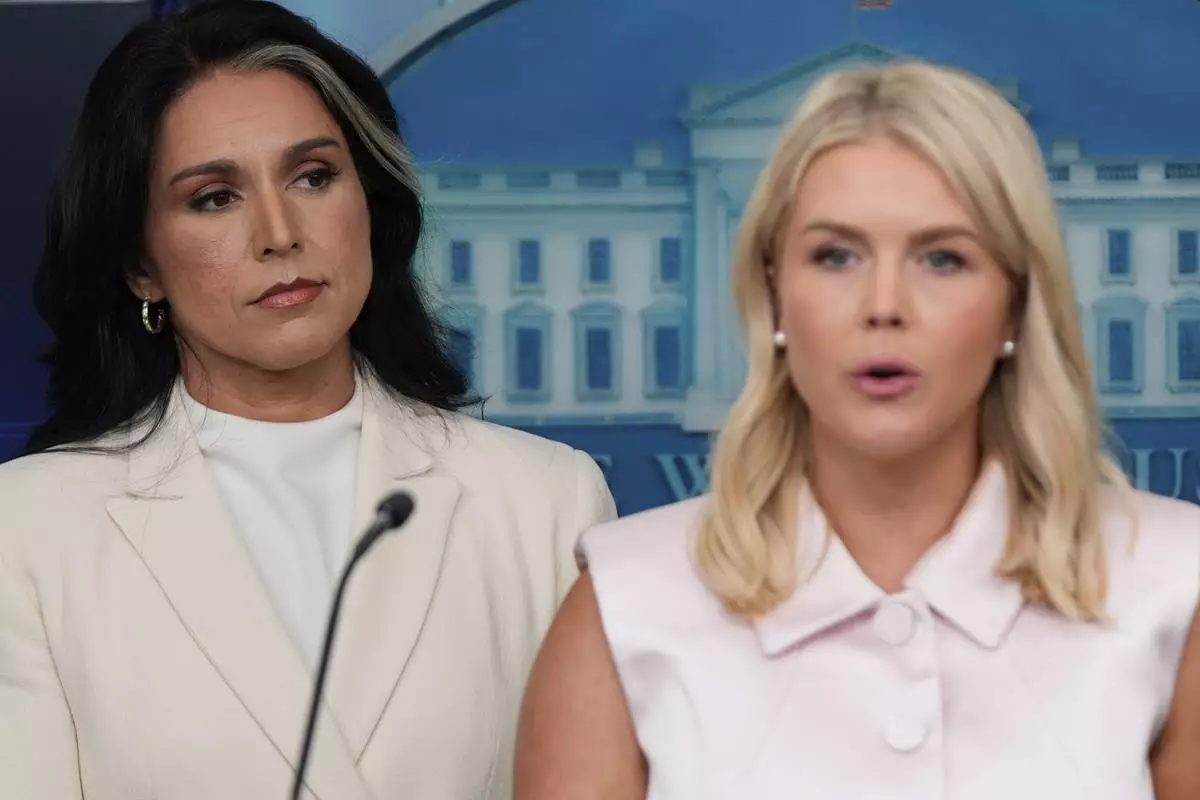
White House press secretary Karoline Leavitt speaks as Director of National Intelligence Tulsi Gabbard listens in the James Brady Press Briefing Room at the White House, Wednesday, July 23, 2025, in Washington. (AP Photo/Julia Demaree Nikhinson)
WASHINGTON (AP) — Venezuelan opposition leader María Corina Machado said she presented her Nobel Peace Prize medal to President Donald Trump at the White House on Thursday even as he has questioned her credibility to take over her country after the U.S. ousted then-President Nicolás Maduro.
The Nobel Institute has said Machado could not give her prize to Trump, an honor that he has coveted. Even if it the gesture proves to be purely symbolic, it was extraordinary given that Trump has effectively sidelined Machado, who has long been the face of resistance in Venezuela. He has signaled his willingness to work with acting President Delcy Rodríguez, who had been Maduro’s second in command.
“I presented the president of the United States the medal, the Nobel Peace Prize," Machado told reporters after leaving the White House and heading to Capitol Hill. She said she had done so "as a recognition for his unique commitment with our freedom.”
Trump confirmed later on social media that Machado had left the medal for him to keep, and he said it was an honor to meet her.
“She is a wonderful woman who has been through so much. María presented me with her Nobel Peace Prize for the work I have done,” Trump said in his post. “Such a wonderful gesture of mutual respect. Thank you María!”
The White House later posted a photo of Machado standing next to Trump in the Oval Office as he holds the medal in a large frame. A text in the frame reads, "Presented as a personal symbol of gratitude on behalf of the Venezuelan people in recognition of President Trump’s principled and decisive action to secure a free Venezuela.”
Trump has raised doubts about his stated commitment to backing democratic rule in Venezuela, giving no timetable on when elections might be held. Machado indicated that he had provided few specifics on that front during their discussion.
She did not provide more information on what was said.
After the closed-door meeting, Machado greeted dozens of cheering supporters waiting for her near the White House gates, stopping to hug many.
“We can count on President Trump,” she told them without elaborating, prompting some to briefly chant, “Thank you, Trump.”
Before her visit to Washington, Machado had not been seen in public since she traveled last month to Norway, where her daughter received the peace prize on her behalf. She had spent 11 months in hiding in Venezuela before she appeared in Norway after the ceremony.
The jubilant scene after her meeting with Trump stood in contrast to political realities in Venezuela. Rodríguez remains in charge of day-to-day government operations, along with others in Maduro’s inner circle. In her first state of the union speech Thursday, the interim president promoted the resumption of diplomatic ties between the historic adversaries and advocated for opening the state-run oil industry to more foreign investment after Trump pledged to seize control of Venezuelan crude sales.
Trump has said it would be difficult for Machado to lead because she “doesn’t have the support within or the respect within the country.” Her party is widely believed to have won 2024 elections rejected by Maduro.
White House press secretary Karoline Leavitt called Machado “a remarkable and brave voice” but also said the meeting didn’t mean Trump’s opinion of her changed, calling it “a realistic assessment.”
Leavitt told reporters that Trump supported new Venezuelan elections “when the time is right” but did not say when he thought that might be.
Leavitt said Machado had sought the face-to-face meeting without setting expectations for what would occur. She spent about two and a half hours at the White House.
“I don’t think he needs to hear anything from Ms. Machado," the press secretary said while the meeting was still going on, other than to have a ”frank and positive discussion about what’s taking place in Venezuela.”
After leaving the White House, Machado went on to a closed-door meeting with a bipartisan group of senators.
Sen. Chris Murphy, D-Conn., said Machado told them that “if there’s not some progress, real progress towards a transition in power, and/or elections in the next several months, we should all be worried.”
“She reminded us that Delcy Rodríguez is, in many ways, worse than Maduro,” he added.
Asked if Machado had heard any commitment from the White House on holding elections in Venezuela, Murphy said, “No, I don’t think she got any commitment from them."
Sen. Bernie Moreno, an Ohio Republican, was exultant following the meeting, saying Machado "delivered a message that loud and clear: What President Trump did was the most important, significant event in Latin America. That getting rid of Maduro was absolutely essential.”
Machado's Washington stop coincided with U.S. forces in the Caribbean Sea seizing another sanctioned oil tanker that the Trump administration says had ties to Venezuela. It is part of a broader U.S. effort to take control of the South American country’s oil after U.S. forces captured Maduro and his wife less than two weeks ago at a heavily guarded compound in the Venezuelan capital of Caracas and brought them to New York to stand trial on drug trafficking charges.
Leavitt said Venezuela's interim authorities have been fully cooperating with the Trump administration and noted that Rodríguez's government said it planned to release more prisoners detained under Maduro. Among those released were five Americans this week.
Trump said Wednesday that he had a “great conversation” with Rodríguez, their first since Maduro was ousted.
Just hours after Maduro's capture, Trump said of Machado that “it would be very tough for her to be the leader.” Machado had steered a careful course to avoid offending Trump, notably after winning the peace prize, and had sought to cultivate relationships with him and key administration voices like Secretary of State Marco Rubio.
The industrial engineer and daughter of a steel magnate, Machado began challenging the ruling party in 2004, when the nongovernmental organization she co-founded, Súmate, promoted a referendum to recall then-President Hugo Chávez. The initiative failed, and Machado and other Súmate executives were charged with conspiracy.
A year later, she drew the anger of Chávez and his allies again for traveling to Washington to meet President George W. Bush, whom Chávez considered an adversary.
Almost two decades later, she marshaled millions of Venezuelans to reject Chávez’s successor, Maduro, for another term in the 2024 election. But ruling party-loyal electoral authorities declared him the winner despite ample credible evidence to the contrary. Ensuing anti-government protests ended in a brutal crackdown.
Garcia Cano reported from Caracas, Venezuela. Associated Press writers Lisa Mascaro, Stephen Groves, Michelle L. Price and Matthew Lee in Washington, and Megan Janetsky in Mexico City contributed to this report.
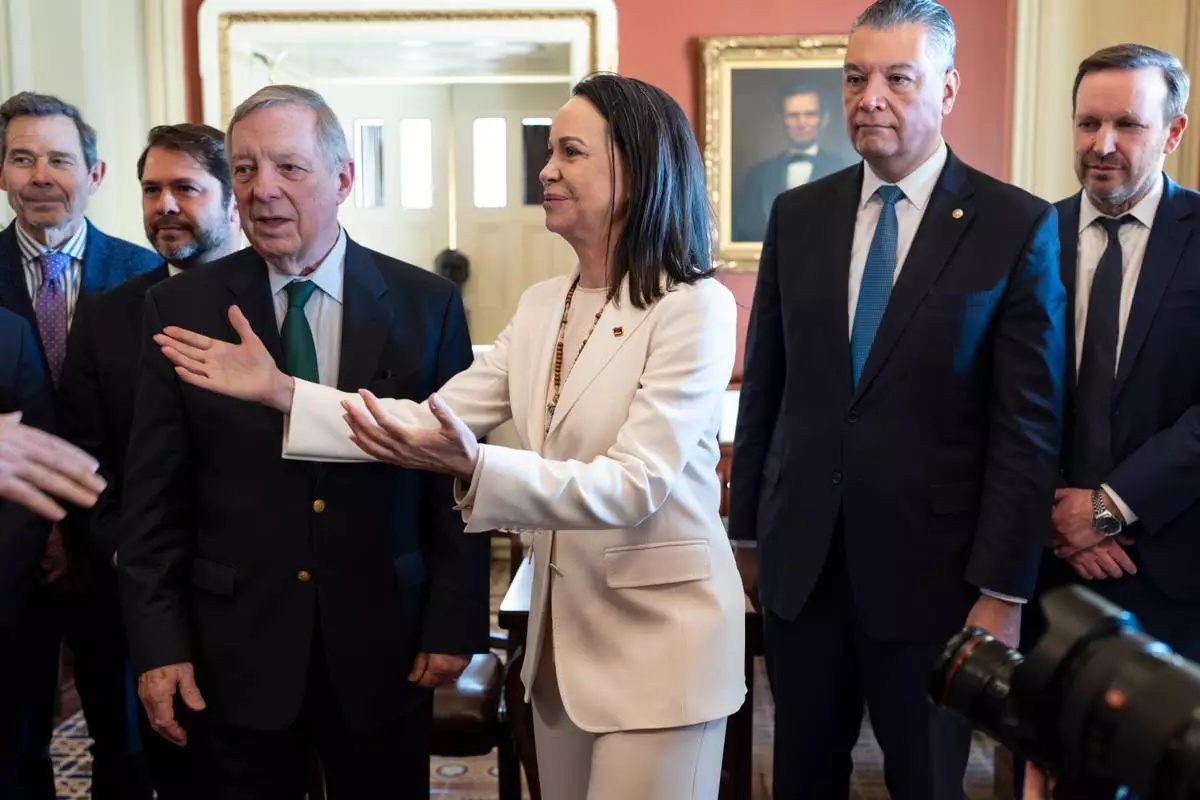
Venezuelan opposition leader Maria Corina Machado is welcomed at the Capitol before a meeting with senators, from left, Sen. John Curtis, R-Utah, Sen. Ruben Gallego, D-Ariz., Sen. Dick Durbin, D-Ill., Sen. Alex Padilla, D-Calif., and Sen. Chris Murphy, D-Conn., as the Nobel Peace Prize recipient visits American leaders two weeks after President Donald Trump toppled Venezuelan president Nicolas Maduro in a stunning military raid, at the Capitol in Washington, Thursday, Jan. 15, 2026. (AP Photo/J. Scott Applewhite)
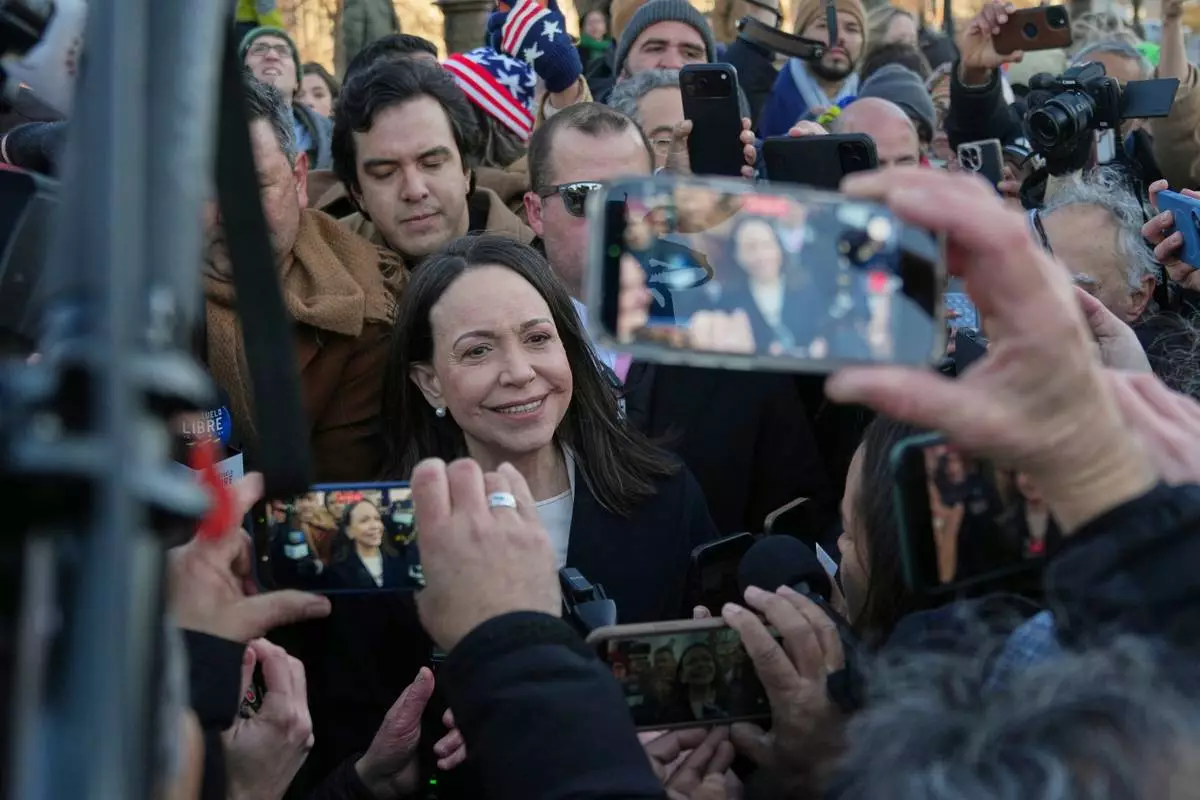
Venezuelan opposition leader María Corina Machado, center, leaves the Capitol, Thursday, Jan. 15, 2026, in Washington. (AP Photo/Allison Robbert)
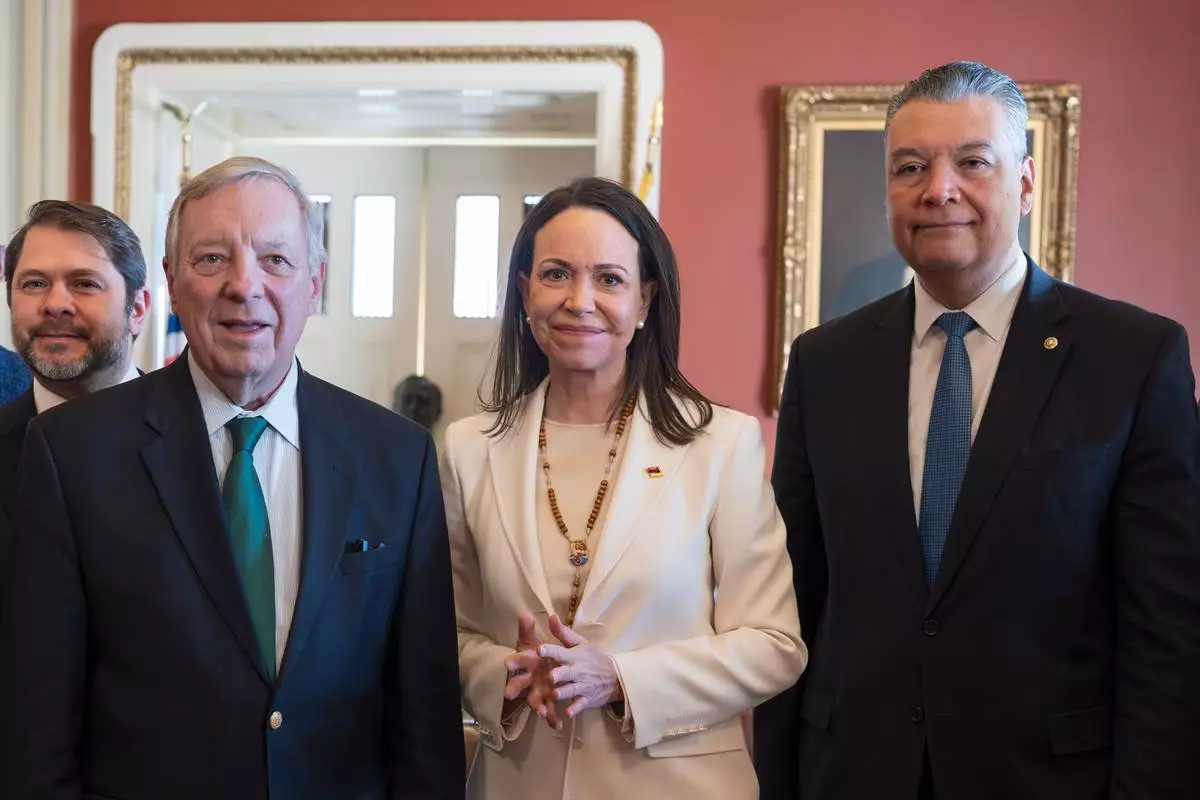
Venezuelan opposition leader Maria Corina Machado, center, is welcomed by Sen. Dick Durbin, D-Ill., left, Sen. Ruben Gallego, D-Ariz., far left, and Sen. Alex Padilla, D-Calif., right, as the Nobel Peace Prize recipient visits American leaders at the Capitol in Washington, Thursday, Jan. 15, 2026. (AP Photo/J. Scott Applewhite)
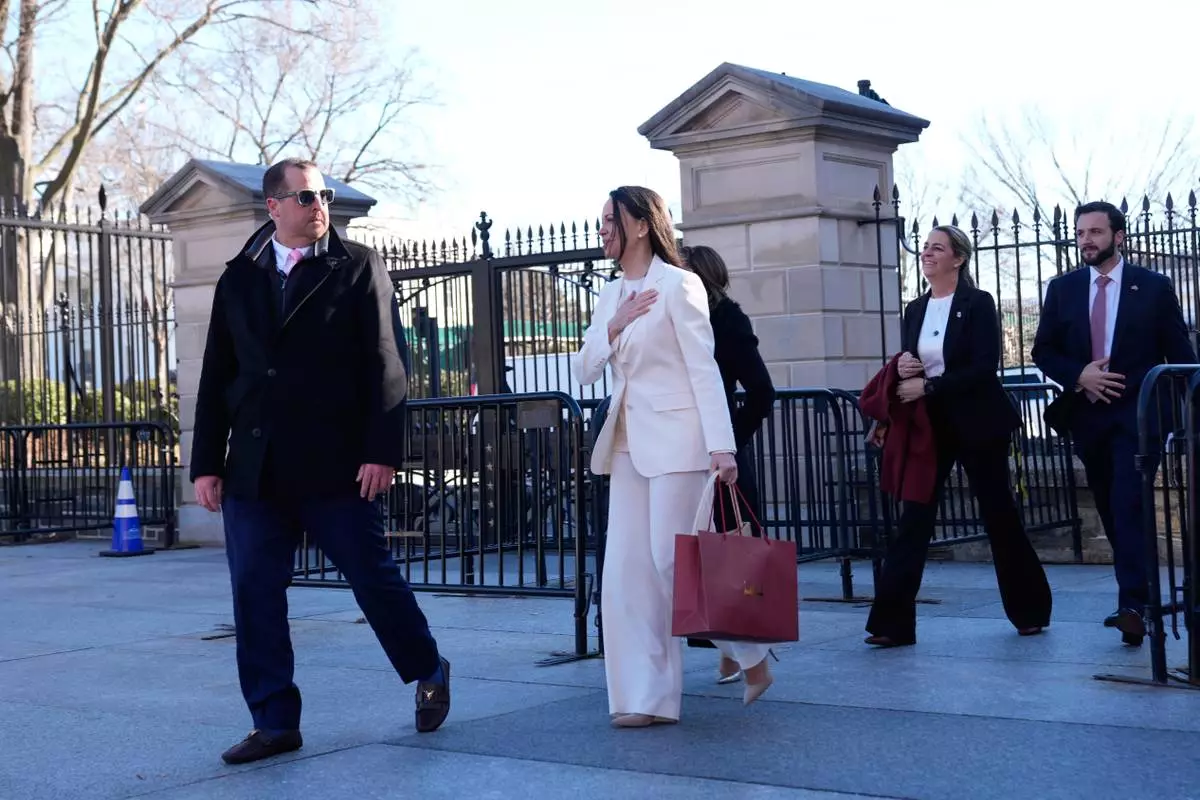
Venezuelan opposition leader María Corina Machado gestures to supporters on Pennsylvania Avenue as she leaves the White House after meeting with President Donald Trump Thursday, Jan. 15, 2026, in Washington. (AP Photo/Pablo Martinez Monsivais)
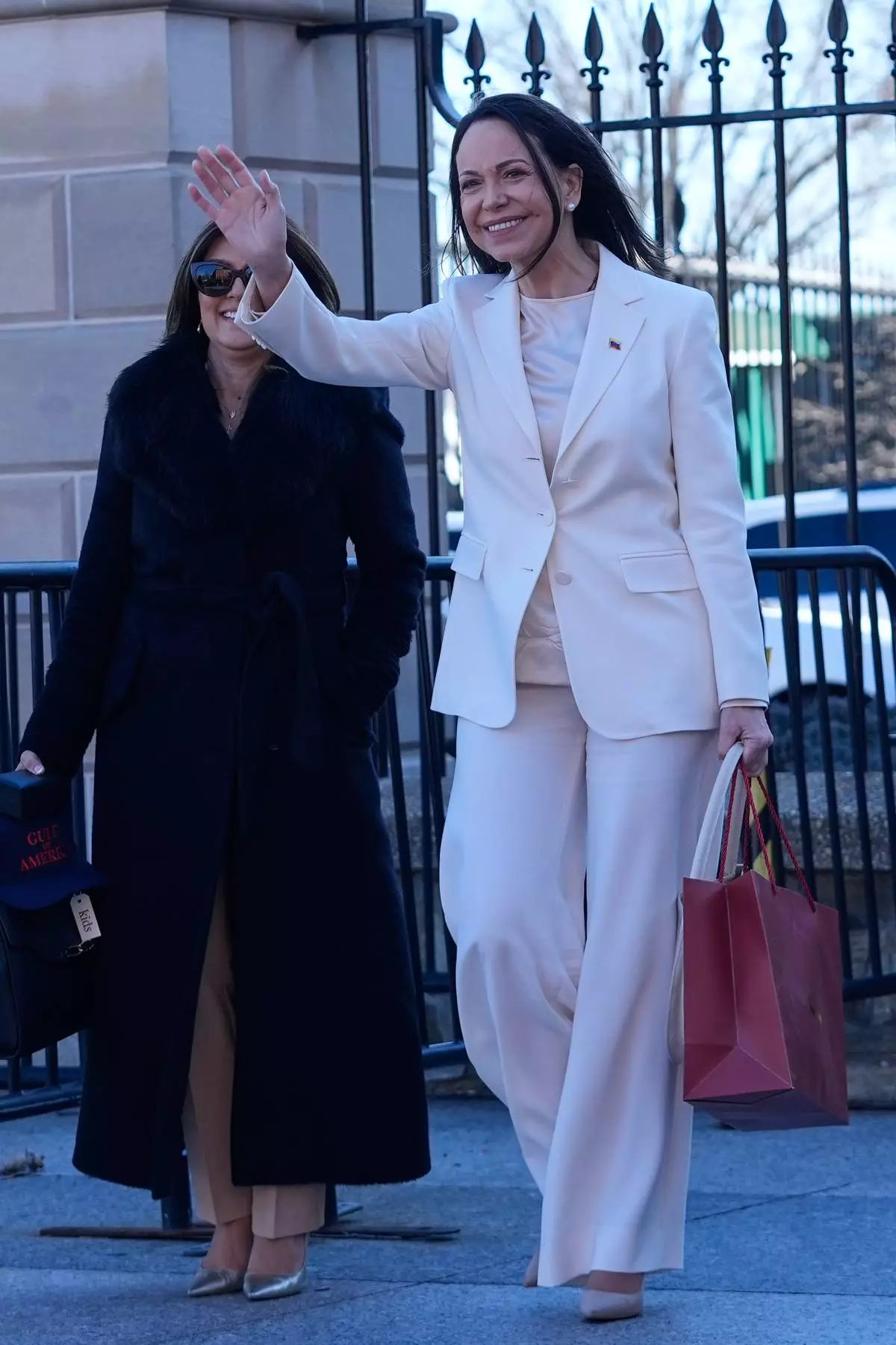
Venezuelan opposition leader María Corina Machado waves to supporters on Pennsylvania Avenue as she leaves the White House after meeting with President Donald Trump Thursday, Jan. 15, 2026, in Washington. (AP Photo/Pablo Martinez Monsivais)
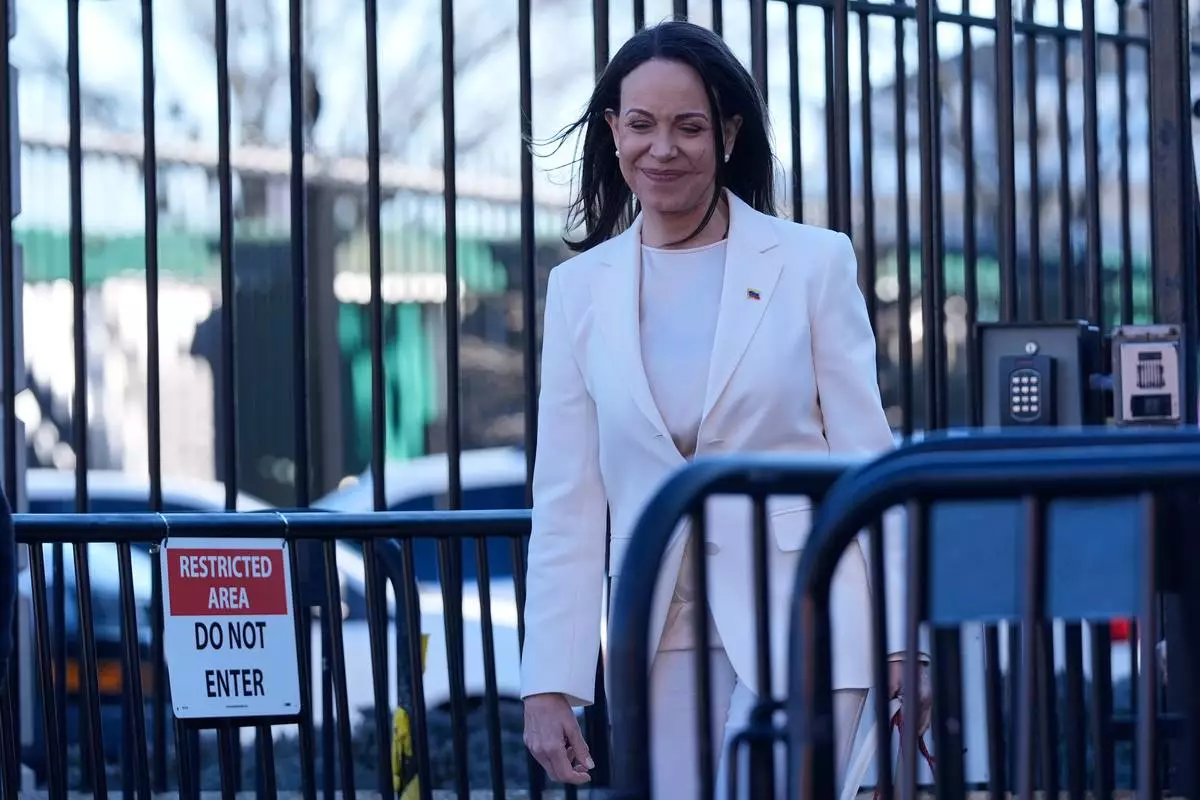
Venezuelan opposition leader María Corina Machado smiles on Pennsylvania Avenue as she leaves the White House after meeting with President Donald Trump Thursday, Jan. 15, 2026, in Washington. (AP Photo/Pablo Martinez Monsivais)
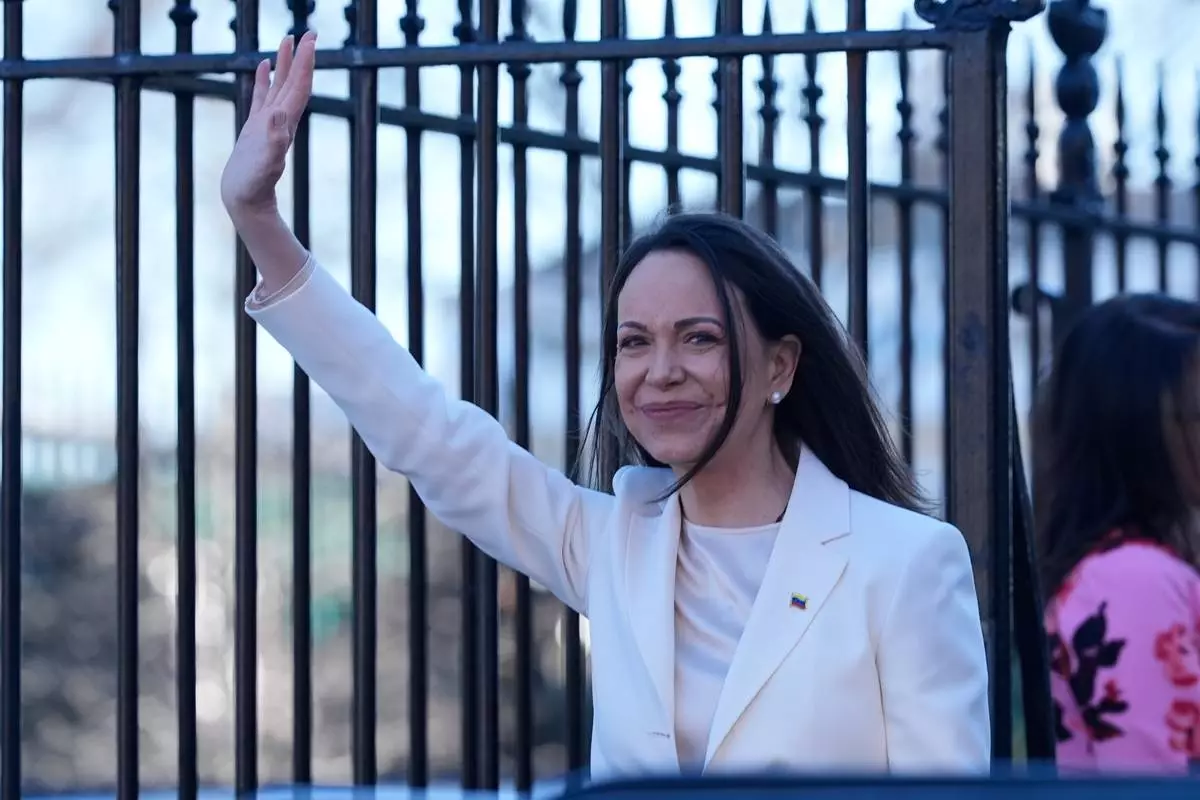
Venezuelan opposition leader María Corina Machado waves to supporters on Pennsylvania Avenue as she leaves the White House after meeting with President Donald Trump Thursday, Jan. 15, 2026, in Washington. (AP Photo/Pablo Martinez Monsivais)
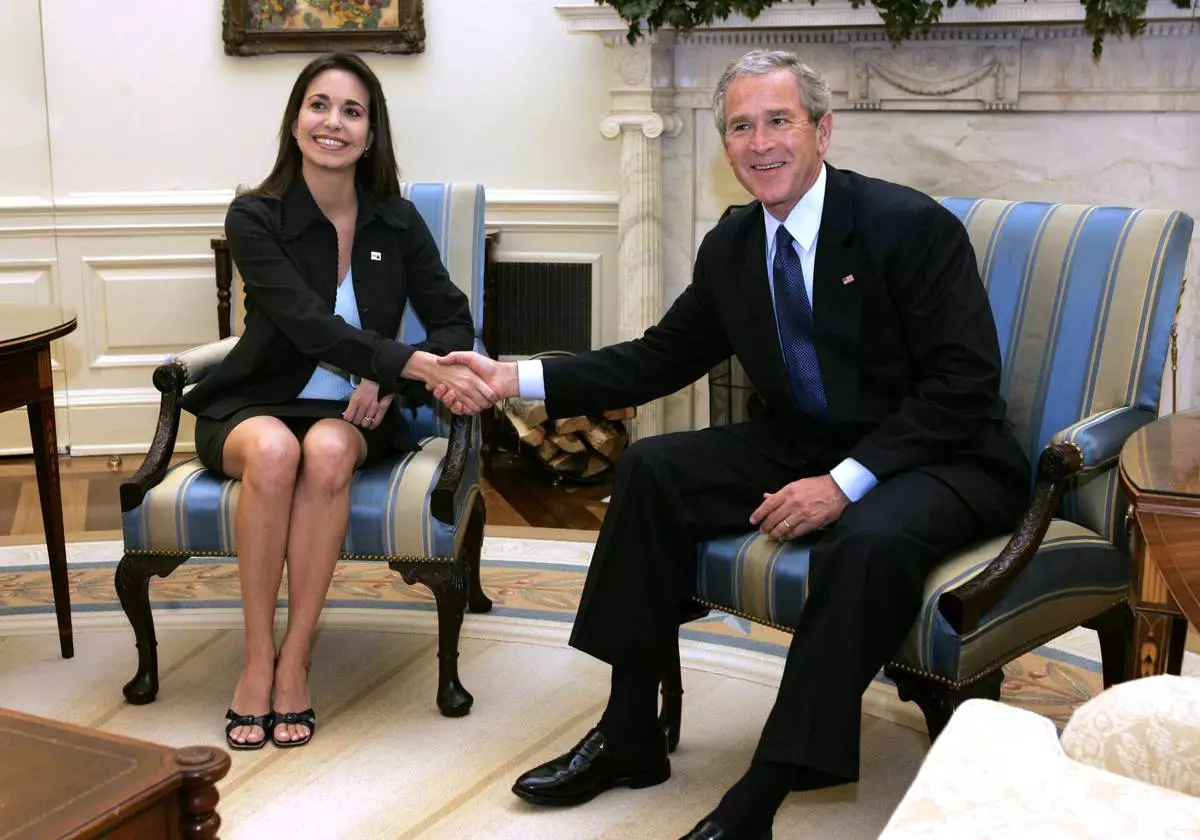
FILE - U.S. President George Bush, right, meets with Maria Corina Machado, executive director of Sumate, a non-governmental organization that defends Venezuelan citizens' political rights, in the Oval Office of the White House, Washington, May 31, 2005. (AP Photo/Charles Dharapak, File)
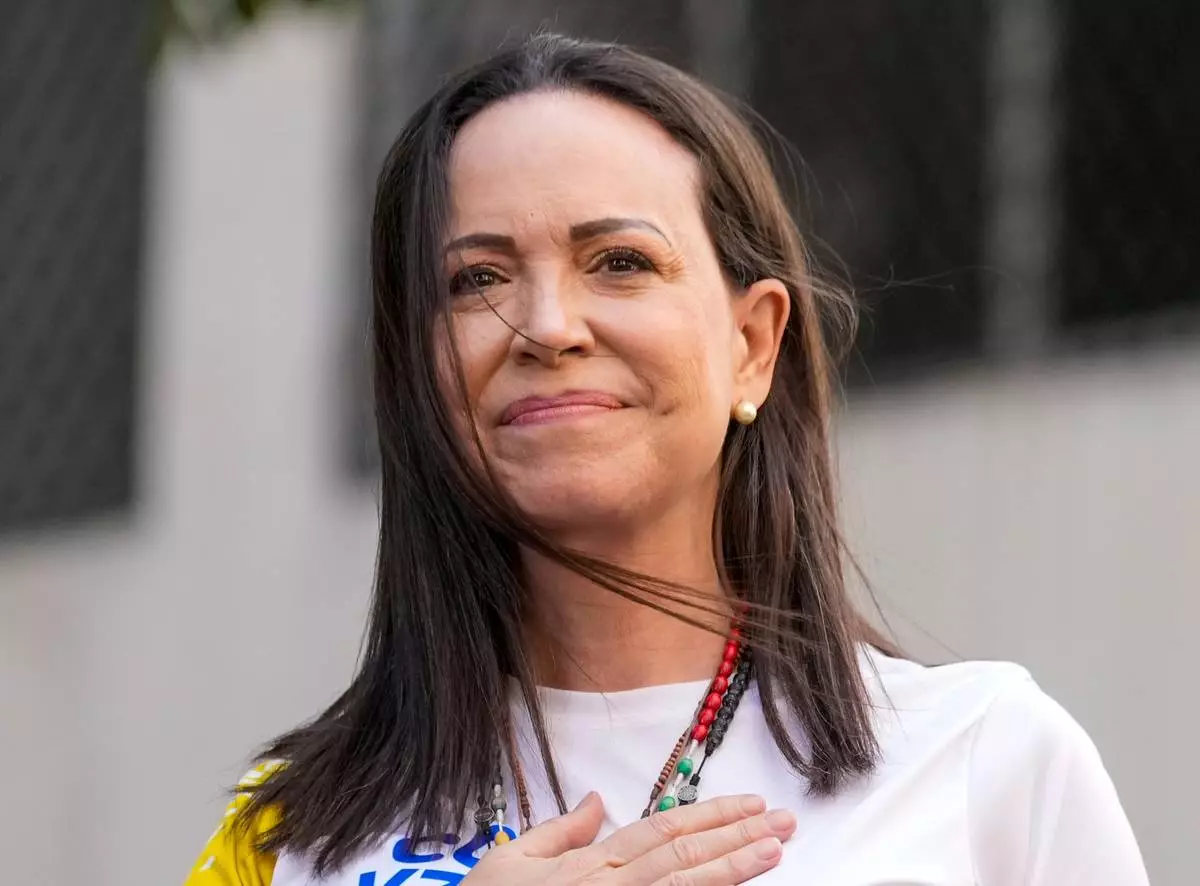
FILE - Opposition leader Maria Corina Machado gestures to supporters during a protest against President Nicolas Maduro the day before his inauguration for a third term, in Caracas, Venezuela, Thursday, Jan. 9, 2025. (AP Photo/Ariana Cubillos, file)