Skip to Content Facebook Feature Image

Ryder Reports Second Quarter 2025 Results

News

Ryder Reports Second Quarter 2025 Results
News

News

Ryder Reports Second Quarter 2025 Results

2025-07-24 18:55 Last Updated At:19:00

MIAMI--(BUSINESS WIRE)--Jul 24, 2025--

Ryder System, Inc. (NYSE: R) reported results for the three months ended June 30 as follows:

This press release features multimedia. View the full release here: https://www.businesswire.com/news/home/20250722727437/en/

Total and operating revenue for the three months ended June 30 were as follows:

CEO Comment

"The Ryder team delivered our third consecutive quarter of double-digit growth in earnings per share," says Ryder Chairman and CEO Robert Sanchez. "Earnings in the second quarter were above our expectations driven by better supply chain performance, partially offset by additional used vehicle wholesale volumes. We remain on track to achieve expected benefits in 2025 from our lease pricing and multi-year maintenance cost-saving initiatives, acquisition synergies, and optimization of our omnichannel retail network. Our ability to generate ROE of 17% in the current environment continues to demonstrate consistent execution and the resilience of our transformed business model.

"SCS delivered another quarter of record earnings, marking nine consecutive quarters of earnings growth. Execution of strategic initiatives and new business were the key drivers of strong SCS performance. DTS earnings were up slightly as acquisition benefits and solid operating performance were offset by lower fleet count, reflecting the prolonged freight market downturn. In FMS, contractual earnings growth, driven by our initiatives, partially offset weaker market conditions in used vehicle sales.

"Our strong capital deployment capacity continues to increase, enabling us to invest in profitable growth and strategic initiatives while also returning capital to shareholders. We recently announced a 12% annualized increase to our quarterly dividend, reflecting higher profitability and improved returns over the cycle. We also continued to execute on our share repurchase programs and have reduced our share count by 21% since 2021.

"Long-term secular growth trends remain intact for all of our businesses. Ryder is well positioned to benefit from the eventual freight cycle upturn in our transactional rental and used vehicle sales offerings, as well as in our contractual businesses as we continue to support customers navigating a dynamic market. We are confident that the structurally higher earnings profile of our transformed business model will continue to outperform prior cycles."

Second Quarter 2025 Segment Review

Fleet Management Solutions: Contractual Earnings Growth Partially Offset Weaker Market Conditions in Used Vehicle Sales

Supply Chain Solutions: Double-Digit Earnings Growth Reflects Continued Strong Operating Performance

Dedicated Transportation Solutions: Earnings Include Acquisition Synergies Offset by Lower Fleet Count Reflecting Freight Market Conditions

Corporate Financial Information

Tax Rate

Our effective income tax rate from continuing operations was 28.3%, as compared to 29.1% in the prior year, and our comparable effective income tax rate (a non-GAAP measure) from continuing operations was 28.0%, as compared to 29.0%. The decrease in the tax rates was primarily due to a reduction in U.S. tax on foreign earnings.

Capital Expenditures, Cash Flow, and Leverage

Second quarter capital expenditures decreased to $1.2 billion in 2025 compared to $1.3 billion in 2024, primarily reflecting reduced investments in ChoiceLease.

Second quarter net cash provided by operating activities from continuing operations was $1.4 billion compared to $1.1 billion in 2024, primarily reflecting lower income tax payments and timing of vendor payments. Free cash flow (non-GAAP) of $461 million compared to $71 million in 2024, primarily reflects higher cash provided by operating activities and reduced capital expenditures.

Debt-to-equity as of June 30, 2025 was 251% compared to 250% at year-end 2024 and is at the bottom end of the company's long-term target of 250% to 300%.

Outlook

"We continue to expect earnings growth in 2025 reflecting ongoing execution on our initiatives and the strength of our contractual businesses," says Ryder Chief Financial Officer Cristina Gallo-Aquino. "Our 2025 free cash flow forecast has been increased by approximately $500 million to reflect lower capital spending and the permanent reinstatement of tax bonus depreciation. The top end of our revised earnings forecast range primarily reflects a more muted second-half recovery for used vehicle sales and contractual sales headwinds from ongoing macroeconomic uncertainty."

Supplemental Company Information

Business Description

Ryder System, Inc. is a leading supply chain, dedicated transportation, and fleet management solutions company. Ryder's stock (NYSE: R) is a component of the Dow Jones Transportation Average and the S&P MidCap 400 ® index. The company's financial performance is reported in the following three, inter-related business segments:

For more information on Ryder System, Inc., visit investors.ryder.com and ryder.com.

Note: Regarding Forward-Looking Statements

Certain statements and information included in this news release are "forward-looking statements" under the Federal Private Securities Litigation Reform Act of 1995, including our expectations regarding: our forecast; our outlook; market conditions, such as expectations regarding macroeconomic uncertainty, rental demand and utilization, and used vehicle sales volume and pricing; the freight cycle, including the impact of the prolonged downturn and cycle timing and recovery on our businesses; total and operating revenue, EPS, comparable EPS, adjusted ROE, earnings before income tax, net cash provided by operating activities from continuing operations, free cash flow, debt-to-equity, capital expenditures, and the causes of change; our ability to continue executing on our transformed business model; our ability to outperform prior cycles; pricing and maintenance cost savings initiatives; long-term growth opportunities and secular growth trends; used vehicle inventory and fleet size; our ability to profitably grow business; our ability to support organic growth; growth and continued strong earnings performance in our contractual businesses; strategic investments and acquisitions, including acquisition synergies; the omnichannel retail network; our capital deployment capacity; our actions to increase returns and create long-term value; and our ability to return capital to shareholders, including through share repurchases and dividends. Our forward-looking statements also include our estimates of the impact of residual value estimates on earnings and depreciation expense that is based in part on our current assessment of the residual values and useful lives of revenue-earning equipment based on multi-year trends and our outlook for the expected near- and long-term used vehicle market. A variety of factors, many of which are outside of our control, could cause residual value estimates to differ from actual used vehicle sales pricing, such as changes in supply and demand of used vehicles; volatility in market conditions; changes in vehicle technology; competitor pricing; regulatory requirements, including changes to taxes or tariffs; driver shortages; customer requirements and preferences; and changes in underlying assumption factors.

All of our forward-looking statements should be evaluated by considering the many risks and uncertainties inherent in our business that could cause actual results and events to differ materially from those in the forward-looking statements. Important factors that could cause such differences include: changes and uncertainty regarding financial, economic and market conditions in the U.S. and worldwide; supply chain and labor challenges and vehicle production constraints, including original equipment manufacturer (OEM) delays; the effect of geopolitical events; our ability to adapt to changing market conditions, including lower than expected contractual sales, decreases in rental demand or utilization, poor acceptance of rental pricing, declining market demand for or excess supply of used vehicles impacting current or estimated pricing, and our anticipated proportion of retail versus wholesale sales; declining customer demand for our services; higher than expected maintenance costs; lower than expected benefits from our cost-savings initiatives; our ability to effectively and efficiently integrate acquisitions into our business; lower than expected benefits from our sales, marketing and new product initiatives; setbacks in the economic market or in our ability to retain profitable customer accounts; impact of changing laws and regulations, such as taxes, tariffs, trade restrictions or trade agreements, including the impact to our customers and partners; difficulty in obtaining adequate profit margins for our services; inability to maintain current pricing levels due to, for example, economic conditions, business interruptions, expenditures, labor disputes and extreme weather or other natural occurrences; competition from other service providers; changes in technology and new entrants; professional driver and technician shortages resulting in higher procurement costs and turnover rates; impact of supply chain disruptions; higher than expected bad debt reserves or write-offs; decrease in credit ratings; increased debt costs; adequacy of accounting estimates; higher than expected reserves and accruals particularly with respect to pension, taxes, insurance and revenue; impact of changes in our residual value estimates and accounting policies, including our depreciation policy; unanticipated changes in fuel and alternative energy prices; unanticipated currency exchange rate fluctuations; fluctuations in inflation or interest rates; our ability to manage our cost structure; and the risks described in our filings with the Securities and Exchange Commission (SEC). The risks included here are not exhaustive. New risks emerge from time to time, and it is not possible for management to predict all such risk factors or to assess the impact of such risks on our business. Accordingly, we undertake no obligation to publicly update or revise any forward-looking statements, whether as a result of new information, future events or otherwise.

Note: Regarding Non-GAAP Financial Measures

This news release includes certain non-GAAP financial measures as defined under SEC rules. Refer to Appendix - Non-GAAP Financial Measure Reconciliations at the end of the tables following this press release for reconciliations to the most comparable GAAP measure. Additional information regarding non-GAAP financial measures as required by Regulation G and Item 10(e) of Regulation S-K can be found in our most recent Form 10-K, Form 10-Q and Form 8-K filed with the SEC as of the date of this release, which are available athttps://investors.ryder.com.

CONFERENCE CALL AND WEBCAST INFORMATION

Ryder’s earnings conference call and webcast is scheduled for July 24, 2025 at 11:00 a.m. ET. To join, click here.

LIVE AUDIO VIA PHONE

WEBCAST REPLAY

An audio replay including the slide presentation will be available within four hours following the call. Click here, then select Financials/Quarterly Results and the date.

ryder-financial
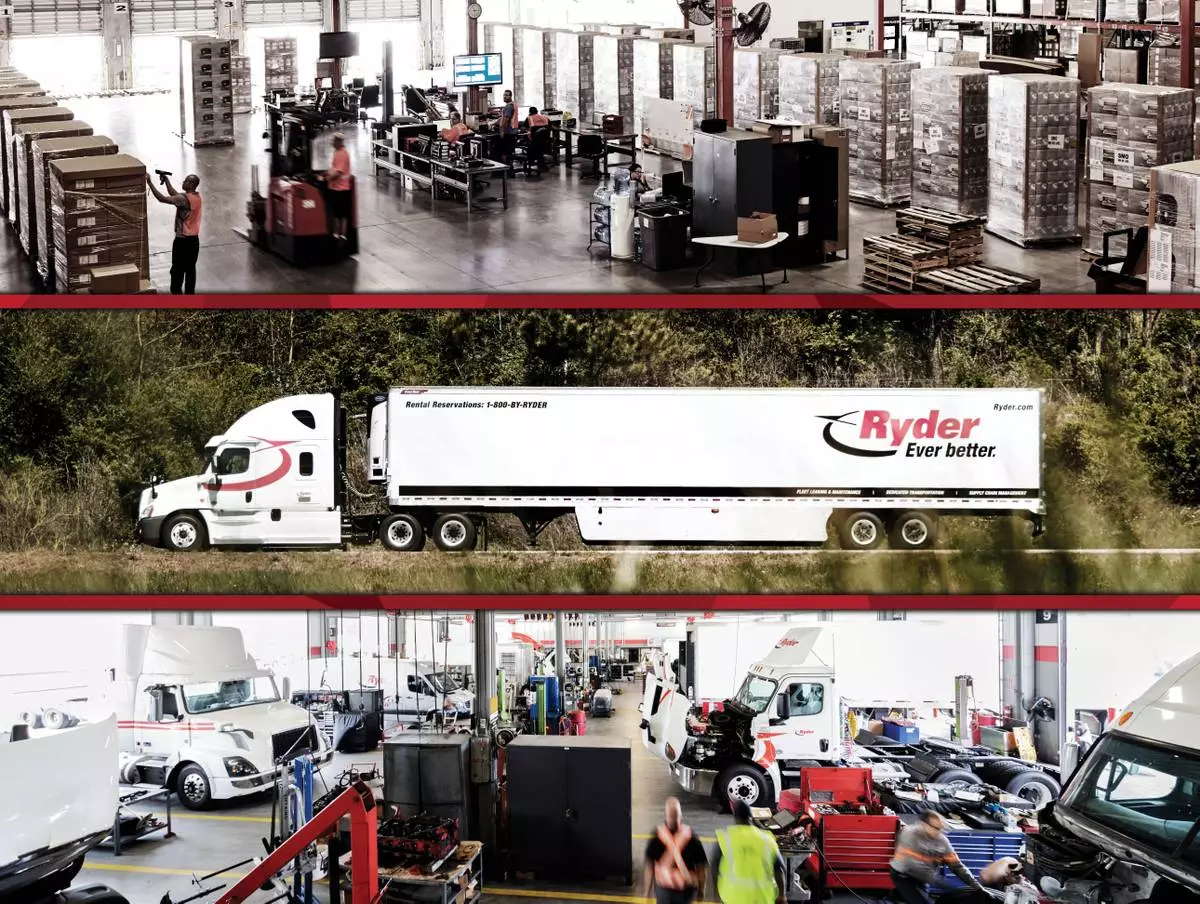
Ryder is a leader in supply chain, dedicated transportation, and fleet management solutions.
Ryder is a leader in supply chain, dedicated transportation, and fleet management solutions.
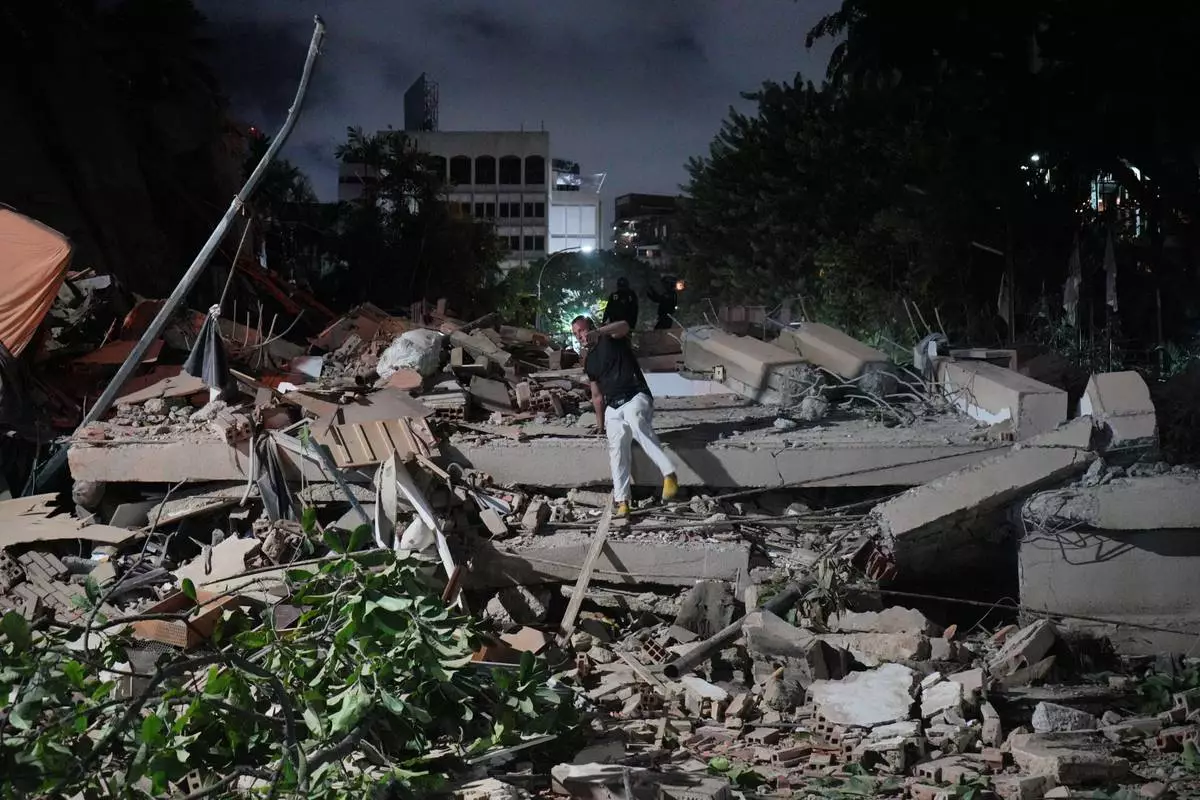
HAVANA (AP) — Trumpets and drums played solemnly at Havana's airport Thursday as white-gloved Cuban soldiers marched out of a plane carrying urns with remains of the 32 Cuban officers killed during a stunning U.S. attack on Venezuela.

Nearby, thousands of Cubans lined one of Havana’s most iconic streets to await the bodies as the island remained under threat by the administration of U.S. President Donald Trump.

The soldiers' shoes clacked as they marched stiff-legged into the headquarters of the Ministry of the Armed Forces and placed the urns on a long table next to the pictures of those killed. Tens of thousands of people paid their respects, saluting the urns or holding their hand over their heart, many of them drenched from standing outside in a heavy downpour.

Thursday’s mass funeral was only one of a handful that the Cuban government has organized over the past half-century.

The soldiers were part of the security detail of Venezuelan President Nicolás Maduro during the Jan. 3 raid on his residence to seize the former leader and bring him to the U.S. to face drug trafficking charges.

State television also showed images of what it said were more than a dozen wounded combatants from the raid, accompanied by Cuban Foreign Minister Bruno Rodríguez after arriving Wednesday night from Venezuela. A man identified in state media as Col. Pedro Domínguez attended Thursday's ceremony in a wheelchair.

He said it was a “disproportionate attack” that killed 11 colleagues around him as they slept. Domínguez said he was committed to doing “whatever it takes to defend this people and to remain united in the face of threats from the United States.”

Tensions between Cuba and the U.S. have spiked, with Trump recently demanding that the Caribbean country make a deal with him before it is “too late.” He did not explain what kind of deal.

Trump also has said that Cuba will no longer live off Venezuela's money and oil. Experts warn that the abrupt end of oil shipments could be catastrophic for Cuba, which is already struggling with serious blackouts and a crumbling power grid.

Officials unfurled a massive flag at Havana's airport as President Miguel Díaz-Canel, clad in military garb, stood silent next to former President Raúl Castro, with what appeared to be the relatives of those killed looking on nearby.

Cuban Interior Minister Lázaro Alberto Álvarez Casas called the slain soldiers “heroes” of an anti-imperialist struggle spanning both Cuba and Venezuela. In an apparent reference to the U.S., he said the “enemy” speaks of “high-precision operations, of troops, of elites, of supremacy.

“We, on the other hand, speak of faces, of families who have lost a father, a son, a husband, a brother,” Álvarez said.

The events demonstrate that “imperialism may possess more sophisticated weapons; it may have immense material wealth; it may buy the minds of the wavering; but there is one thing it will never be able to buy: the dignity of the Cuban people,” he said.

Carmen Gómez, a 58-year-old industrial designer, was among the thousands of Cubans who lined a street where motorcycles and military vehicles thundered by with the remains of those killed.

“They are people willing to defend their principles and values, and we must pay tribute to them,” Gómez said. “It’s because of the sense of patriotism that Cubans have, and that will always unite us.”

The 32 military personnel ranged in age from 26 to 60 and were part of protection agreements between the two countries.

Officials in Cuba have said they expect a massive demonstration Friday across from the U.S. Embassy to protest the deaths.

“People are upset and hurt ... many do believe that the dead are martyrs” of a historic struggle against the United States, analyst and former diplomat Carlos Alzugaray told The Associated Press.

In October 1976, then-President Fidel Castro led a massive demonstration to bid farewell to the 73 people killed in the bombing of a civilian flight financed by anti-revolutionary leaders in the U.S. Most of the victims were Cuban athletes.

In December 1989, officials organized a ceremony to honor the more than 2,000 Cuban combatants who died in Angola during Cuba’s participation in a war that defeated the South African army.

In October 1997, memorial services were held following the arrival of the remains of guerrilla commander Ernesto “Che” Guevara and six of his comrades, who died in 1967.

The latest mass burial is critical to honor those slain, said José Luis Piñeiro, a 60-year-old doctor who lived for four years in Venezuela.

“I don’t think Trump is crazy enough to come and enter a country like this, ours, and if he does, he’s going to have to take an aspirin or some painkiller to avoid the headache he’s going to get,” Piñeiro said. “These were 32 heroes who fought him. Can you imagine an entire nation? He’s going to lose.”

The remains arrived a day after the U.S. announced $3 million in additional aid to help the island recover from the catastrophic Hurricane Melissa. The first flight took off on Wednesday, and a second flight was scheduled for Friday. A commercial vessel also will deliver food and other supplies.

Cuba had said on Wednesday that any contributions will be channeled through the government.

But U.S. State Department foreign assistance official Jeremy Lewin said Thursday that the U.S. was working with Cuba’s Catholic Church to distribute aid, as part of Washington's efforts to give assistance directly to the Cuban people.

“There’s nothing political about cans of tuna and rice and beans and pasta,” he said Thursday, warning that the Cuban government should not intervene or divert supplies. “We will be watching, and we will hold them accountable.”

Lewin said the Cuban government has a choice to: “Step down or better provide towards people.” Lewin added that “if there was no regime,” the U.S. would provide “billions and billions of dollars” in assistance, as well as investment and development: “That’s what lies on the other side of the regime for the Cuban people.”

Rodríguez, the Cuban foreign minister, said the U.S. government was “exploiting what appears to be a humanitarian gesture for opportunistic and politically manipulative purposes.”

Coto contributed from San Juan, Puerto Rico.

Follow AP’s coverage of Latin America and the Caribbean at https://apnews.com/hub/latin-america

People line up outside the Ministry of the Revolutionary Armed Forces where the remains are on display of the Cuban officers who were killed during the U.S. operation in Venezuela that captured President Nicolas Maduro, as it sprinkles rain in Havana, Cuba, Thursday, Jan. 15, 2026. (AP Photo/Ramon Espinosa)

People line up outside the Ministry of the Revolutionary Armed Forces where the remains are on display of the Cuban officers who were killed during the U.S. operation in Venezuela that captured President Nicolas Maduro, as it sprinkles rain in Havana, Cuba, Thursday, Jan. 15, 2026. (AP Photo/Ramon Espinosa)

Military members line up outside the Ministry of the Revolutionary Armed Forces where the urns containing the remains of Cuban officers, killed during the U.S. operation in Venezuela that captured President Nicolas Maduro, are on display in Havana, Cuba, Thursday, Jan. 15, 2026. (AP Photo/Ramon Espinosa)

Military members line up outside the Ministry of the Revolutionary Armed Forces where the urns containing the remains of Cuban officers, killed during the U.S. operation in Venezuela that captured President Nicolas Maduro, are on display in Havana, Cuba, Thursday, Jan. 15, 2026. (AP Photo/Ramon Espinosa)

Military members pay their last respects to Cuban officers who were killed during the U.S. operation in Venezuela that captured Venezuelan President Nicolas Maduro, at the Ministry of the Revolutionary Armed Forces where the urns containing the remains are displayed during a ceremony in Havana, Cuba, Thursday, Jan. 15, 2026. (AP Photo/Ramon Espinosa)

Military members pay their last respects to Cuban officers who were killed during the U.S. operation in Venezuela that captured Venezuelan President Nicolas Maduro, at the Ministry of the Revolutionary Armed Forces where the urns containing the remains are displayed during a ceremony in Havana, Cuba, Thursday, Jan. 15, 2026. (AP Photo/Ramon Espinosa)

A motorcade transports urns containing the remains of Cuban officers, who were killed during the U.S. operation in Venezuela that captured Venezuelan President Nicolas Maduro, through Havana, Cuba, Thursday, Jan. 15, 2026. (AP Photo/Ramon Espinosa)

A motorcade transports urns containing the remains of Cuban officers, who were killed during the U.S. operation in Venezuela that captured Venezuelan President Nicolas Maduro, through Havana, Cuba, Thursday, Jan. 15, 2026. (AP Photo/Ramon Espinosa)

Soldiers carry urns containing the remains of Cuban officers, who were killed during the U.S. operation in Venezuela that captured Venezuelan President Nicolas Maduro, at the Ministry of the Revolutionary Armed Forces in Havana, Cuba, Thursday, Jan. 15, 2026. (Adalberto Roque /Pool Photo via AP)

Soldiers carry urns containing the remains of Cuban officers, who were killed during the U.S. operation in Venezuela that captured Venezuelan President Nicolas Maduro, at the Ministry of the Revolutionary Armed Forces in Havana, Cuba, Thursday, Jan. 15, 2026. (Adalberto Roque /Pool Photo via AP)

A motorcade transports urns containing the remains of Cuban officers, who were killed during the U.S. operation in Venezuela that captured Venezuelan President Nicolas Maduro, through Havana, Cuba, Thursday, Jan. 15, 2026. (AP Photo/Ramon Espinosa)

A motorcade transports urns containing the remains of Cuban officers, who were killed during the U.S. operation in Venezuela that captured Venezuelan President Nicolas Maduro, through Havana, Cuba, Thursday, Jan. 15, 2026. (AP Photo/Ramon Espinosa)

A motorcade transports urns containing the remains of Cuban officers, who were killed during the U.S. operation in Venezuela that captured Venezuelan President Nicolas Maduro, through Havana, Cuba, Thursday, Jan. 15, 2026. (AP Photo/Ramon Espinosa)

A motorcade transports urns containing the remains of Cuban officers, who were killed during the U.S. operation in Venezuela that captured Venezuelan President Nicolas Maduro, through Havana, Cuba, Thursday, Jan. 15, 2026. (AP Photo/Ramon Espinosa)

People line the streets of Havana, Cuba, Thursday, Jan. 15, 2026, to watch the motorcade carrying urns containing the remains of Cuban officers killed during the U.S. operation in Venezuela that captured Venezuelan President Nicolas Maduro. (AP Photo/Ramon Espinosa)

People line the streets of Havana, Cuba, Thursday, Jan. 15, 2026, to watch the motorcade carrying urns containing the remains of Cuban officers killed during the U.S. operation in Venezuela that captured Venezuelan President Nicolas Maduro. (AP Photo/Ramon Espinosa)

Workers fly the Cuban flag at half-staff at the Anti-Imperialist Tribune near the U.S. Embassy in Havana, Cuba, Monday, Jan. 5, 2026, in memory of Cubans who died two days before in Caracas, Venezuela during the capture of Venezuelan President Nicolas Maduro by U.S. forces. (AP Photo/Ramon Espinosa)

Workers fly the Cuban flag at half-staff at the Anti-Imperialist Tribune near the U.S. Embassy in Havana, Cuba, Monday, Jan. 5, 2026, in memory of Cubans who died two days before in Caracas, Venezuela during the capture of Venezuelan President Nicolas Maduro by U.S. forces. (AP Photo/Ramon Espinosa)

Recommended Articles