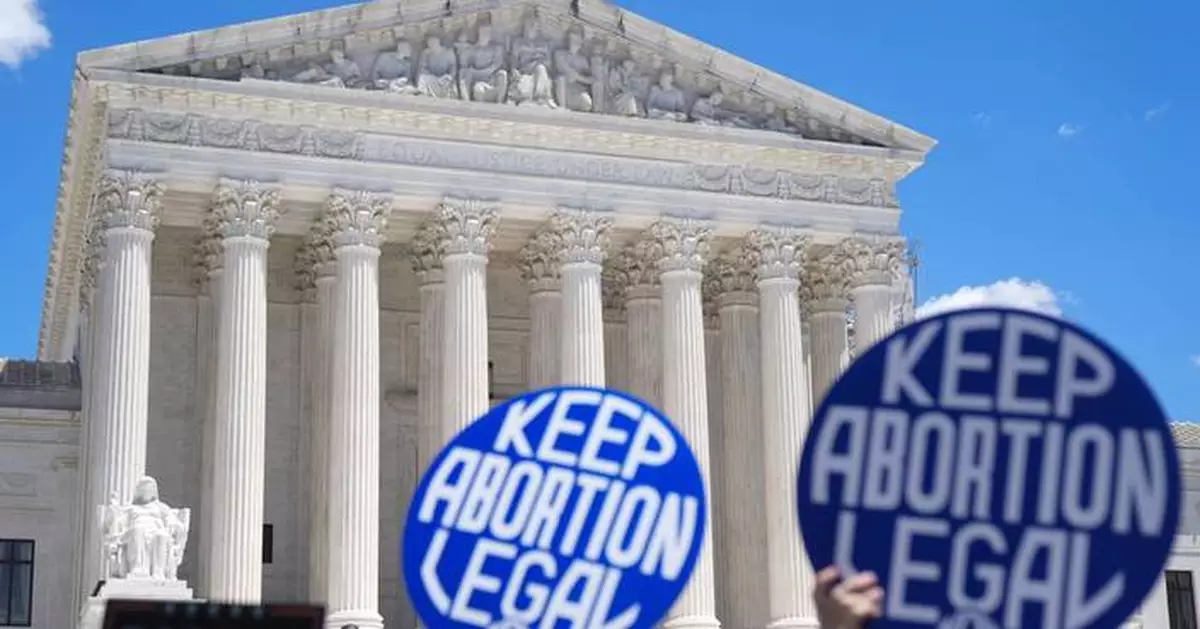
Three years after the Supreme Court opened the door to state abortion bans, most U.S. adults say abortion should be legal — views that look similar to before the landmark ruling.
The new findings from The Associated Press-NORC Center for Public Affairs Research poll show that about two-thirds of U.S. adults think abortion should be legal in all or most cases.
About half believe abortion should be available in their state if someone does not want to be pregnant for any reason.
That level of support for abortion is down slightly from what an AP-NORC poll showed last year, when it seemed that support for legal abortion might be rising.
The June 2022 Supreme Court ruling that overturned Roe v. Wade and opened the door to state bans on abortion led to major policy changes.
Most states have either moved to protect abortion access or restrict it. Twelve are now enforcing bans on abortion at every stage of pregnancy, and four more do so after about six weeks' gestation, which is often before women realize they're pregnant.
In the aftermath of the ruling, AP-NORC polling suggested that support for legal abortion access might be increasing.
Last year, an AP-NORC poll conducted in June found that 7 in 10 U.S. adults said it should be available in all or most cases, up slightly from 65% in May 2022, just before the decision that overruled the constitutional right to abortion, and 57% in June 2021.
The new poll is closer to Americans' views before the Supreme Court ruled. Now, 64% of adults support legal abortion in most or all cases. More than half the adults in states with the most stringent bans are in that group.
Similarly, about half now say abortion should be available in their state when someone doesn’t want to continue their pregnancy for any reason — about the same as in June 2021 but down from about 6 in 10 who said that in 2024.
Adults in the strictest states are just as likely as others to say abortion should be available in their state to women who want to end pregnancies for any reason.
Democrats support abortion access far more than Republicans do. Support for legal abortion has dropped slightly among members of both parties since June 2024, but nearly 9 in 10 Democrats and roughly 4 in 10 Republicans say abortion should be legal in at least most instances.
Seeing what's happened in the aftermath of the ruling has strengthened the abortion rights position of Wilaysha White, a 25-year-old Ohio mom.
She has some regrets about the abortion she had when she was homeless.
“I don’t think you should be able to get an abortion anytime,” said White, who calls herself a “semi-Republican.”
But she said that hearing about situations — including when a Georgia woman was arrested after a miscarriage and initially charged with concealing a death — is a bigger concern.
“Seeing women being sick and life or death, they’re not being put first — that’s just scary,” she said. “I’d rather have it be legal across the board than have that.”
Julie Reynolds’ strong anti-abortion stance has been cemented for decades and hasn’t shifted since Roe was overturned.
“It’s a moral issue,” said the 66-year-old Arizona woman, who works part-time as a bank teller.
She said her view is shaped partly by having obtained an abortion herself when she was in her 20s. “I would not want a woman to go through that,” she said. “I live with that every day. I took a life.”
The vast majority of U.S. adults — at least 8 in 10 — continue to say their state should allow legal abortion if a fetal abnormality would prevent the child from surviving outside the womb, if the patient’s health is seriously endangered by the pregnancy, or if the person became pregnant as a result of rape or incest.
Consistent with AP-NORC’s June 2024 poll, about 7 in 10 U.S. adults “strongly” or “somewhat” favor protecting access to abortions for patients who are experiencing miscarriages or other pregnancy-related emergencies.
In states that have banned or restricted abortion, such medical exceptions have been sharply in focus.
This is a major concern for Nicole Jones, a 32-year-old Florida resident.
Jones and her husband would like to have children soon. But she said she’s worried about access to abortion if there’s a fetal abnormality or a condition that would threaten her life in pregnancy, since they live in a state that bans most abortions after the first six weeks of gestation.
“What if we needed something?” she asked. “We’d have to travel out of state or risk my life because of this ban.”
Florida's law has exceptions, including to save the life of a pregnant woman or prevent irreversible impairment of bodily functions. But some patients, advocates and health care providers across the country have often said that restrictions still limit access to emergency care.
There's less consensus on whether states that allow abortion should protect access for women who live in places with bans.
Just over half support protecting a patient's right to obtain an abortion in another state and shielding those who provide abortions from fines or prison time. In both cases, relatively few adults — about 2 in 10 — oppose the measures and about 1 in 4 are neutral.
More Americans also favor than oppose legal protections for doctors who prescribe and mail abortion pills to patients in states with bans. About 4 in 10 “somewhat” or “strongly” favor those protections, and roughly 3 in 10 oppose them.
Such telehealth prescriptions are a key reason that the number of abortions nationally has risen even as travel for abortion has declined slightly.
There have been legal challenges to telehealth abortions, including a lawsuit filed this week by a Texas man claiming a California physician violated state and federal law by sending pills to the plaintiff’s girlfriend.
The AP-NORC poll of 1,437 adults was conducted July 10-14, using a sample drawn from NORC’s probability-based AmeriSpeak Panel, which is designed to be representative of the U.S. population. The margin of sampling error for adults overall is plus or minus 3.6 percentage points.
Follow the AP's coverage of abortion at https://apnews.com/hub/abortion.
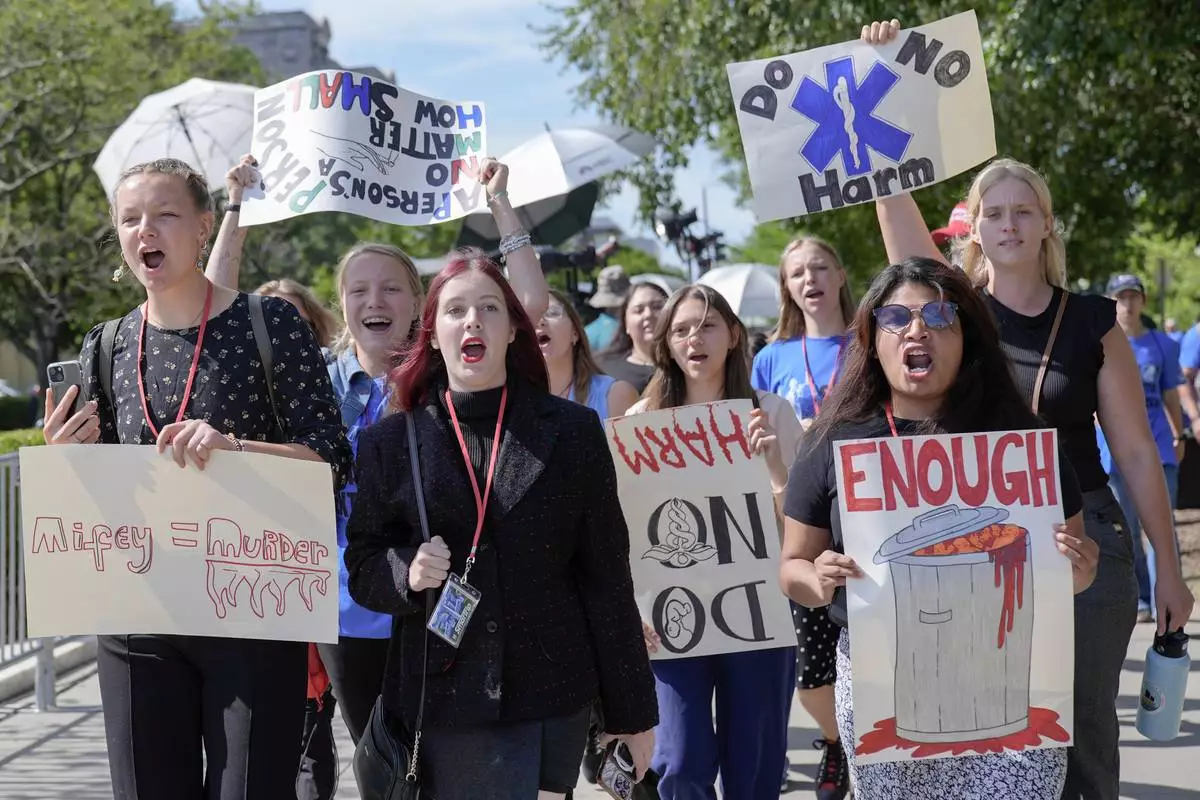
FILE - Anti-abortion activists rally outside of the U.S. Supreme Court, Thursday, June 20, 2024, in Washington. (AP Photo/Mariam Zuhaib, File)
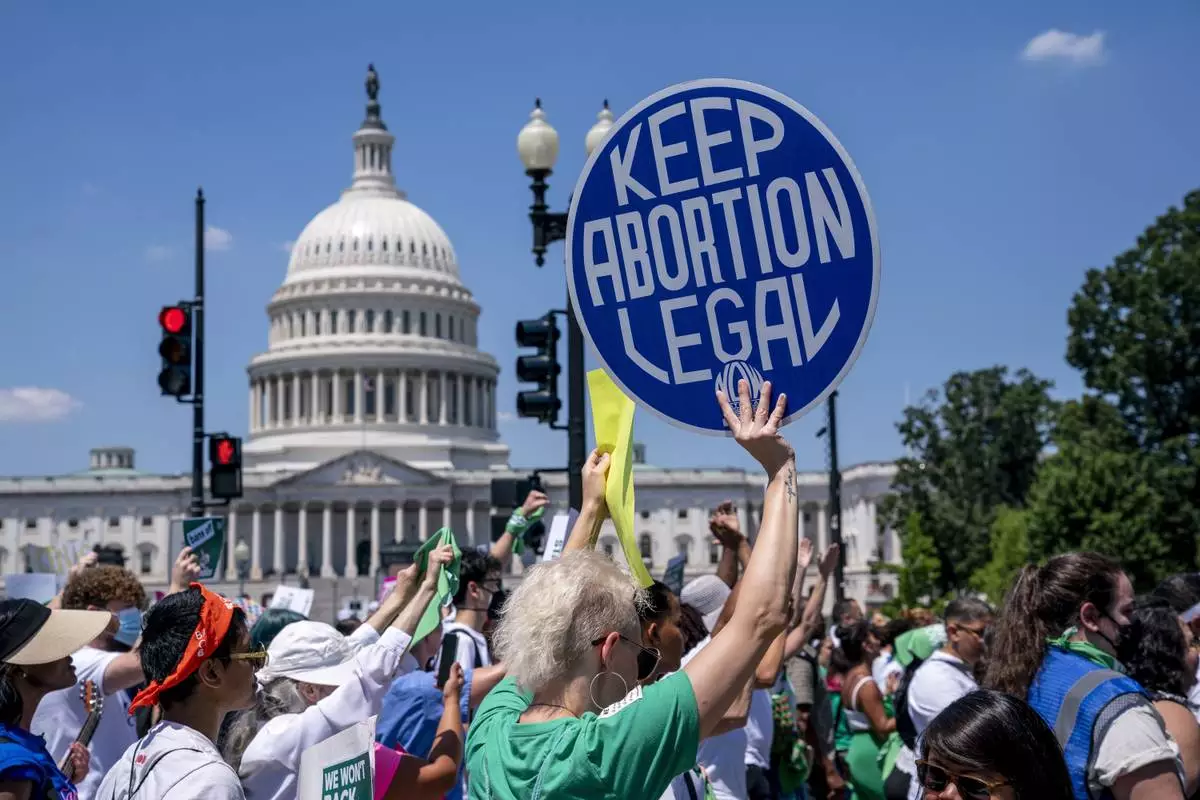
FILE - Abortion-rights activists demonstrate against the Supreme Court decision to overturn Roe v. Wade that established a constitutional right to abortion, on Capitol Hill in Washington, June 30, 2022. (AP Photo/J. Scott Applewhite, File)
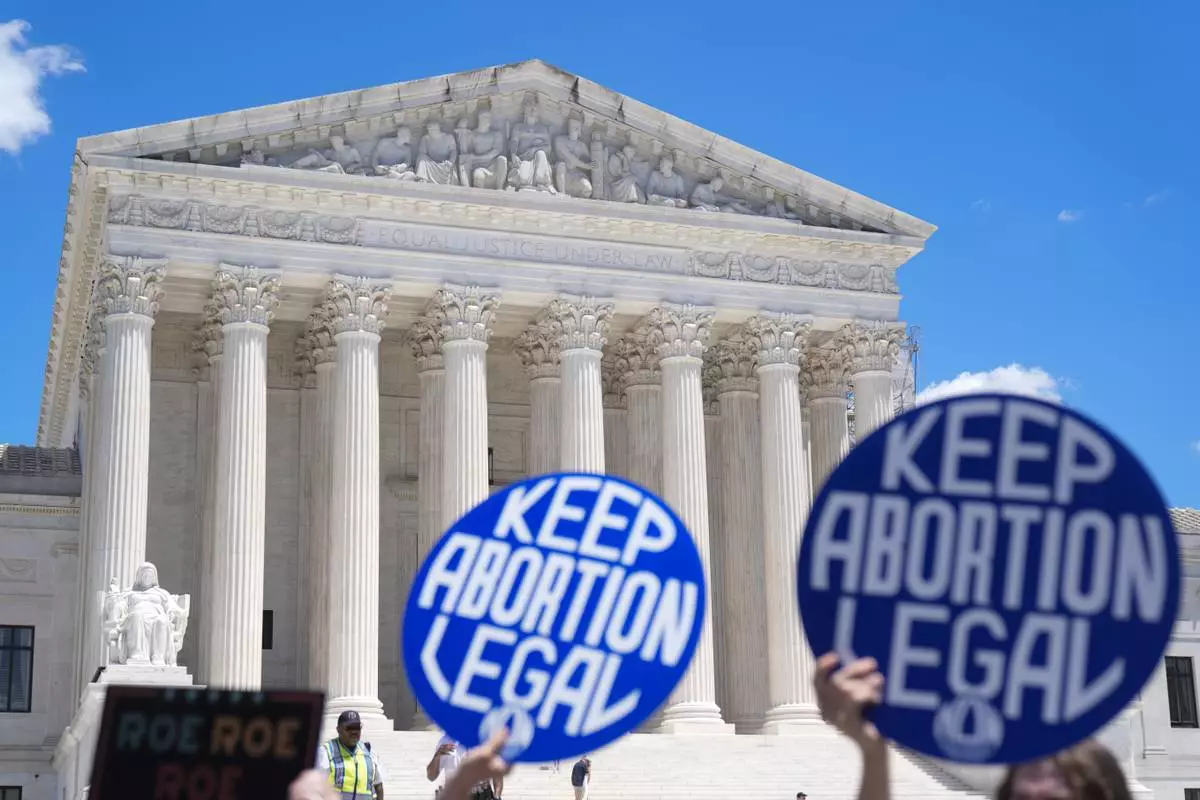
FILE - Abortion rights activists and Women's March leaders protest as part of a national day of strike actions outside the Supreme Court, June 24, 2024, in Washington. (AP Photo/Mark Schiefelbein, File)