
Skip to Content Facebook Feature Image

Philanthropist Wendy Schmidt insists science and immersive media can inspire action for the planet

TECH

Philanthropist Wendy Schmidt insists science and immersive media can inspire action for the planet
TECH

TECH

Philanthropist Wendy Schmidt insists science and immersive media can inspire action for the planet

2025-07-25 04:13 Last Updated At:04:20

NEW YORK (AP) — Technology drove the personal wealth behind many philanthropists atop the list of last year's biggest American donors. But Wendy Schmidt and her husband, former Google CEO Eric Schmidt, are fairly unusual in their insistence that the scientific advancements they fund be shared widely and for the planet's protection.

The Silicon Valley veterans' philanthropies, led by Wendy Schmidt, have joined the growing ranks focused on marine conservation since the Schmidt Family Foundation's inception in 2006. With a net worth estimated to exceed $25 billion, they're embracing that role as the Trump administration cuts billions in federal funding to scientific research.

“We work really hard to make sure science holds its place in our society," Wendy, the president and co-founder of the Schmidt Family Foundation and Schmidt Ocean Institute, told The Associated Press. "It’s how we got where we are. It’s why we have these technologies that we’re using today.”

Her latest philanthropic venture is Agog: The Immersive Media Institute. Co-founded last year with climate journalism pioneer Chip Giller, the effort attempts to spark social change by fostering new connections with the natural world through extended reality technologies.

Grantees include “Fragile Home," a project exploring displacement through a mixed reality headset that takes users through the past, present and future of a Ukrainian home; and Kinfolk Tech, a nonprofit that aims to help excluded communities reshape public monuments by superimposing their own digitally rendered installations onto real world spaces.

The Associated Press recently followed Wendy Schmidt on a tour of Kinfolk Tech's Juneteenth exhibit in Brooklyn Bridge Park and spoke with her about funding scientific research. This interview has been edited and condensed for clarity.

A: (Extended reality) has an enormous amount of power. It has a power to get inside your head. It has a power to move you and remove your ego in a way, and it puts you inside as a participant of something. You’re seeing a story rather than just being an observer. And so, it has a potential for stirring you to action.

We realized someone’s going to take this and they’re going to make it really good. And they’ll probably use it for entertainment and someone will make money with it. But maybe there’s a better way to use it. As a philanthropist, I’m thinking about what good can come out of this and how can we use this for social good and to create more empathy in the world, more connection for people.

A: Well, they’re not going away. Because even when you think about AI and how you program an AI, if you’re not inclusive, you’re not really serving everybody. And when you have a technology just as powerful as this one is, and those that are more powerful, they must be inclusive by design. We work with all of our grantees to make sure that we’re listening and that their voices are heard and their stories, in this case, get told by them.

A: We’ve frankly continued to do what we’ve always done, which is to try to be on the frontier of research and efforts to understand our planet, to share that understanding openly with more people. Because when you see something differently, your whole worldview changes. We’re finding things in the ocean we didn’t know existed at all, even five years ago. And they should change the way we think about the planet.

And so (what’s going on today in our country) is really a shame. There are many important projects that have lost funding, and you can’t save all of them. But we are doing everything we can to shore up people in our very broad network of scientists and young PhD students and post-PhD folks, researchers everywhere. We’re expanding our opportunities on Falkor (too), on the (ocean) research vessel. Most people are lacking funding. We’re helping them to have funding so they can complete their mission. We don’t think science should stop because of what’s going on here. In fact, it’s more important than ever.

As always, it’s our job as philanthropists to take risks -- to do what governments and industry often won’t do anyway. You can’t do everything, but you can do a lot. Particularly when it comes to climate and climate science. Climate modeling is super important in terms of public health and the surveillance and reporting of data. When the United States isn’t doing that, there are others who can do that if you build out their architecture. And philanthropy can play a very big role in doing that.

A: Experiential (media) I think is important. One of the things that Agog can do is expose people to realities that they don’t see. People accept what they see on the surface. But when you, for example, bring people along on a dive that our robot SuBastian does off of Falkor (too), and you show them a world no human eye has ever seen, and they witness what is really on the earth. And then you give them the science and tell them this is most of life on earth and that this plays this function in your life and your well-being.

We can help people make connections when we can show them things, get their attention, and reveal the most wonderful things they’ve ever seen that are here on this planet.

Associated Press coverage of philanthropy and nonprofits receives support through the AP’s collaboration with The Conversation US, with funding from Lilly Endowment Inc. The AP is solely responsible for this content. For all of AP’s philanthropy coverage, visit https://apnews.com/hub/philanthropy.
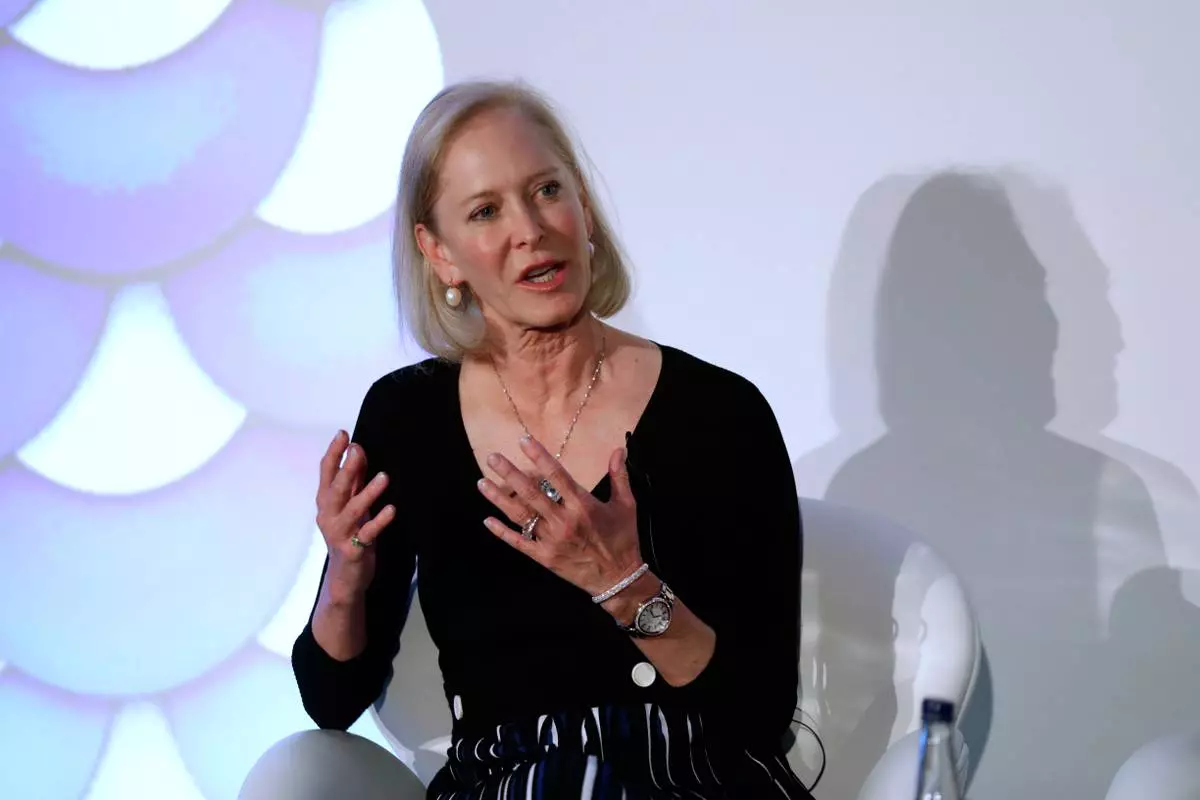
FILE - American businesswoman and philanthropist Wendy Schmidt speaks at the launch of the New Plastics Economy Innovation Prize at the Saatchi Gallery in London, May 18, 2017. (AP Photo/Matt Dunham, File)
FILE - American businesswoman and philanthropist Wendy Schmidt speaks at the launch of the New Plastics Economy Innovation Prize at the Saatchi Gallery in London, May 18, 2017. (AP Photo/Matt Dunham, File)

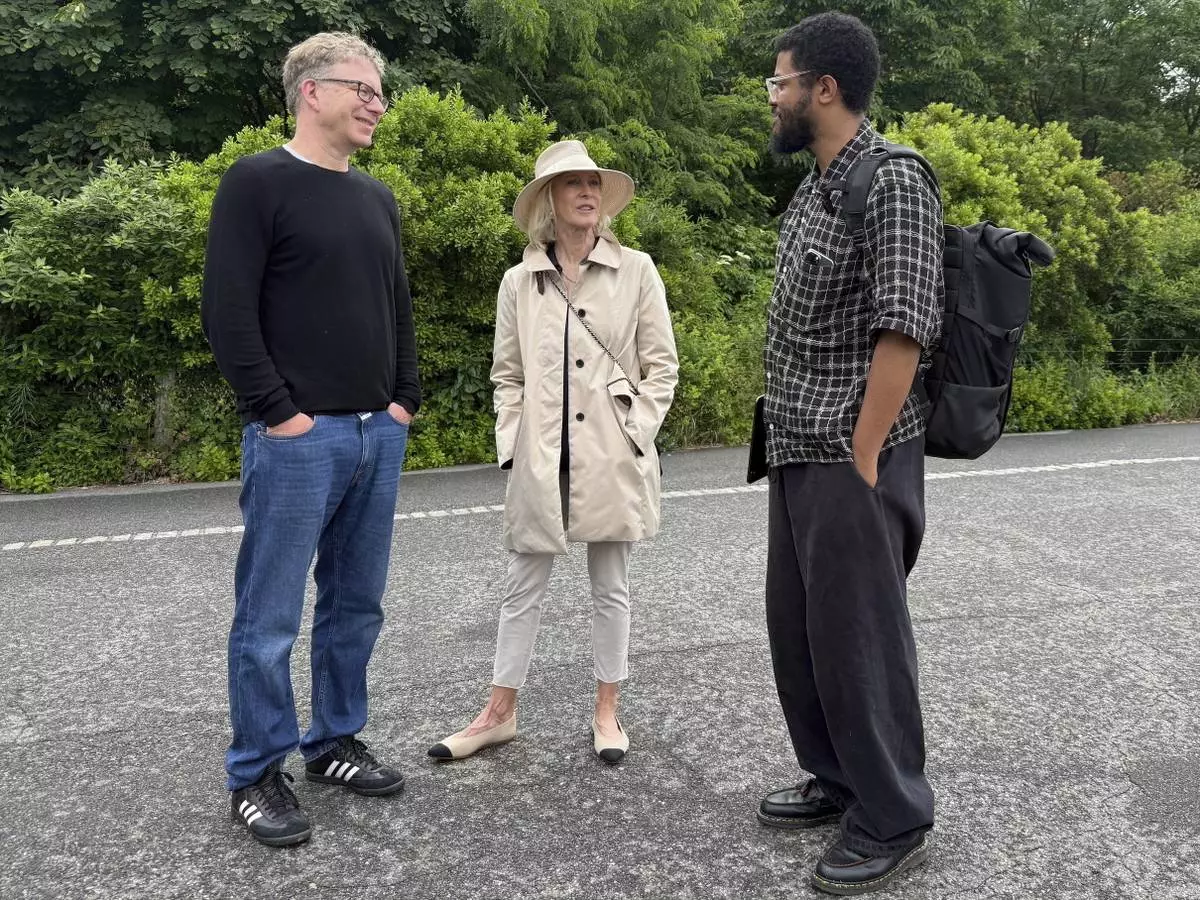
Agog Executive Director Chip Giller, left, philanthropist Wendy Schmidt and Kinfolk Tech co-founder Idris Brewster, right, tour Brooklyn Bridge Park in New York City on June 7, 2025. (AP Photo/James Pollard)

Agog Executive Director Chip Giller, left, philanthropist Wendy Schmidt and Kinfolk Tech co-founder Idris Brewster, right, tour Brooklyn Bridge Park in New York City on June 7, 2025. (AP Photo/James Pollard)

LONDON (AP) — Britain's Conservative Party, which governed the country from 2010 until it suffered its worst-ever electoral defeat two years ago, was plunged into fresh turmoil Thursday after its leader sacked the man widely seen as her greatest rival for apparently plotting to defect from the party.

Conservative leader Kemi Badenoch said in a video and statement on X that she sacked the party's justice spokesperson Robert Jenrick due to “irrefutable evidence that he was plotting in secret to defect" in a way that was “designed to be as damaging as possible” to the party. Badenoch also ejected Jenrick from the party's ranks in Parliament and suspended his party membership.

“The British public are tired of political psychodrama and so am I,” she said. “They saw too much of it in the last government, they’re seeing too much of it in this government. I will not repeat those mistakes.”

Though Badenoch did not specify which party Jenrick was planning to switch to, Nigel Farage, leader of the hard-right Reform UK party, said he had “of course” had conversations with him.

In the past 12 months, the Conservatives have suffered a string of defections to Reform UK, including some former Cabinet ministers.

Farage said in a press briefing in Edinburgh, the Scottish capital, that coincided with Badenoch's statement that, “hand on heart,” he wasn't about to present Jenrick as the latest Conservative to defect to Reform, an upstart, anti-immigration party.

“I’ll give him a ring this afternoon,” he said. “I might even buy him a pint, you never know.”

The Conservatives are fighting not just the Labour government to their left, but Reform UK to the right.

Reform, which only has a handful of lawmakers in the House of Commons, is tipped to make a major breakthrough in an array of elections this May, including those to the Scottish and Welsh Parliaments, at the expense of both the Conservatives and Labour.

Jenrick, who continued to attract speculation about leadership ambitions despite being beaten in 2024, has appeared more open than Badenoch to the prospect of some sort of deal between the Conservatives and Reform to unite the right in the run-up to next general election, which has to take place by 2029.

Jenrick has yet to respond to the news of his sacking.

Labour Prime Minister Keir Starmer, whose favorability ratings have fallen sharply since the general election following a series of missteps, questioned why it took Badenoch “so long” to sack Jenrick given all the speculation that he was looking to either challenge her or to defect to Reform.

Badenoch, a small-state, low-tax advocate, has shifted the Conservatives to the right, announcing policies similar to those of U.S. President Donald Trump, including a promise to deport 150,000 unauthorized immigrants a year.

Her poor poll ratings and lackluster performance in Parliament had stirred speculation that she could be ousted long before the next election.

However, she has been making a better impression in Parliament in recent weeks, particularly during her weekly questioning of Starmer, in a way that appears to have cemented her position as leader.

The party is no stranger to turmoil, having gone through six leaders in the space of 10 years, five of them serving as prime minister. Widespread anger at the way the Conservatives were governing Britain led to their defeat at the general election in July 2024, when they lost around two-thirds of their lawmakers, their worst performance since the modern party was created nearly 200 years ago.

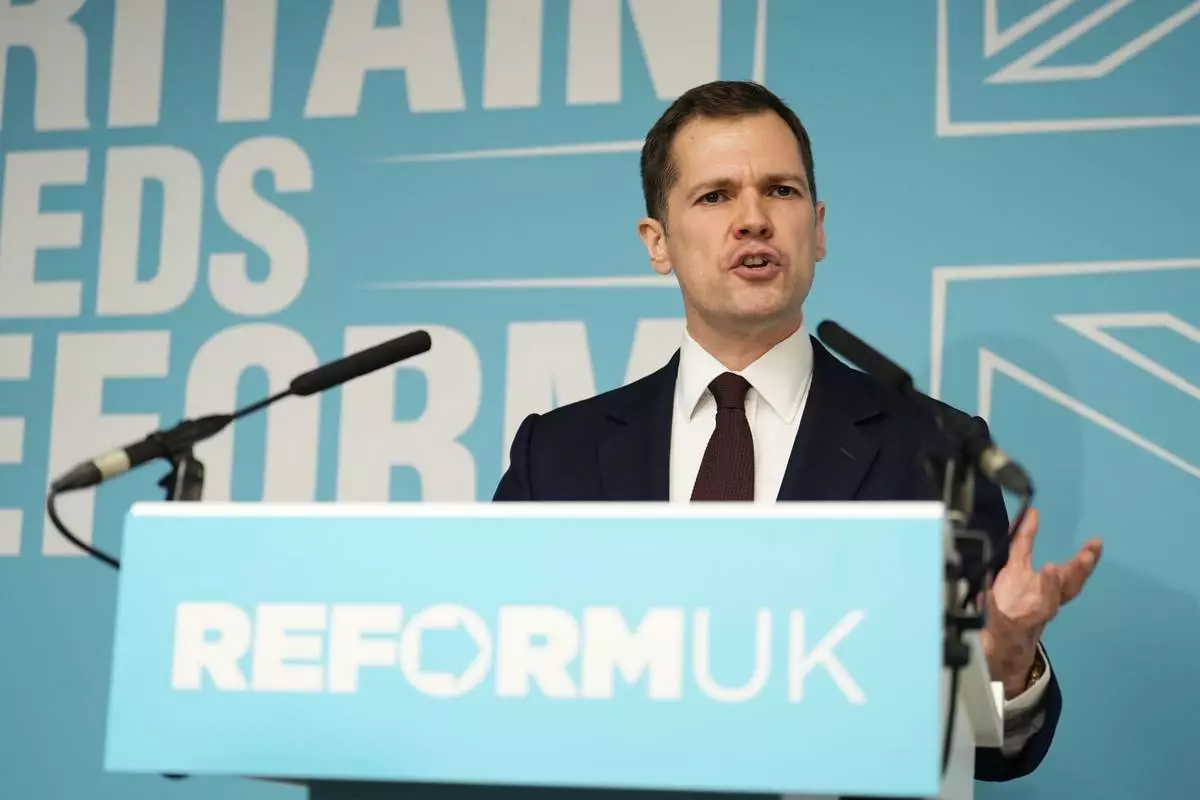
Robert Jenrick speaking at a Reform UK press conference in Westminster, London, where it was announced the former Conservative MP has joined Reform UK, Thursday, Jan. 15, 2026. (Jordan Pettitt/PA via AP)

Robert Jenrick speaking at a Reform UK press conference in Westminster, London, where it was announced the former Conservative MP has joined Reform UK, Thursday, Jan. 15, 2026. (Jordan Pettitt/PA via AP)

Robert Jenrick with Reform UK leader Nigel Farage at a Reform UK press conference in Westminster, London, where it was announced the former Conservative MP has joined Reform UK, Thursday, Jan. 15, 2026. (Jordan Pettitt/PA via AP)

Robert Jenrick with Reform UK leader Nigel Farage at a Reform UK press conference in Westminster, London, where it was announced the former Conservative MP has joined Reform UK, Thursday, Jan. 15, 2026. (Jordan Pettitt/PA via AP)

Reform Party leader Nigel Farage addresses protesters outside the Iranian embassy, in London, Monday, Jan. 12, 2026. (Yui Mok/PA via AP)

Reform Party leader Nigel Farage addresses protesters outside the Iranian embassy, in London, Monday, Jan. 12, 2026. (Yui Mok/PA via AP)

Kemi Badenoch with Robert Jenrick before being announced as the new Conservative Party leader following the vote by party members at 8 Northumberland Avenue in central London, Nov. 3, 2024. (Stefan Rousseau/PA via AP)

Kemi Badenoch with Robert Jenrick before being announced as the new Conservative Party leader following the vote by party members at 8 Northumberland Avenue in central London, Nov. 3, 2024. (Stefan Rousseau/PA via AP)

Recommended Articles