The German city of Dresden, which endured a spate of deadly bombing attacks towards the end of World War II, has been reconciling with its difficult past amid decades of rebuilding and now stands as an important reminder of the need to cherish peace.
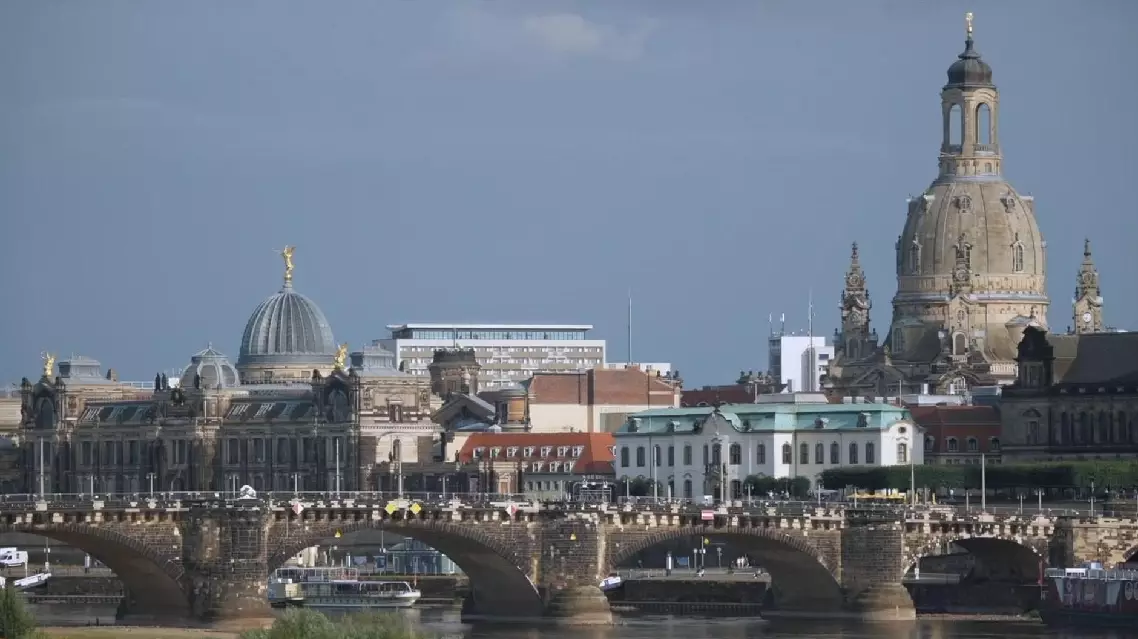
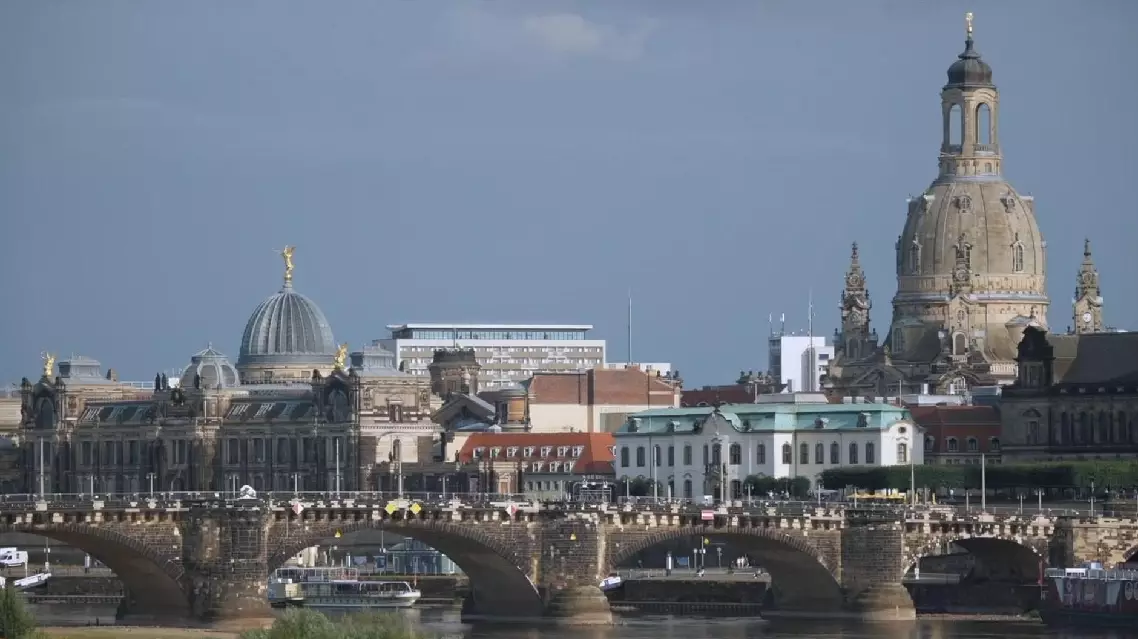
Rising proudly above the River Elbe, Dresden was once a city celebrated for its baroque splendor and long regarded as a key center of European culture, music and art.
However, all this changed on the nights of Feb 13 and 14, 1945, when the Allied Forces launched a massive bombing campaign which reduced the city to ashes within the space of roughly 40 hours.
Tens of thousands died as entire neighborhoods were flattened and a city which was once called "the Florence on the Elbe" was nearly completely wiped out.
The horrors of those terrifying nights have continued to haunt survivors to this day.
"I can still see it so clearly. Suddenly there was a full alarm. Everything was happening so fast, coat on and everyone was responsible for a piece of luggage. It was so bad because you knew, now it's time to go," said Nora Lang, an eyewitness of the bombing who was 13 at the time.
"It was so terrible. Everyone was sitting in a big cellar room. A candle was burning in the middle and everyone was shaking. Mainly, you heard the incendiary bombs falling through the roofs. It sounded like a sack of potatoes or a hundred pounds of coal was being poured out. This noise --- boom boom boom -- was constant. I was so scared," she said.
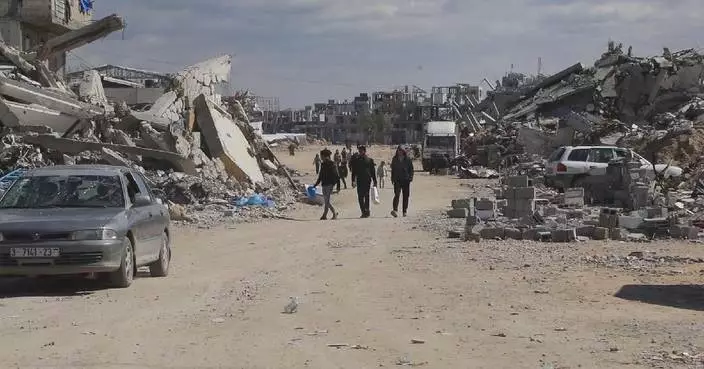
When Lang emerged from the cellar, what she saw was scenes of utter devastation, with homes reduced to rubble and lives left shattered.
The immediate aftermath of the bombing was no easier, as she saw more things that no child should have to see.
"The next day, there were thousands of people on the move, all streaming out of the city. Along the country road, trucks loaded with corpses passed us by. They drove past us," she said.
More than 12 square kilometers of urban area in the city was flattened and around 25,000 people were killed in the attacks. Nearly 7,000 of them were cremated in the middle of the city's Altmarkt, or Old Market Square.
The Allied Forces had been conducting large-scale bombing campaigns against many German cities to destroy armaments, and while there are many debates about why the Allies bombed Dresden, one historian noted it is likely to have been a strategic decision targeting the Nazis.
"In the winter of 1944 to 1945, Dresden was one of the largest cities in the then German Reich. Many industries, particularly intelligence-intensive industries, were located here. Dresden was also home to one of the largest garrisons, where over 10,000 soldiers were stationed," said Matthias Neutzner, a historian and engineer.
However, many lament the huge civilian casualties of the attack which left the city in ruin.
"The question which is very often asked is 'why was Dresden bombed?' Dresden was not an innocent city in World War II, but the fact that it was not these military targets but the historic city center and what was around it, so residential [quarters], which was aimed at -- usually is interpreted that it was an act to break the morale of the civil population," said Susanne Reichelt, a city tour guide.
After the end of the war, Dresden became part of the German Democratic Republic, and while some old buildings were remade, many others were lost to the past.
One of the most symbolic reconstruction projects was that of the Frauenkirche, the Church of Our Lady, which was left in its demolished state for decades as a powerful symbol of the war's devastation before the rebuilding work began in the 1990s.
"It was only after the reunification of Germany everything seemed possible. They then started to take into their hands, each individual stone of this heap of rubble and put them back to the place where they think they were and that's why you see that patchwork appearance of it, which is like a scar to the events of 1945 and so it remains a memorial," said Reichelt.
Every year on Feb 13, thousands of residents gather to remember the victims of the 1945 bombing, sending out a strong message which warns of the devastating consequences of war.
"If there were stronger impulses emanating from Dresden for peace, human rights and democracy then I believe we have lived up to our responsibility as a symbolic place of remembrance, but there is still a lot to do," said Neutzner.
"War always brings suffering and destruction, which you can overcome but it is really an absolutely hard and long [term] thing and that would be a good message to learn from the story of Dresden," said Reichelt.
1945 Bombing of Dresden offers stark reminder to cherish peace
1945 Bombing of Dresden offers stark reminder to cherish peace
1945 Bombing of Dresden offers stark reminder to cherish peace