BOGOTA, Colombia (AP) — Peruvian customs officials have seized a record-breaking shipment of illegal mercury, exposing a cross-border smuggling network that is fueling one of the Amazon’s most destructive criminal economies: illicit gold mining.
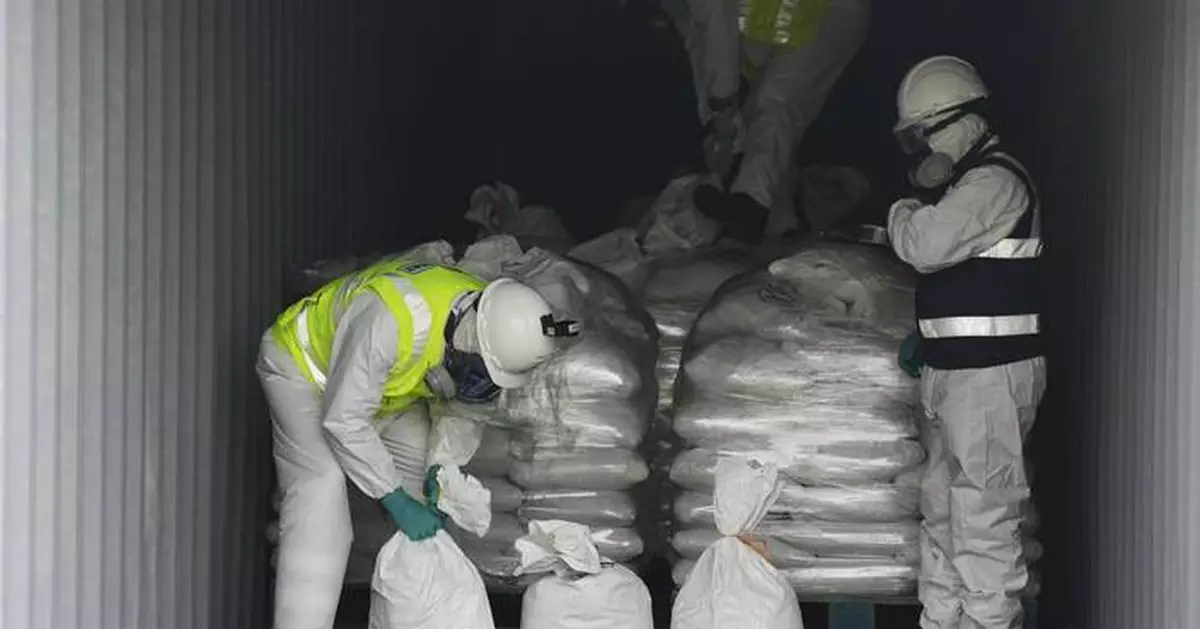
The 4-ton haul — the largest mercury seizure ever made in an Amazon country and one of the world's largest — was discovered in June at the port of Callao, hidden inside gravel-filled bags on a cargo ship bound for Bolivia. Though labeled as crushed stone, the shipment was flagged by customs agents based on international intelligence sharing.
Click to Gallery
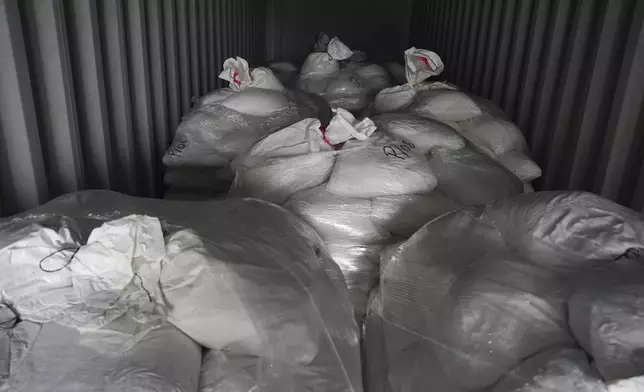
Gravel-filled bags with mercury hidden inside sit inside a seized container in Lima, Peru, Wednesday, July 16, 2025. (AP Photo/Guadalupe Pardo)
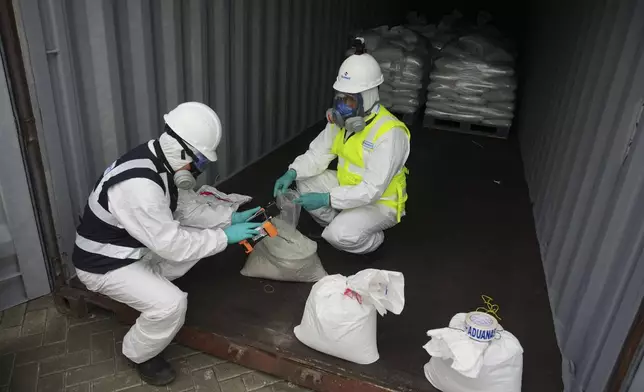
Customs workers test a sample of mercury hidden in gravel-filled bags in Lima, Peru, Wednesday, July 16, 2025. (AP Photo/Guadalupe Pardo)
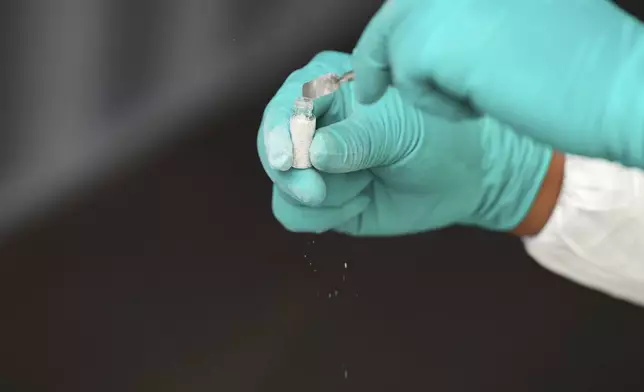
A costums worker shows a sample of mercury that was hidden in gravel-filled bags in Lima, Peru, Wednesday, July 16, 2025. (AP Photo/Guadalupe Pardo)

A customs worker takes a sample of mercury hidden in gravel-filled bags in Lima, Peru, Wednesday, July 16, 2025. (AP Photo/Guadalupe Pardo)

Customs workers carry bags of mercury hidden in gravel-filled bags in Lima, Peru, Wednesday, July 16, 2025. (AP Photo/Guadalupe Pardo)
“This crushed stone was laced with mercury,” said Jorge Gallo Alvarado, head of customs enforcement at SUNAT, Peru’s tax and customs agency. “It’s a restricted substance because it’s used in illegal alluvial mining.”
The container, which originated in Mexico, was singled out for inspection by SUNAT’s risk analysis team. U.S. specialists later confirmed the presence of mercury embedded in the gravel — a tactic increasingly used to avoid detection at ports.
The seized goods are valued at roughly $500,000, SUNAT said.
Authorities say the bust marks a turning point in efforts to dismantle the supply chains behind the Amazon’s illicit gold trade. Mercury, a powerful neurotoxin banned or tightly restricted in many countries, remains essential to the process used by illegal miners across the rainforest to extract gold from river sediment.
The method is simple but dangerous: miners mix mercury with gold particles to form an amalgam, then burn it off, releasing toxic vapor into the air. The leftover mercury often flows into rivers, where it transforms into methylmercury — its most dangerous form — and builds up in fish and aquatic life.
“This is a very important seizure,” said Luis Fernandez, a research professor and mercury expert at Wake Forest University in North Carolina, who traveled to Lima to assess the find.
“We don’t often see mercury seizures at this scale, especially not in transit through formal customs points," he said.
Fernandez estimated the mercury could have been used to produce roughly 1,600 kilograms (3,527 pounds) of gold — worth more than $172 million at current prices.
“This isn’t subsistence mining,” he said. “It’s organized, high-value illicit trade with serious environmental and public health consequences.”
In Peru’s Madre de Dios region, an epicenter of illegal mining, mercury contamination has been detected in drinking water, fish and even breast milk. Long-term exposure to methylmercury can cause irreversible damage to the brain and nervous system, particularly in children and pregnant women. Indigenous and riverine communities that rely on fish for food are especially vulnerable.
Peruvian authorities say much of the mercury entering the country is smuggled from Mexico, where it’s mined in central states such as Querétaro. Prices have surged in recent years due to booming global demand for gold, reaching as high as $330 per kilogram of mercury — and more than $3,500 per ounce of gold — earlier this year.
Some of the mercury seized in June is believed to have originated in small, artisanal mines inside a UNESCO ‑protected biosphere reserve.
While the Environmental Investigation Agency, a nonprofit watchdog that investigates environmental crime, has documented that at least 30 tons of mercury have been trafficked annually from Mexico to countries like Peru and Colombia by a single criminal network, the real volume is likely higher. Soaring gold prices and a 400% markup on mercury in the Amazon compared to Mexico have made smuggling increasingly lucrative. Seizures and monitoring suggest flows rose to an estimated 56 tons in 2024, with further increases expected this year. Colombia remains one of the highest per capita emitters of mercury worldwide, with total annual releases reaching up to 150 tons, much of it tied to illegal gold mining.
EIA’s latest investigation, released in tandem with Peru's announcement, describes a growing “gold-mercury-drug trifecta” linking illegal mining to transnational crime and environmental degradation. The group’s investigators documented how organized criminal groups — including Mexico’s Jalisco New Generation Cartel — are now involved in mercury mining and trafficking.
“Until mercury mines are no longer in operation, traffickers will leave no stone unturned to smuggle the metal,” the report states.
Traffickers often disguise mercury shipments with false paperwork and front companies, allowing them to slip through customs. Once across the border, the metal is sold to illegal mining camps — often in protected forests or Indigenous territories — where it becomes almost impossible to trace.
In Colombia, security sources say armed groups such as the National Liberation Army and the Gulf Clan play a central role in the mercury-for-gold trade. Similar dynamics have been reported in Brazil and Bolivia, where enforcement is weak and black-market demand is high.
Although Peru ratified the Minamata Convention on Mercury in 2013, enforcement has struggled to keep up with the pace and adaptability of trafficking networks.
“These networks are agile,” Fernandez said. “As gold prices rise, they adapt quickly. Customs authorities need tools, training, and resources to keep pace.”
Adam Dolezal, extractive industries campaigner at EIA, said the seizure shows what is possible when customs systems are properly resourced and coordinated — but warned that enforcement alone won’t stop the trade.
“Unless mercury production is shut down at the source, this toxic trade will continue,” Dolezal said.
Calls are growing to close remaining mercury mines in Mexico and reform global controls on the metal. The issue is expected to take center stage at the upcoming Conference of the Parties to the Minamata Convention later this year, where advocates hope to eliminate legal loopholes that allow mercury to be traded for small-scale mining.
Follow Steven Grattan on Instagram: @steven.grattan
The Associated Press’ climate and environmental coverage receives financial support from multiple private foundations. AP is solely responsible for all content. Find AP’s standards for working with philanthropies, a list of supporters and funded coverage areas at AP.org.
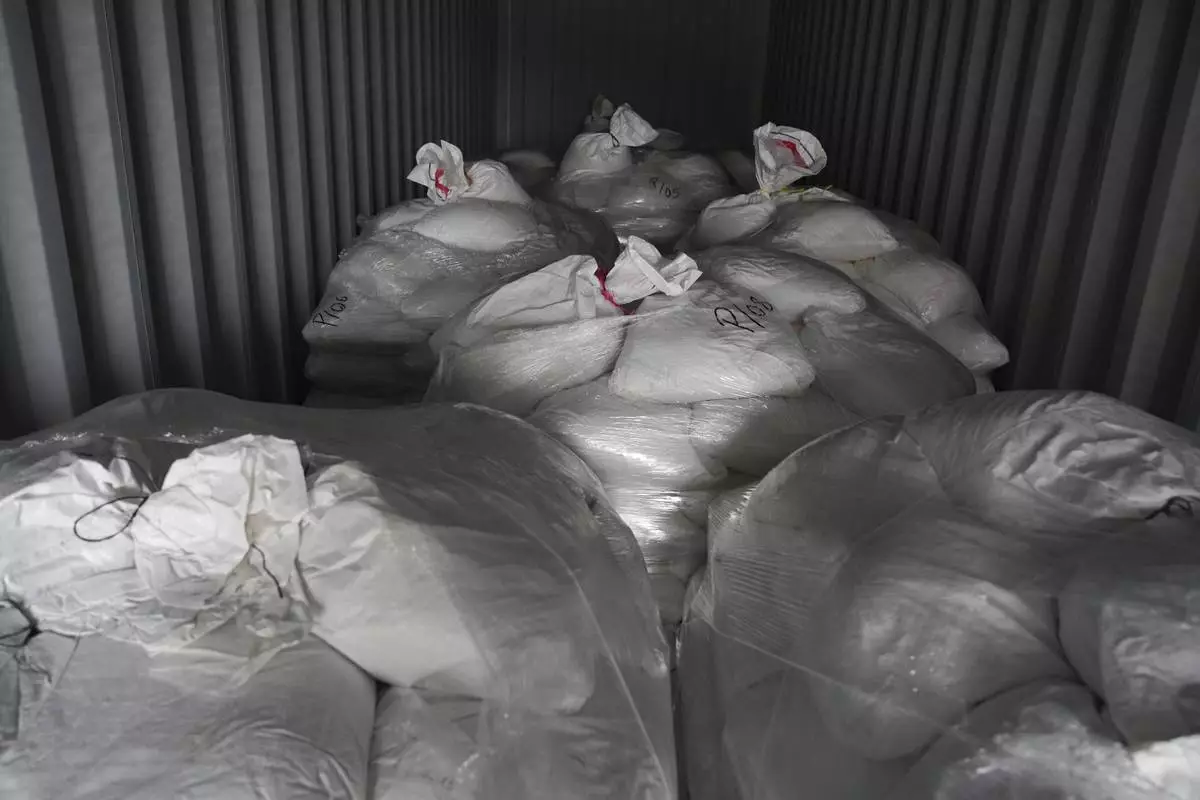
Gravel-filled bags with mercury hidden inside sit inside a seized container in Lima, Peru, Wednesday, July 16, 2025. (AP Photo/Guadalupe Pardo)
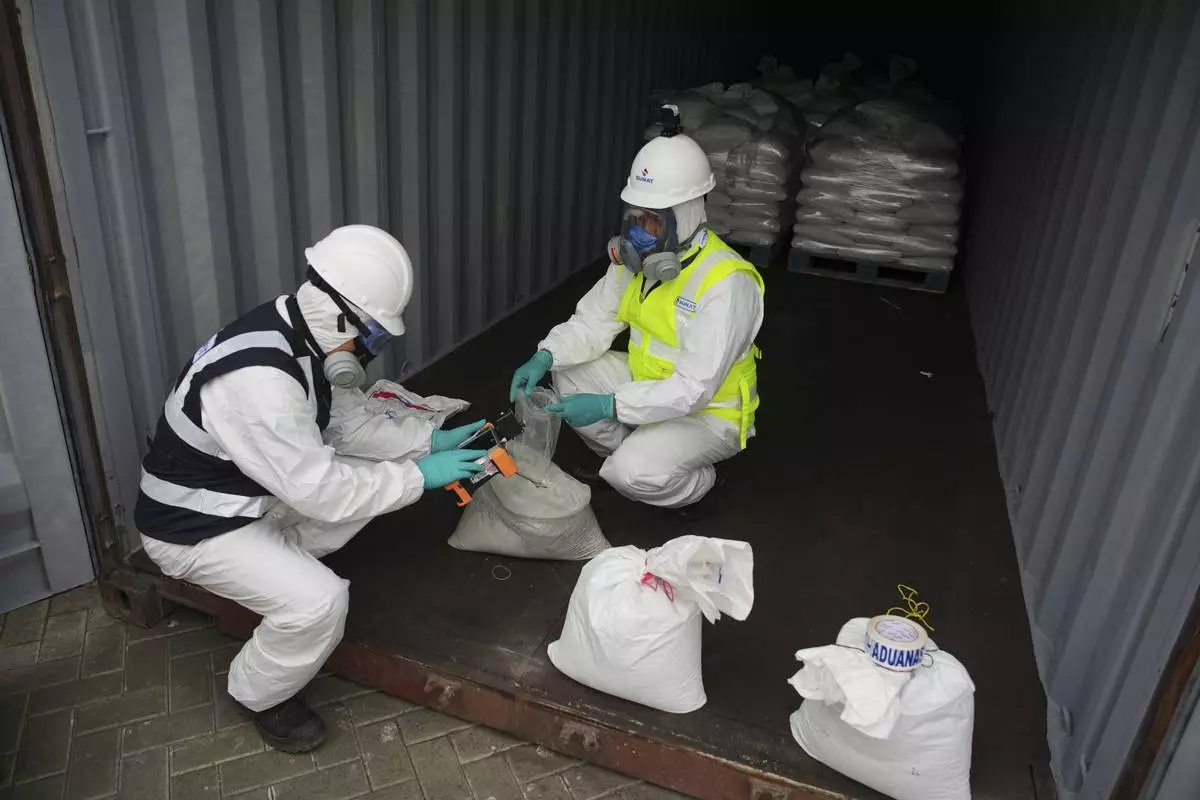
Customs workers test a sample of mercury hidden in gravel-filled bags in Lima, Peru, Wednesday, July 16, 2025. (AP Photo/Guadalupe Pardo)
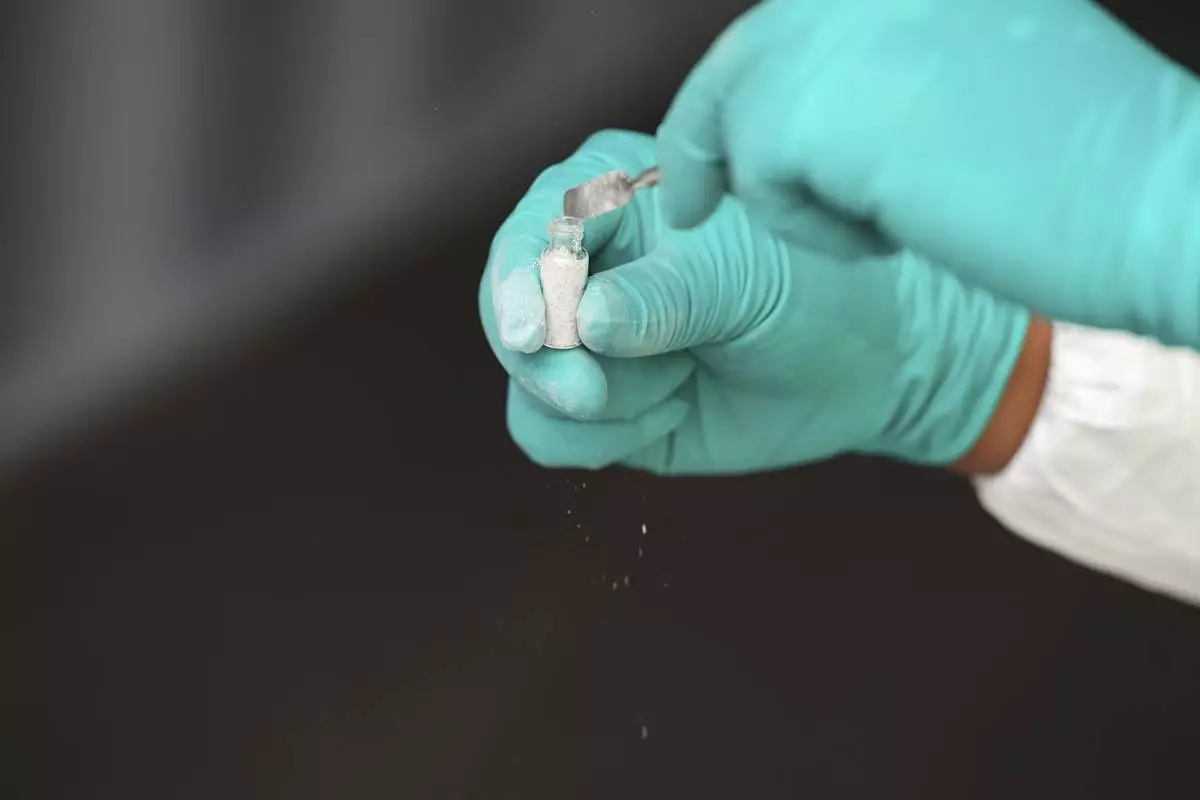
A costums worker shows a sample of mercury that was hidden in gravel-filled bags in Lima, Peru, Wednesday, July 16, 2025. (AP Photo/Guadalupe Pardo)
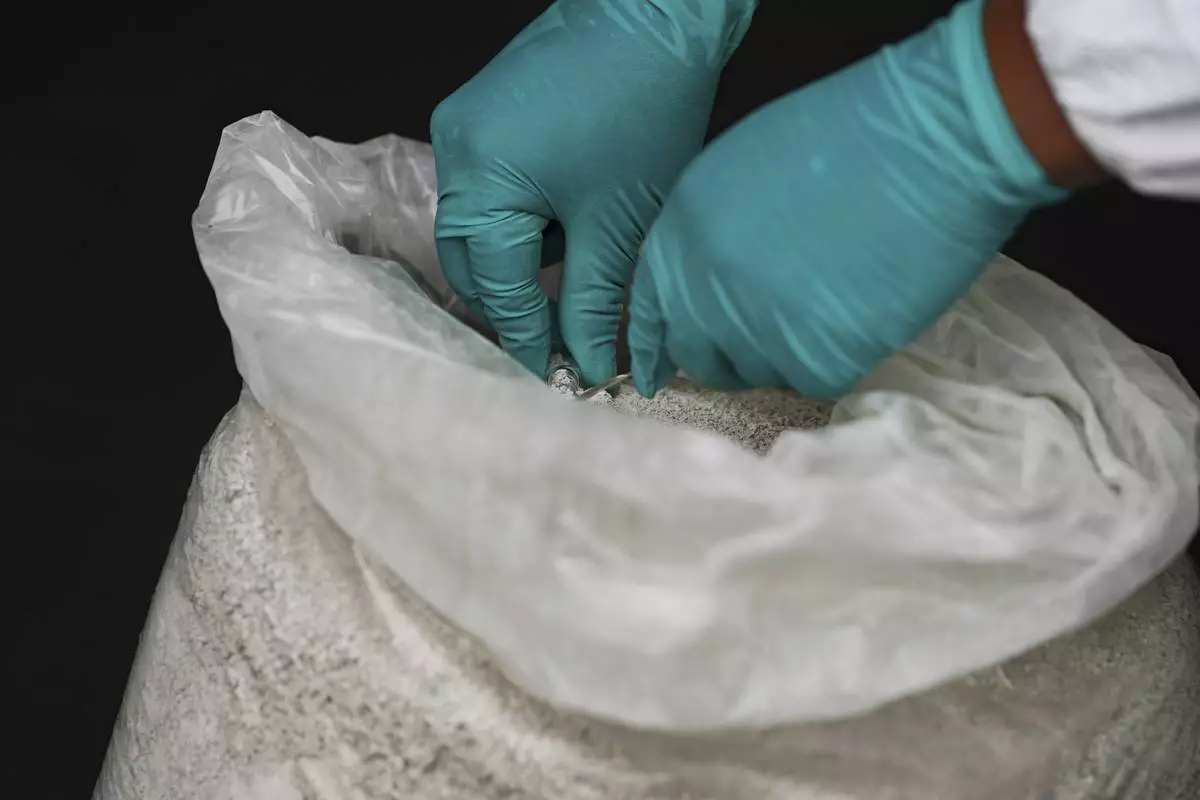
A customs worker takes a sample of mercury hidden in gravel-filled bags in Lima, Peru, Wednesday, July 16, 2025. (AP Photo/Guadalupe Pardo)
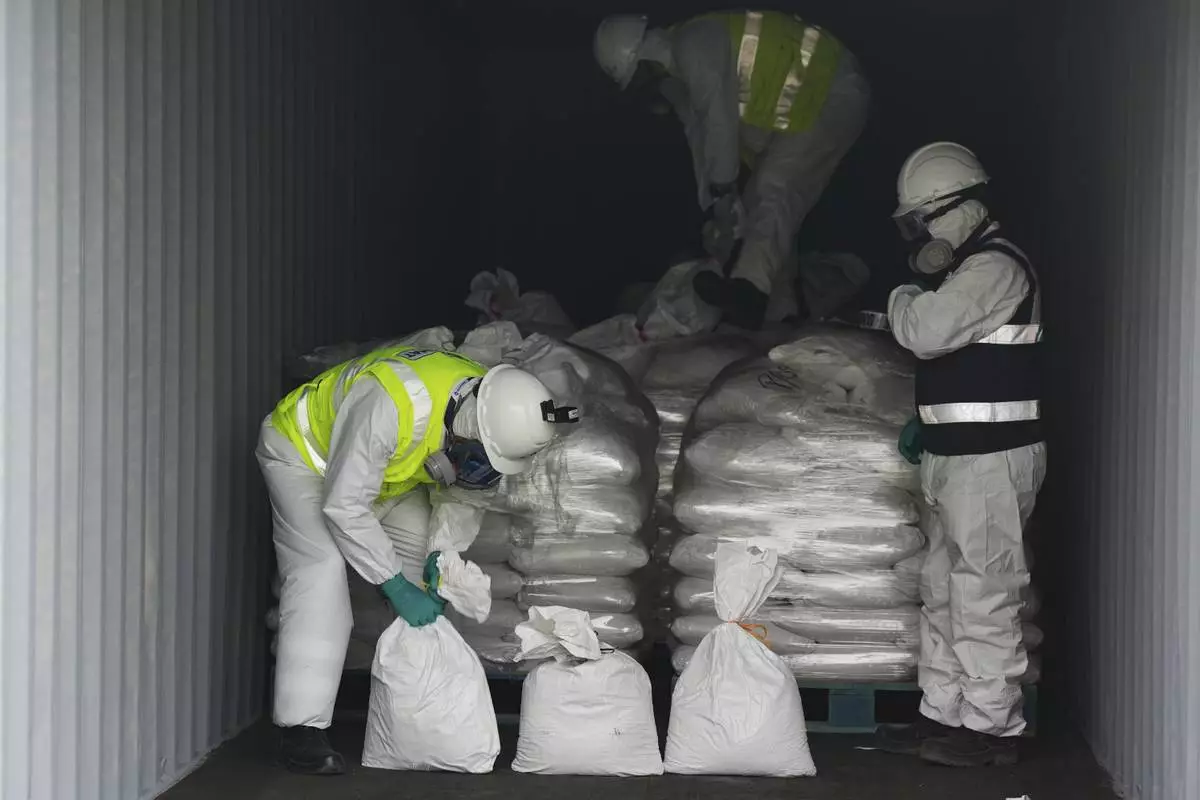
Customs workers carry bags of mercury hidden in gravel-filled bags in Lima, Peru, Wednesday, July 16, 2025. (AP Photo/Guadalupe Pardo)