Skip to Content Facebook Feature Image

Trump's USDA to scatter half its Washington staff to field offices. Critics see a ploy to cut jobs

News

Trump's USDA to scatter half its Washington staff to field offices. Critics see a ploy to cut jobs
News

News

Trump's USDA to scatter half its Washington staff to field offices. Critics see a ploy to cut jobs

2025-07-25 04:47 Last Updated At:04:51

SPRINGFIELD, Ill. (AP) — The U.S. Department of Agriculture will move thousands of employees out of the nation's capital in a reorganization the agency says will put them closer to customers while saving money, Agriculture Secretary Brooke Rollins said Thursday.

Around 2,600 workers — more than half the Washington, D.C. workforce — will be moved to five hubs stretching from North Carolina to Utah, Rollins said. The union representing federal workers immediately criticized the plan as a ploy to cut federal jobs, pointing out that some 95% of the department's employees already work outside Washington.

The move is part of President Donald Trump's effort to make the federal government slimmer and more efficient, which received a Supreme Court boost this month.

“American agriculture feeds, clothes, and fuels this nation and the world, and it is long past time the department better serve the great and patriotic farmers, ranchers, and producers we are mandated to support,” Rollins said in a statement.

The goal is to re-size the department so that costs don't outstrip available finances, as well as eliminate layers of management and consolidate redundant functions, the statement said. The department expects the plan to take several months. It follows a workforce reduction of more than 15,000 department-wide through voluntary retirements earlier this year.

Sen. Amy Klobuchar, a Minnesota Democrat and ranking member of the Senate Agriculture, Nutrition and Forestry Committee, demanded that department officials appear before the Senate to explain their thinking behind the “half-baked proposal.”

“I have serious doubts that the administration adequately considered the impact of this move on research and on services for farmers and rural Americans,” Klobuchar said in a statement.

Chad Hart, a professor of agricultural economics at Iowa State University, said the agricultural community is concerned about a “bumpy transition” reminiscent of similar action during Trump’s first term, when relocated Agriculture offices needed months to get up and running again.

Although it’s important to be closer to farmers and ranchers, he said, relocating those Agriculture employees also risks losing connection to Congress.

“You want that balance,” Hart said, to ensure effective farm policy.

Everett Kelley, national president of the American Federation of Government Employees, the labor union representing federal workers, agreed. He said staff in Washington ensure the agency has a “seat at the table” when lawmakers and the White House make decisions that affect farmers nationwide.

“I’m concerned this reorganization is just the latest attempt to eliminate USDA workers and minimize their critical work,” Kelley said.

Alex Craven, forest campaign manager for the Sierra Club, argued that the more the agency is cut, the easier it will be for the administration to suggest it can no longer do effective work and that parts of it, such as the Forest Service, need to be privatized.

The Agriculture Department reported that its headcount grew by 8% over the past four years, with salaries increasing by 14.5%. The statement from Rollins said the 4,600 employees in and around Washington are “underutilized and redundant” and housed in underused buildings with billions of dollars in deferred maintenance.

In the Washington region, the department will vacate three buildings and examine the best use of three others. One building set to be abandoned has $1.3 billion in needed but delayed maintenance and has room for 6,000 employees while only housing 1,900.

Wages will fall too, Rollins promised. The capital region is among the nation’s costliest to live, and department employees there are paid a surcharge of 34% to keep ahead of the cost of living. The surcharges range from 17.1% in Salt Lake City to 30.5% in Fort Collins.

Raza reported from Sioux Falls, South Dakota.
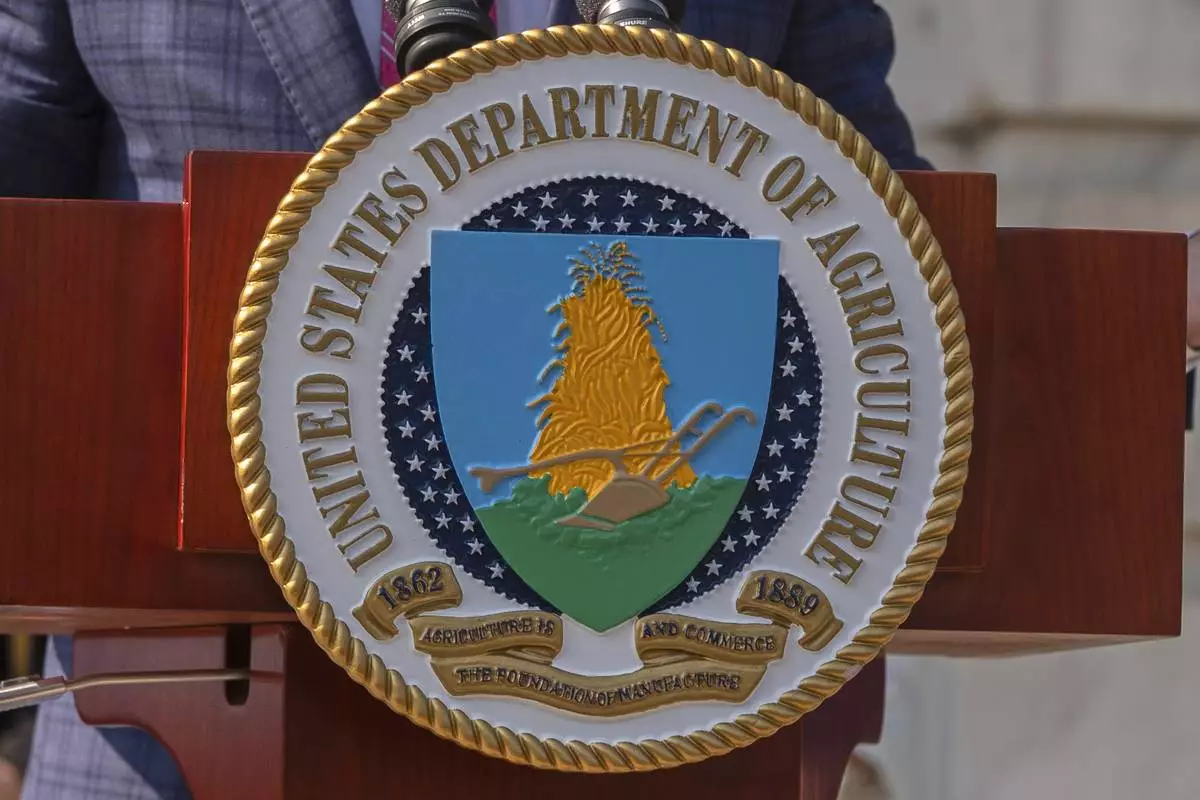
FILE - The U.S. Department of Agriculture seal is seen on a podium during a news conference in Washington, July 8, 2025. (AP Photo/Manuel Balce Ceneta, File)


FILE - The U.S. Department of Agriculture seal is seen on a podium during a news conference in Washington, July 8, 2025. (AP Photo/Manuel Balce Ceneta, File)

COPENHAGEN, Denmark (AP) — A bipartisan U.S. congressional delegation on Saturday sought to reassure Denmark and Greenland of their support following President Donald Trump's threat to punish countries with tariffs if they don’t back the U.S. taking over the strategic Arctic island.

Delegation leader Sen. Chris Coons, a Delaware Democrat, said the current rhetoric around Greenland is causing concern across the Danish kingdom. He said he wants to de-escalate the situation.

“I hope that the people of the Kingdom of Denmark do not abandon their faith in the American people,” Coons said in Copenhagen, adding that the U.S. has respect for Denmark and NATO “for all we’ve done together.”

Meanwhile, thousands of people marched through Copenhagen, many of them carrying Greenland’s flag, on Saturday afternoon in support of the self-governing island. Others held signs with slogans like “Make America Smart Again” and “Hands Off.” Another rally was planned in Nuuk, the Greenlandic capital,

Coons' comments contrasted with that emanating from the White House. Trump has sought to justify his calls for a U.S. takeover by repeatedly claiming that China and Russia have their own designs on Greenland, which holds vast untapped reserves of critical minerals. The White House hasn’t ruled out taking the territory by force.

“There are no current security threats to Greenland,” Coons said.

Trump for months has insisted that the U.S. should control Greenland, a semiautonomous territory of NATO ally Denmark, and said earlier this week that anything less than the Arctic island being in U.S. hands would be “unacceptable.”

During an unrelated event at the White House about rural health care, he recounted Friday how he had threatened European allies with tariffs on pharmaceuticals.

“I may do that for Greenland, too,” Trump said. “I may put a tariff on countries if they don’t go along with Greenland, because we need Greenland for national security. So I may do that,” he said.

He had not previously mentioned using tariffs to try to force the issue.

Earlier this week, the foreign ministers of Denmark and Greenland met in Washington this week with U.S. Vice President JD Vance and Secretary of State Marco Rubio.

That encounter didn’t resolve the deep differences, but did produce an agreement to set up a working group — on whose purpose Denmark and the White House then offered sharply diverging public views.

European leaders have insisted it is only for Denmark and Greenland to decide on matters concerning the territory, and Denmark said this week that it was increasing its military presence in Greenland in cooperation with allies.

“There is almost no better ally to the United States than Denmark,” Coons said. “If we do things that cause Danes to question whether we can be counted on as a NATO ally, why would any other country seek to be our ally or believe in our representations?”

__

Associated Press writer Stefanie Dazio in Berlin contributed to this report.

People gather for a pro- Greenlanders demonstration, in Copenhagen, Denmark, Saturday, Jan. 17, 2026. (Emil Helms/Ritzau Scanpix via AP)

People gather for a pro- Greenlanders demonstration, in Copenhagen, Denmark, Saturday, Jan. 17, 2026. (Emil Helms/Ritzau Scanpix via AP)

People gather for a pro- Greenlanders demonstration, in Copenhagen, Denmark, Saturday, Jan. 17, 2026. (Emil Helms/Ritzau Scanpix via AP)

People gather for a pro- Greenlanders demonstration, in Copenhagen, Denmark, Saturday, Jan. 17, 2026. (Emil Helms/Ritzau Scanpix via AP)

People march during a pro- Greenlanders demonstration, in Copenhagen, Denmark, Saturday, Jan. 17, 2026. (Emil Helms/Ritzau Scanpix via AP)

People march during a pro- Greenlanders demonstration, in Copenhagen, Denmark, Saturday, Jan. 17, 2026. (Emil Helms/Ritzau Scanpix via AP)

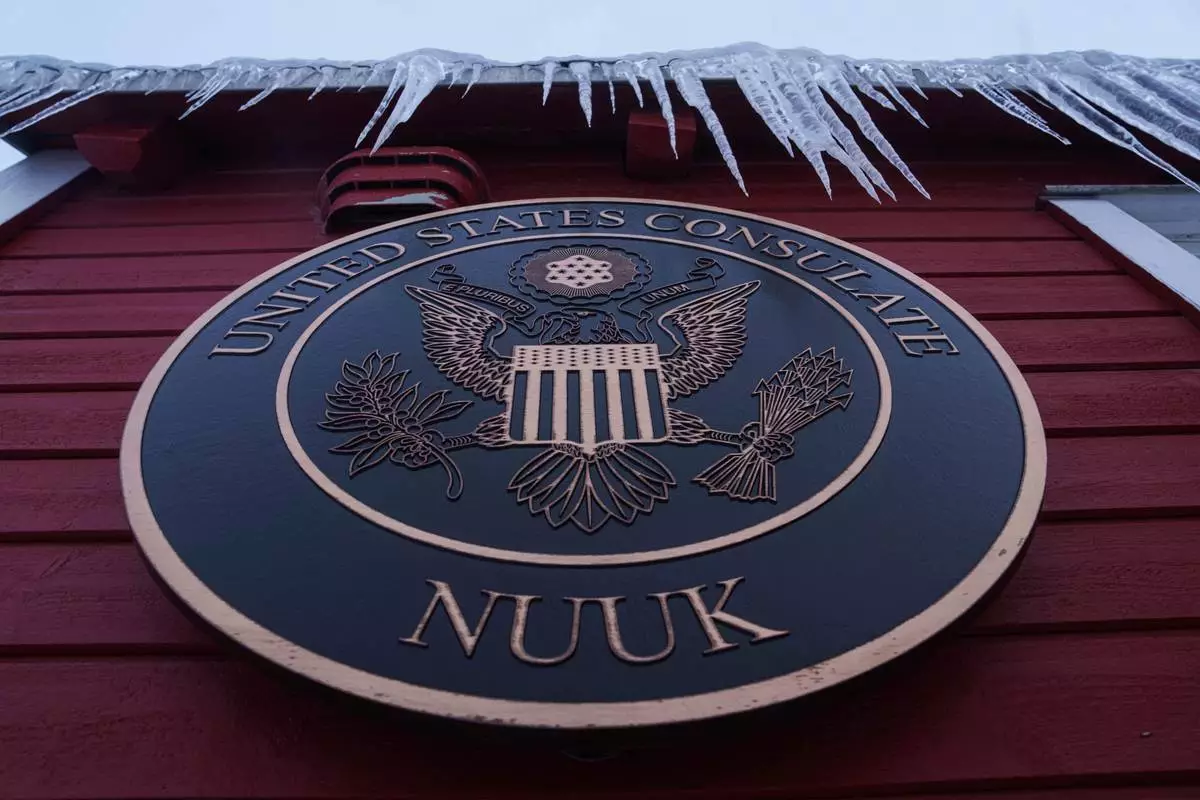
Icicles hang from the roof of the US consulate in Nuuk, Greenland, on Friday, Jan. 16, 2026. (AP Photo/Evgeniy Maloletka)

Icicles hang from the roof of the US consulate in Nuuk, Greenland, on Friday, Jan. 16, 2026. (AP Photo/Evgeniy Maloletka)

A Danish serviceman walks in front of Joint Arctic Command center in Nuuk, Greenland, on Friday, Jan. 16, 2026. (AP Photo/Evgeniy Maloletka)

A Danish serviceman walks in front of Joint Arctic Command center in Nuuk, Greenland, on Friday, Jan. 16, 2026. (AP Photo/Evgeniy Maloletka)

Senator Chris Coons from the Democratic Party speaks during a press conference with the American delegation, consisting of senators and members of the House of Representatives, in Copenhagen, Denmark, Saturday, Jan. 17, 2026. (Ida Marie Odgaard/Ritzau Scanpix via AP)

Senator Chris Coons from the Democratic Party speaks during a press conference with the American delegation, consisting of senators and members of the House of Representatives, in Copenhagen, Denmark, Saturday, Jan. 17, 2026. (Ida Marie Odgaard/Ritzau Scanpix via AP)

Recommended Articles