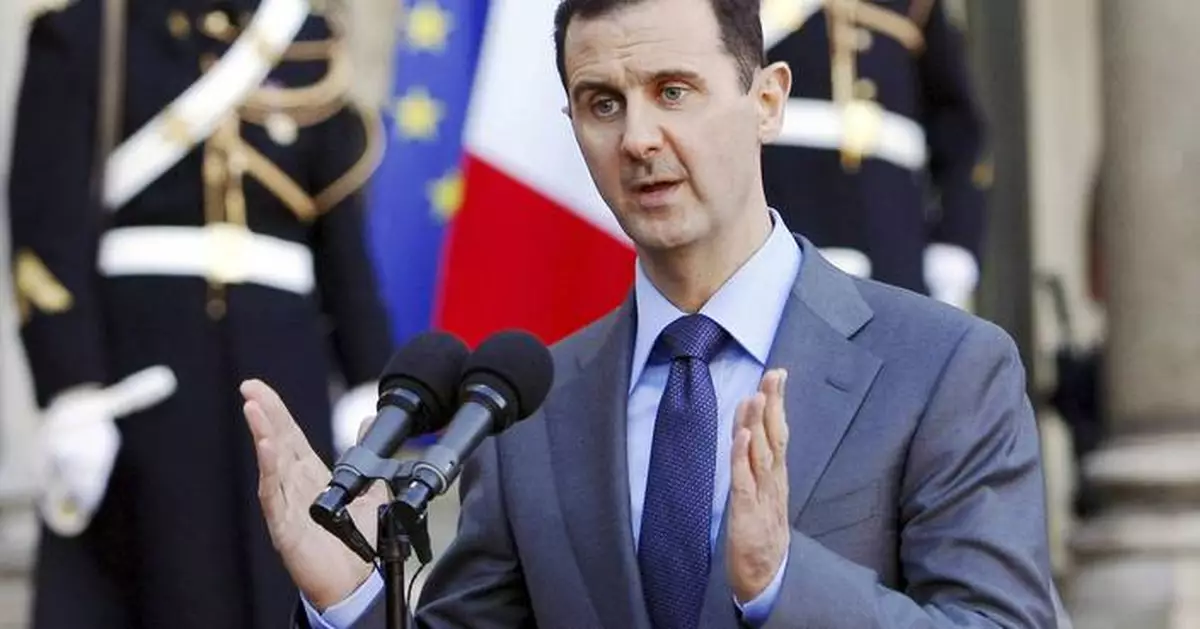
PARIS (AP) — France’s highest court on Friday upheld some of Syrian ex-leader Bashar Assad’s personal immunity as a head of state while green-lighting possible future war crime warrants, drawing criticism from human rights lawyers and Syrian activists.
The Cour de Cassation upheld Assad’s head-of-state immunity, but added that since he is no longer in office, “new arrest warrants may have been or may be issued against him for acts that may constitute war crimes or crimes against humanity.”
The decision is a blow to activists who had hoped the court would set aside the immunity, a decision that could have had far-reaching consequences for other leaders accused of atrocities.
“From our side as a victim, this is a huge mistake. This will support another dictatorship to keep doing this kind of crime — they know they will enjoy immunity,” said Mazen Darwish, president of the Syrian Center for Media, which collected evidence of war crimes.
“It is a sad day for us,” Darwish said.
The president of the Cour de Cassation, Christophe Soulard, said in the ruling that 19 judges had declined to lift Assad’s immunity, but that a new arrest warrant could be issued to pave the way for his trial in absentia in France over the use of chemical weapons in Ghouta in 2013.
Human rights lawyers had sought to enable prosecution of leaders linked to atrocities while they are in power, not just when they leave. But international law currently forbids it.
“Under current international law, crimes against humanity and war crimes are not exceptions to the principle of jurisdictional immunity for sitting foreign heads of state," Soulard said.
Assad, the former leader of Syria now in exile in Russia, retained no lawyers for these charges and has denied that he was behind the chemical attacks.
“The court’s ruling is a missed opportunity for justice,” said Mariana Pena, a lawyer with the Open Society Justice Initiative, which helped bring the case to the court. But she said that the ruling “leaves the door open to the prosecution of Assad.”
The court also ruled on a case against a former Syrian government finance minister in Assad’s government, allowing that he could be prosecuted. Adib Mayaleh’s lawyers have argued that he too had immunity under international law. That is to some a silver lining in the court's ruling by establishing in France the right for courts to go after heads of state when they leave office and even current high-ranking officials. “This is a huge step, but not an absolute victory in the fight against impunity,” said lawyer Clémence Witt, who with Jeanne Sulzer brought the case against Assad to the court. She said that the French courts can now for the first time issue warrants for high-ranking officials currently in power with adequate evidence.
“Every official — except head of state, head of government and head of foreign affairs — can be prosecuted in France if we have evidence of genocide, war crimes or crimes against humanity,” Witt said.
For more than 50 years, Syria was ruled by Hafez Assad and then his son Bashar. During the Arab Spring, rebellion broke out against their tyrannical rule in 2011 across the country of 23 million people, igniting a brutal 13-year civil war that killed more than 500,000 people, according to the Syrian Observatory of Human Rights.
Millions more fled to Lebanon, Jordan, Turkey and Europe. The Assad dynasty manipulated sectarian tensions to stay in power, a legacy driving renewed violence in Syria against minority groups, despite promises that the country’s new leaders will carve out a political future for Syria that includes and represents all of its communities.
The International Criminal Court isn't bound by head of state immunity and has issued arrests warrants for leaders accused of atrocities — like Russian President Vladimir Putin in Ukraine, Israeli Prime Minister Benjamin Netanyahu in Gaza, and Rodrigo Duterte in the Philippines.
The Syrian government denied in 2013 that it was behind the Ghouta attack, an accusation that the opposition rejected, because Assad’s forces were the only side in the brutal civil war to possess sarin.
Assad held onto power, aided militarily by Russia and Iranian-backed proxies, until late 2024, when a surprise assault by rebels swept into Aleppo and then Damascus, driving Assad to flee to safety to Russia on Dec. 8, 2024.
New warrants after Friday's ruling in France could lay the groundwork for the former leader’s trial in absentia or potential arrest, if he travels outside Russia.
Any trial of Assad, whether in absentia or if he leaves Russia, would mean this evidence could then “be brought to light,” Pena said, including an enormous trove of classified and secret evidence amassed by the judges during their investigations.
Syrians often took great personal risk to gather evidence of war crimes. Darwish said that in the aftermath of a chlorine gas attack in Douma, for example, teams collected witness testimonies, images of devastation and soil samples. Others then tracked down and interviewed defectors to build a “chain of command” for the Syrian government's chemical weapons production and use.
“We link it directly to the president himself, Bashar al-Assad,” he said.
Syria today remains beholden to many awful legacies of the Assad dynasty. Poverty, sectarianism, destruction and violence still haunt the country.
Syrian authorities are now investigating nearly 300 people for crimes during several days of fighting on the coast earlier this year. The new interim President Ahmad al-Sharaa in Damascus have pledged to work with the United Nations on investigating further war crimes of the Assad government and the civil war.
While disappointed in the verdict in France, Darwish is working on 29 cases against Assad and other figures who have fled to Russia, the Gulf, Lebanon and Europe. He said that many Syrians hope Assad sits for a fair trial in Syria.
“It should be done in Damascus, but we need also a lot of guarantees that we will have a fair trial even for this suspect," he said.
His organization has already received requests to bring to court war crimes accusations against those involved in recent bloodshed in southern Syria.
“So anyone, whatever his name, or the regime, or their authority, we will keep fighting this type of crime,” Darwish said.
Sam McNeil reported from Brussels. John Leicester contributed to this report from Paris.
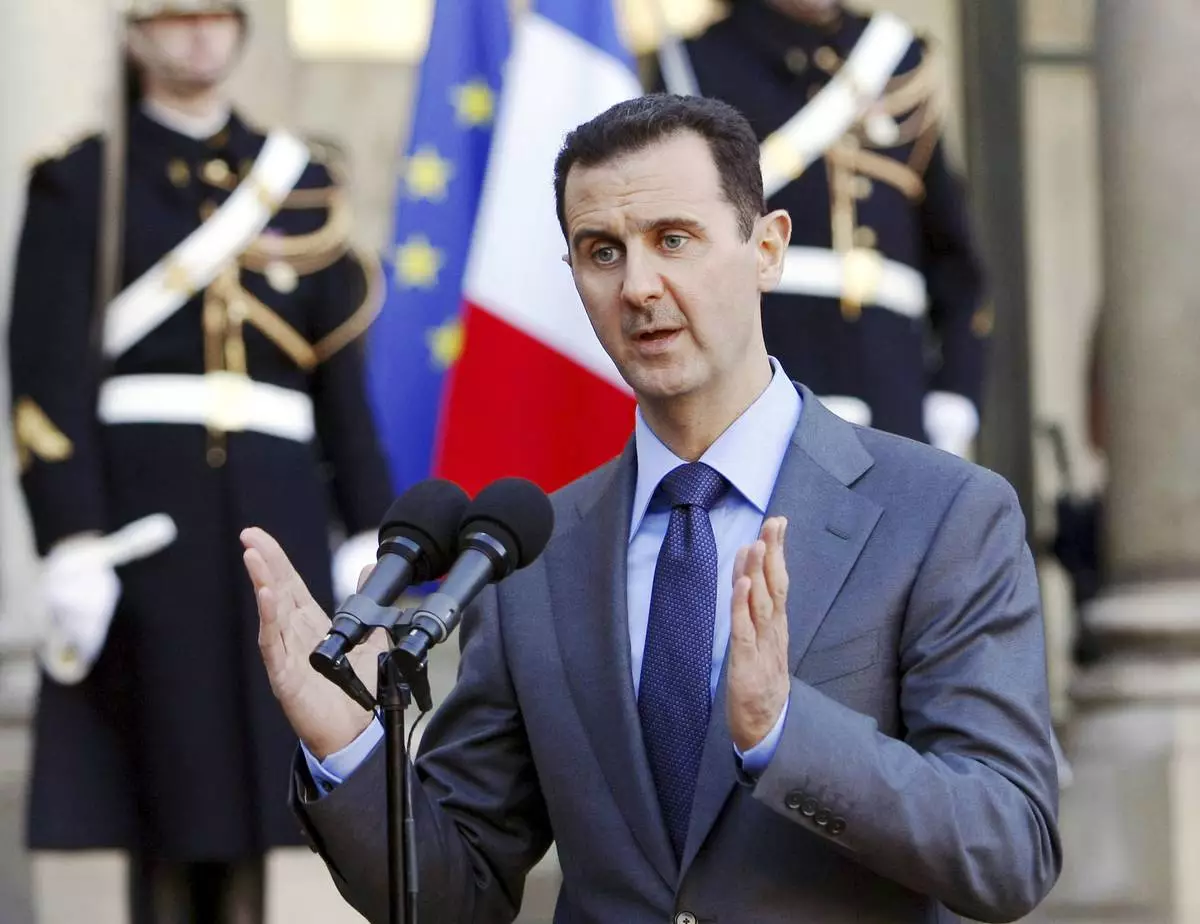
FILE - In this Dec. 9, 2010 file photo, then-Syrian President Bashar al-Assad addresses reporters at the Elysee Palace in Paris, France. (AP Photo/Remy de la Mauviniere, File)