China's homegrown MA60 civil search and rescue aircraft has successfully completed its inaugural flight, marking the formal start of its comprehensive flight test and verification phase, its developer has confirmed.
The Aviation Industry Corporation of China (AVIC), the country's leading planemaker, announced on Thursday that the aircraft successfully completed its designated daytime validation tasks after a flight lasting one hour and 20 minutes, landing at an airport in Xi'an, capital of northwest China's Shaanxi Province.
This new aircraft belongs to the homegrown MA60 "Modern Ark" multipurpose aircraft family.
Challenges such as slow response times and limited search coverage capacity have long constrained China's ability to conduct maritime search and rescue operations over vast distances and in complex environments, according to AVIC experts.
The new aircraft, designed to provide search and rescue, on-site assessment and personnel transportation capabilities, is engineered to offer broad application scenarios. It is capable of executing missions over oceans, in high-altitude regions and at disaster sites, such as earthquakes and floods.
This specialized aircraft is expected to significantly enhance China's maritime search and rescue capabilities, greatly improving response speed and operational coverage, said the AVIC.
It represents a significant leap forward in terms of the nation's airborne search and rescue equipment and will further bolster China's maritime emergency response system, it added.
The development program for this aircraft was formally launched in December 2021. Its major component production and delivery were completed in December 2024, and this was followed by its final assembly and delivery in May 2025.
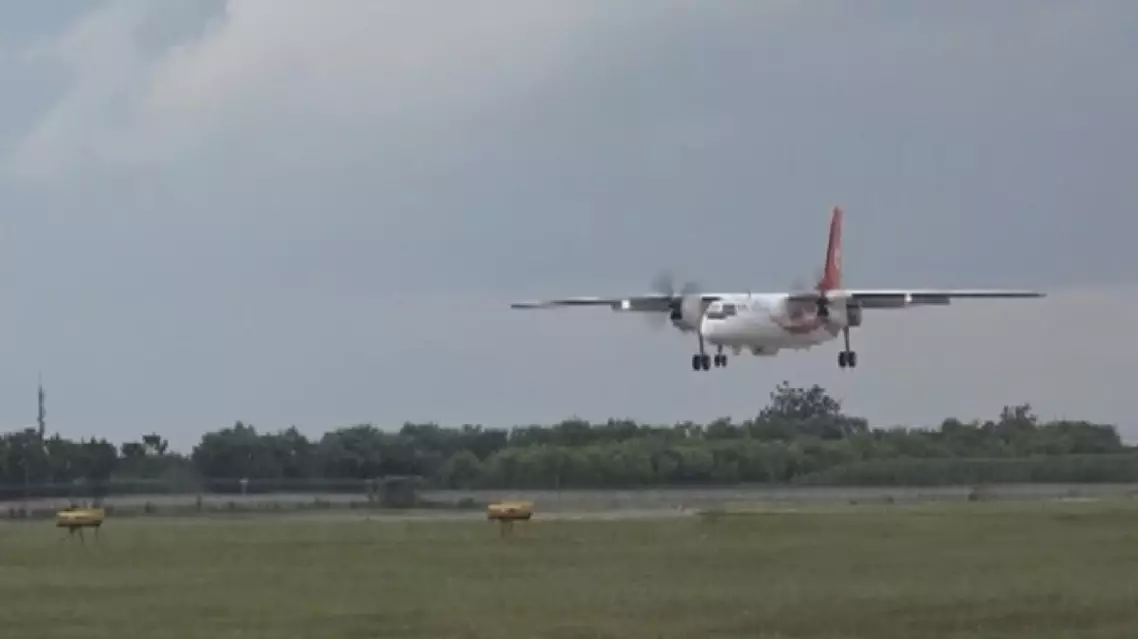
China's homegrown MA60 civil search, rescue aircraft completes first test flight
Scenic spots across China have seen an influx of tourists during the ongoing Qingming Festival holiday, attracted by breathtaking spring scenery and a variety of entertainment activities.
Falling on April 5 this year, the Qingming Festival, or the Tomb-Sweeping Day, is a traditional Chinese festival for honoring the deceased and paying tributes to ancestors. The three-day holiday from Saturday to Monday also provides a short break for Chinese citizens to enjoy outdoor activities and sightseeing in pleasant springtime temperatures.
In Beijing, flowers are in full bloom in many parks, drawing large crowds of visitors to capture the beauty on camera.
"The flowers are now in full bloom and this is one of the most beautiful seasons in Beijing. The weather is lovely, and it's a holiday. I'm in a great mood spending time with my family, and my child is also very happy," said Zheng, a visitor.
In Luanping County, north China's Hebei Province, the magnificent Jinshanling section of the Great Wall and apricot blossoms dotting the surrounding mountains create a stunning, picturesque scene, attracting many tourists to enjoy the breathtaking view.
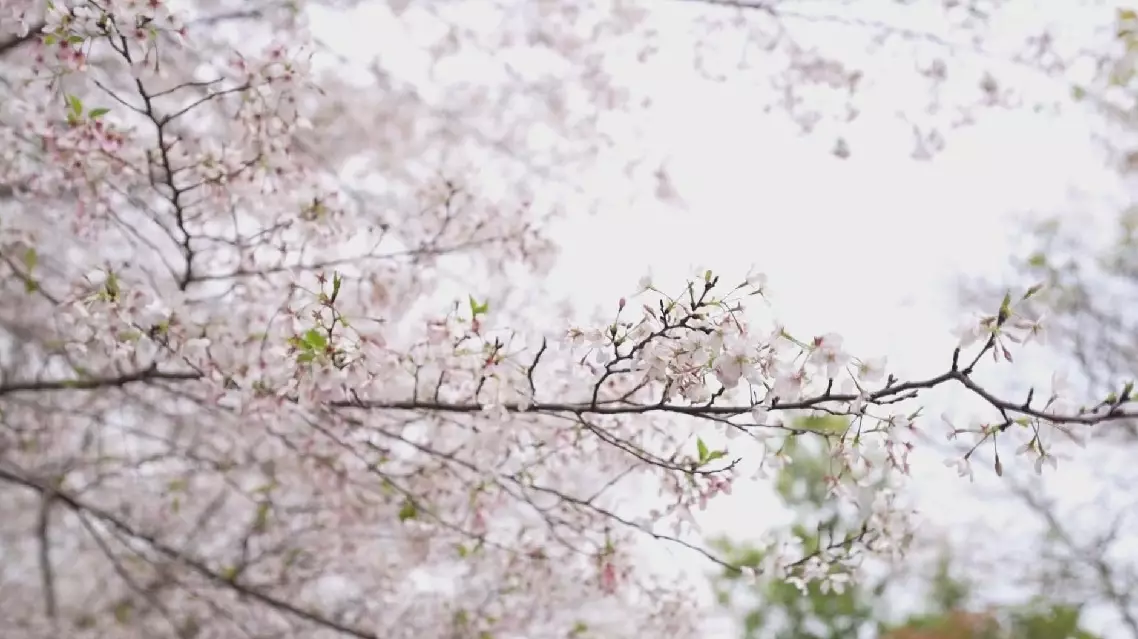
In Nanchang, large expanses of blooming cherry blossoms have also drawn many visitors to the Jiangxi Academy of Forestry.
The academy has planted multiple varieties of cherry blossoms, allowing visitors not only to enjoy a spring outing and admire the flowers, but also learn about plant science.
"A large stretch of cherry blossoms has bloomed along the lake. When the wind blows, the cherry blossoms flutter down like snow. It's incredibly romantic," said Xiao Yuxin, a tourist.
During the holiday, the Bashan Grand Canyon Scenic Area in Dazhou, southwest China's Sichuan Province, has designed a series of fun and immersive experience activities, allowing tourists to fully engage with the local culture and customs.
Spring scenery, fun activities draw crowds to scenic spots in China during Qingming Festival holiday